Can Dogs Eat Sweet Potato Skins? Cooking and Safety
A small piece of well-cooked, plain sweet potato skin is usually low risk for a healthy dog, but raw or leathery skin can choke and large servings can upset the stomach. Wash the tuber, cook it until soft, cut it small, skip seasonings, and discard bitter, damaged, moldy, or spoiled pieces.
Skin is not automatically toxic
Sweet potato skin is part of the edible storage root, not a peel that becomes poisonous merely because it remains attached. The practical concerns are toughness, piece size, total amount, spoilage, and what was cooked onto it.
One tiny soft plain piece and a plate of roasted skins covered in butter are different exposures. Save the recipe and estimate the amount, time, dog’s weight, health conditions, medicines, symptoms, and any missing foil or packaging.
Cook until the skin is truly soft
Bake, steam, or boil a washed sweet potato without salt, oil, butter, sugar, or spice until both flesh and skin yield easily. Let it cool, then cut a small approved amount into pieces the dog cannot gulp whole.
A skin that pulls into long rubbery strips is not ready for a fast eater. Peel it off or cook it longer rather than relying on chewing.
Raw skin and tough chunks
Raw sweet potato skin and flesh are dense and fibrous, and a thick chunk can lodge in the throat or create gastrointestinal trouble. Raw is not a nutritional upgrade for dogs.
A stolen small shaving may pass without difficulty, but a whole raw tuber or several large pieces deserves advice. The FDA identifies sweet potatoes among produce rarely consumed raw, which supports cooking as the ordinary preparation rather than proving raw sweet potato is a poison.
Choking signs
Coughing, gagging, repeated swallowing, drooling, pawing at the mouth, noisy breathing, panic, blue or gray gums, or collapse is an emergency. Dogs with short muzzles, dental disease, swallowing problems, neurologic disease, or a habit of gulping need extra caution.
Do not push a piece down with bread, force water into a coughing dog, or sweep blindly inside the mouth. Call emergency care and follow airway instructions suited to the dog.

Large servings and the gastrointestinal tract
Skin and flesh add fiber and starch, and a sudden large helping can cause gas, loose stool, nausea, vomiting, or abdominal discomfort. That is a tolerance and dose issue, not evidence that every cooked peel is toxic.
Repeated vomiting, severe pain, a swollen abdomen, unproductive retching, weakness, blood, or inability to keep water down needs prompt assessment. Stop extra foods while getting advice.
No constipation or diarrhea treatment
Sweet potato skin is not a universal stool remedy. More fiber can worsen signs in some dogs, and constipation or diarrhea may reflect dehydration, obstruction, parasites, medication, inflammation, endocrine disease, or another problem.
Our sweet-potato guide covers the flesh and common dishes. Use a veterinary plan rather than guessing a skin dose for a sick dog.
Wash before cooking
Rinse the whole tuber under running water and scrub away soil with a clean produce brush before cutting. Do not use soap, detergent, bleach, or household disinfectant on porous food.
The FDA recommends washing produce under running water and discarding rotten produce. Clean hands, knives, boards, and counters reduce cross-contamination.
Bitter, damaged, or spoiled pieces
A strongly bitter taste, extensive bruising, blackened wet areas, slime, mold, leaking, or an off odor is a reason to discard the tuber securely. Do not taste questionable food yourself or give it to a dog to avoid waste.
The FDA advises discarding moldy food as the safest practice. Trimming a visible patch does not guarantee that a soft, damaged root is suitable.

Mold claims need species context
Moldy sweet potatoes can produce plant and fungal compounds that are well documented as a respiratory hazard in cattle, but that does not establish a predictable dog dose or syndrome. The sensible household rule is still simple: no moldy or spoiled sweet potato for any pet.
Coughing, breathing difficulty, vomiting, weakness, tremors, or unusual behavior after spoiled food deserves prompt advice. Save photographs and remaining material away from pets if a clinician or poison service wants identification.
Butter, oil, and bacon fat
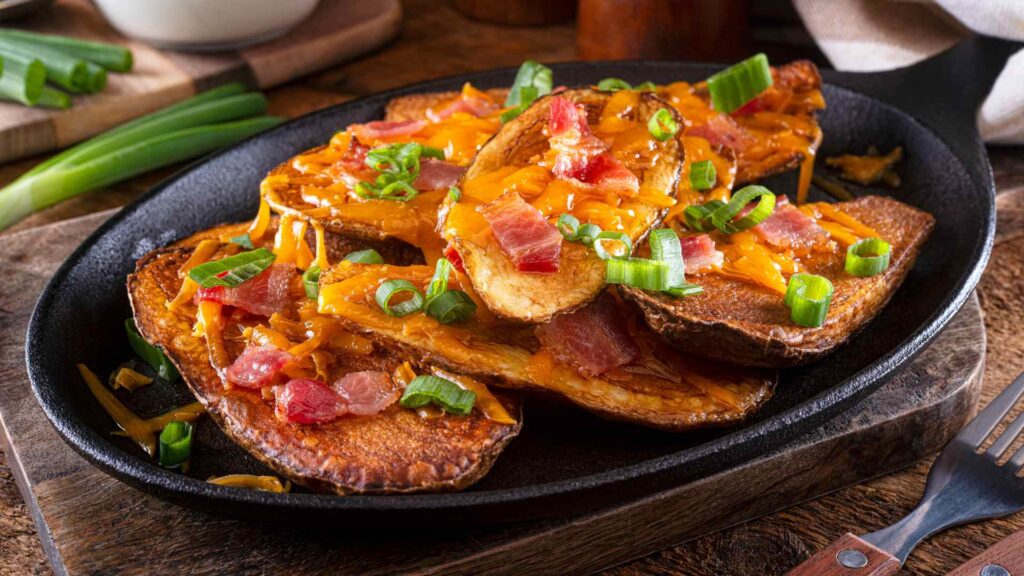
Loaded skins can carry much more fat than plain sweet potato. Butter, oil, bacon grease, cheese, sour cream, and fried coatings can trigger gastrointestinal upset and are especially concerning for dogs with prior pancreatitis.
Appetite loss, repeated vomiting, dehydration, weakness, abdominal pain, or a hunched posture needs care. Do not tempt a nauseated dog with another rich topping.
Salt and savory seasoning
Seasoned skins may contain salt, onion, garlic, chives, bouillon, ranch powder, barbecue rub, hot pepper, or soy sauce. Scraping the surface does not remove seasoning absorbed during cooking.
Report the entire dish and save packets or labels. Our garlic guide explains why cooked and powdered Alliums still matter.
Sugar, syrup, and marshmallow toppings
Candied skins, casseroles, and holiday leftovers can add brown sugar, maple syrup, marshmallows, pie spice, chocolate, nuts, alcohol, or sugar-free sweeteners. A dessert label matters more than the orange vegetable underneath.
Check sugar-free products for xylitol, birch sugar, or wood sugar. Confirmed or possible xylitol exposure is an immediate veterinary call.
Foil, skewers, and baking dishes
Foil packets, parchment, silicone mats, toothpicks, skewers, plastic film, and absorbent pads may be swallowed with leftovers. Sharp or bulky material can cut, choke, or obstruct.
Do not induce vomiting after sharp or uncertain foreign material unless a veterinarian specifically directs it. Repeated vomiting, appetite loss, abdominal pain, lethargy, straining, or little stool after missing packaging needs assessment.
Air-fried and dehydrated skins
Drying can turn skin into a stiff strip that is harder to chew and easier to swallow in a long piece. Commercial sweet-potato chews also vary in thickness, ingredients, sourcing, and quality control.
Supervise any veterinarian-approved chew and remove pieces small enough to swallow whole. The FDA has investigated illness reports involving some jerky pet treats, so keep original packaging and lot information if a dog becomes ill.
Sweet potato versus white potato
Sweet potatoes are Ipomoea batatas in the morning-glory family, while white potatoes are Solanum tuberosum in the nightshade family. Guidance about green white-potato skins and glycoalkaloids should not be pasted onto sweet potatoes.
Our potato guide covers raw, green, and sprouted white potatoes. Correct plant identity prevents both false reassurance and unnecessary panic.
Vines and leaves require identification
The ASPCA lists Ipomoea batatas sweet potato vine as non-toxic to dogs, but other plants called morning glory may be toxic. A common name or leaf photo alone is not enough for confident identification.
Garden plants can also carry fertilizer, pesticide, slug bait, compost, or mold. Keep the plant or clear photos and call when the species or chemical exposure is uncertain.
Skin does not become a vitamin supplement
Sweet potato skin contains nutrients, but a complete and balanced dog food already supplies required nutrition in controlled proportions. The skin does not treat vision, immunity, skin disease, inflammation, weight, or digestion.
Adding “healthy” extras can still displace essential food. Puppies and toy dogs have especially little calorie room, while therapeutic diets may exclude even plain produce.
A practical portion approach
If the veterinarian approves, begin with one tiny soft plain piece and watch chewing, stool, gas, appetite, and comfort. There is no need for a rigid dog-size chart or a target serving.
The UC Davis veterinary nutrition guidance says all treats and extra foods combined should remain under 10 percent of daily calories. That ceiling is not a recommendation to feed skin every day.
Dogs that may need to skip it
Dogs with swallowing disease, severe dental problems, active vomiting or diarrhea, prior gastrointestinal obstruction, pancreatitis, diabetes, allergy trials, or prescription diets need individual rules. A soft texture does not override a medical plan.
Ask before adding skin to a bland or recovery diet. “Plain” and “appropriate for this patient” are not the same thing.
After a shared tray raid
Separate pets and estimate access individually rather than dividing the missing food equally. One dog may have swallowed foil while another ate only a soft scrap.
Count skins, toppings, bones, utensils, toothpicks, foil sheets, and packets. Give a reasonable minimum and maximum when nobody witnessed the theft.
What to do after a skin theft
- Remove remaining food, raw tubers, spoiled pieces, seasonings, foil, skewers, and accessible trash.
- Identify cooked soft skin, raw tough pieces, mold, bitterness, toppings, Alliums, xylitol, and foreign material.
- Estimate the amount and time, then record the dog’s weight, conditions, medicines, and symptoms.
- Separate pets and save labels, recipes, photos, and commercial lot information.
- Call for choking, serious signs, large raw pieces, spoiled food, dangerous add-ins, or missing packaging.
Do not induce vomiting or give oil, milk, bread, salt, charcoal, fiber supplements, or another remedy without veterinary direction. A tough piece or foreign object changes what is safe.
Bottom line
A small amount of soft, well-cooked, plain sweet potato skin can be an optional treat for many healthy dogs. Raw tough pieces, choking, large portions, spoilage, rich or sugary toppings, Alliums, xylitol, garden chemicals, diet displacement, and packaging are the real boundaries, not the mere presence of skin.