Can Dogs Eat Shrimp Tails? Choking, Obstruction, and Shell Risks
Shrimp tails are not poisonous, but their hard pointed shell makes them a poor thing for a dog to swallow. One tiny chewed tail may pass, yet choking, esophageal injury, obstruction, perforation, raw seafood, seasoning, skewers, trash, and the dog’s size can justify prompt veterinary advice.
Use a physical-risk checklist
- One small well-chewed cooked tail in a comfortable larger dog: call the regular clinic for case-specific monitoring advice.
- Several tails, a large rigid tail, or an unknown amount: contact a veterinarian promptly, especially for a small dog.
- Gagging, repeated swallowing, drooling, regurgitation, coughing, or breathing trouble: seek urgent care for possible throat or esophageal obstruction.
- Repeated vomiting, belly pain, refusal to eat, lethargy, or blood: seek prompt care for gastrointestinal injury or obstruction.
- Raw tails, garlic butter, skewer, shell bag, foil, or trash missing: report every part of the mixed exposure.
Record the number and size of tails, cooked or raw, shell hardness, time, dog weight, symptoms, seasonings, and missing objects. A toy-breed dog gulping a jumbo tail is not the same case as a large dog chewing a small soft fragment.
The shell is the issue, not a shell toxin
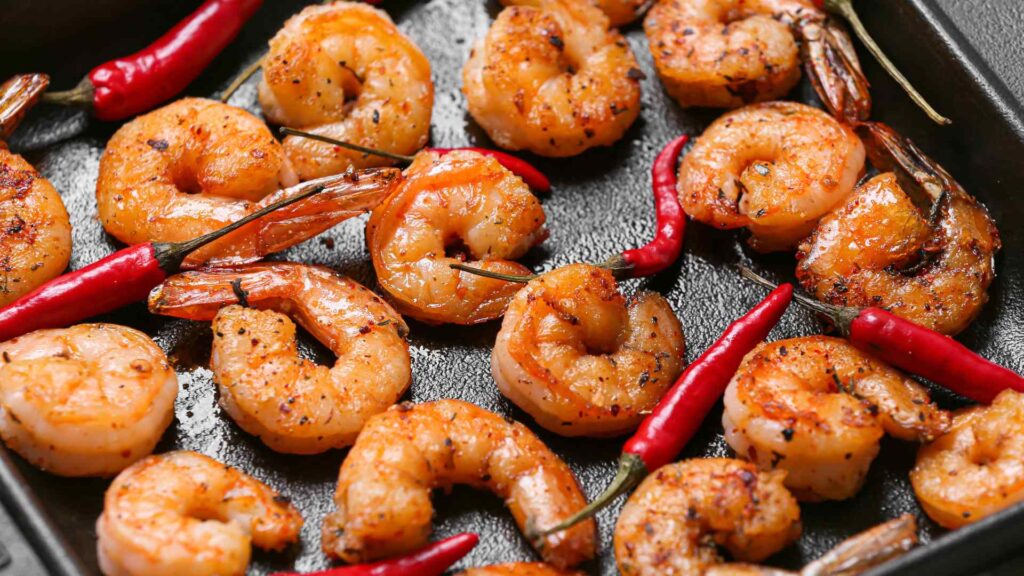
A shrimp tail is made of rigid shell segments with pointed edges. Cooking may make a tail brittle or firm, but it does not reliably turn it into a safe chew or guarantee that sharp fragments will pass.
Possible outcomes range from no sign to mouth injury, choking, esophageal lodging, vomiting, obstruction, or perforation. Risk depends on fragment size and shape, chewing, dog anatomy, and where the material travels.
Do not offer more bread, rice, pumpkin, oil, or bulky food to cushion the shell unless a veterinarian gives that instruction. Adding volume does not prove a sharp object is safely enclosed and can complicate vomiting or endoscopy decisions.
Shrimp shells are not a sensible calcium supplement, dental chew, or fiber source. A dog needing mineral supplementation requires a veterinary-formulated plan, not an unpredictable pile of seafood waste.
Tail size and preparation change the geometry
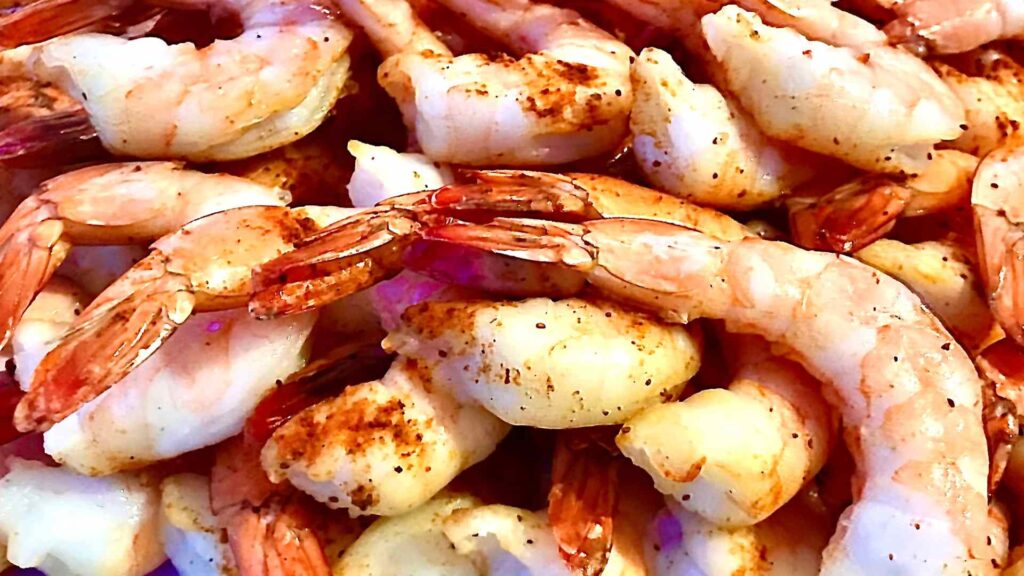
Small salad shrimp may have thin tail fans, while jumbo shrimp, prawns, and langoustine-style shellfish can have larger, harder segments. The species name on a menu is less useful than a photograph and measurements of an intact matching tail.
Boiling can leave shell flexible, grilling can dry it, and deep frying can make shell brittle and jagged. None of those preparations guarantees safe digestion, and a crunchy sound does not prove the fragments became harmless.
A dog that crushes a tail thoroughly may face less lodging risk than one that gulps several whole, but owners often cannot see what happened. Report the uncertainty instead of assuming chewing occurred because no shell remains on the floor.
Dog size matters, but a large dog is not immune to a sharp esophageal fragment or skewer. A small dog has less room for a bulky tail to pass, yet anatomy, prior surgery, swallowing disease, and the object’s shape also influence risk.
Do not cut up leftover tails and offer them as treats to prove that a previous one passed. Prevention is safer than repeating an exposure whose outcome depended partly on chance.
Choking and esophageal signs need fast action
A tail can lodge in the mouth, throat, or esophagus, particularly when swallowed whole. Sudden gagging, drooling, repeated swallowing, neck extension, regurgitation, coughing, panic, or inability to swallow deserves immediate veterinary contact.
The Merck Veterinary Manual esophageal foreign-body review explains that lodged objects can cause laceration, perforation, stricture, and aspiration pneumonia. Partial obstruction may still allow liquid to pass, so drinking does not rule it out.
Breathing trouble, blue or gray gums, collapse, or loss of consciousness is an emergency. Do not sweep blindly with fingers or push a visible object deeper into a frightened dog’s throat.
Do not induce vomiting for a rigid pointed tail unless a veterinarian directs it after considering the object and timing. The shell can scrape or lodge on the way back up.
Stomach and intestinal obstruction can appear later
A tail that reaches the stomach can still irritate, obstruct, or perforate farther along the gastrointestinal tract. The dog may look normal immediately after the raid while the object moves.
The American College of Veterinary Surgeons foreign-body guide notes that nondigestible objects may cause vomiting, appetite loss, abdominal pain, dehydration, diarrhea, perforation, peritonitis, or sepsis. Some pass, while others require endoscopy or surgery.
Call for repeated vomiting, inability to keep water down, abdominal pain, a swollen belly, refusal to eat, marked lethargy, straining, blood, or fever. Do not wait for a shell fragment to appear in stool when signs are worsening.
A clinic may recommend examination, imaging, endoscopy, serial monitoring, or home observation based on the exact case. Shell material is not always easy to evaluate from one home photograph or a single normal moment.
Raw shrimp adds a pathogen question
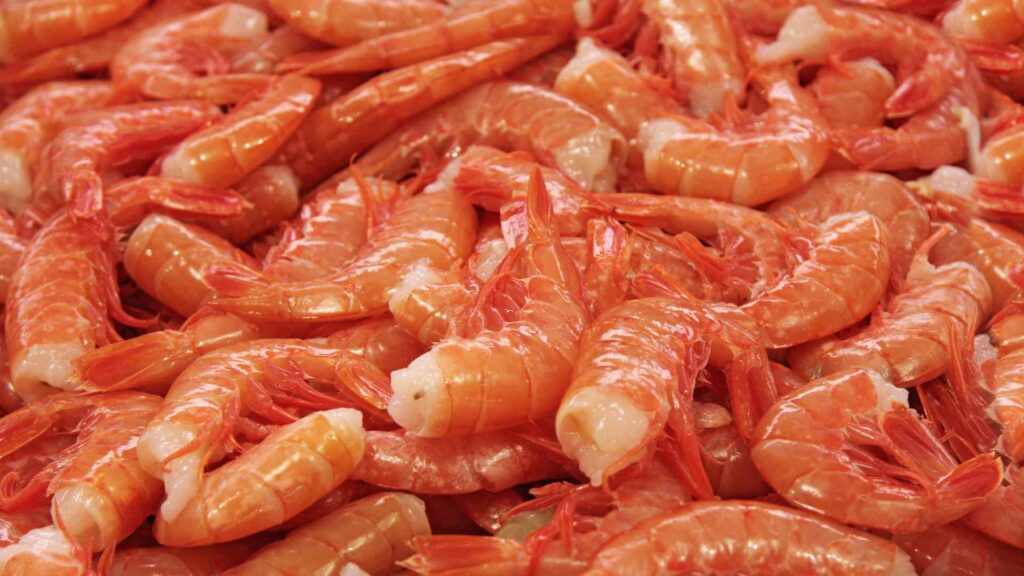
Raw shrimp and raw shells are not sterile and can contaminate mouths, hands, counters, floors, bowls, and other foods. A dog may remain well, develop gastrointestinal illness, or shed organisms that matter to vulnerable people.
The United States Department of Agriculture foodborne-illness guide identifies raw or undercooked shellfish as a pathogen source and recommends preventing cross-contamination. Wash hands and food-contact surfaces after a raw-seafood raid.
Repeated vomiting, severe or bloody diarrhea, fever, weakness, or dehydration needs veterinary advice. Puppies, seniors, pregnant dogs, and dogs with immune or gastrointestinal disease may need help sooner.
Cooking leftover raw tails after the dog mouthed the package does not make the household contamination event disappear. Discard unsafe food, clean the area, and keep children or immunocompromised people away during cleanup.
Butter, garlic, salt, and frying change the case
Restaurant shrimp tails may be coated in butter, garlic, onion, chile, salt, breading, cheese, or sauce. A tail from scampi, coconut shrimp, tempura, or a seafood boil is a mixed-food exposure.
Garlic and onion can damage canine red blood cells even after cooking. The Merck Veterinary Manual Allium review explains that anemia may be delayed for several days.
Large amounts of butter, oil, or fried breading can cause vomiting and diarrhea and may contribute to pancreatitis in susceptible dogs. Salt-heavy seafood-boil seasoning is a separate dose question, especially for a small dog or one on a restricted diet.
Our scallop guide explains why plain fully cooked shellfish muscle and hard shell material require different decisions. Remove all shell before sharing any veterinarian-approved seafood taste.
Our garlic-bread guide covers cooked garlic, delayed red blood cell injury, butter, salt, raw dough, and packaging. Use the same Allium caution when the tail came from garlic-heavy scampi.
Allergy is possible, but shell does not diagnose it
Shrimp is a crustacean and can trigger food allergy in an individual dog, although a first observed exposure does not predict who will react. Gastrointestinal upset after a tail may also come from shell irritation, seasoning, fat, spoilage, or infection.
Facial swelling, hives, breathing difficulty, collapse, or rapidly worsening vomiting is an emergency. Chronic itching or recurrent ear and skin problems requires a controlled veterinary diet trial, not repeated shrimp testing at home.
The Merck Veterinary Manual food-allergy review notes that itching is the most common skin sign and that anaphylaxis is less common. Do not label a breed “allergic to seafood” without diagnosis.
Trash, compost, skewers, and packaging increase risk
Shrimp tails often reach dogs through a trash bag, compost bin, takeout box, seafood tray, or dropped skewer. Those settings add spoiled food, mold, plastic film, foil, absorbent pads, sauce cups, bones, corn cobs, and other shells.
A skewer or sharp utensil is an emergency concern because it can penetrate tissue. Do not induce vomiting or pull at material from the mouth or rectum unless a veterinarian directs the action.
Count tails and every package component, then inspect an identical tray if available. A flexible seafood bag can also seal around the muzzle and cause suffocation.
Our sushi guide covers raw seafood, rice, soy sauce, wasabi, avocado, bones, skewers, and mixed ingredients. Use it when the missing tail came from a larger takeout raid.
What to do now
Secure the trash, photograph the remaining tails and meal, and estimate the maximum number swallowed. Note whether the dog chewed, gagged, vomited, coughed, or swallowed a skewer or wrapper.
Call promptly for several or large tails, a small dog, sharp fragments, any swallowing or breathing sign, repeated vomiting, pain, raw seafood in a vulnerable dog, strong seasoning, or missing objects. Follow the clinic’s monitoring window because physical complications can be delayed.
Do not give peroxide, salt, oil, bread, pumpkin, antacids, or human pain medicine unless a veterinary professional specifically directs it. Keep the dog calm and avoid food until the clinician advises whether imaging or endoscopy could be needed.
Prevention is easier than predicting passage
Remove shells before plating, place tails directly into a rigid lidded bin, and clear skewers and takeout containers before the dog enters the room. Do not leave a seafood tray or compost bucket within reach.
If plain shrimp meat is approved for the dog, use a tiny fully cooked unseasoned peeled piece with no tail, shell, vein, butter, garlic, salt, or sauce. The shell offers no benefit worth the physical risk.
Bottom line
A shrimp tail is a sharp physical hazard, not a calcium treat or classic poison. One tiny chewed tail may pass, but size, number, choking signs, esophageal injury, obstruction, perforation, raw pathogens, seasoning, allergy, trash, skewers, and packaging determine how urgently to call.