Can Cats Eat Fruit? Safe Bites, Dangerous Parts, and Better Choices
Some cats can have tiny pieces of certain ripe fruits, but fruit is optional, not a feline food group. Grapes and raisins call for caution, stone-fruit pits can choke or expose toxic kernels, citrus peel and oils are unsafe, and every juice, dessert, dried fruit, or fruit cup needs its own ingredient check.
Start with the exact fruit, part, and product
Take the food away, keep the package, and identify what the cat actually swallowed. Soft flesh, a whole pit, crushed seeds, peel, leaves, syrup, mold, alcohol, and plastic packaging create very different decisions.
- Tiny piece of known ripe flesh: usually monitor for drooling, vomiting, diarrhea, or appetite change.
- Grape, raisin, currant, unknown berry, pit, kernel, citrus peel, or plant material: call a veterinarian or pet poison service promptly.
- Juice, dessert, smoothie, jam, or fruit cup: read every ingredient and account for sweeteners, chocolate, alcohol, caffeine, dairy, and packaging.
- Breathing trouble, collapse, repeated vomiting, severe weakness, tremors, or seizures: seek urgent veterinary care.
Do not induce vomiting or give hydrogen peroxide, salt, oil, or milk. Save photos and labels so professional triage can be based on evidence rather than the fruit bowl’s remaining vibes.
Why cats do not need fruit
Cats are obligate carnivores with nutrient requirements that must be met by a diet containing animal tissues. Fruit can supply water, sugar, fiber, and human-friendly vitamins, but it cannot replace taurine, arachidonic acid, preformed vitamin A, or balanced feline protein.
The Merck Veterinary Manual overview of small-animal nutrition explains that cats can digest some plant-derived nutrients while remaining true carnivores. That distinction permits an occasional fruit taste without turning a fruit plate into lunch.
The Cornell Feline Health Center recommends complete and balanced food as the foundation and treats only occasionally. Its practical range keeps extras to no more than roughly 10 to 15 percent of daily calories.
Lower-risk fruit flesh for a healthy adult cat
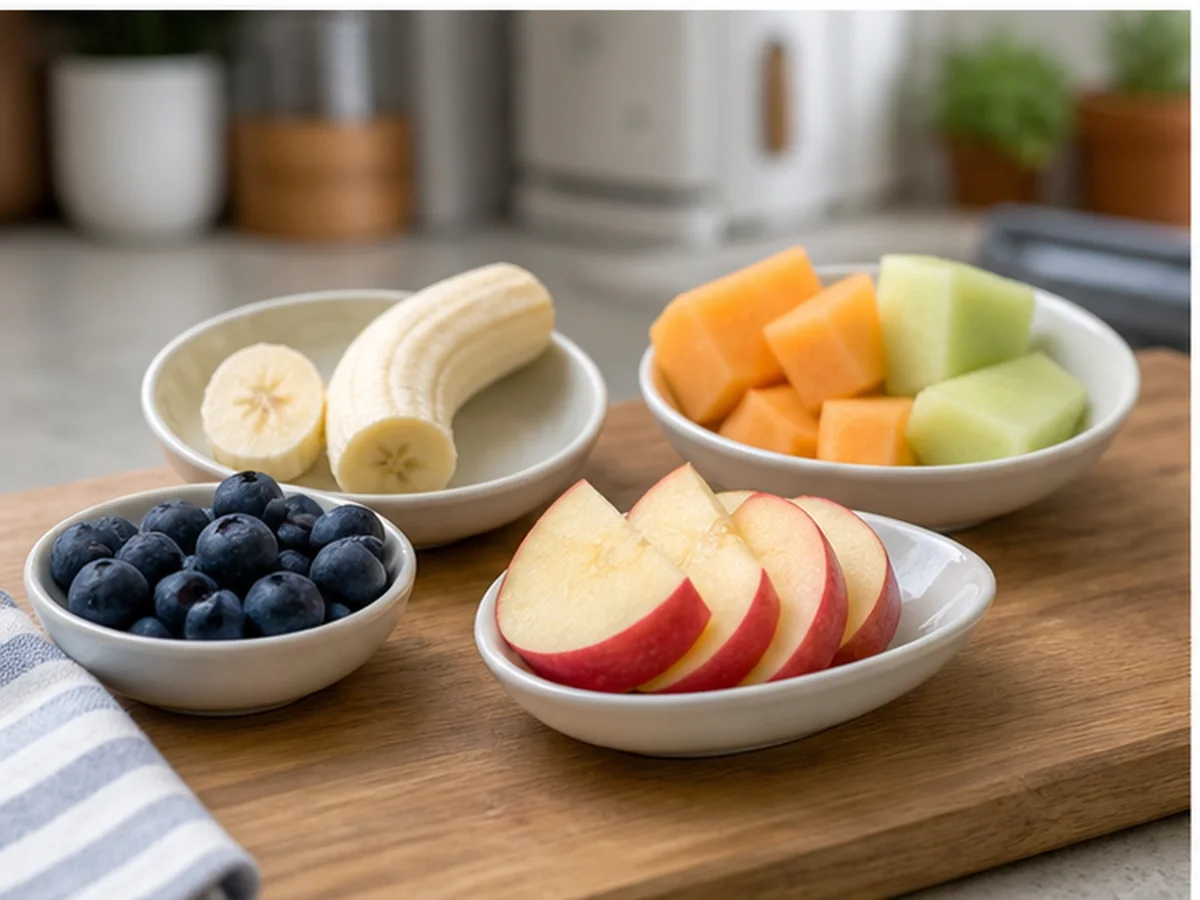
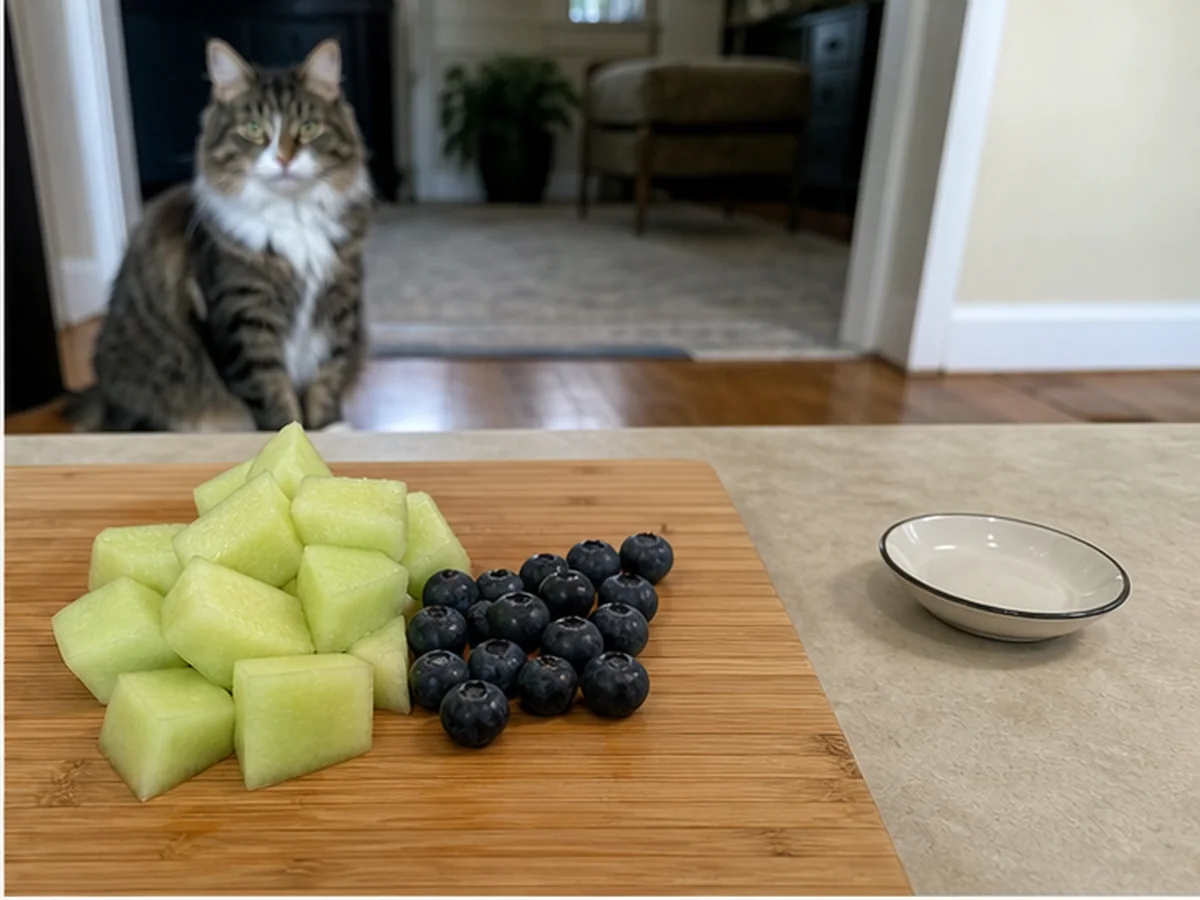
Small pieces of ripe apple without seeds or core, banana without peel, blueberry, strawberry without leaves, seedless watermelon without rind, cantaloupe without rind, mango without pit or peel, and pineapple flesh without rind or core are generally low-risk choices. None is required.
Wash produce, remove every hard or fibrous part, and cut one soft pea-sized piece. Introduce only one new food at a time so vomiting, diarrhea, or itching has a traceable suspect.
Our guides to apples, blueberries, and pineapple break down the parts and products for each fruit.
Grapes and raisins deserve a call
Grape and raisin kidney toxicity is well documented in dogs, while the feline evidence is limited and the risk cannot be confidently quantified. The lack of a clear cat threshold is not permission to experiment.
Call after a grape, raisin, or true currant exposure so a professional can assess the cat and product. Our grape guide for cats separates the known canine evidence from sensible feline caution.
Do not wait for vomiting, lethargy, appetite loss, thirst, or urination changes when the fruit is known. Save the package because baked goods and trail mixes add other hazards.
Stone fruits: flesh outside, hazards inside
Peach, plum, apricot, cherry, and nectarine flesh is different from the stone, kernel, leaves, and stems. The hard pit can choke or obstruct, while damaged kernels and some plant parts contain cyanogenic glycosides.
The Merck review of cyanide poisoning lists several Prunus species among cyanogenic plants. It does not provide a home safe-dose calculation for cats.
Call promptly after a whole pit, crushed stone, exposed kernel, or plant-material ingestion. Count pits before and after baking or canning projects, when an unattended stone can disappear quietly.
Citrus flesh, peel, and oil are not equivalent
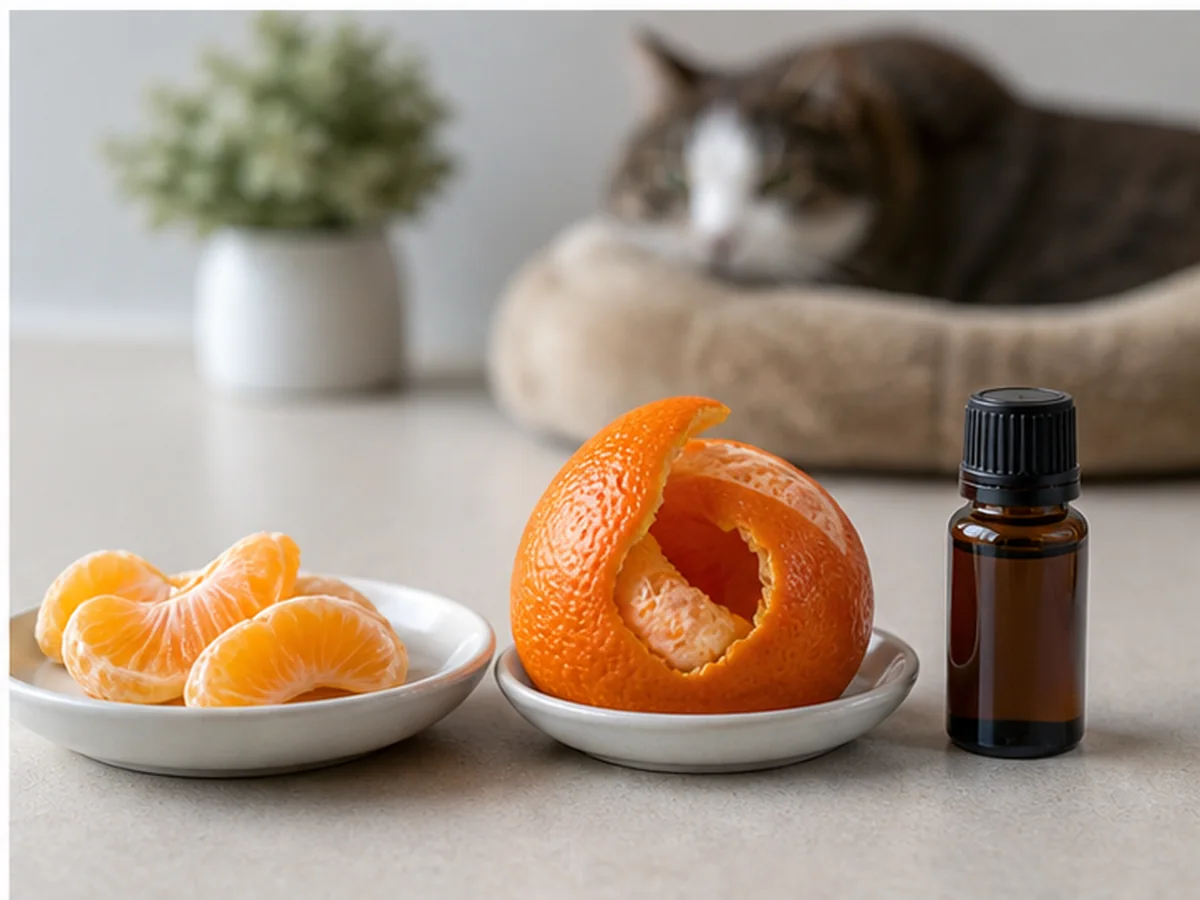
A lick of orange flesh is usually less concerning than zest, rind, leaves, stems, extract, cleaner, or essential oil. Peel concentrates aromatic compounds, and oil can be absorbed through skin, lungs, and the digestive tract.
Our orange guide covers fruit, juice, peel, tree parts, diffusers, and cleaners. Never apply citrus essential oil to a cat as fragrance, flea control, or a behavior deterrent.
Wild berries and mystery fruit
Do not let a cat eat fruit or berries from an unidentified plant, even when birds or wildlife eat them. Species, ripeness, seeds, leaves, pesticides, and regional lookalikes can change toxicity.
Photograph the plant, fruit, leaves, and growing location without delaying a call. Use a botanist, extension service, or poison-control identification resource rather than a crowd-sourced visual guess.
The ASPCA maintains a searchable toxic and non-toxic plant database, but an absent listing does not prove a mystery plant safe. Keep a sample away from pets and children when advised.
Peels, cores, rinds, seeds, and stems
Tough peels and rinds can scrape the mouth, lodge in the throat, or obstruct the intestine. Cores and large seeds add the same mechanical risk even when their chemistry is not the main concern.
Call for repeated vomiting, abdominal pain or swelling, refusal to eat, inability to keep water down, straining, reduced stool, or marked lethargy after a hard fruit part disappears. Do not pull stringy peel from the mouth or rectum because it may be anchored internally.
Fresh versus dried fruit
Drying removes water and concentrates sugar and calories into a chewy piece. Dried fruit can also contain preservatives, sweeteners, spices, chocolate, nuts, or several fruit species.
Raisins remain a call-now product, while large dried mango, pineapple, apple, or cranberry pieces can choke or stick to teeth. A product labeled cranberries may be sweetened and mixed with raisins.
Freeze-dried fruit is lighter but not calorie-free, and crisp chunks can be inhaled or swallowed dry. Regular cat treats are easier to portion and nutritionally more relevant.
Juice, smoothies, and fruit cups
Juice delivers acid and sugar quickly without intact fruit fiber, while smoothies may add yogurt, milk, protein powder, cocoa, caffeine, grapes, supplements, or sweeteners. Water remains the appropriate cat beverage.
Canned fruit and cups may sit in juice or syrup and come with sharp cans, pull tabs, plastic film, and spoons. The FDA’s pet-proofing guidance notes that food packaging can endanger animals.
Check every blend rather than relying on the largest fruit pictured on the front. A tropical cup can quietly contain grape juice, cherries, artificial flavors, or nonstandard sweeteners.
Jam, pie, cake, candy, and alcohol
Fruit desserts add sugar, butter, dairy, raw dough, chocolate, raisins, nuts, spices, alcohol extracts, and wrappers. Sugar-free products may contain sweeteners whose safety differs by species and concentration.
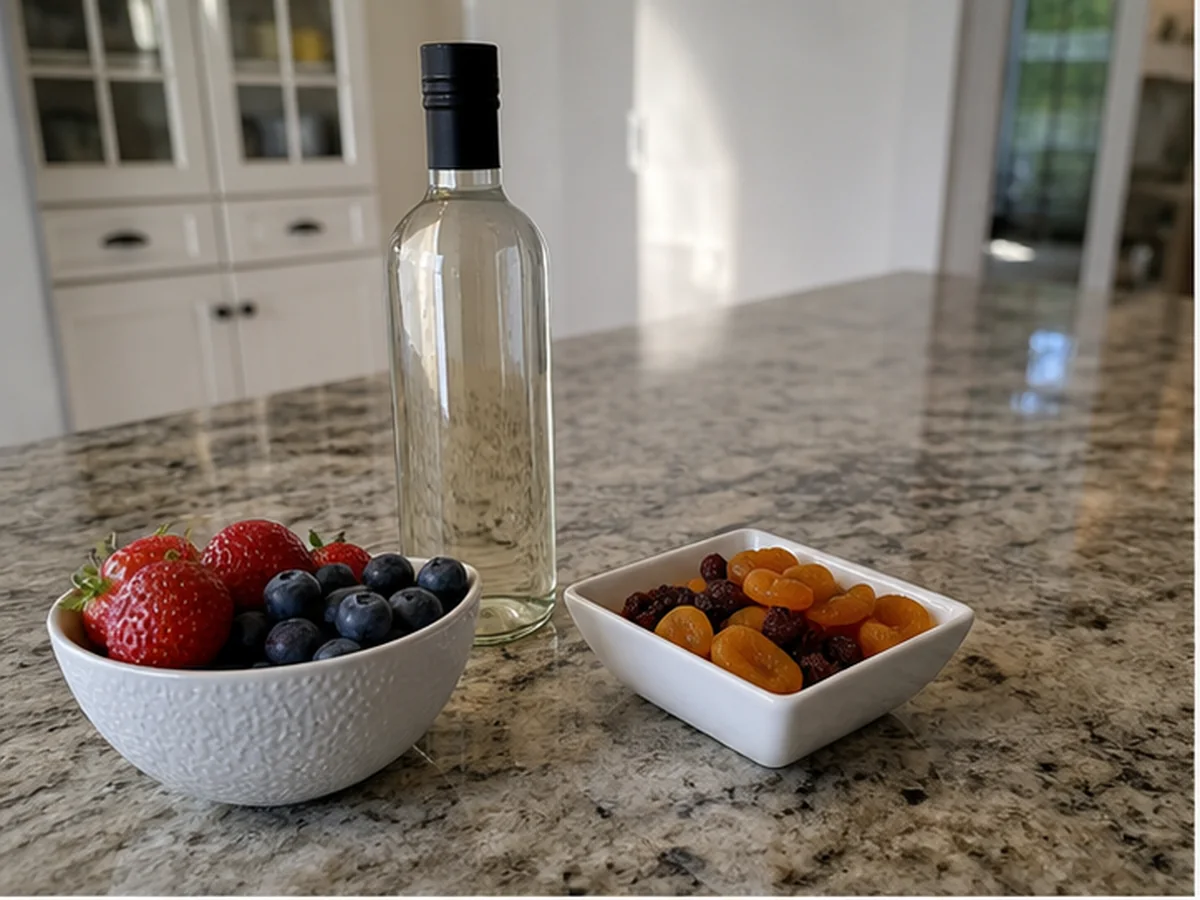
Fermented fruit, wine, liqueur, rum-soaked cake, and cocktails are alcohol exposures, not fruit servings. Cocktail picks, skewers, foil, and string introduce foreign-body risk.
Spoilage, mold, and fermentation
Discard fruit that is moldy, slimy, leaking, unexpectedly fizzy, or alcoholic-smelling. Trimming one visible mold spot does not reliably remove contamination or toxins from the surrounding food.
Store cut fruit according to food-safety directions and move scraps directly into a lidded bin. Fermenting compost can combine alcohol, mold, pits, coffee grounds, onion, and packaging in one extremely unhelpful buffet.
Cats who should skip fruit experiments
Kittens need complete growth food, while diabetic, overweight, gastrointestinally sensitive, or medically fragile cats have little reason to receive sugary extras. Cats on prescription or elimination diets should receive only approved treats.
Fruit is not a treatment for constipation, hairballs, urinary disease, dehydration, or vitamin deficiency. Persistent vomiting, stool changes, appetite loss, or weight loss deserves diagnosis.
What to tell the veterinary team
Report the fruit species, part, ripeness, product form, maximum amount, time, symptoms, and the cat’s medical conditions. Include every pit, skewer, wrapper, sweetener, supplement, and recipe ingredient that may be missing.
Photograph labels, plants, and remaining pieces, then keep a sample safely away from pets when advised. A clinician may recommend monitoring, examination, imaging, laboratory testing, or decontamination based on the actual hazard.
Do not assume one episode of vomiting returned every pit, peel, or piece of packaging. Continue tracking appetite, water, urine, stool, activity, breathing, and comfort for the period the veterinary team recommends.
When several pets had access, estimate the maximum each animal could have eaten rather than dividing the missing fruit evenly. Kitchen investigations rarely come with reliable witnesses, particularly when one suspect can jump onto the refrigerator and another specializes in moving evidence under furniture.
A practical fruit-serving checklist
- Confirm the exact fruit is known and the ripe flesh is considered low risk.
- Wash it and remove every pit, seed, core, rind, peel, leaf, stem, and skewer.
- Cut one soft pea-sized piece and serve it plain.
- Introduce one new food at a time and stop after any reaction.
- Count the calories among all daily extras.
Part of the regular complete ration is a more useful reward and requires no produce flowchart, seed removal, ripeness test, or emergency count of missing pits. Cats are excellent at enjoying a treat without knowing whether it contains antioxidants.
Frequently asked questions
Can kittens eat fruit?
Skip it during routine feeding because kittens need complete growth nutrition and have small airways, digestive tracts, and calorie budgets. A vet can advise after an accidental bite.
Can cats eat fruit every day?
There is no nutritional reason to offer it daily. Repeated fruit adds sugar and calories and may displace balanced food.
Which fruit is best for cats?
No fruit is necessary. If a healthy adult enjoys fruit, choose one tiny piece of known ripe, seedless, pitless, rindless flesh and confirm it fits the veterinary diet plan.
The bottom line
Some ripe fruit flesh is low risk in tiny portions, but pits, kernels, rinds, citrus oils, grapes, wild berries, mixed products, spoilage, and packaging change the answer. Identify the exact exposure first, call when uncertainty matters, and let complete cat food remain the real menu.