Can Cats Eat Scrambled Eggs? Plain Prep, Portions, and Add-Ins
Most healthy adult cats can eat a tiny amount of fully cooked, plain scrambled egg. Cook it until no liquid remains, let it cool, and serve without butter, oil, milk, cream, cheese, salt, onion, garlic, hot sauce, or breakfast meat.
A stolen forkful of plain egg is usually a portion question, not a poison emergency. Mixed restaurant eggs, raw batter, symptoms, or swallowed packaging deserve a closer look and sometimes a prompt veterinary call.
The safest scrambled egg for a cat
- Use a clean egg. Discard cracked, leaking, dirty, recalled, or bad-smelling eggs.
- Beat it plain. Add no milk, cream, salt, seasoning, cheese, or sauce.
- Cook it through. Stir in a clean nonstick pan until the white and yolk are firm with no runny spots.
- Cool it. Hot egg can burn the mouth, so wait before serving.
- Cut a tiny portion. Start around a pea-size bite for a healthy adult cat.
- Store the rest promptly. Refrigerate in a clean covered container rather than leaving it beside the pan.
If your pan requires fat, cook the cat’s portion in a clean dry pan first, then prepare your own breakfast. Separating one teaspoon before the seasoning lands is easier than trying to rinse garlic butter off afterward.

Why cooked egg is safer than raw egg
Fresh eggs can contain Salmonella even when the shell looks clean and unbroken. The FDA advises cooking eggs until both yolk and white are firm and cooking egg dishes thoroughly.
A soft scramble with glossy liquid patches is still undercooked. For the cat’s portion, keep stirring until the curds are set, then move them to a clean plate so they do not pick up raw residue from the mixing bowl.
Cooking also denatures avidin in raw egg white, avoiding the biotin-binding concern associated with repeated large raw-white intake. The practical reason to cook, however, is immediate food safety rather than fear that one stolen lick created a vitamin deficiency.
For a full comparison of yolks, whites, shells, raw forms, and cooked methods, see our cat-and-eggs guide. The short version is refreshingly plain: firm, unseasoned egg wins.
How much scrambled egg can a cat eat?
There is no universal feline serving because cats differ in size, energy needs, health, and the calories already supplied by treats. One large egg contains far more food than a small cat needs as an extra.
Begin with a pea-size piece rather than a spoonful. If it causes vomiting, diarrhea, gas, itching, or an appetite change, stop serving it and contact your veterinarian if symptoms persist or are severe.
Treats should remain a small part of the day so they do not dilute essential nutrients. The FDA explains the “complete and balanced” label statement, which is what you want on a food intended to supply the main diet.
Egg is nourishing but not complete cat food by itself. It cannot replace the precise balance of taurine, fatty acids, vitamins, minerals, protein, fat, and energy formulated for a cat’s life stage.
Butter, oil, and pan spray
A trace of cooking fat is not a classic feline poison, but it adds calories and may trigger digestive upset in a sensitive cat. Butter also contains dairy components, and many adult cats do not tolerate lactose well.
Flavored butter, infused oil, and pan sprays may contain garlic, onion, herbs, chili, artificial flavor, or more sodium than expected. A label that says “natural flavor” does not tell you enough to make it the cat’s regular breakfast.
Nonstick cookware lets you make a dry-pan portion with less fuss. Do not serve burned residue, and keep the cat away from a hot stove, skillet, splattering fat, and cooling pan.
Milk, cream, and cheese
Adding milk does not make scrambled egg fluffier in a way your cat needs. Lactose can cause gas, loose stool, or diarrhea, while cream and cheese add fat, salt, and calories.
Some cats tolerate a tiny amount of dairy, but tolerance is individual and does not make dairy nutritionally necessary. Cats with pancreatitis history, obesity, heart disease, kidney disease, or a prescribed diet need veterinary guidance before rich extras.
Cheese blends may also contain onion, garlic, chive, jalapeño, smoke flavor, or mold. A plain egg avoids turning one simple ingredient into a label-reading obstacle course.
Onion, garlic, chives, and seasoning blends
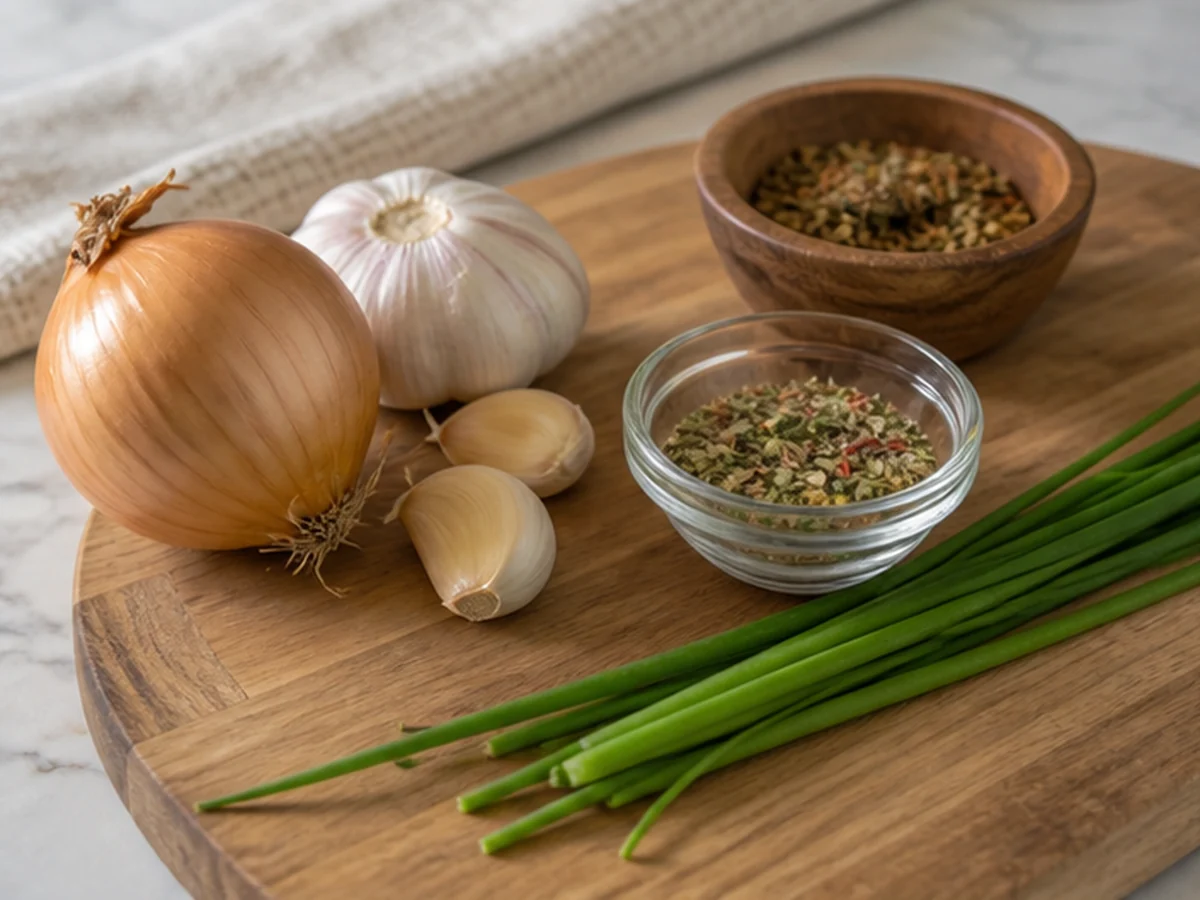
Onion, garlic, leek, shallot, and chive can damage feline red blood cells. The Merck Veterinary Manual states that raw, cooked, and concentrated forms can cause Allium toxicosis in cats.
That includes onion powder and garlic powder, which disappear neatly into seasoning salt, bouillon, gravy mix, and restaurant eggs. Do not assume the amount is harmless because you cannot see pieces.
Possible signs include vomiting, weakness, pale gums, rapid breathing, fast heart rate, dark urine, or reduced appetite. Effects can be delayed, and repeated small exposures may matter, so call after a known exposure rather than waiting for pale gums.
Restaurant scrambles, omelets, and breakfast burritos often use pre-seasoned liquid egg or a shared grill. If the ingredient list is unavailable, the safest answer is to keep the cat out of the takeout box.
Breakfast meats and other add-ins
Bacon, sausage, ham, salami, pepperoni, smoked salmon, and deli turkey tend to be salty, fatty, spiced, or cured. Some contain onion or garlic, and casings, strings, absorbent pads, skewers, and wrappers create physical hazards.
A tiny meat crumb does not automatically equal poisoning, but a plateful of grease and cured meat can cause vomiting or diarrhea and may be more concerning for an ill cat. Our salami guide explains salt, alliums, casings, and storage issues that apply across the deli drawer.
Vegetable add-ins also change the answer. Spinach, tomato, mushroom, avocado, hot pepper, and potato each carry their own preparation and health considerations, while onions and garlic are the immediate ingredients to exclude.
Sauces, condiments, and toppings
Ketchup, salsa, hot sauce, hollandaise, pesto, gravy, barbecue sauce, and seasoning packets are complex products. They may include alliums, alcohol, excessive sodium, chili, dairy, fat, sugar, xylitol, or concentrated spices.
Hot pepper can cause mouth and gastrointestinal irritation even when it is not a systemic feline toxin. Rich sauces can also provoke digestive upset, so “not poisonous” is too low a bar for a planned treat.
Pizza-style scrambled eggs add cheese, cured meat, tomato sauce, and alliums in one scoop. Our pizza guide is useful whenever a simple carb or protein arrives under a committee of toppings.
Powdered eggs, liquid eggs, and egg substitutes
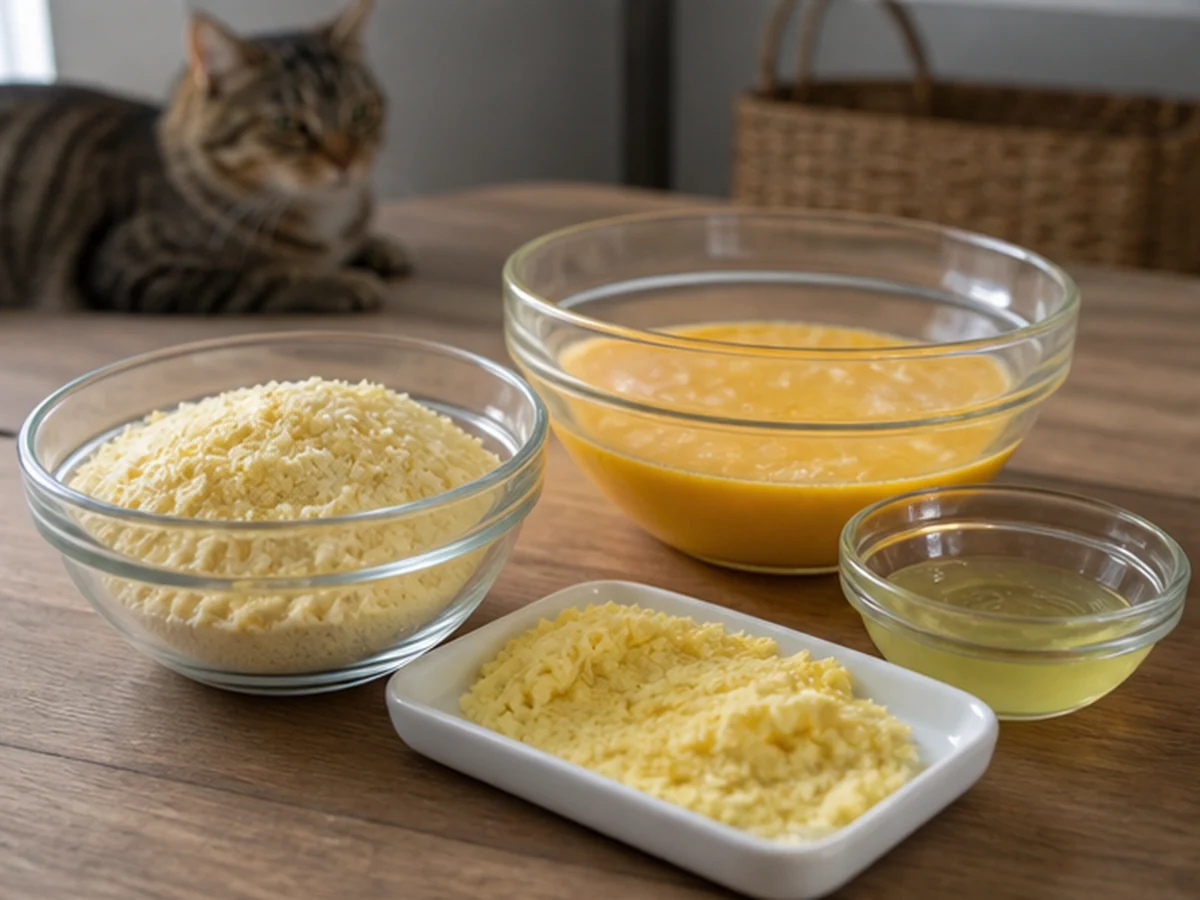
Commercial liquid egg may be pasteurized, but check whether it is plain whole egg, whites, a seasoned food-service mix, or a plant-based substitute. Salt, preservatives, gums, flavoring, dairy, onion, and garlic may be present.
Powdered egg must be prepared according to its label, stored dry before mixing, and kept away from a cat that might inhale powder. A reconstituted product still needs full cooking unless its instructions and processing clearly establish otherwise.
Plant-based “egg” products are multi-ingredient foods, not eggs without cholesterol. Read every ingredient and skip products with alliums, high sodium, or unfamiliar additives rather than assuming the marketing name answers a feline safety question.
Who should skip scrambled egg or ask first
Kittens need growth food, not a breakfast buffet, and seniors may have medical restrictions. Pregnant or nursing cats and cats with diabetes, kidney disease, heart disease, pancreatitis, obesity, inflammatory bowel disease, food allergy, or weakened immunity need individualized advice.
Egg is also a common protein used in elimination-diet decisions, so an unplanned bite can spoil a diagnostic trial. Cats eating prescription diets should receive only treats approved by the prescribing clinic.
Cornell’s feline feeding guidance emphasizes complete diets and veterinary help with homemade recipes. It also notes that obesity is a major nutrition-related problem in cats, which makes portion control more than fussiness.
Storage and leftovers
Refrigerate cooked egg promptly in a shallow, covered container. The FDA recommends using refrigerated cooked egg dishes within three to four days and hard-cooked eggs within one week.
Discard egg that was left at room temperature for more than two hours, or more than one hour above 90°F. Do not rely on smell alone because dangerous bacteria do not always announce themselves.
Reheat leftovers thoroughly for human use, but a cat treat can simply be a newly cooked cooled piece. For a make-ahead option, our boiled egg guide covers shell handling and fridge timing.
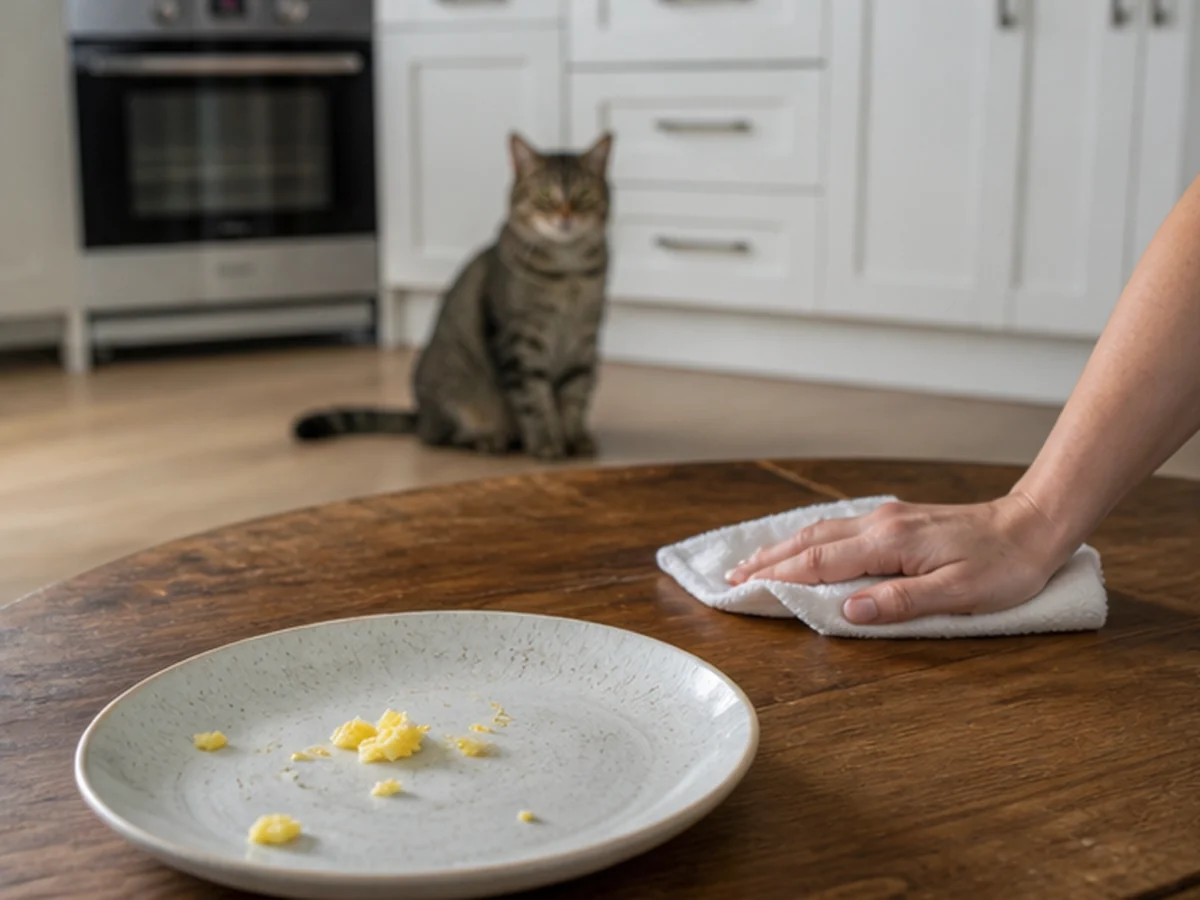
What to do after a stolen scramble
- Identify the recipe. List egg, fats, dairy, seasonings, meat, vegetables, sauces, and supplements.
- Estimate the most that could be missing. Note when it happened and your cat’s weight and health conditions.
- Check the surroundings. Account for foil, plastic wrap, carton, shell, string, toothpicks, skewers, and utensils.
- Call for toxic ingredients or symptoms. Contact your veterinarian, emergency clinic, or animal poison service.
- Skip home remedies. Do not induce vomiting or give milk, oil, salt, charcoal, or hydrogen peroxide without veterinary instruction.
Seek emergency care for trouble breathing, collapse, seizures, severe weakness, pale or blue gums, repeated vomiting, a swollen or painful belly, inability to swallow, or suspected obstruction. Call ahead and bring the packaging or recipe.
Frequently asked questions
Can cats eat scrambled eggs every day?
Daily egg can add substantial calories and displace complete cat food, so routine use should be discussed with your veterinarian. A tiny occasional taste is a different proposition from a standing breakfast order.
Can cats eat runny scrambled eggs?
Choose fully cooked egg with no liquid white or yolk remaining. Runny egg is undercooked and retains more pathogen risk than firm egg.
Can kittens eat scrambled egg?
A kitten’s growth diet needs priority, and extras fill a very small stomach quickly. Ask the kitten’s veterinarian before offering egg and keep any approved piece tiny and fully cooked.
What if my cat is allergic to chicken?
Chicken and egg are distinct ingredients, but food-allergy diagnosis is individualized and cross-assumptions are unreliable. Do not test egg during an elimination trial unless the supervising veterinarian approves it.
Bottom line
A tiny bite of firm, plain scrambled egg can be a reasonable occasional treat for many healthy adult cats. Keep the pan free of fat, dairy, salt, alliums, meats, and sauces, then let complete cat food return to its regular starring role.