Can Cats Drink Pineapple Juice? Fresh, Canned, and Mixed Products
A small lick of plain pineapple juice is generally low risk for a healthy adult cat, but it offers no useful feline nutrition. Sugar, acidity, bromelain, canned syrup, sweeteners, alcohol, coconut mixers, supplements, spoiled containers, sharp lids, and missing packaging determine whether a tropical spill stays simple.
Triage the tropical crime scene
Move the drink away and identify fresh juice, canned liquid, syrup, concentrate, smoothie, cocktail, fermented beverage, marinade, or supplement. Save labels and recipes, estimate quantity and time, then account for caps, straws, foil seals, pull tabs, cans, and glass.
- One lick of plain pasteurized juice: make water available and monitor for drooling or digestive upset.
- A substantial drink, concentrate, supplement, or cat with diabetes or bowel disease: call for tailored advice.
- Alcohol, chocolate, caffeine, cannabis, medication, unknown sweetener, or a missing sharp object: seek prompt veterinary help.
- Collapse, repeated vomiting, breathing difficulty, tremors, seizures, or severe weakness: use emergency care.
Do not induce vomiting or force liquids. If juice covers fur, remove it with a damp cloth and discourage grooming until the coat is clean and dry.
Pineapple flesh and pineapple juice differ
Juicing removes much of the fruit’s fiber and makes natural sugars easier to consume quickly. A tablespoon of liquid disappears faster than an equivalent amount of chewy flesh.
Our pineapple guide explains rind, crown, core, and fruit preparation. Juice avoids some hard plant parts but creates a concentrated portion problem.
A taste is not a health supplement
Pineapple contains human-interest nutrients and enzymes, yet cats obtain required nutrition from an appropriately formulated diet. Drinking fruit extract does not improve immunity, coat, digestion, or dental health in a proven feline way.
The FDA complete-and-balanced food explainer describes the nutritional adequacy statement to look for on staple diets. Juice is missing that framework and should remain outside routine feeding.
Acid can irritate mouth and stomach
Pineapple juice is acidic and can prompt drooling, lip smacking, nausea, vomiting, or diarrhea in a sensitive cat. Mouth sores or dental disease may make contact uncomfortable.
Do not add baking soda, milk, oil, or another household ingredient to neutralize it. Rinse a coated chin with plain water on a cloth and let the clinic guide anything more.
Bromelain is not a DIY feline medication
Pineapple contains bromelain enzymes, with concentrations differing among stem, flesh, juice, and manufactured supplements. Claims about inflammation or digestion do not establish an effective and safe dose for a cat.
Concentrated bromelain products may have their own precautions and interactions. Never substitute a human capsule or pineapple shot for diagnosed pain control, digestive treatment, or postoperative care.
Fresh juice and food hygiene
Fresh-squeezed juice can be contaminated through unwashed rind, hands, cutting boards, juicers, or raw-food splashes. Wash the whole fruit before cutting and sanitize equipment appropriately afterward.
The FDA produce handling guidance advises rinsing under running water and keeping produce separate from raw meat. Household soap should not be applied to fruit that will be eaten.
Canned juice versus heavy syrup
Liquid around canned pineapple may be 100 percent juice, juice from concentrate, light syrup, or heavy syrup. The sweeter syrups provide more added sugar and are especially unsuitable for a diabetic or overweight cat.
Draining a chunk does not remove all syrup, and offering the can liquid as a drink is unnecessary. Check whether the sharp lid, pull ring, or inner coating was damaged during a raid.
Concentrate, nectar, and powdered drink mix
Concentrated juice delivers more acid and sugar per lick before dilution. Pineapple nectar may include sweetener, other fruit, stabilizers, flavor, or preservatives, while powdered mixes can add colors and unfamiliar additives.
A dry powder spill may irritate eyes or airways and will later be groomed from paws. Move the cat, ventilate safely, wipe the coat, and call for persistent coughing, squinting, or breathing changes.
No-added-sugar is not the same as sugar-free
A “no added sugar” juice can still contain natural fruit sugars, while a sugar-free drink may use high-intensity sweeteners or sugar alcohols. Those labels describe different formulations.
The FDA xylitol advisory documents severe canine risk; feline evidence is not equivalent. Call with the complete panel after a cat drinks a sugar-free mix, because other ingredients and the swallowed amount still require judgment.
Piña coladas and rum drinks
Alcohol requires urgent attention, while coconut cream adds substantial fat and calories. Premixed cocktails may also contain sweeteners, dairy, flavor concentrates, or higher alcohol levels than expected.
Contact a veterinarian or animal poison service with the brand, proof, volume, time, and cat’s weight. Sleepiness, wobbliness, vomiting, low body temperature, slow breathing, or collapse can signal alcohol poisoning.
Coconut-pineapple smoothies
Nonalcoholic smoothies may include coconut milk, yogurt, ice cream, nut products, protein powder, supplements, or sweetened condensed milk. Café names rarely list all components.
Check our guides to ice cream, Greek yogurt, and fruit for common additions. Keep the receipt or recipe for the veterinary call.
Pineapple juice in meat marinades
Marinades can contain garlic, onion, soy sauce, salt, chili, alcohol, sweetener, and raw-meat juices. Bromelain tenderizes protein, but it does not make the seasoned liquid clean or safe for a cat.
Never offer used marinade, and discard it where pets cannot reach. A lick from raw poultry or pork marinade adds bacterial exposure alongside seasoning concerns.
Gummies, wellness shots, and supplements
Pineapple gummies can contain sugar, sweeteners, vitamins, cannabis, medication, or wrappers. Wellness shots may concentrate ginger, turmeric, pepper, cayenne, vitamins, caffeine, or botanical extracts.
Do not calculate safety from the pineapple percentage alone. Save both the ingredient and supplement-facts panels, and call after a meaningful or uncertain exposure.
Diabetes, obesity, and therapeutic food
Juice is a poor fit for diabetic and weight-loss plans because liquid carbohydrate is easy to consume and hard to portion by eye. Kidney, urinary, allergy, and gastrointestinal diets also depend on predictable ingredients.
Ask before using pineapple liquid to hide medicine or encourage appetite. If a cat stops eating, the underlying nausea, pain, stress, or disease deserves attention rather than a sweeter topper.
Kittens should not practice with juice
A kitten needs complete growth nutrition and has little capacity for acidic sugary extras. Small body size also makes a missing cap, straw piece, or pull tab proportionally more dangerous.
For an orphan, pineapple juice is never a milk replacement. Obtain commercial kitten milk replacer and feeding guidance from a veterinarian or qualified rescue.
Spoilage, fermentation, and refrigerator rules
Follow the use-after-opening label, refrigerate promptly, and discard juice that fizzes unexpectedly, smells alcoholic, grows mold, leaks, or sat warm too long. Fermentation can create alcohol even when the original carton contained none.
Mention storage history if vomiting, diarrhea, fever, weakness, or appetite loss develops. Keep the lot code if a product recall could be relevant.
Water wins the beverage comparison
Fresh clean water hydrates without acidity, fruit sugar, or formulation surprises. Some cats prefer wide ceramic or stainless-steel bowls placed away from food and litter.
The Cornell feline feeding resource supports complete food as the dietary foundation. Sudden thirst, drinking avoidance, or urine changes should trigger a health conversation rather than juice experimentation.
Canned-food edges and kitchen cuts
A cat licking an opened can can slice the tongue or lip even when the contents are harmless. Cover or transfer leftovers immediately and put lids where they cannot be nosed from the bin.
Drooling, blood, mouth pawing, sudden food refusal, or repeated swallowing after contact needs examination. Do not probe a painful mouth with bare fingers.
Pineapple vinegar and fermented products
Pineapple vinegar is much more acidic than juice, and tepache or other fermented drinks may contain alcohol. Homemade batches have variable strength and may keep fermenting during storage.
Save the recipe, fermentation time, and estimated amount after an exposure. Call promptly for concentrated vinegar, any alcohol, or neurologic signs.
Do not use juice to tenderize cat meat
Soaking meat in pineapple juice changes texture but does not create a balanced homemade diet or remove bacterial hazards. Marinades also spread raw-meat contamination around sinks, boards, and bowls.
A home-prepared feline diet needs formulation by a qualified veterinary nutrition professional. Random meat, fruit enzyme, and supplement combinations can produce serious deficiencies or excesses.
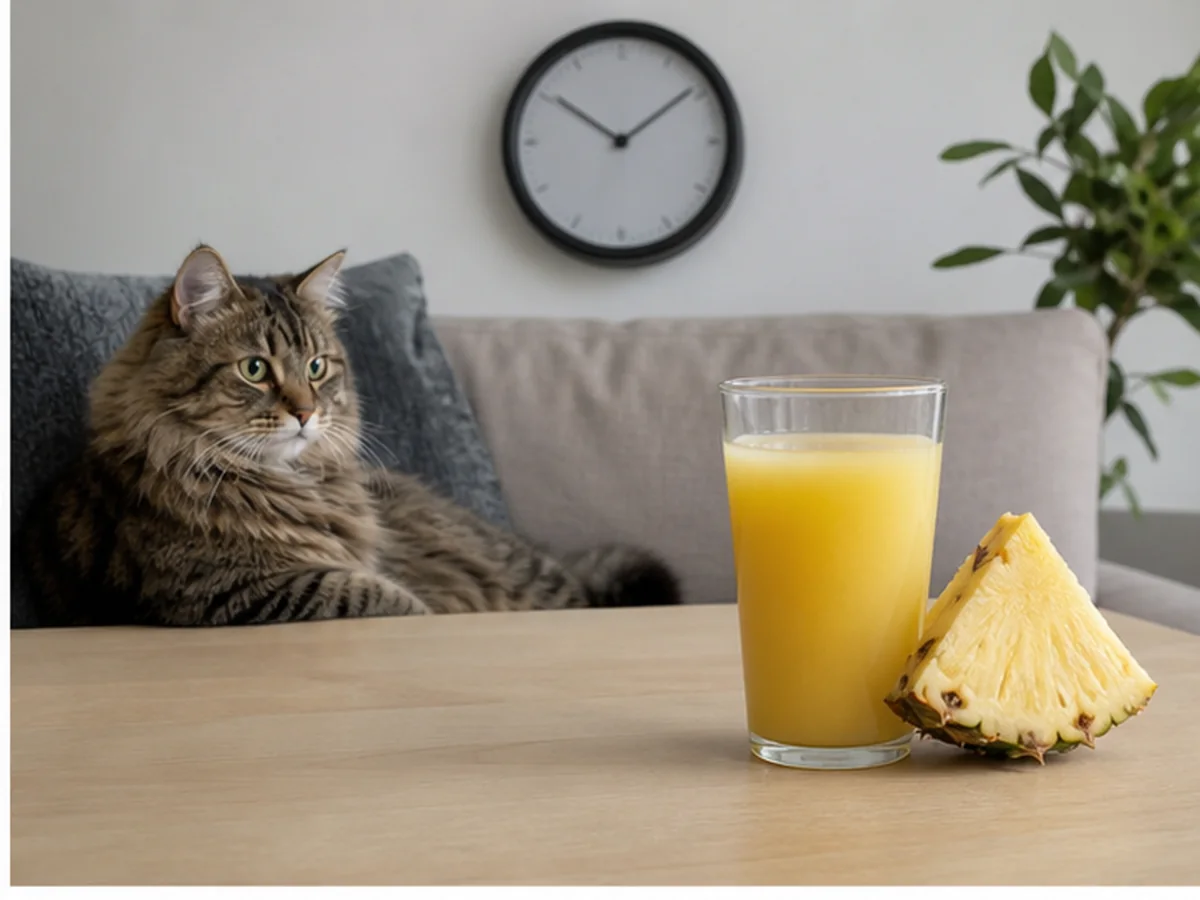
Observe the cat, not the clock alone
After a tiny plain taste, monitor swallowing, appetite, water intake, comfort, energy, and stool rather than staring only at elapsed hours. Product additives can have different timelines.
Call when vomiting repeats, diarrhea persists, the abdomen seems sore, food is refused, or behavior is clearly abnormal. Kittens and chronically ill cats merit an earlier threshold.
Avoid turning appetite loss into a juice habit
A cat refusing ordinary meals may still lap a sweet liquid, but that does not show recovery. Dental pain, nausea, kidney disease, infection, stress, and many other conditions can suppress normal eating.
Seek advice promptly when meaningful food intake stops, particularly for a kitten, diabetic animal, or cat already acting ill. Sustained under-eating can create additional serious problems in this species.
Frequently asked questions
Can cats drink the juice from canned pineapple?
A lick is commonly low risk, but canned liquid may be sugary syrup and can contact sharp lids. Do not offer it intentionally.
Is pineapple juice good for hairballs?
There is no dependable evidence that it treats feline hairballs. Repeated retching may be vomiting or coughing and deserves correct identification.
What should I monitor after a tiny taste?
Watch normal swallowing, breathing, appetite, comfort, and litter-box use. Call for repeated vomiting, persistent diarrhea, pain, marked lethargy, or any risky co-ingredient.
The bottom line
Plain pineapple juice in a tiny accidental amount is generally a monitoring situation, but it is acidic, sugary, and unnecessary. Concentrates, syrup, alcohol, supplements, marinade, spoilage, symptoms, and sharp or missing packaging are the details that change the plan.