Can Cats Eat Almond Butter? Plain Jars, Sweeteners, Fat, and Portions
A tiny lick of plain almond butter is unlikely to poison most healthy adult cats, but it is fatty, calorie-dense, sticky, and nutritionally unnecessary. Check sweeteners, salt, chocolate, spices, added oils, and missing packaging before deciding that a stolen spoon scrape is simple.
Plain almond butter is the narrow low-risk lane
Commercial butter made only from roasted sweet almonds is not recognized as a common acute feline toxin. That limited reassurance applies to a very small taste, not a spoonful, daily supplement, flavored spread, or homemade mystery jar.
Cats are small enough that a human smear can become a substantial snack. A lick from the tip of a clean spoon is already a complete taste test, and there is no health reason to work up to a larger portion.
If the cat has never eaten almond, watch for vomiting, diarrhea, itching, facial swelling, coughing, or unusual behavior. Most food reactions are not immediate anaphylaxis, but breathing difficulty, collapse, or rapidly developing swelling is an emergency.
Our whole-almond guide for cats covers hard-nut choking, coatings, mold, and shell debris. Grinding changes the texture but does not make the fat and calories disappear.
Read the jar by risk, not by marketing claim
| Jar style | What to inspect | Practical call |
|---|---|---|
| Almonds only | Smoothness, freshness, and amount | One tiny accidental taste is usually a monitor-at-home event. |
| Salted | Sodium per serving and quantity eaten | Do not use routinely, especially with kidney or heart restrictions. |
| Sweetened | Sugar, syrups, honey, and sugar substitutes | Skip as a cat treat and save the label after exposure. |
| Chocolate almond spread | Cocoa type and concentration | Treat it as a chocolate question and contact veterinary help. |
| Protein or energy spread | Caffeine, supplements, protein additives, and sweeteners | Do not offer; call when a meaningful amount is missing. |
| Spiced or flavored | Cinnamon, vanilla, coffee, maple, coconut, and mixed nuts | Each added ingredient needs its own assessment. |
| Homemade | Nut type, sanitation, salt, oil, and storage date | Uncertainty is higher without a printed formula. |
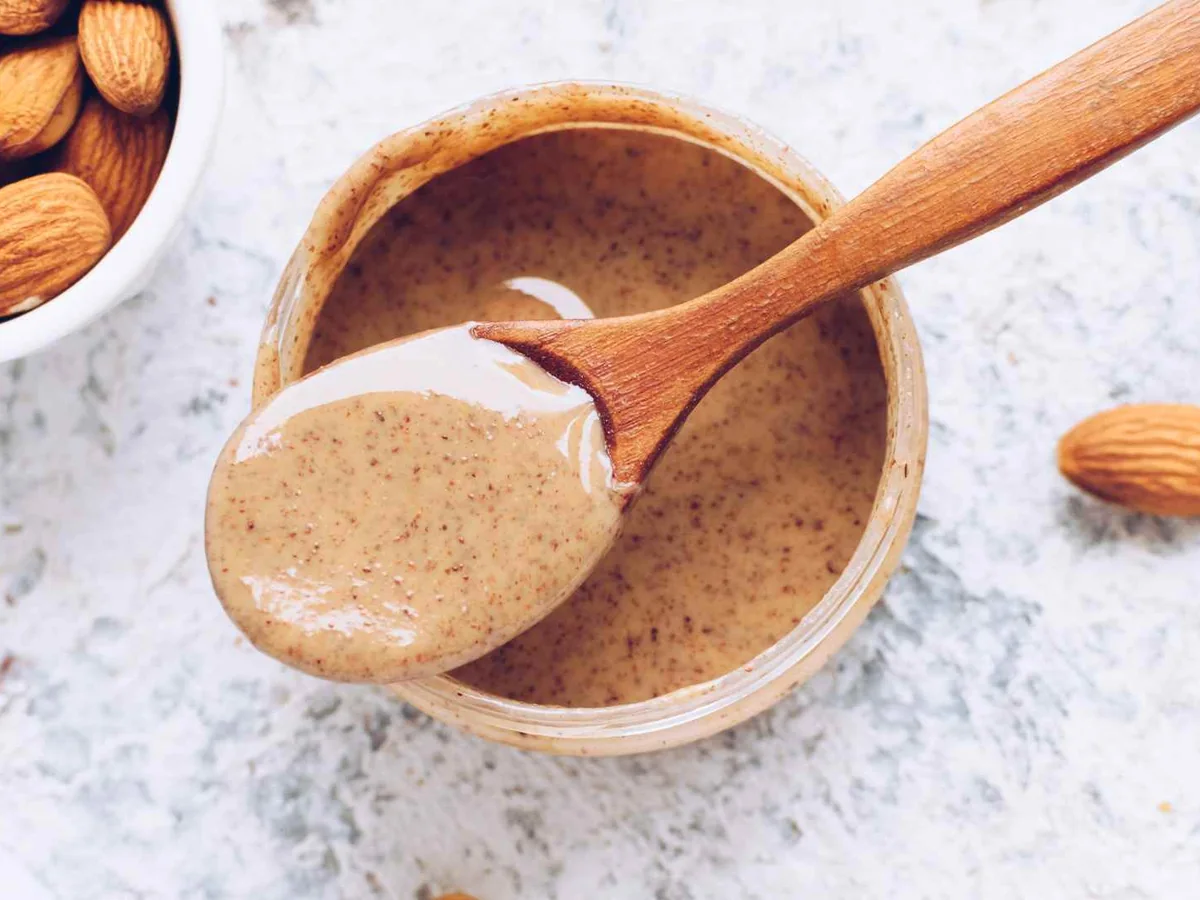
“Natural” can describe almond butter with salt, palm oil, cane sugar, flavor, and stabilizers. “No added sugar” may still coexist with alternative sweeteners or other supplements.
Photograph the ingredient list, Nutrition Facts, lot information, and front flavor name. Online formulas and old pantry jars may not match the current product, so use the package the cat actually reached.
The calorie problem hides in a small spoon
Nut butter concentrates the energy of many almonds into an easy-to-lick paste. Air does not fluff it, water does not dilute it, and the cat’s hopeful expression does not resize the serving.
Extra calories can quietly interfere with weight management, especially when several family members offer tastes. Cornell identifies obesity as a major feline nutrition problem and recommends keeping treats occasional in its cat-feeding guidance.
Almond butter is also high in fat. A small exposure may cause nothing, while a larger serving can lead to nausea, vomiting, loose stool, reduced appetite, or abdominal discomfort.
The ASPCA groups almonds with other fatty nuts that can provoke vomiting or diarrhea and potentially contribute to pancreatitis in some pets. That supports restraint without claiming every stolen lick produces pancreatic disease.
It is inaccurate to state that one fatty bite guarantees pancreatitis. It is accurate to say that rich food is a poor experiment for a cat with pancreatitis history or chronic gastrointestinal disease.
Why protein on the label is not a feline nutrition plan
Almond butter contains plant protein, but cats require a complete pattern of animal-derived and supplemented nutrients. One attractive protein number does not show that the amino acids, minerals, fatty acids, and vitamins meet feline needs.
The FDA explains that complete pet food must meet a nutrient profile or pass an appropriate feeding trial. Human almond butter makes no such claim for cats.
Do not use nut butter to replace meat, increase protein in a homemade diet, or “balance” a picky eater. A veterinary nutrition professional can formulate food when a medical or homemade plan truly requires it.
Sticky texture creates its own problem
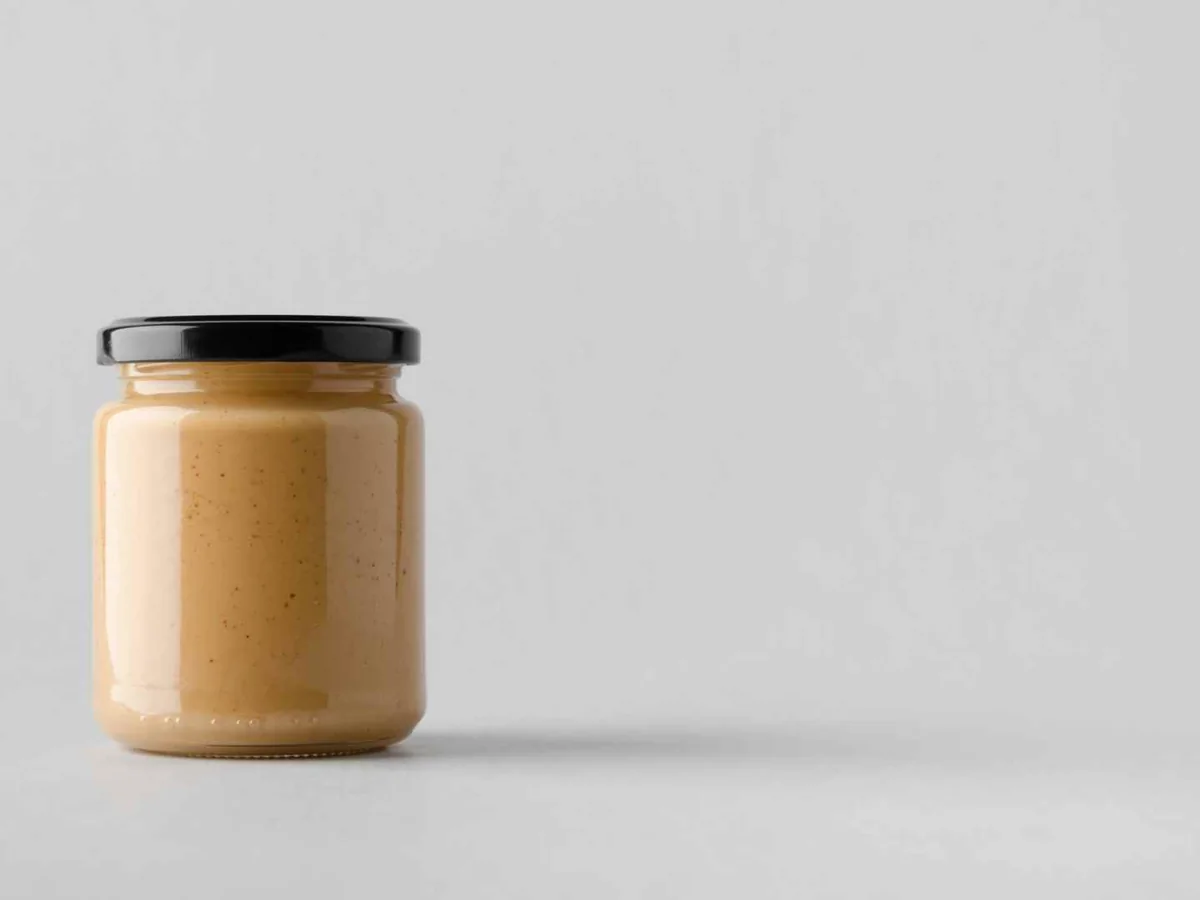
A thick glob can coat the tongue and roof of the mouth, causing frantic licking, pawing, coughing, or gagging. It can be particularly difficult for kittens, flat-faced cats, dental patients, and animals with swallowing disorders.
Never offer a loaded spoon or let a cat push its face into an open jar. If almond butter is used with veterinary approval for medication, spread only a paper-thin amount on a shallow dish and confirm the full dose was swallowed.
Do not force water into the mouth of a gagging cat and do not sweep blindly with a finger. Breathing effort, blue-gray gums, collapse, or an inability to clear the mouth needs emergency care.
Oil separation is normal, but spills matter
Natural almond butter often separates into a dense paste under a layer of oil. That oil is part of the food, not evidence that the jar is spoiled, but it can turn a small countertop spill into a very rich lick.
Stir according to package directions and store the product as labeled. Discard it when it smells rancid, shows mold, has a damaged seal, or has been contaminated by a used spoon.
Do not pour separated oil over cat food. The flavor may encourage overeating while adding calories and digestive risk without making the meal more complete.
Sugar-free wording needs cat-specific care
Xylitol can cause profound hypoglycemia and liver injury in dogs, but an equivalent clinical sensitivity has not been established in cats. The FDA’s consumer warning is explicitly canine, which is why dog dose tables must not be reused for a cat.
Limited feline evidence is not a reason to feed xylitol almond butter. Call with the exact product after a meaningful exposure because formulas contain multiple ingredients and the available cat data do not justify a homemade safe dose.
Xylitol may also appear as birch sugar or wood sugar. “Birch bark extract” is not an accurate interchangeable name, so do not tell readers to treat those phrases as synonyms.
Chocolate, coffee, and energy spreads
Chocolate almond butter adds cocoa methylxanthines, and darker or more concentrated cocoa generally creates greater concern. Coffee or espresso flavors can add more caffeine rather than simply an aroma.
Some performance spreads include guarana, green tea extract, vitamins, herbal mixtures, or concentrated protein. The whole product deserves review, even when almond is the first ingredient.
Collect the cocoa percentage, caffeine statement, amount missing, and time, then contact the clinic. Our cat chocolate guide helps distinguish cocoa powder, dark spread, milk chocolate, and white chocolate without guessing.
Salt, maple, honey, and cinnamon
Salted almond butter is designed for human taste and can be inappropriate for cats with kidney or heart disease. One small lick is rarely a sodium crisis, but large amounts, salt crystals, or concentrated salty mixtures need case-specific advice.
Maple and honey versions add sugar and stickiness, while cinnamon products may include spice oil or concentrated flavor. Our cinnamon article explains why powder inhalation and essential oil are different from a trace baked into food.
Pumpkin spice can mean cinnamon, ginger, nutmeg, cloves, allspice, and flavoring, not pumpkin alone. Seasonal branding is an invitation to read more carefully.
Almond butter in sandwiches and baked foods
Bread adds calories and may carry raisins, chocolate, seeds, sweeteners, or mold. A raw yeast dough is a separate urgent exposure because it can expand and produce alcohol in the stomach.
Jam introduces concentrated sugar, fruit pieces, and sometimes grape ingredients. Sugar-free preserves require their own sweetener check rather than an assumption based on the almond spread.
Cookies, brownies, snack bars, and energy bites can contain raw batter, chocolate, macadamias, cannabis, protein powder, or wrappers. The bread guide helps sort finished bread from dough and mold, but every recipe still needs its own list.
Compare almond butter with peanut butter carefully
Both products are concentrated, fatty spreads that vary by salt, sugar, texture, and add-ins. Neither is nutritionally important to a cat, and neither brand category has one permanent formulation.
Our peanut butter guide for cats covers similar label and choking questions. A cat who tolerated peanut butter has not automatically proven tolerance to almond or a mixed-nut spread.
Jars, foil, and dropped spoons
The foil freshness seal can smell delicious and cut the mouth when chewed. Plastic lid liners, glass chips, measuring-spoon fragments, and desiccant packets from nearby products may also disappear during a pantry raid.
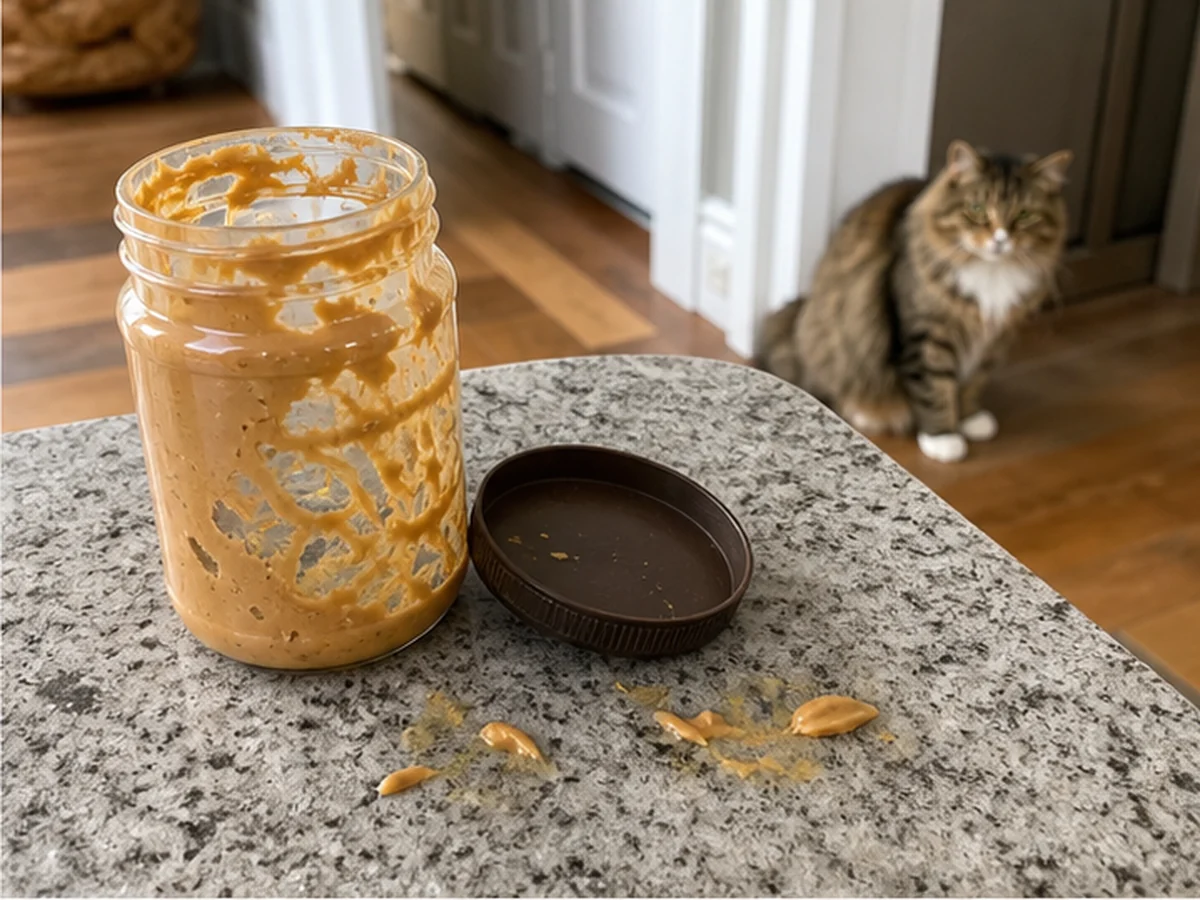
A cat can push its head into a wide jar and panic when the container moves with it. Transfer only the amount people need, close the lid, and store the jar rather than leaving an open invitation on the counter.
If glass broke, confine the cat away from the area and inspect paws without squeezing. Bleeding, limping, oral pain, missing shards, or suspected ingestion requires veterinary help.
Which cats should skip almond butter?
Do not trial it in kittens, cats with obesity, diabetes, food allergy, pancreatitis, chronic diarrhea, swallowing trouble, or a therapeutic diet. A novel plant protein can also invalidate an elimination trial.
Medication administration needs approval because some tablets must remain whole or be given away from food. A sticky spread can hide whether the cat swallowed the full dose or merely polished the almond coating.
After the jar raid
- Secure the scene: close the jar and collect the seal, lid, spoon, bread, wrapper, and broken pieces.
- Read every ingredient: flag chocolate, caffeine, sweeteners, salt, spices, supplements, and mixed nuts.
- Estimate the amount: compare the missing level with a measured spoon instead of saying “some.”
- Check the individual cat: note body weight, medical diet, allergy history, medication, and current signs.
- Call when complexity rises: toxic add-ins, a large serving, packaging loss, choking signs, or illness needs professional input.
Do not induce vomiting or give salt, oil, milk, or another paste as a home antidote. After a trace of plain smooth butter in a well cat, simply remove access, serve the normal meal, and monitor.
Frequently asked questions
Can cats eat unsalted almond butter?
A tiny lick of a smooth product made only from sweet almonds is generally low risk for a healthy adult. It remains high in fat and calories, so there is no reason to schedule servings.
Can almond butter help a cat gain weight?
Do not use it for weight gain without veterinary advice. Unplanned weight loss needs a diagnosis, and balanced calorie strategies are safer than filling a small stomach with nut paste.
Is crunchy almond butter safe?
Crunchy pieces add hard fragments and make swallowing less predictable. Smooth texture is the less awkward option if a veterinarian has approved a minuscule taste.
What if my cat ate chocolate almond butter?
Contact a veterinarian or poison service with the cocoa type, product label, quantity, time, and cat’s weight. Do not wait for vomiting, restlessness, rapid heartbeat, tremors, or seizures.
Bottom line
Plain almond butter earns a narrow “one tiny lick is usually low risk,” not a place in the treat rotation. Respect its fat and sticky texture, investigate every flavor, preserve the jar label, and choose measured cat food when your kitchen assistant requests a bonus.