Can Cats Drink Apple Juice? Sugar, Cider, Labels, and Spills
A healthy adult cat who takes one or two licks of plain pasteurized apple juice will usually need monitoring, not a special treatment. Apple juice is sugary, acidic, fiber-free, and nutritionally unnecessary, while cider, concentrates, cocktails, supplements, and blended drinks can change the risk entirely.
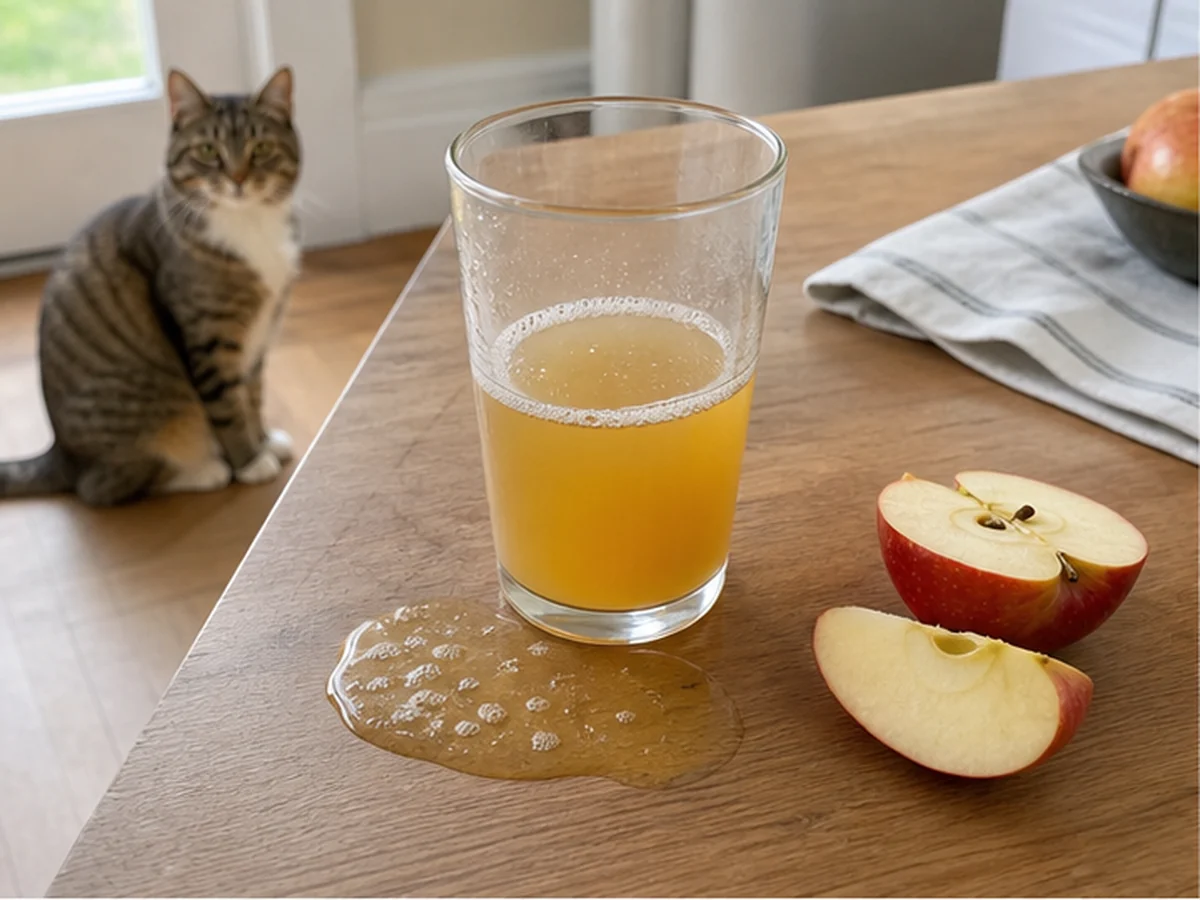
If you are standing beside a spill
Move the glass, blot the floor, and check the label before the cat cleans sticky paws. Identify whether the liquid is 100-percent juice, juice drink, cider, concentrate, smoothie, alcohol-containing cocktail, or a product with grapes, sweeteners, supplements, or medication.
For a tiny taste of plain pasteurized juice and no symptoms, return to the normal meal and water routine. For a large amount, uncertain blend, alcohol, missing package pieces, or a cat who is vomiting, weak, painful, or unusually sleepy, contact a veterinarian.
Do not induce vomiting or give insulin, salt, milk, oil, or human stomach medicine. Product details and the cat’s health should drive the response, not a generic fruit rule.
Why juice is not the same as apple flesh
Juicing removes much of the fruit’s structure and fiber while concentrating naturally occurring sugars into an easy-to-lap liquid. A cat can consume the equivalent of several bites before anyone notices the saucer is getting lower.
Plain apple flesh can be portioned into a visible tiny piece, while juice invites repeated drinking and adds no chewing enrichment. Our apple guide for cats covers flesh, seeds, cores, spoilage, and preparation.
Neither form is necessary, because cats require complete feline nutrition built around their species-specific needs. The Cornell Feline Health Center recommends occasional treats and complete balanced food rather than nutritionally incomplete extras.
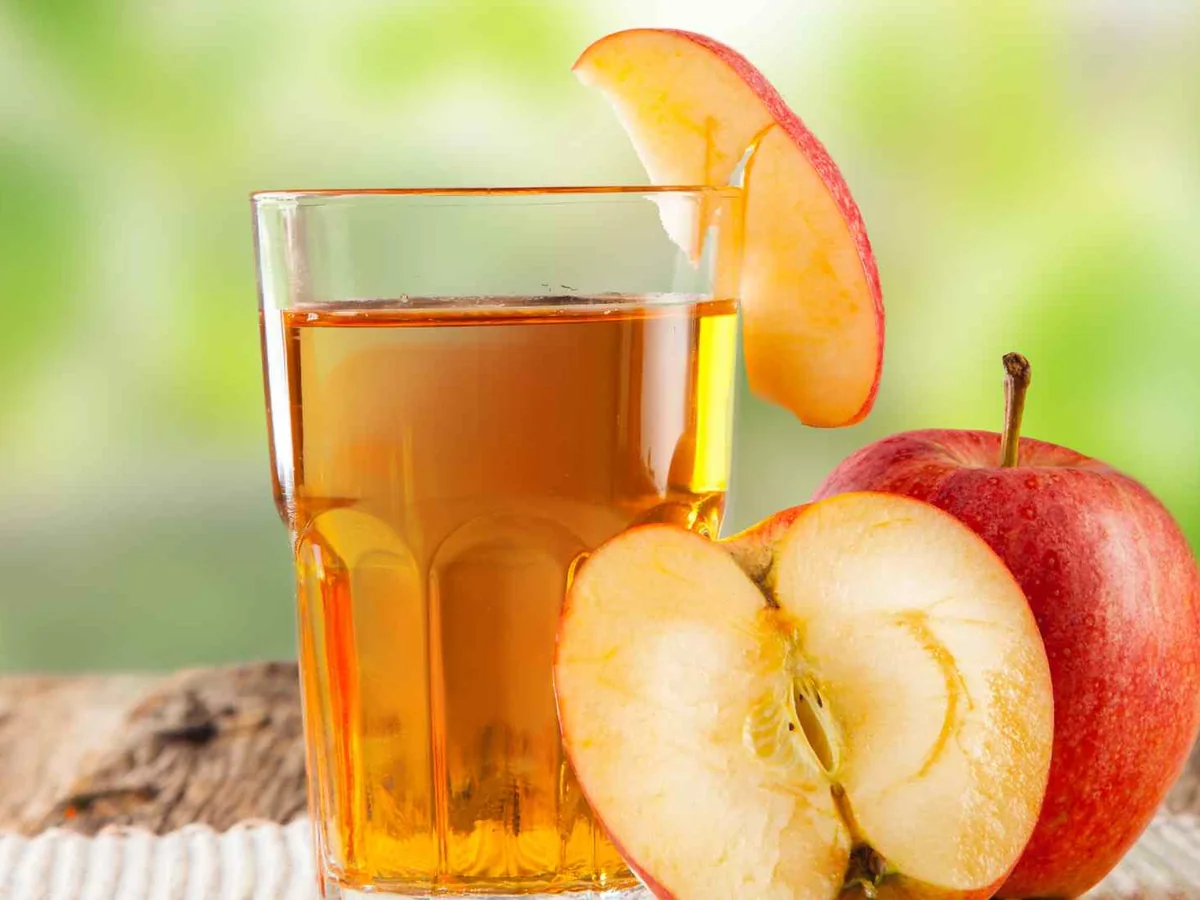
Read past the apples on the front
A bottle labeled apple can contain pear, white grape, cranberry, flavoring, color, added sugar, citric acid, preservatives, vitamins, herbs, or sweeteners. Juice cocktail may contain surprisingly little apple juice, while no added sugar does not mean low sugar.
Check the ingredient list, serving size, total sugar, added sugar, storage directions, and pasteurization statement. If the exposure involves a supplement beverage, photograph every panel because active ingredients may be listed separately.
White grape juice is often used as a base in blends, and feline evidence around grapes is limited compared with the established canine kidney hazard. Use our cat grape guide for evidence-aware triage rather than assuming either complete safety or a dog-derived toxic dose.
Pasteurized juice is the safer food-safety choice
Fresh-squeezed and unpasteurized juice can carry bacteria from produce or processing. The FDA’s juice safety guidance explains that untreated juice and cider have been linked to foodborne illness and may carry a warning label.
The CDC similarly lists pasteurized juice or cider as the safer choice over untreated products. Kittens, seniors, immunocompromised cats, and animals with chronic illness have less reason to encounter a preventable pathogen exposure.
Pasteurization does not turn juice into cat hydration therapy; it addresses microbes, not sugar or nutritional balance. A safer human product can remain an unhelpful feline drink.
Apple cider can mean three different things
In the United States, sweet cider often means cloudy unfiltered apple juice, which may be pasteurized or untreated. Hard cider contains alcohol, while apple cider vinegar is an acidic fermented product with a separate risk profile.
Hard cider exposure should be handled as alcohol ingestion, not ordinary fruit juice. Call promptly with the alcohol percentage, amount, timing, and symptoms instead of waiting to see whether the cat looks drunk.
Apple cider vinegar should not be poured into food or water as a wellness tonic. Our site’s apple cider vinegar guide provides product context, while feline topical and oral use requires cat-specific caution.
What about seeds and cyanide?
Apple seeds, stems, and leaves contain cyanogenic compounds, as the ASPCA apple plant entry explains. Commercial juice is processed from fruit, and ordinary filtered juice does not present the same physical seed-chewing scenario as a cat eating plant parts.
Do not claim that every sip contains a dangerous cyanide dose, and do not blend cores and seeds into homemade pet juice. If a cat chewed many seeds, wilted leaves, or branches, contact a veterinarian with the actual plant material and amount.
Breathing difficulty, dilated pupils, collapse, severe weakness, or unusually bright-red gums after plant ingestion needs emergency evaluation. This is different from mild loose stool after too much sweet liquid.
Arsenic headlines need proportion
Arsenic can occur in foods from environmental sources, and the FDA established a 10-parts-per-billion action level for inorganic arsenic in apple juice. That regulatory work aims to reduce long-term human exposure and does not make a tiny accidental feline lick an arsenic emergency.
It does reinforce a simpler point: apple juice was designed and regulated as human food, not as a daily cat beverage. Avoid chronic unnecessary exposure instead of using contaminant headlines to panic over one verified taste.
If a product is recalled or smells fermented, moldy, or chemically odd, keep the package and call about the exact issue. Do not offer spoiled juice to a pet to avoid wasting it.
Diabetes, obesity, and digestive disease
Sugary drinks are a poor choice for cats with diabetes or weight concerns because intake is difficult to measure and nutritionally empty. Never use apple juice to treat suspected low blood sugar unless the veterinary team gives immediate, case-specific instructions.
Cats with inflammatory bowel disease, chronic diarrhea, pancreatitis, or food-responsive illness may react poorly to sudden sugar and acidity. Prescription diets should not receive juice toppers without approval.
Repeated vomiting, substantial diarrhea, dehydration, abdominal pain, or refusal to eat deserves veterinary care. Cats can become medically compromised when poor intake persists, regardless of whether the original cause looked minor.
Juice is not a constipation remedy
Apple juice lacks much of the whole fruit’s fiber, and loose stool from sugar is not controlled constipation treatment. Constipation may involve dehydration, pain, kidney disease, pelvic narrowing, medication, megacolon, or obstruction.
Straining can also signal urinary blockage, especially when little or no urine appears. That emergency should never be managed with juice, pumpkin experiments, or a wait-and-see afternoon.
Track stool frequency, appetite, vomiting, water intake, and urine clumps, then discuss the pattern with a veterinarian. Useful treatment begins with identifying which system is actually failing.
Frozen treats, gummies, sauces, and marinades
Frozen apple-juice pops can include sticks, plastic wrappers, sweeteners, and hard chunks. Gummies may contain concentrated supplements or medications, while sauces can add onion, garlic, salt, fat, and alcohol.
Apple juice in a meat marinade is not plain juice by the time it reaches the plate. Assess every seasoning and tell the clinic whether bones, skewers, foil, or kitchen string are also missing.
Applesauce is thicker and comes with its own sweetener, spice, jar, pouch, and spoilage questions. Our cat applesauce guide covers those forms without pretending juice and puree are interchangeable.
Packaging can outlast the drink
Straws, foil seals, plastic caps, pouch spouts, and juice-box wrappers can choke or obstruct. Tell the veterinarian if any piece is unaccounted for, even when the apple juice itself was harmless.
Store open juice in the refrigerator and dispose of containers in a closed bin. Sticky recycling tends to attract the cat who ignored the fresh serving five minutes earlier.
Do not leave a glass on a windowsill, nightstand, or bathtub edge where it can spill onto fur. Coat contamination leads to additional drinking during grooming and makes the amount impossible to estimate.
Better ways to encourage fluid intake
Provide fresh water in several quiet locations, wash bowls regularly, and test a wide shallow dish or maintained fountain. Keep water away from dirty litter and congested feeding areas if your cat prefers separation.
Wet cat food adds moisture when compatible with the medical and calorie plan. A veterinarian may suggest additional strategies for kidney disease, urinary problems, constipation, or recovery, each of which needs more precision than fruit juice offers.
If drinking suddenly rises or falls, schedule an assessment. Changes in thirst can accompany kidney disease, diabetes, thyroid disease, pain, nausea, and other conditions that deserve a real workup.
What vomiting after juice actually tells you
One vomit can follow rapid drinking, sugar, acidity, spoiled product, another ingredient, or an unrelated illness. It does not prove apple allergy, detoxification, or that the cat has emptied every concerning ingredient from the stomach.
Note timing, appearance, frequency, appetite, energy, stool, and urine, then call if vomiting repeats or the cat seems unwell. Save the label because a blended juice may make the ingredient list more informative than the color of the vomit.
Clean promptly with a pet-safe product and keep other animals away from the mess. Do not let the cat re-eat vomited material or chew the paper towels and plastic bag used during cleanup.
Frequently asked questions
Can kittens drink apple juice?
No, kittens need water after weaning and species-appropriate milk replacer before weaning. Juice can cause digestive upset and displace the dense nutrition required for growth.
Is organic apple juice better for cats?
Organic certification does not remove sugar, acidity, or the need for pasteurization and label review. It remains a human beverage rather than feline hydration.
Can apple juice hide medicine?
Ask the prescriber because some drugs have food restrictions, unpleasant dissolved tastes, or must be swallowed whole. Use the smallest approved vehicle so you know the full dose reached the cat.
Apple juice belongs in a closed human glass, not the cat’s bowl.
Bottom line
One lick of plain pasteurized apple juice is usually low risk, but regular serving offers sugar without feline benefit. Distinguish juice from cider, alcohol, vinegar, blends, and supplements, secure packaging, and call when ingredients, quantity, symptoms, or underlying disease make the incident more complicated.