Can Cats Eat Freeze-Dried Strawberries? Labels, Texture, and Portions
One tiny crumbled piece of an unsweetened, single-ingredient freeze-dried strawberry is unlikely to harm most healthy adult cats, but it offers no special feline benefit. Check the label, soften or crush the piece, and skip sweetened, chocolate-coated, yogurt-covered, blended, moldy, or medically incompatible products.
The package test takes ten seconds
| Label says | What it means | Cat decision |
|---|---|---|
| Strawberries only | No added sugar or coating | A crumb can be considered for a healthy adult |
| Sugar or syrup | Extra calories and sticky residue | Skip it |
| Yogurt coating | Sugar, fat, dairy, flavoring | Treat as a confection |
| Chocolate or cocoa | Methylxanthine hazard | Call for exposure |
| Fruit blend | Several fruits and possible additives | Identify every ingredient |
| Supplement powder | Concentrated or fortified formula | Do not use as an ordinary snack |
Freeze-dried fruit looks simple because it is light enough to float out of the bag when opened enthusiastically. That airy appearance can hide coatings, sweeteners, flavor dust, other fruits, and serving sizes designed for people.
Read the ingredient panel every time, including products marketed for toddlers, hikers, cereal bowls, or smoothies. A familiar front label is not a permanent contract because manufacturers can reformulate.
Freeze-drying removes water, not the whole food
The process freezes food and removes moisture under low pressure, leaving a dry, porous piece. The FDA recognizes “freeze dried” as a useful food-label description, not as a health claim.
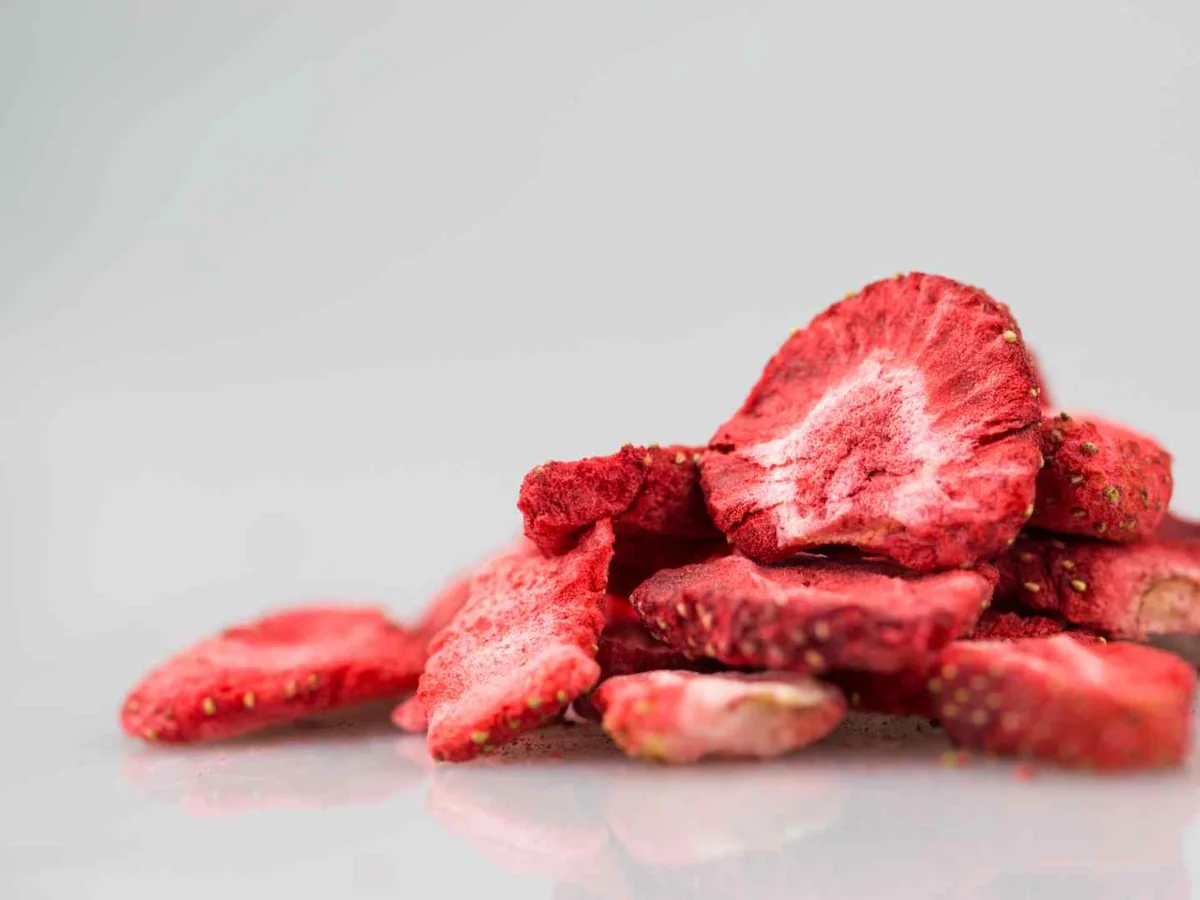
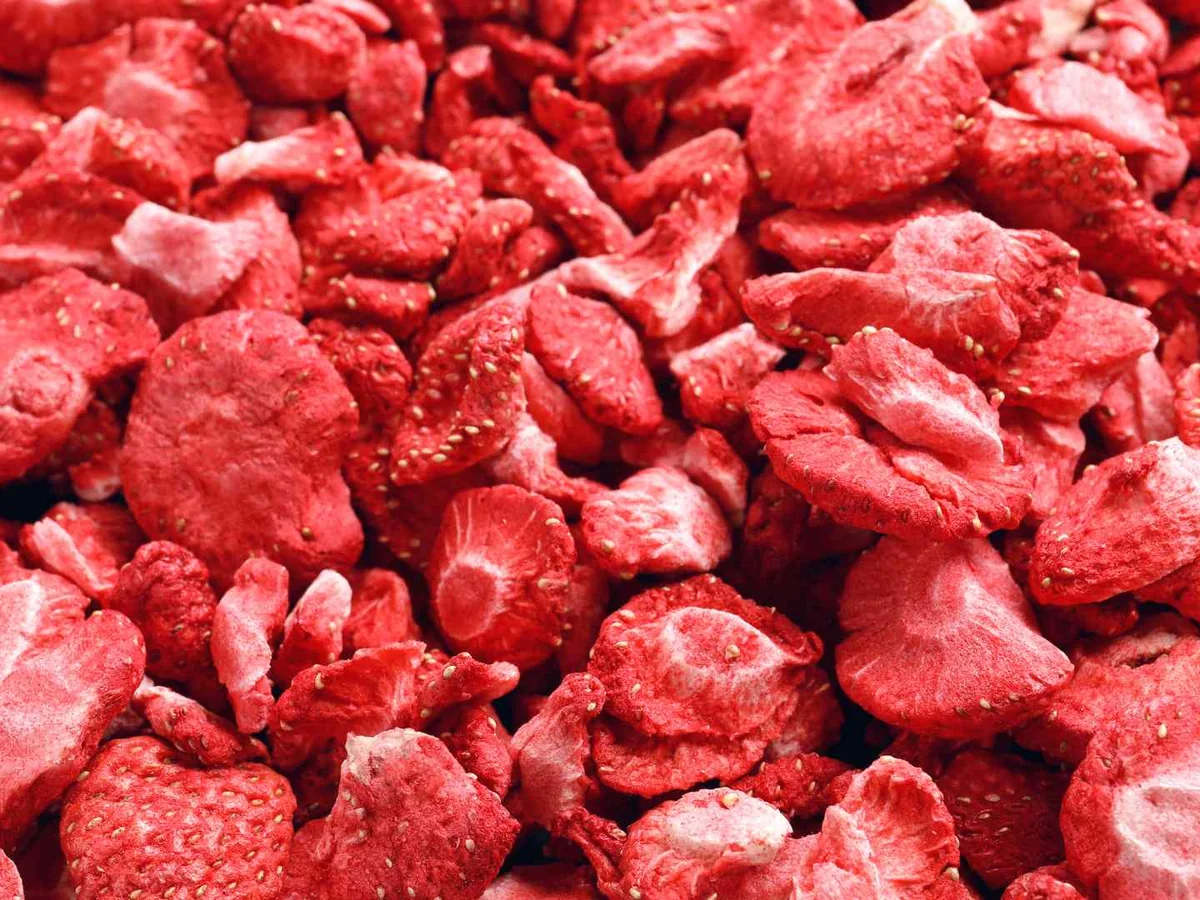
A dried slice is lighter than the fresh berry it came from, so several pieces can disappear quickly without looking like much. Water removal concentrates the original food into a smaller, crisp package and changes how a feline mouth handles it.
Texture decides whether the taste is sensible
Whole freeze-dried berries can be hard, sharp-edged, or surprisingly large once they hit the tongue. Crumble a candidate piece into tiny flakes or moisten it with plain water, then discard leftovers rather than letting a damp fruit sponge linger.
Cats with missing teeth, inflamed gums, resorptive lesions, swallowing difficulty, or a history of gulping are poor candidates. A treat should not require optimism about a sore mouth.
A strawberry is optional, not a wellness assignment
Cats are obligate carnivores with nutritional requirements that a fruit snack cannot meet. Antioxidant, vitamin, superfood, detox, and immune-support language on human packaging does not demonstrate a clinical benefit for a cat.
The Cornell Feline Health Center places complete, balanced food at the center of feline feeding. Freeze-dried strawberry belongs, at most, in the tiny optional-extra category.
Fresh and freeze-dried portions are not visually equal
A sliver of fresh strawberry carries plenty of water and bends easily, while a dried slice is compact and brittle. Do not compare piece for piece or assume a nearly weightless handful has trivial calories and carbohydrate.
Start with one crumb, not one whole berry, and do not make it a daily ritual. Our fresh strawberry guide for cats covers leaves, stems, washing, and fresh texture in more detail.
Sugar matters most as a routine problem
Plain strawberry naturally contains carbohydrate, and sweetened products add more. One unsweetened fleck is not a sugar emergency, but frequent handfuls can displace balanced calories and work against weight or glucose goals.
Cats with diabetes, obesity, or a calorie-controlled plan should receive only treats approved by the clinician managing the diet. A fruit’s wholesome reputation does not cancel its place in the daily calorie total.
Yogurt-covered is candy wearing activewear
White “yogurt” coatings commonly combine sugar, oils, milk ingredients, flavoring, and stabilizers rather than plain cultured yogurt. Some cats develop digestive upset after dairy, and the coating lets them consume a richer portion quickly.
Chocolate-dipped strawberries require prompt identification of cocoa type, amount, and timing. Use our chocolate guide for the ingredient checklist, then contact a veterinary professional rather than waiting for restlessness or tremors.
Mixed berry bags require a roll call
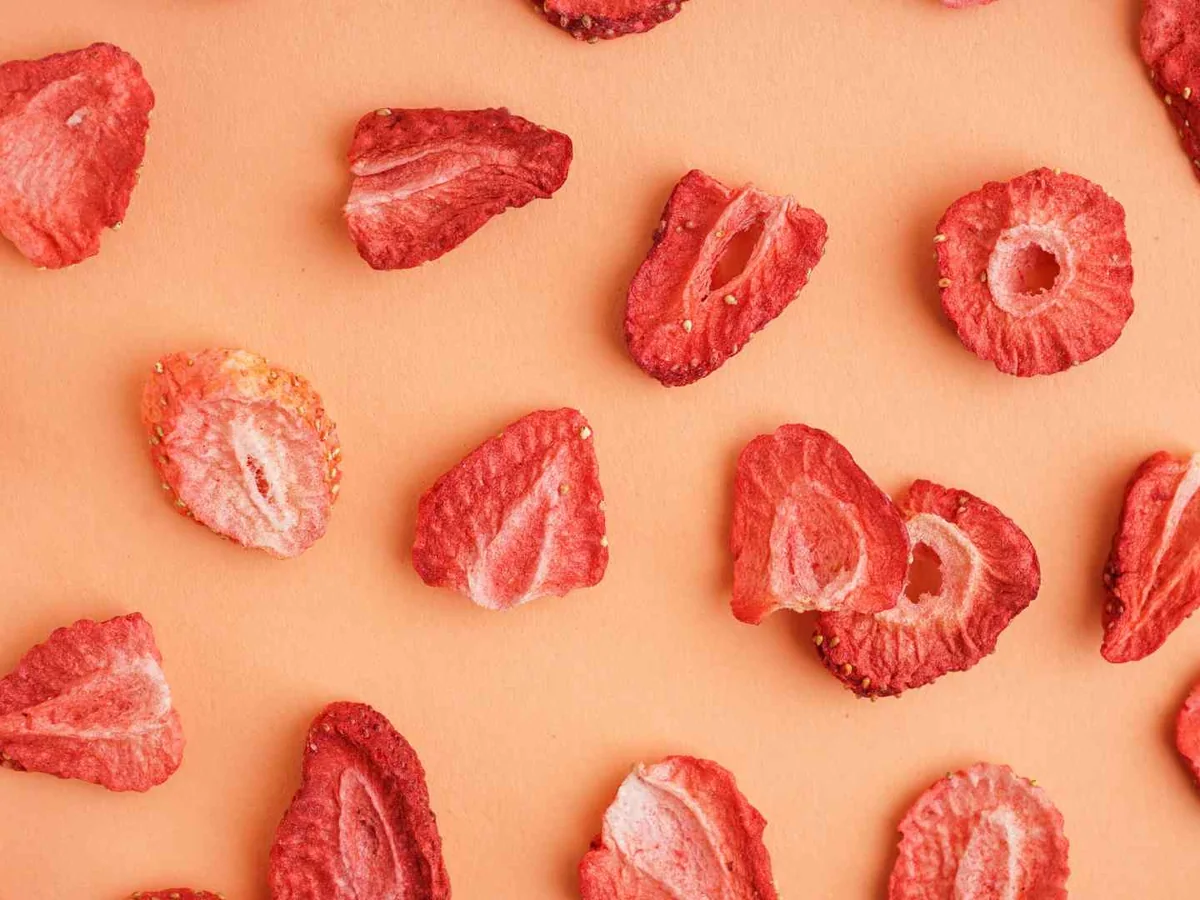
A red piece may sit beside blueberries, raspberries, cherries, cranberries, banana, apple, or grapes, plus stems and pits. Identify what actually vanished instead of assigning every fragment to strawberry.
The site’s cat fruit overview helps sort forms and physical hazards without pretending every fruit shares one risk profile. Save the bag and lot number if the mix is unlabeled after transfer to a jar.
Pet treats and human snacks follow different labels
A commercial cat treat containing strawberry is judged as a finished formula with feeding directions, not as proof that loose fruit should be added freely. Read whether the product is complete food, a treat, a topper, or a supplement.
The FDA nutritional adequacy explainer describes how complete foods differ from snacks. Keep the original package so calories, lot codes, and intended species remain available.
Powder behaves differently from slices
Crushed freeze-dried strawberry can become a fine dust that reaches eyes and noses or coats paws for grooming. Move the cat away before blending a smoothie powder and wipe settled dust rather than blowing it off the counter.
Supplement blends may add beet powder, caffeine-containing ingredients, vitamins, minerals, probiotics, sugar substitutes, or botanicals. Do not sprinkle a human wellness scoop over cat food without veterinary review of the exact label.
Storage keeps the crunch from becoming a science project
Dry fruit readily absorbs moisture after opening, which changes texture and encourages spoilage if handling is poor. Close the bag tightly, follow the manufacturer’s storage directions, and discard damp, stale, discolored, odorous, insect-damaged, or moldy pieces.
The FDA advises retaining original pet-food and treat packaging for the lot number and best-by information. The same practical habit helps when a fruit product is recalled or seems defective.
The bag can be a bigger problem than the berry
Resealable pouches, zipper strips, oxygen absorbers, desiccant packets, clips, and torn plastic can disappear during a cupboard raid. A cat with its head inside a flexible bag also faces suffocation risk.
Account for every packet and closure before monitoring a simple fruit taste. Repeated vomiting, gagging, drooling, food refusal, belly pain, straining, reduced stool, or lethargy after missing packaging warrants veterinary contact.
When to stop watching and call
- Call immediately for chocolate, caffeine, an unknown sweetener blend, a missing packet, or breathing difficulty.
- Seek prompt advice after a large amount, a mixed product with uncertain ingredients, or exposure by a medically fragile cat.
- Arrange examination for repeated vomiting, diarrhea that persists, facial swelling, hives, painful chewing, or appetite loss.
- After one plain crumb with no signs, remove access and monitor normal eating, drinking, activity, and litter-box use.
Do not induce vomiting, force water, or give human stomach medicines. The label, time, largest possible amount, cat’s weight, and current signs are the useful details to collect.
An abrupt reaction with facial swelling, breathing trouble, collapse, or profound weakness is an emergency regardless of how innocent the snack looked. Bring the package rather than relying on a product photo from a shopping site.
Build a better treat ritual
If a cat enjoys the crinkle of the bag more than the berry, place a measured portion of regular kibble in a puzzle feeder and close the fruit away. The ceremony survives while the unnecessary sugar and brittle texture disappear.
For cats on wet food, a spoonful of their normal meal can become the special offering. Warm it gently if approved, check the temperature, and enjoy the fact that cats are often impressed by presentation rather than novelty.
Homemade freeze-drying does not erase kitchen hygiene
Fruit should be washed and sorted before processing, equipment needs cleaning, and spoiled berries should never be rescued by dehydration. Freeze-drying removes water but is not permission to begin with moldy, fermented, dirty, or damaged produce.
Follow the appliance manufacturer’s validated instructions for slicing, loading, drying, packaging, and storage. A leathery center can indicate incomplete drying, while a poorly sealed jar can pull moisture from the room and lose its crisp stability.
Keep trays, cords, vacuum-pump oil, hot surfaces, and loose hardware away from curious paws during a cycle. Home equipment creates mechanical and electrical hazards that have nothing to do with strawberry chemistry.
Treat calories include the dust at the bottom
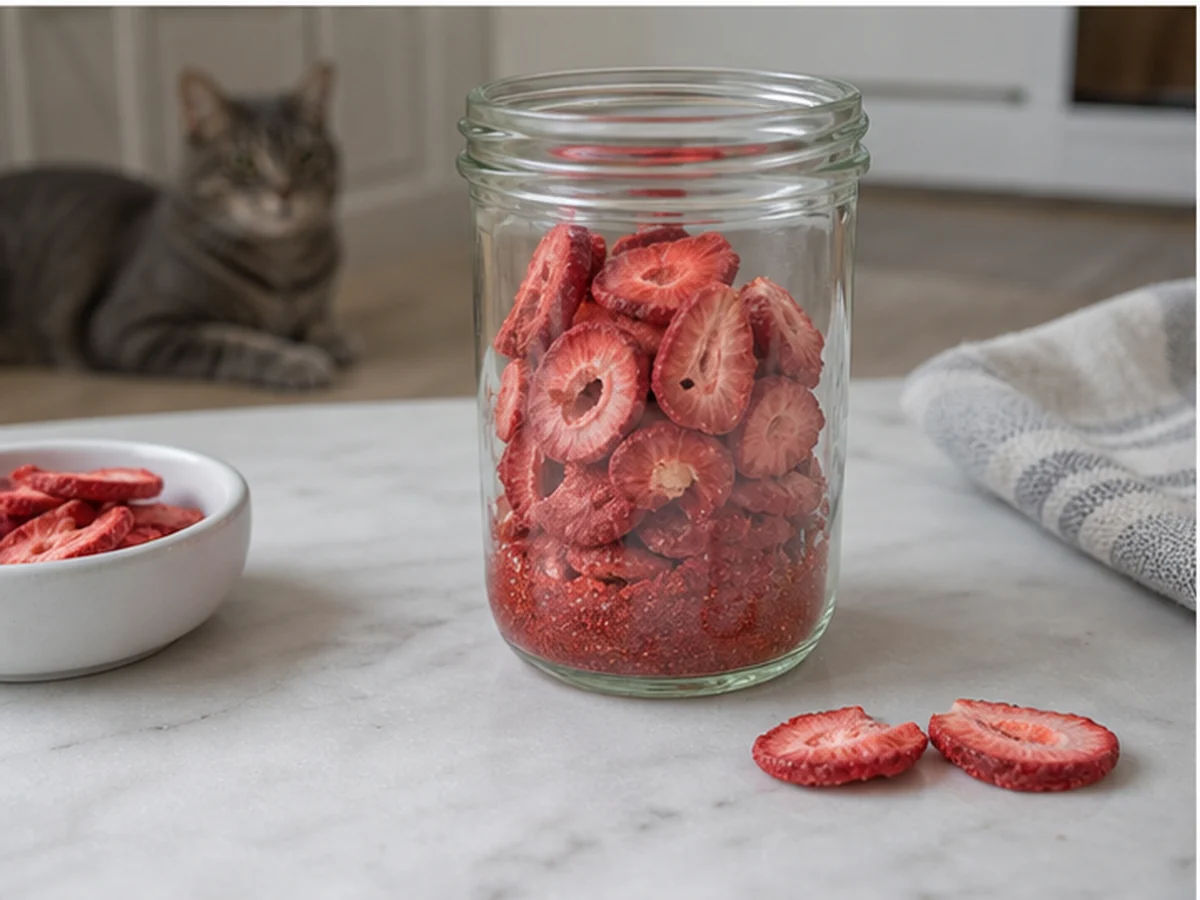
Broken flakes and powder are easy to pour generously because they seem insubstantial. Measure before crumbling, and count every bit used on food rather than repeatedly shaking the bag over the bowl until the cat approves.
Frequent toppers can train a cat to reject an otherwise appropriate diet while quietly changing calories and nutrient balance. If appetite has suddenly become selective, record normal intake and arrange an examination instead of escalating from flakes to coatings.
For a multi-cat household, give approved tastes separately and collect remnants right away. The cat who dislikes fruit should not accidentally donate its entire portion to the household vacuum cleaner with whiskers.
Online marketplace listings can omit a readable panel or combine several package versions on one page. Inspect the bag that actually arrived for country-specific ingredients, allergen statements, intended species, storage directions, and damaged seals before any piece reaches a cat.
A sudden fondness for crunchy fruit may also reflect novelty rather than need. If the cat begins chewing unusual foods or packages generally, mention the behavior at the next examination because dental pain, hunger changes, or pica deserves its own assessment.
Small berry questions
Can kittens eat freeze-dried strawberries?
Kittens need complete growth nutrition and gain no necessary benefit from dried fruit. Use part of the normal kitten ration as rewards, especially because hard fragments can challenge a small mouth.
Can I put strawberry powder on cat food?
Do not use a human powder without checking every ingredient and asking the veterinarian. Dust can irritate, blends may contain supplements or sweeteners, and toppers can disrupt a therapeutic or balanced diet.
Are unsweetened freeze-dried strawberries healthy for cats?
“Unsweetened” removes one concern but does not establish a feline health benefit. A tiny softened crumb may be tolerated by a healthy adult, yet complete cat food remains the useful nutrition.
The last crumb
A single-ingredient freeze-dried strawberry crumb is usually a low-stakes curiosity for a healthy adult cat, not a nutritional upgrade. Read the label, respect the hard dry texture, keep portions tiny, avoid coatings and powders, secure every packet, and choose the familiar complete diet when health conditions enter the picture.