Can Cats Eat Avocado? Flesh, Pits, Persin, and Guacamole
Do not make avocado a regular cat treat. A tiny lick of plain ripe flesh is unlikely to cause severe poisoning in most cats, but avocado contains persin, its fat can upset digestion, the pit can obstruct, and guacamole often adds onion, garlic, salt, and other hazards.
The answer depends on which part was eaten
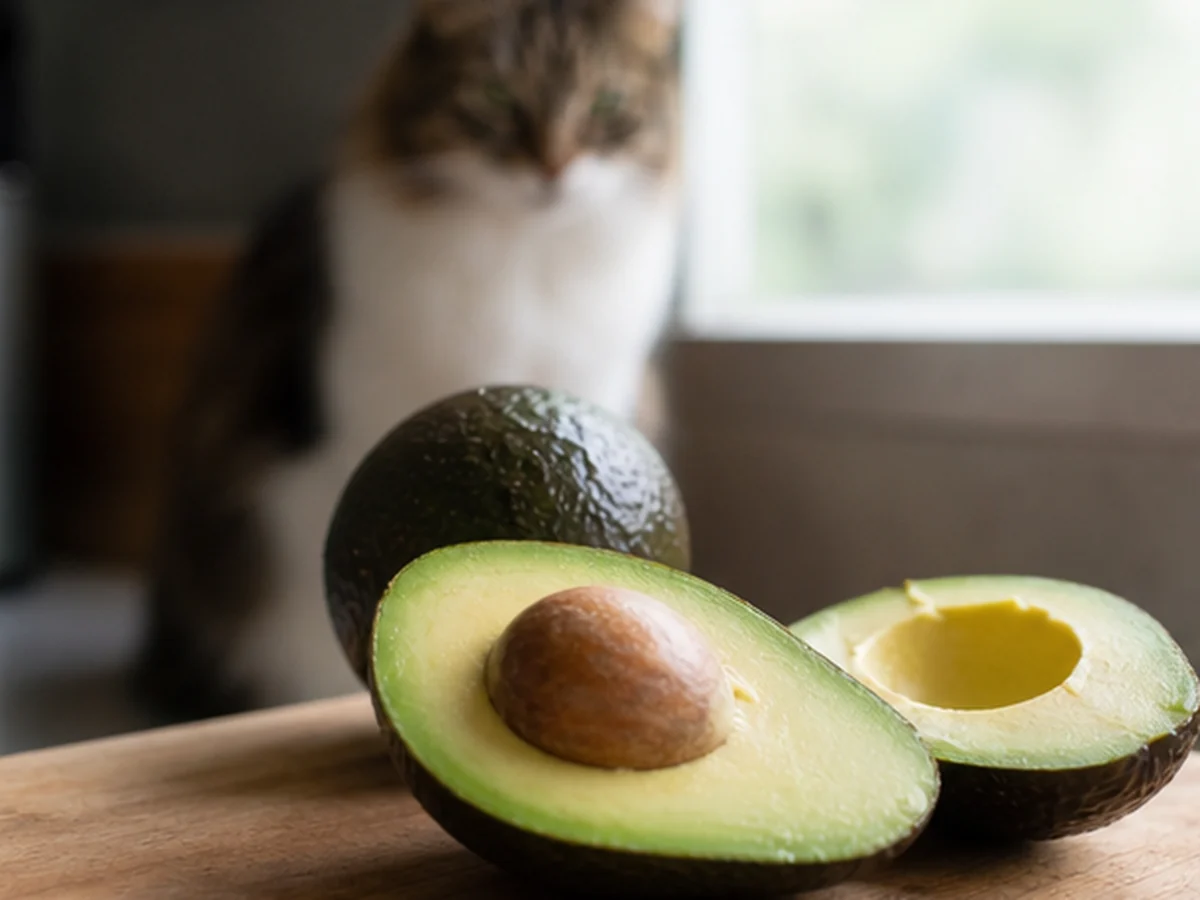
- Ripe flesh: A small accidental taste may cause no problem or mild digestive upset, but deliberate feeding is unnecessary.
- Skin: Tougher to digest and not a suitable snack.
- Pit: A choking and gastrointestinal obstruction hazard that needs prompt veterinary advice if swallowed.
- Leaves, stems, and bark: Higher-risk plant material that should be kept away from cats.
- Guacamole: Potentially contains onion, garlic, heavy salt, spicy peppers, alcohol, or other unsafe ingredients.
- Oil: Not a needed supplement and very calorie-dense, with a greater digestive problem after a sizable amount.
The FDA describes avocado as mildly toxic to dogs and cats, while noting that it can be far more dangerous to birds, rabbits, horses, and ruminants. That species distinction matters because a dramatic bird warning should not be copied directly onto a cat exposure.
It also does not make avocado a good feline food. Cats need animal-based nutrition from a complete diet, and a green fruit with a giant rolling pit does not fill a missing nutritional gap.
For a side-by-side product map, our avocado guide for dogs also separates flesh, pits, plants, and guacamole. Use that page to identify the form involved, then rely on this cat guide and your veterinarian for the species-specific response.
What is persin?
Persin is a compound found in avocado fruit and plant material. Sensitivity varies widely by species, and birds and certain livestock are much more vulnerable to serious effects than dogs and cats.
The Merck Veterinary Manual review of avocado toxicosis reports that leaves are the most toxic part and details severe cardiac and mammary effects in susceptible animals. It does not provide a reliable feline dose that owners can use to decide treatment at home.
That missing cat-specific threshold is exactly why this guide will not invent one. If a cat ate more than a lick, consumed plant material, or is showing symptoms, a veterinarian or veterinary poison specialist should judge the exposure using the product, amount, timing, and cat’s health.
A lick of flesh is not the same as an avocado pit
A cat that sneaks a lick of mashed avocado from a plate has a very different problem from one that chews skin, bats a pit around the kitchen, or nibbles an avocado houseplant. Start by identifying the exact material before searching for a verdict.
Ripe flesh can cause vomiting, diarrhea, poor appetite, or abdominal discomfort, especially after a rich serving. The ASPCA Animal Poison Control Center notes that sensitivity varies by species and advises recording the amount before contacting a veterinarian or poison control.
Skin is fibrous and less digestible, while the pit is smooth, dense, and far too large to be a cat treat or toy. Even if swallowing the whole pit seems physically unlikely, chewed fragments or smaller avocado pits can still create choking or obstruction concerns.
Signs that should not wait
- Open-mouth breathing, obvious choking, blue or pale gums, collapse, or severe distress.
- Repeated gagging, heavy drooling, repeated swallowing, or trouble keeping water down.
- Repeated vomiting, significant diarrhea, a painful abdomen, or profound lethargy.
- Refusal to eat, reduced stool, straining, or worsening discomfort after pit or skin ingestion.
- Weakness, breathing difficulty, swelling, or rapidly changing behavior after leaves, stems, bark, or a large exposure.
Cats often hide illness, so a quiet cat is not automatically a comfortable cat. If behavior is meaningfully different after an exposure, call instead of waiting for a more theatrical symptom.
The pit is a foreign body, not a chew toy
The FDA specifically identifies avocado pits as items that can obstruct the esophagus, stomach, or intestines of pets. A pit can also become slick with saliva, making an attempted grab more difficult and potentially pushing it farther back.
Do not reach blindly into a struggling cat’s throat or try to push a pit down with bread, food, or water. Breathing trouble is an emergency, and a swallowed pit or substantial fragment needs prompt veterinary advice even before symptoms begin.
Possible gastrointestinal obstruction signs include vomiting, appetite loss, abdominal pain, lethargy, diarrhea, or reduced stool. Those signs can have many causes, but the exposure history makes delay a poor bargain.
Fat and calories are a quieter concern
Avocado is rich in fat, which is why a spoonful carries more calories than its size suggests. For a cat, that spoonful can be a meaningful dietary extra rather than a dainty taste.
Rich foods may trigger vomiting, diarrhea, nausea, or food refusal, and they are a poor choice for cats with obesity, diabetes, gastrointestinal disease, or a prescribed diet. A cat with a history of pancreatitis should not be used for an avocado experiment.
No honest guide can promise that a particular bite will or will not cause pancreatitis. Persistent vomiting, a hunched or painful posture, marked lethargy, dehydration, or refusal to eat warrants veterinary assessment.
The Cornell Feline Health Center recommends feeding a complete diet formulated for a cat’s life stage. Avocado does not improve the balance of that food, and its vitamins in human nutrition do not automatically translate into a feline benefit.
Guacamole is usually the bigger ingredient puzzle
Guacamole often contains onion, garlic, shallot, chives, salt, hot peppers, tomato, lime, and seasoning blends. Onion and garlic can damage feline red blood cells, while a heavily salted dip or spicy recipe adds more reasons for concern.
A single lick of a simple avocado-and-lime mash is not the same as eating several spoonfuls of commercial dip. Save the tub or recipe, identify every ingredient, and call promptly when alliums, alcohol, an unknown sweetener, or a substantial amount is involved.
Our guacamole ingredient guide shows how to inspect a label for onion, garlic, salt, peppers, and packaging. Use it to organize the facts, then get cat-specific advice rather than borrowing the dog serving discussion.
Avocado toast, sushi, salads, and sandwiches
Prepared foods rarely contain avocado alone. Toast can bring butter, garlic, raw dough residue, seeds, or mold, while sushi may add raw fish, soy sauce, wasabi, pickled ginger, spicy mayonnaise, and string or plastic packaging.
Salads and sandwiches can include onion, garlic dressing, grapes, raisins, bacon, cheese, chocolate, macadamia nuts, or skewers and toothpicks. Inventory the entire plate, not just the photogenic green slice in the middle.
If a toothpick, skewer, plastic wrap, foil, or string is missing, tell the veterinary team immediately. Sharp or linear objects can create a more urgent mechanical problem than the avocado.
Can cats have avocado oil?
Avocado oil is highly concentrated fat and does not belong in a cat’s bowl as a wellness supplement unless a veterinarian has recommended a specific product and amount. A small lick from a pan is usually a different situation from drinking oil or eating an oil-soaked meal.
Check flavored oils for garlic, onion, chili, herbs, essential oils, and salt. Our avocado oil guide provides a useful label and quantity checklist, but feline dietary advice should come from a veterinarian.
Oil spills also coat paws and fur, encouraging a cat to ingest more during grooming. Prevent licking, use a pet-safe cleaning approach recommended by your clinic, and call if a large amount was swallowed or respiratory signs appear.
Avocado plants and compost need stricter rules
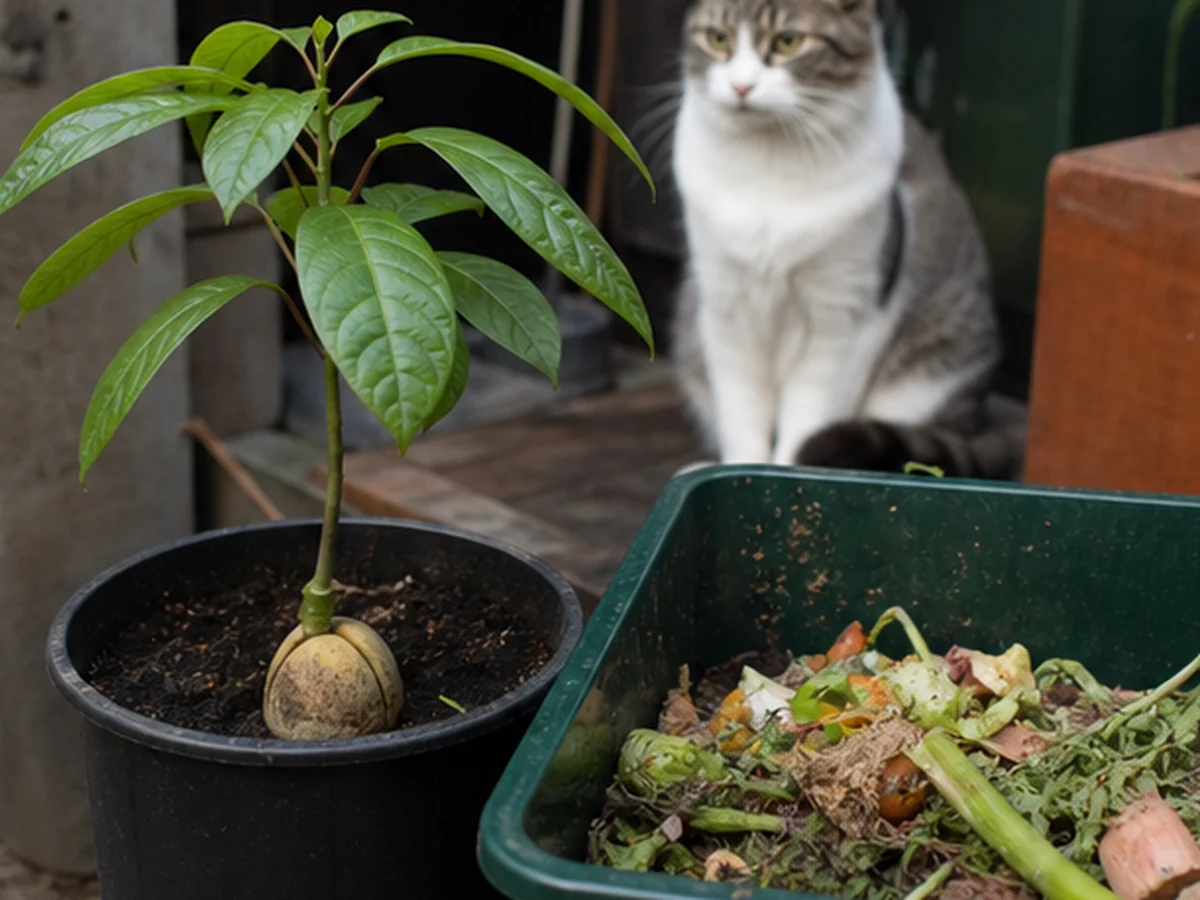
Leaves are described as the most toxic avocado plant part in the Merck review, so an avocado sapling should not sit where a cat can chew it. Fallen leaves, pruned branches, seeds started in water, and composted skins all need secure storage.
An indoor pot can create a second hazard if it contains fertilizer, pesticide, decorative stones, or standing water. Cats treat plant shelves as climbing suggestions, so height alone is not a safety system.
If plant material was eaten, photograph the plant and collect a sample without delaying the call. Do not wait for vomiting or weakness before asking for advice because decontamination decisions can be time-sensitive.
Cats that deserve extra caution
- Kittens, because their smaller size leaves less margin for hard pieces and dietary extras.
- Senior cats or cats with dental disease, because chewing and swallowing may be less efficient.
- Cats with pancreatitis, diabetes, obesity, kidney disease, gastrointestinal disease, or a prescription diet.
- Cats that are pregnant, nursing, or medically fragile, because experimental table foods add uncertainty without benefit.
- Cats with pica or a habit of chewing plants and packaging.
A restriction here is not a claim that avocado causes a special syndrome in every cat on the list. It reflects the simple fact that an unnecessary food should not complicate an already complex medical or nutritional plan.
What to do if your cat ate avocado
- Remove the avocado, plant, dip, oil, and packaging from reach.
- Check breathing, swallowing, alertness, and gum color.
- Identify flesh, skin, pit, leaves, stems, bark, oil, or a prepared product.
- Estimate the amount and time, and save the ingredient label or recipe.
- Call promptly for a pit, pit fragments, plant material, guacamole with unsafe ingredients, a large exposure, or any symptom.
Do not induce vomiting or give hydrogen peroxide, oil, milk, salt, charcoal, or another home remedy unless a veterinary professional directs you. The wrong response can irritate the digestive tract, delay appropriate care, or create aspiration risk.
For a poisoning concern in the United States, the ASPCA Animal Poison Control Center is available at 888-426-4435 and may charge a consultation fee. Your own veterinarian is often the best first call because the clinic knows your cat’s conditions and medications.
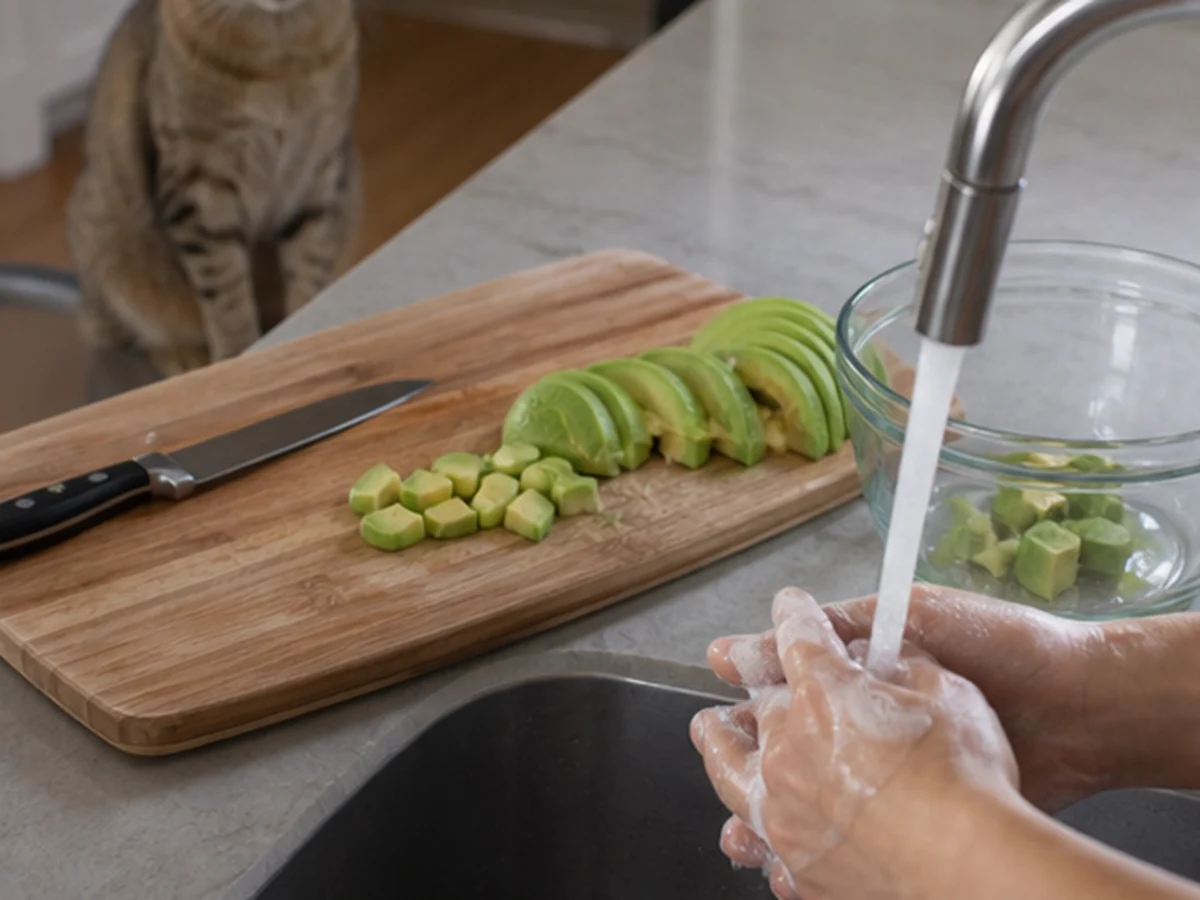
Prevention that works in a real kitchen
- Put pits directly into a lidded trash or compost container.
- Keep guacamole, avocado toast, salads, and sushi away from counter edges.
- Store oil bottles in a cabinet and clean spills before a cat walks through them.
- Do not grow avocado pits or plants where cats can reach the water, leaves, or soil.
- Ask guests not to share table food, especially with a cat on a prescription diet.
A pit rolling across tile is practically an invitation to pounce, so prevention may require speed. Retire it to a secure bin before your cat adds it to the household toy collection.
Frequently asked questions
Is avocado poisonous to cats?
Avocado contains persin and is described by the FDA as mildly toxic to cats and dogs, with much greater sensitivity in certain other species. Cats may develop gastrointestinal upset, while pits and plant material add separate mechanical and toxic concerns.
My cat licked avocado. Is that an emergency?
One lick of plain ripe flesh from a healthy adult cat is generally less concerning than a large amount, plant material, or guacamole. Monitor closely and call if you are uncertain or if vomiting, diarrhea, lethargy, appetite loss, or any breathing change appears.
Can cats eat avocado in commercial cat food?
A reputable commercial cat food is formulated as a complete product, so judge it by its nutritional adequacy statement, manufacturer quality controls, and your veterinarian’s advice. Do not assume a tested formulation is equivalent to adding raw avocado from your cutting board.
Can cats eat guacamole without onion?
Even without onion, guacamole is fatty, unnecessary, and may contain garlic, salt, peppers, lime, or other ingredients that cause trouble. Plain cat treats are easier to evaluate and portion.
The bottom line
Avocado is not a worthwhile cat treat, although one lick of plain ripe flesh is usually less alarming than internet toxin lists suggest. Treat pits, plant material, large servings, oil spills, and seasoned guacamole seriously, and call promptly if the product is uncertain or your cat acts unwell.