Can Cats Eat Fish? Species, Bones, Raw Risk, and Mercury
Cats can eat a small portion of plain, fully cooked, boneless fish, but “fish” is too broad to be a safety answer. Species, bone structure, raw pathogens, H5N1 relevance, parasites, thiaminase, mercury, salt, oil, seasoning, allergies, storage, and whether fish is a treat or complete cat food all change the decision.
A safe-looking fish portion has seven traits
- Identified: the species and product are known rather than described only as white fish.
- Cooked: the center is fully cooked with no translucent raw section.
- Boneless: pin bones, ribs, spine, skin scales, hooks, and packaging have been checked.
- Plain: no salt, butter, garlic, onion, smoke, sauce, breading, alcohol, or spice.
- Fresh: cold-chain and storage history are sound, with no spoilage or mold.
- Small: one cat-sized flake rather than a fillet or entire can.
- Supplemental: the treat does not displace complete feline food or violate a medical diet.
Failing one trait does not always mean poisoning, but it creates another question. This guide sorts those questions without pretending salmon, tuna, sardines, cod, trout, raw bait, and a seasoned restaurant fillet are interchangeable.
Plain cooked fish is the simplest form
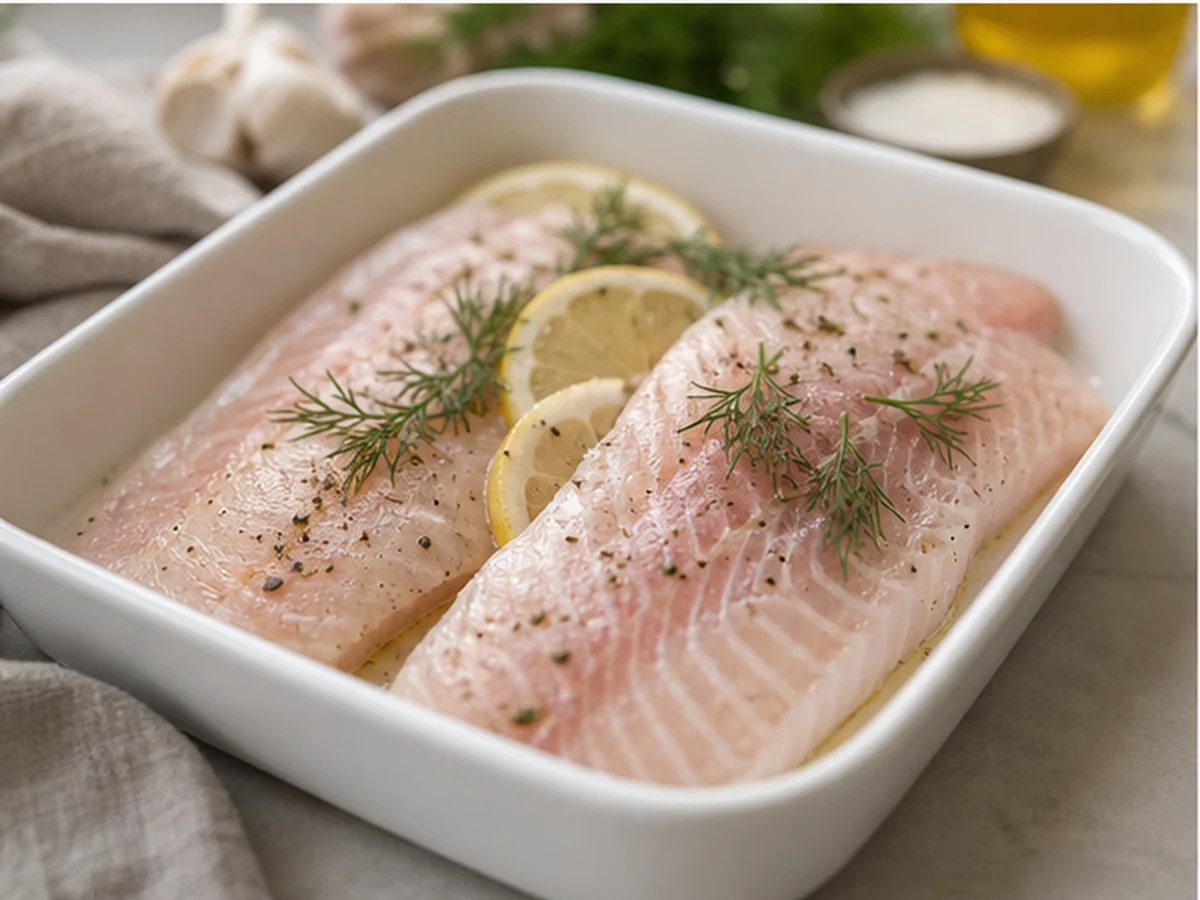
Bake, poach, or steam a small piece without seasoning until fully cooked, then cool it on a clean plate. Flake the meat apart under bright light and feel for bones from several directions before offering one morsel.
FDA seafood guidance says most fish should reach 145°F or become opaque and separate easily with a fork. Temperature is more reliable than guessing from an browned exterior.
Avoid cooking spray, butter, salt, broth, garlic, onion, lemon peel, wine, blackened seasoning, and marinades in the cat portion. Set it aside before the human recipe begins.
The cat salmon guide covers that oily species in depth, while the sardine guide addresses tiny bones, cans, oil, and sodium.
Bones are the risk that cooking can worsen
Fish bones can be slender, sharp, translucent, and easy to miss. Cooking may make some bones brittle, while canning can soften small bones without guaranteeing every product is appropriate for a cat.
A bone can lodge across the mouth, pierce the throat, become stuck in the esophagus, or injure the stomach and intestines. Cats that gulp stolen food may swallow a bone before anyone hears crunching.
Drooling, gagging, repeated swallowing, regurgitation, mouth-pawing, blood, vomiting, appetite loss, neck extension, abdominal pain, or sudden hiding after fish needs prompt veterinary advice. Airway compromise or collapse requires emergency transport.
Do not induce vomiting, push bread or rice, or pull a firmly embedded bone. A sharp object can cause more damage on the return trip, and blind mouth sweeps can move it farther.
Raw fish is a pathogen and parasite decision
Raw seafood can carry bacteria and parasites, and freezing does not eliminate every pathogen. Cats may become ill or spread organisms through saliva, bowls, paws, feces, and litter even when they appear normal.
The CDC recommends avoiding raw pet food and using careful hygiene because raw animal proteins can expose pets and people to germs. Children, older adults, pregnant people, and immunocompromised household members have particular reason to avoid contamination.
Fish parasites vary by species, geography, life cycle, and preparation. Sushi-grade, previously frozen, wild-caught, and farmed labels do not create a sterile product or a feline feeding recommendation.
Our raw fish guide for cats provides expanded pathogen, parasite, thiaminase, bone, and handling detail. A stolen raw piece should be reported with species, source, freezing, amount, time, and symptoms.
H5N1 matters for uncooked animal products
Highly pathogenic avian influenza is not a generic risk claim for every cooked fish dinner. It becomes relevant in the wider raw-pet-food environment and in wildlife exposure, with current recommendations changing as outbreaks and evidence evolve.
The FDA has advised manufacturers to consider H5N1 in food-safety plans for uncooked or unpasteurized cat and dog foods and notes that cats are especially susceptible. That guidance supports choosing properly cooked products and avoiding unpasteurized or raw animal ingredients.
A fully cooked plain fish flake is not equivalent to raw poultry, unpasteurized milk, or a cat hunting infected birds. Keep claims proportionate while following current public-health and veterinary alerts for raw food and wildlife contact.
Thiaminase is species and preparation specific
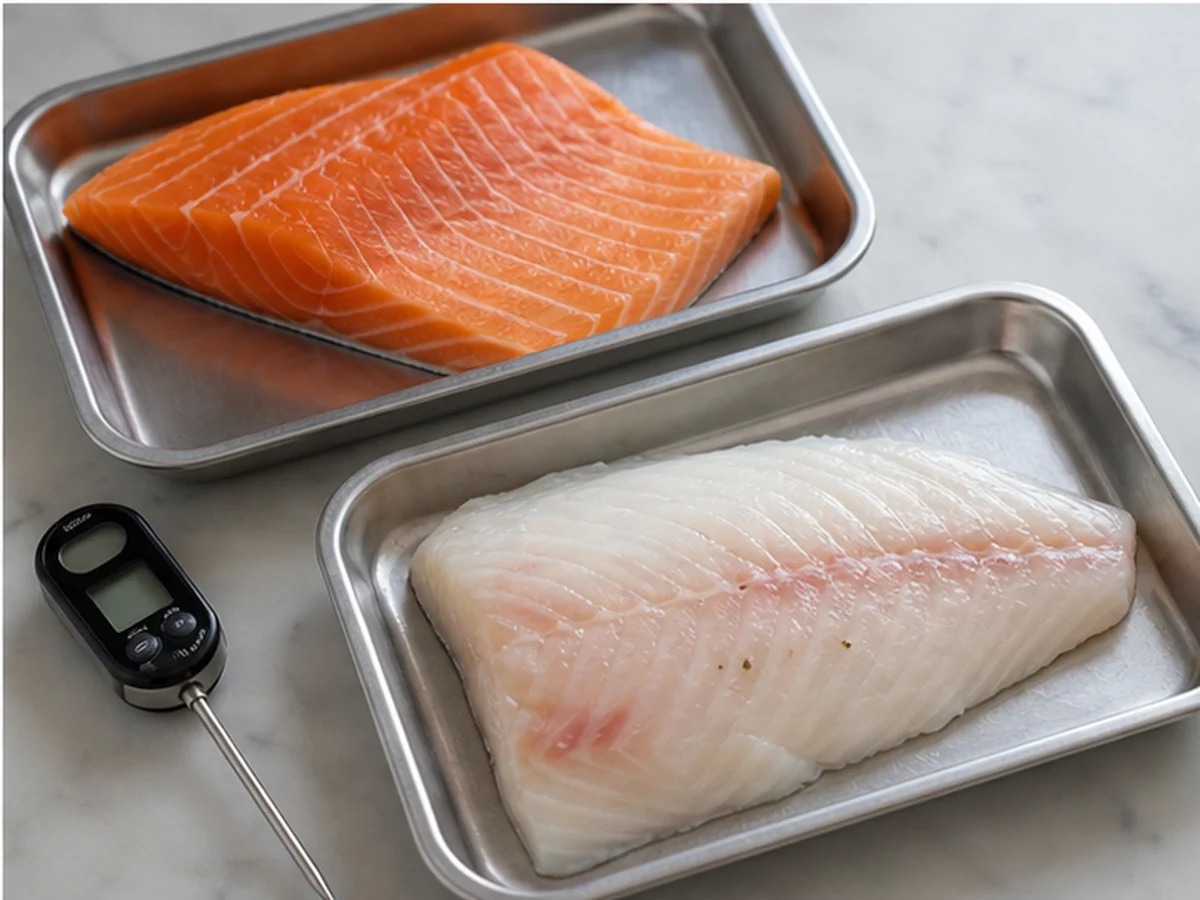
Some raw fish species contain thiaminase, an enzyme that breaks down thiamine, or vitamin B1. Repeated feeding can matter far more than one tiny accidental taste, and heat generally inactivates the enzyme.
Thiaminase content is not identical across all fish, and nutritional deficiency develops from dietary pattern rather than the mere word seafood. Do not diagnose deficiency from one vomiting episode.
Cats with thiamine deficiency can develop appetite loss and neurologic abnormalities, but those signs have many causes and require veterinary evaluation. The safe lesson is to avoid routine raw fish and feed a complete diet, not to supplement B vitamins blindly.
Mercury requires species context and feeding frequency
Mercury accumulates more in some large, long-lived predatory fish than in many smaller species. One tiny cooked flake is different from repeatedly feeding tuna or another high-mercury fish as a major portion of the diet.
FDA and EPA publish species-based fish advice for people, including lower- and higher-mercury choices. That chart is human guidance rather than a feline feeding table, but it correctly shows why “all fish have the same mercury” is false.
Cats also differ in body size, lifespan, diet proportion, and nutrient needs, so do not convert human weekly servings directly. Use commercial complete cat food from a reputable manufacturer or ask a veterinary nutritionist about a home-prepared plan.
The tuna guide for cats addresses mercury, canned forms, oil, sodium, tuna water, and the way a favorite food can crowd out balanced nutrition.
Fish species change more than mercury
| Type | Distinct question | Practical note |
|---|---|---|
| Salmon and trout | Bones, fat, parasites, raw source | Cook fully, remove bones, and keep portions small. |
| Tuna | Mercury, sodium, oil, dietary fixation | Do not use human tuna as a staple. |
| Sardines and anchovies | Cans, salt, oil, tiny bones | Choose only an appropriate plain product and tiny amount. |
| Cod, haddock, pollock | Pin bones, breading, batter | Plain cooked flesh differs from fish sticks. |
| Mackerel | Species name, oil, salt, mercury varies | Identify the exact mackerel rather than using one rule. |
| Tilapia and catfish | Cooking, bones, seasoning, source | Serve only fully cooked plain boneless flesh. |
| Bait fish or wild catch | Hooks, parasites, spoilage, identity | Do not feed an unknown raw catch. |
Canned fish can be plain-looking and still complicated
Cans may pack fish in water, brine, oil, broth, sauce, tomato, chili, smoke flavor, or seasoning. “In water” does not guarantee no sodium, and flavored broth may contain onion or garlic.
Rinsing can remove some surface salt or oil but does not establish a medically appropriate sodium or fat level. Sharp lids, pull tabs, and torn foil pouches also cut mouths and paws.
Never let a cat lick directly from an opened can. Transfer any veterinarian-approved morsel with a clean utensil and secure the lid immediately.
Smoked, salted, dried, and cured fish
Smoked salmon, kippers, jerky, dried minnows, salt cod, and cured fish can carry substantial sodium and concentrated calories. Some products also contain sugar, garlic, onion, pepper, preservatives, or smoke flavor.
One tiny shred may cause no illness, while a major salty raid can produce vomiting, marked thirst, weakness, tremors, incoordination, or seizures. Provide normal water access and call rather than forcing fluids.
Pet-labeled dried fish treats should still have feeding directions, storage instructions, and calorie information. Discard moldy treats and account for freshness packets.
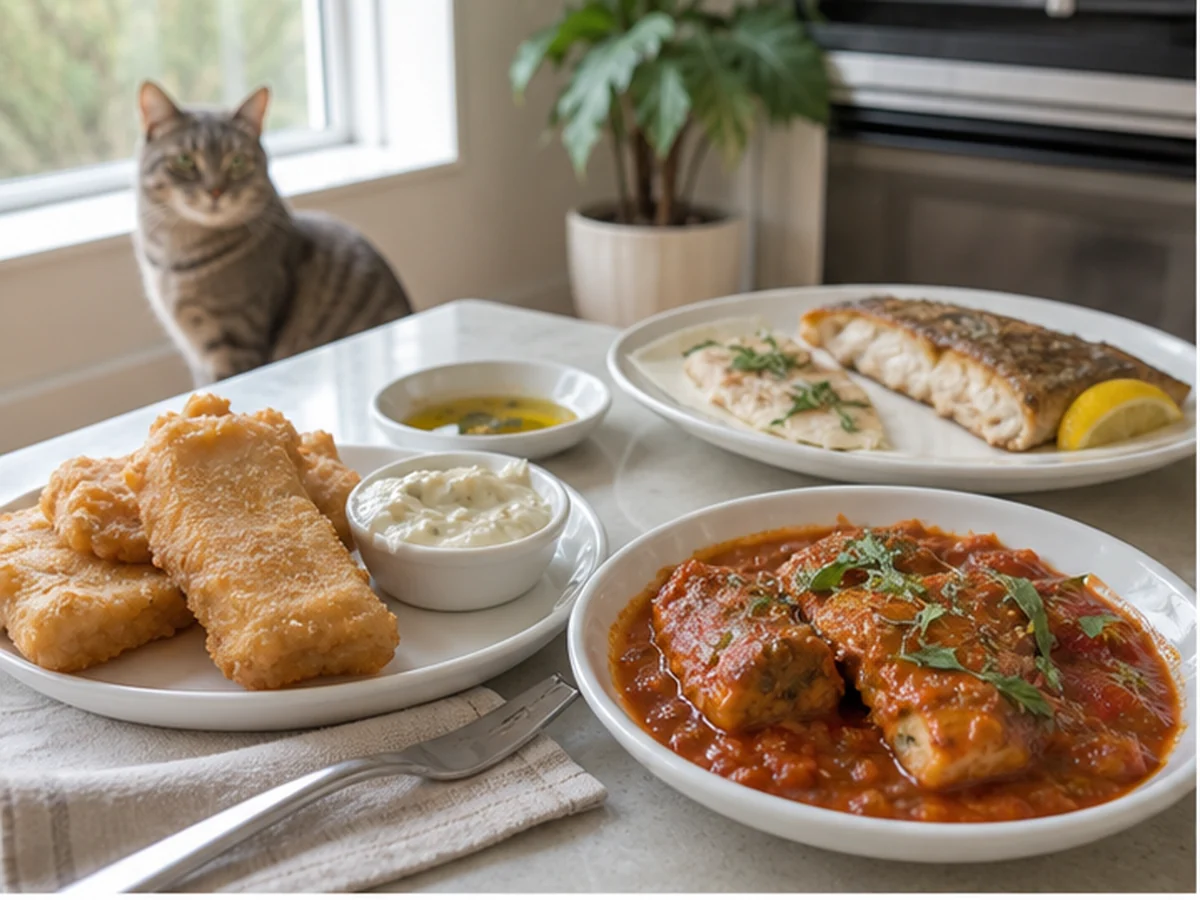
Battered, fried, sauced, and restaurant fish
Fish sticks, fried fillets, tempura, curry, chowder, fish pie, tacos, and blackened fish introduce flour, grease, dairy, salt, Alliums, alcohol, hot pepper, bones, toothpicks, and packaging. Peeling away batter does not remove absorbed seasoning and oil.
Onion and garlic can damage feline red blood cells even when cooked. The Merck Veterinary Manual emphasizes feline susceptibility and delayed anemia after Allium exposure.
A rich bite may cause vomiting or abdominal discomfort without proving pancreatitis. Persistent pain, repeated vomiting, pale gums, weakness, rapid breathing, dark urine, or collapse needs veterinary attention.
Fish allergy and food trials
Fish proteins can trigger food allergy in an individual cat, commonly presenting through recurring skin or gastrointestinal signs. One vomit after greasy fish does not establish allergy, and internet ingredient rankings cannot diagnose it.
Veterinary elimination and controlled challenge are the usual diagnostic approach. During a formal trial, fish treats, flavored medicines, dental products, and another pet’s bowl can undermine the result.
Facial swelling, wheezing, breathing difficulty, or collapse after eating requires emergency care. Do not give a human antihistamine unless a veterinarian approves the specific product and dose.
Fish alone is not a complete feline diet
Fish contains protein and may supply fatty acids and other nutrients, but a fillet does not provide every required nutrient in the correct amount and relationship. Repeatedly replacing balanced meals can create deficiencies or excesses.
The FDA explains complete-and-balanced labeling, including life-stage nutritional adequacy. A cat food named after fish can be complete because the finished recipe is formulated and tested, not because fish alone is complete.
Fish oil is also a concentrated supplement rather than a substitute for meat or a casual topper. Dose, EPA and DHA content, oxidation, calories, medication interactions, and the cat’s disease state require veterinary review.
Storage prevents the fish smell from becoming a medical history
Buy refrigerated seafood on adequate ice and avoid sour, rancid, strongly fishy, or ammonia-like odors. Frozen packages should be intact without obvious thawing and refreezing.
Refrigerator thawing is the simplest method, while a watertight bag under cold water can be used when the fish will be cooked right away. Keep raw juices away from ready-to-eat food, then refrigerate cooked leftovers promptly in a covered container.
Do not use the cat as a freshness detector. Enthusiasm reflects odor and opportunity, not microbial testing.
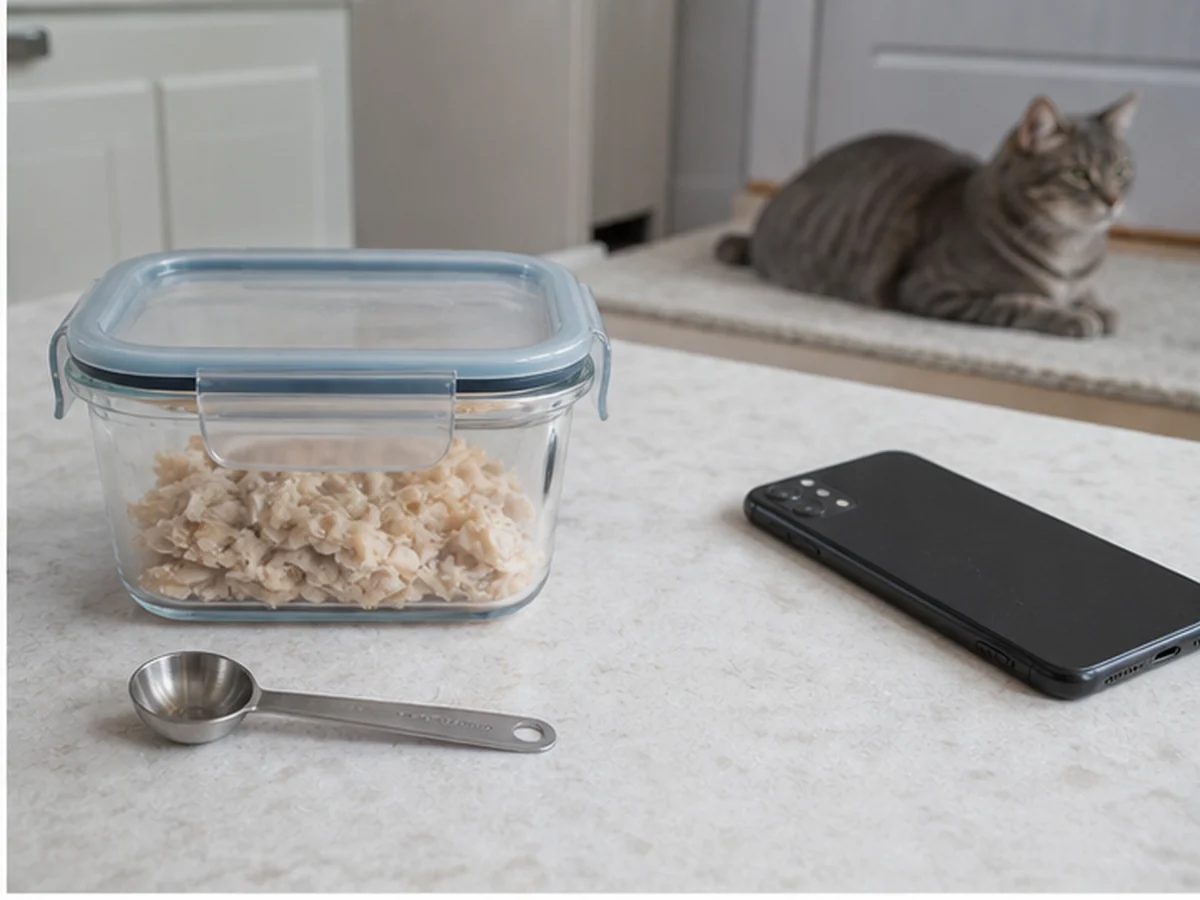
What to tell the clinic after a fish raid
- Identify: species, raw or cooked status, wild or packaged source, product name, lot, and storage history.
- Inventory: bones, hooks, line, skewers, can lids, foil, packets, breading, sauce, garlic, onion, and salt.
- Measure: maximum amount, time, cat weight, diseases, medication, and current symptoms.
- Call promptly: raw fish, bones, unknown catch, large amounts, spoilage, Alliums, hardware, or a vulnerable cat deserves advice.
- Go urgently: airway trouble, collapse, severe weakness, repeated retching, seizures, or intense pain needs immediate care.
Frequently asked questions
Can cats eat fish every day?
Only when fish appears within a commercial or professionally formulated complete feline diet. Plain fillets and human canned fish should not replace balanced meals day after day.
What fish is safest for cats?
No species removes every issue. A small piece of identified, fresh, fully cooked, plain, boneless lower-mercury fish is simpler than raw, bony, smoked, seasoned, or unknown fish.
Can cats eat fish skin?
Plain fully cooked skin may be edible but is fatty, easy to season, and can carry scales or attached bones. Removing it makes a treat easier to inspect and portion.
What if my cat swallowed a fish bone?
Call promptly with species, bone size, time, symptoms, and cat weight. Do not induce vomiting or feed bulky food because a sharp bone can lodge or puncture.
Bottom line
Fish can be a tiny excellent-smelling guest in a cat’s diet when it is identified, cooked, plain, boneless, fresh, and measured. Species and frequency drive mercury and thiaminase context, while raw pathogens, H5N1 guidance, bones, seasonings, and complete nutrition deserve precision instead of folklore.