Can Cats Eat Pears? Flesh, Core, Seeds, and Products
One tiny piece of ripe, peeled, seed-free pear flesh is generally low risk for a healthy adult cat, but cats do not need fruit. Core, seeds, stem, large chunks, canned syrup, dried fruit, fermented products, spoilage, skewers, and packaging need closer attention.
Account for the core
Find the core, seeds, stem, produce sticker, and knife before deciding the cat ate only flesh. Note the amount, time, and whether any seeds were crushed.
Call promptly for a missing core, chewed seeds, a whole large piece, packaging, or a cat with breathing trouble, repeated vomiting, weakness, bright-red gums, seizures, collapse, or abdominal pain.
Do not induce vomiting or deliberately crush another seed for comparison. Save the fruit and any product label.
Ripe flesh is the simple part
Soft pear flesh is not recognized as a feline toxin and one tiny bite often causes no sign. Sugar and fiber still make it an unnecessary extra.
Peel the piece, remove every seed and bit of core, and flatten it smaller than a fingernail. Cats that gulp should receive no fruit experiment.
The Cornell Feline Health Center’s feeding resource makes clear that cats require a properly balanced diet rather than fruit-based nutrition. Human fiber and vitamin claims do not establish a therapeutic pear portion.
Seeds contain cyanogenic material
Pear seeds contain cyanogenic glycosides capable of releasing cyanide, especially when crushed or chewed. One intact stray seed is not the same exposure as a mouthful of pulverized seeds.
Call about chewed seeds or an uncertain seed quantity and report the form honestly. Avoid inventing a feline toxic dose where evidence is limited.
The Merck Veterinary Manual describes rapidly developing breathing difficulty, weakness, neurologic signs, and collapse in significant cyanide poisoning.
Core and stem are physical hazards
The fibrous core and woody stem are difficult to chew and can lodge in the throat or gastrointestinal tract. A quarter-core is much more concerning than a soft flesh shaving.
The Merck obstruction overview lists vomiting, appetite loss, lethargy, pain, and shock among possible findings.
Never pull stem or fiber protruding from the mouth or anus. Call with the missing size and follow imaging or monitoring advice.
Choking can happen with seed-free fruit
A ripe pear cube is smooth and slippery, while an unripe wedge is hard. Either can be swallowed poorly when too large.
Emergency signs include silent gagging, little or no air movement, blue-gray gums, panic, and collapse. Do not perform a blind finger sweep.
Kittens, seniors, flat-faced cats, and cats with dental or swallowing disease should skip pear entirely.
Wash before cutting
Surface microbes and residue can move into flesh on a knife. The FDA recommends running water, clean hands and tools, and separation from raw meat.
Remove produce stickers and do not use soap on fruit. A missing sticker or plastic bag is a foreign-object question.
Garden or orchard chemicals require the exact product label. Advice about edible flesh cannot manage pesticide exposure.
Asian pears and different varieties
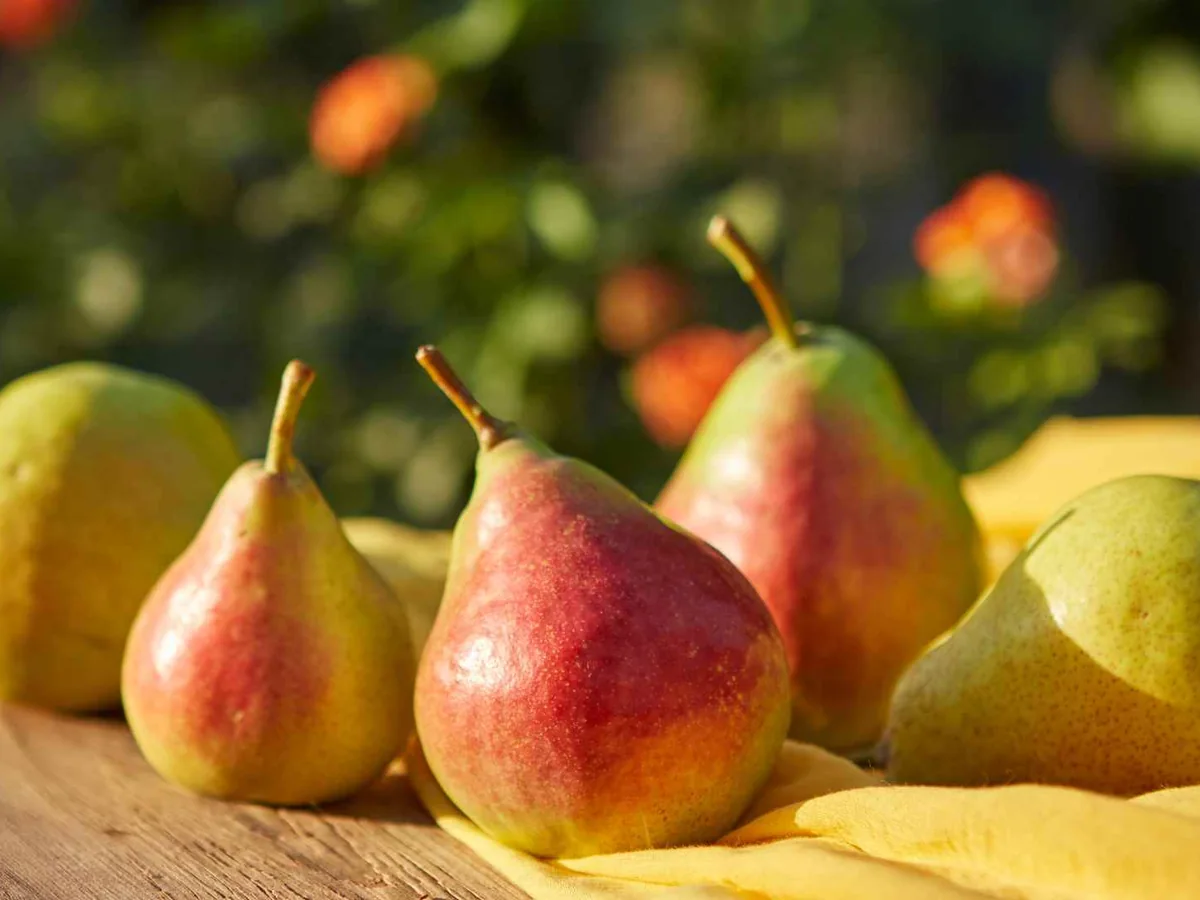
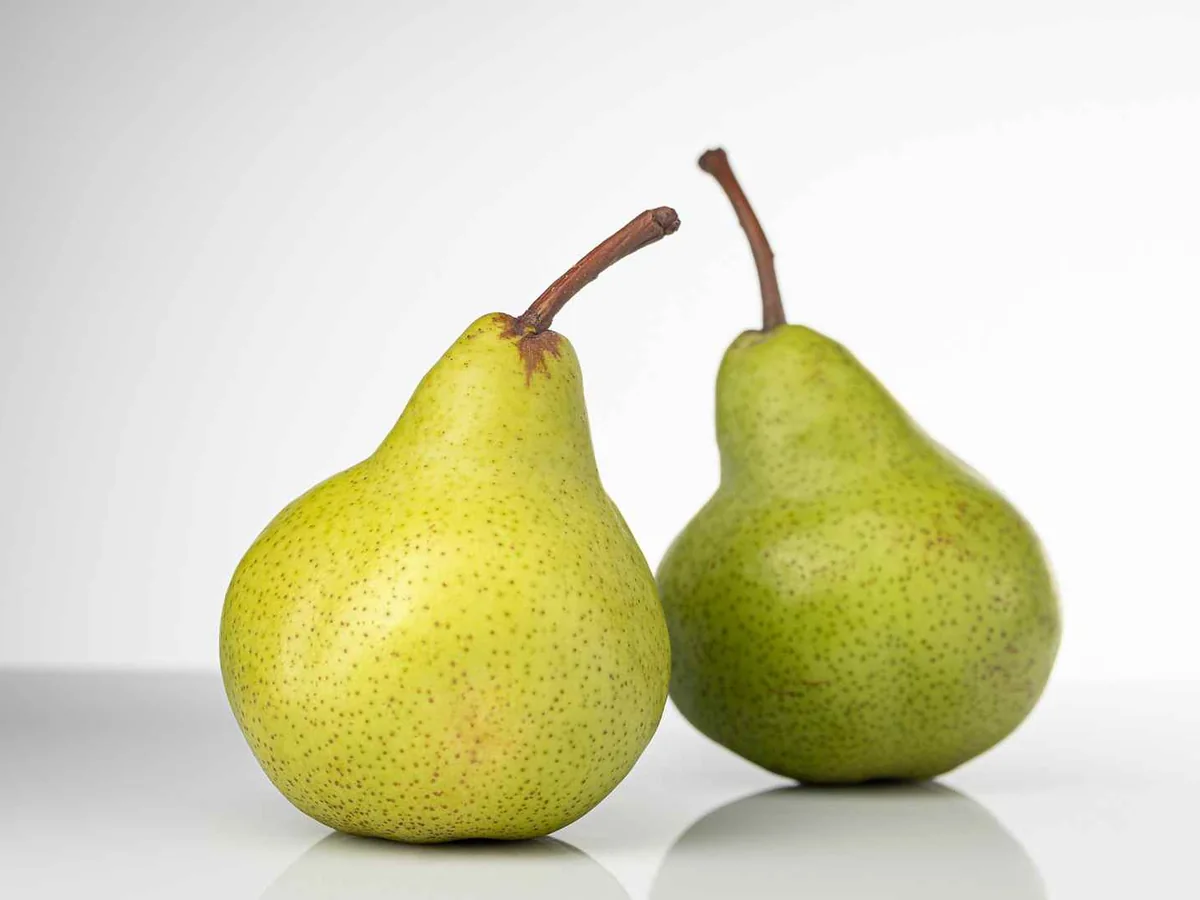
Asian pears are crisp and round, while many European pears soften as they ripen. Variety changes texture and choking risk more than the basic seed concern.
Do not offer a hard chunk simply because the fruit is ripe for its type. Thin, tiny, seed-free pieces remain the conservative form.
The live pear product guide helps distinguish preparations, but canine portions and toxic thresholds do not define feline advice.
Overripe and fermented pears
A soft ripe pear is acceptable for people, but sour odor, fizz, slime, leaking juice, or mold means discard. Fermentation can produce ethanol.
Call for unusual sleepiness, poor coordination, low temperature, vomiting, weakness, tremors, or seizures after spoiled fruit.
Do not cut away a mold patch and feed the remaining fruit. Secure the whole item in lidded trash.
Canned pears and fruit cups
Canned pears may sit in juice, light syrup, heavy syrup, or sweetened blends. They remain sugary and may contain other fruits or sweeteners.
The FDA Nutrition Facts guide helps interpret serving size, added sugar, and ingredients. No-sugar-added does not identify the sweetener.
Check foil lids and plastic cups for missing fragments. A tiny drained plain piece is lower risk than syrup drinking, but there is no benefit in serving either.
Pear sauce and baby food
Pear puree may be plain or blended with apple, prune, cinnamon, lemon, yogurt, vitamins, or preservatives. Baby food is formulated for human infants, not cats.
A plain lick is generally low risk, while products containing grape ingredients, medication, or supplements need specific review.
Do not use pear sauce to treat feline constipation without veterinary direction. Fiber type, hydration, and the cause of constipation matter.
Dried pears
Drying removes water and creates a dense, chewy, sugar-concentrated piece. Commercial fruit may include sulfites, added sugar, spice, or a desiccant packet.
Long strips can fold into the throat and whole pieces can be difficult to chew. Do not offer dried pear to cats.
The cat dried mango guide offers relevant comparison for chewiness, sulfites, and bags without making the fruits identical.
Desserts, pastries, and poached pears
Pear pie and pastries can add butter, raw dough, nuts, raisins, chocolate, alcohol, sugar substitutes, foil, and skewers. Poached pears may contain wine or liqueur.
Report the full recipe rather than highlighting the visible fruit. Alcohol, dark chocolate, or a missing pick can determine urgency.
Hot syrup can burn the mouth and adhere to fur. Use room-temperature water on a minor surface splash and seek care for blistering or persistent pain.
Juice, cider, and fermented drinks
Pear juice is sugary liquid rather than useful hydration, and blended juice may include grape concentrate. Perry and hard pear cider contain alcohol.
The cat alcohol guide covers weakness, poor coordination, sleepiness, temperature changes, and breathing concerns.
Call immediately after an alcoholic drink exposure and do not try to sober a cat with food or coffee.
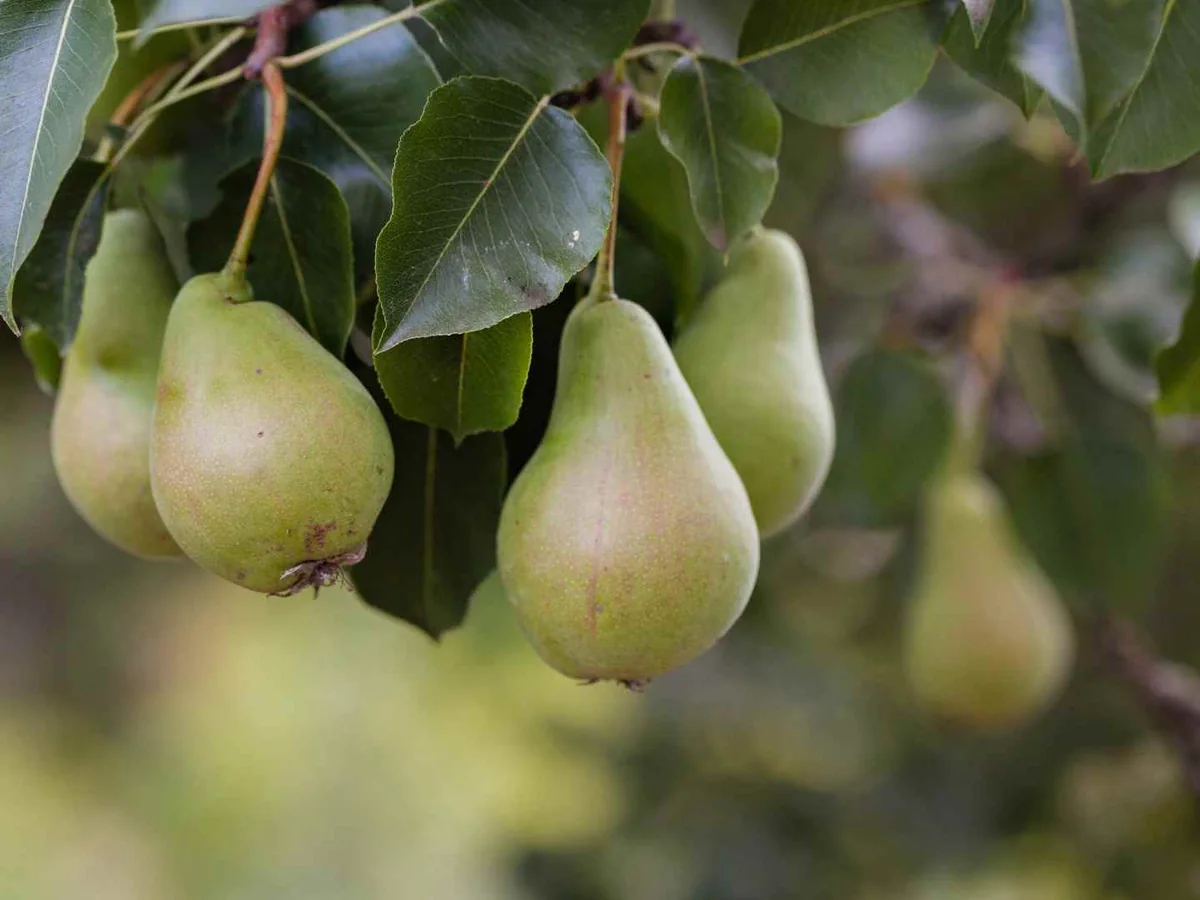
Cats who should decline
Diabetes, obesity, gastrointestinal disease, dental pain, swallowing trouble, food allergy, and prescription diets remove any reason to offer pear.
A cat that refuses its normal food needs medical attention rather than rotating fruit. Prolonged under-eating can become dangerous.
Keep cores and stickers in lidded trash, cover fruit bowls, and offer part of the cat’s usual ration during food preparation.
After one tiny flesh bite
When every seed and the core are accounted for, continue normal meals and water while watching appetite, energy, stool, vomiting, swallowing, and breathing.
Call if signs recur, worsen, or include pain, weakness, dehydration, or food refusal. A missing seed cluster or core never belongs in simple monitoring.
A tiny ripe flesh piece is generally low risk, but core, seeds, choking, spoilage, products, and packaging make the complete pear answer.
Pear chips and freeze-dried pieces
Pear chips can be baked, fried, sweetened, spiced, or dried into a hard disc. Freeze-drying creates a brittle concentrated piece and may involve mixed-fruit bags.
Do not offer either form because hard edges and concentrated sugar add no benefit. Check labels for cinnamon, chocolate, sweeteners, and desiccant packets.
A tiny plain crumb usually needs monitoring, while choking, repeated vomiting, a large piece, or missing plastic warrants a call.
Pear baby pouches and caps
Squeeze pouches may contain pear with spinach, yogurt, oats, chia, prune, citrus, vitamins, or preservatives. Their small caps are serious choking and foreign-object hazards.
A plain puree lick is generally low risk, but the ingredient panel and cap count come first. Do not leave a pouch for a cat to chew.
Discard empty pouches in lidded trash and rinse food residue before recycling when local directions allow. Sticky packaging remains interesting long after the snack is gone.
Orchard and backyard hazards
Fallen pears accumulate fermenting flesh, wasps, mold, pits from other fruits, and lawn chemicals. Tree leaves and branches also fall outside advice for washed ripe flesh.
Clear windfall fruit daily and keep cats away from treated ground. Save fertilizer, pesticide, and herbicide labels after any suspected contact.
If several fruits are missing, do not assume the cat ate only the soft portions. Search for chewed cores and seed debris before calling.
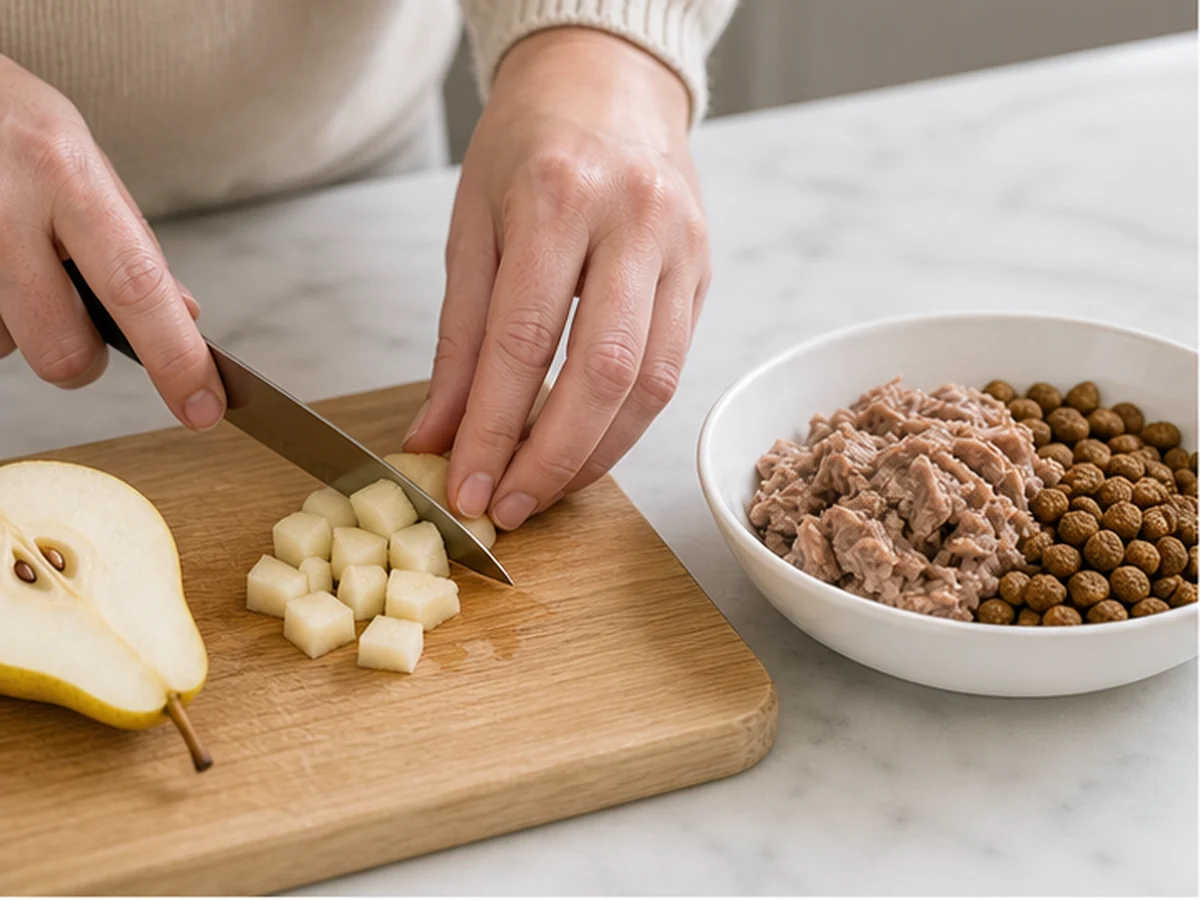
Portion and repeated feeding
Even safe flesh adds sugar and fiber to a small feline calorie budget. Repeated pieces can change stool or displace nutritionally complete food.
Cats with diabetes, obesity, or a controlled gastrointestinal diet should follow their prescribed plan. Fruit variety is not a nutritional requirement for obligate carnivores.
If a veterinarian approves occasional produce, count it within all treats rather than on top of them. A sliver should remain a sliver.
Pear-flavored candy and gum should be assessed by their own formula rather than by fresh-fruit advice. They may contain caffeine, active supplements, sugar substitutes, hard pieces, or wrappers that change the exposure completely.
A pear-scented product is not proof that pear is present, and a fruit picture is not an ingredient list. Keep the package and call about any unfamiliar active component.
FAQ
Can cats eat ripe pear?
One tiny peeled, seed-free piece is generally low risk for a healthy cat, but it is unnecessary.
What if my cat ate pear seeds?
Call if seeds were chewed or the number is uncertain because they contain cyanogenic material. Do not wait for signs after a meaningful exposure.
Can cats eat pear skin?
Washed skin is not a known toxin, but peeling makes a tiny bite easier to chew and removes residue.
Is canned pear safe?
Syrup-packed fruit should not be offered. Check sweeteners, other fruits, and foil packaging after a theft.
Bottom line
A tiny ripe flesh piece is generally low risk, but core, seeds, choking, spoilage, products, and packaging make the complete pear answer.