Can Cats Eat Refried Beans? Onion, Garlic, Fat, Salt, and Toppings
Refried beans are best kept away from cats because the finished dish commonly contains onion or garlic, plus salt and fat. A dot of verified plain canned bean paste is not the same as a missing restaurant scoop, so the useful first move is to identify who made it and exactly what went into the pan.
Three kitchens, three different answers
Homemade refried beans can be reconstructed from the pot; a can has an ingredient panel; restaurant beans may require a call to the kitchen. Do not assume “vegetarian” means unseasoned, because vegetable oil can replace lard while onion, garlic, stock, chile, and salt remain.
- Save the can, recipe, takeout label, seasoning packet, and receipt.
- Estimate the missing amount before scraping the plate or washing the bowl.
- Ask whether the beans were pinto, black, mixed, or a dehydrated instant product.
- Count foil lids, pull tabs, plastic film, spoons, tortilla pieces, and toothpicks.
- Write down the time, cat’s weight, health conditions, and current behavior.
The mash hides Alliums exceptionally well
Onion and garlic can be sautéed until invisible, blended as powder, or supplied by bouillon and spice mixes. The Merck Veterinary Manual’s Allium review explains that cats are especially susceptible to oxidative red-blood-cell injury from raw, cooked, dehydrated, or granulated forms.
There is no reliable household test that proves a smooth spoonful contains little enough garlic or onion to ignore. Call promptly when an Allium is confirmed, the recipe is unknown, a meaningful amount disappeared, or the cat has anemia or another serious condition.
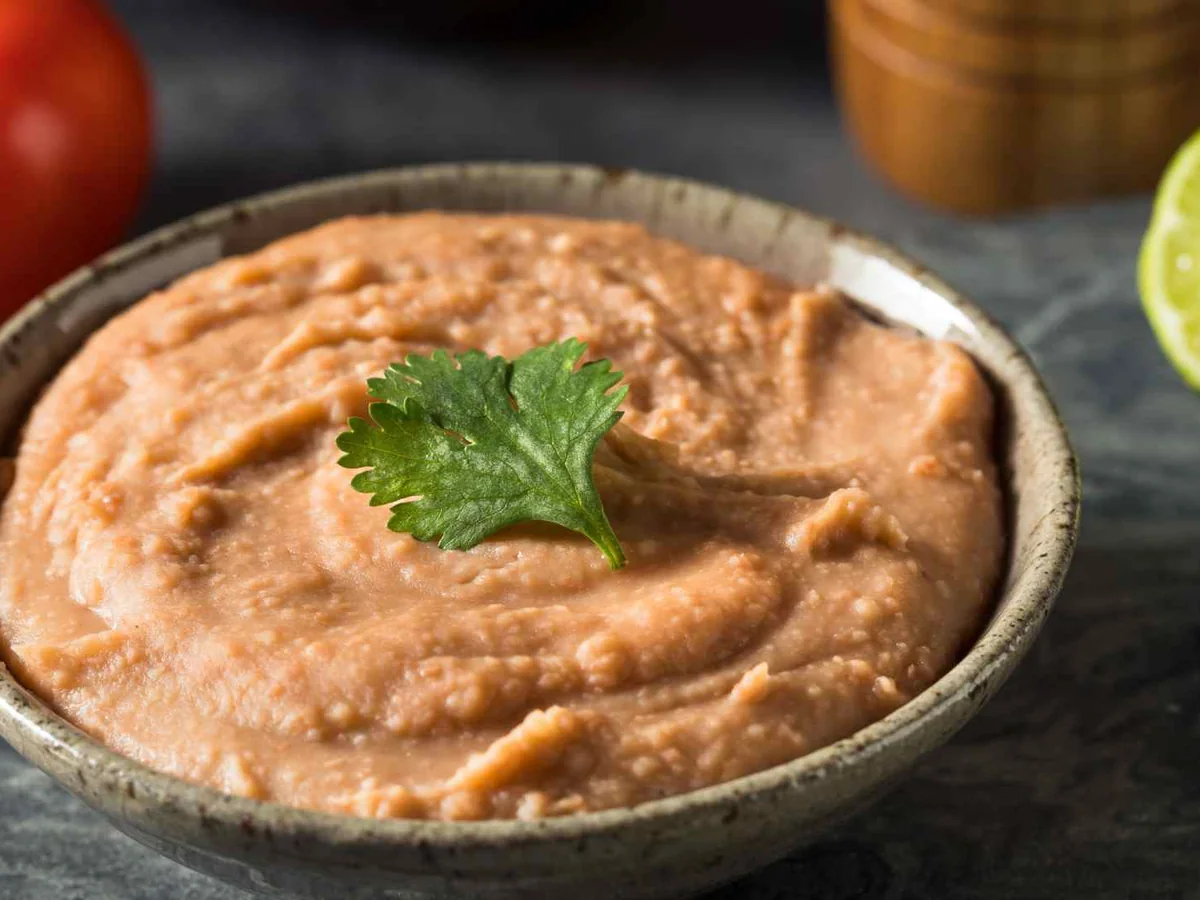
Normal behavior tonight does not close the Allium file
Digestive signs may occur first, while anemia can become apparent over the following days. Weakness, unusual tiredness, appetite loss, pale or yellow gums, rapid breathing, fast heartbeat, dark urine, exercise intolerance, or collapse needs veterinary care.
Follow the clinic’s timing for observation and any recommended bloodwork instead of setting your own twenty-four-hour finish line. The site’s focused pages on onion and garlic help translate the ingredient list into signs worth reporting.
Cooking the bean does solve one question
Refried beans made from canned or properly boiled beans are not raw legumes, so the lectin issue associated with raw and undercooked beans is less central. The FDA describes phytohaemagglutinin in raw or undercooked beans, but that human-food guidance does not supply a feline toxic count.
If a homemade batch began with dry beans, report whether they were soaked, boiled, slow-cooked, pressure-cooked, or only warmed. A soft texture does not tell you every temperature step, especially when beans were prepared in a low-temperature appliance.
Lard, bacon fat, and oil change the serving quickly
Traditional and restaurant recipes may fry or mash beans with lard, bacon drippings, butter, or generous oil. A surface lick might only lead to mild stomach upset, but a large smooth portion can deliver much more fat before a cat pauses to chew.
Do not state that one bite causes pancreatitis, because individual outcome cannot be predicted that way. Repeated vomiting, marked lethargy, abdominal discomfort, or refusal of food should be examined, particularly in a cat with previous pancreatitis or a fat-restricted plan.
Salt is distributed through the paste
Canned beans, seasoning packets, broth, cheese, cured meat, and table salt can all contribute sodium. Rinsing a whole canned bean before mashing may remove some surface brine, but rinsing finished refried beans cannot pull dissolved seasoning back out.
Cats with kidney disease, heart disease, high blood pressure, urinary concerns, or a sodium-controlled prescription diet should not receive casual refried-bean extras. Report extreme thirst, repeated vomiting, weakness, poor coordination, tremors, or seizures urgently after a substantial salty-food exposure.
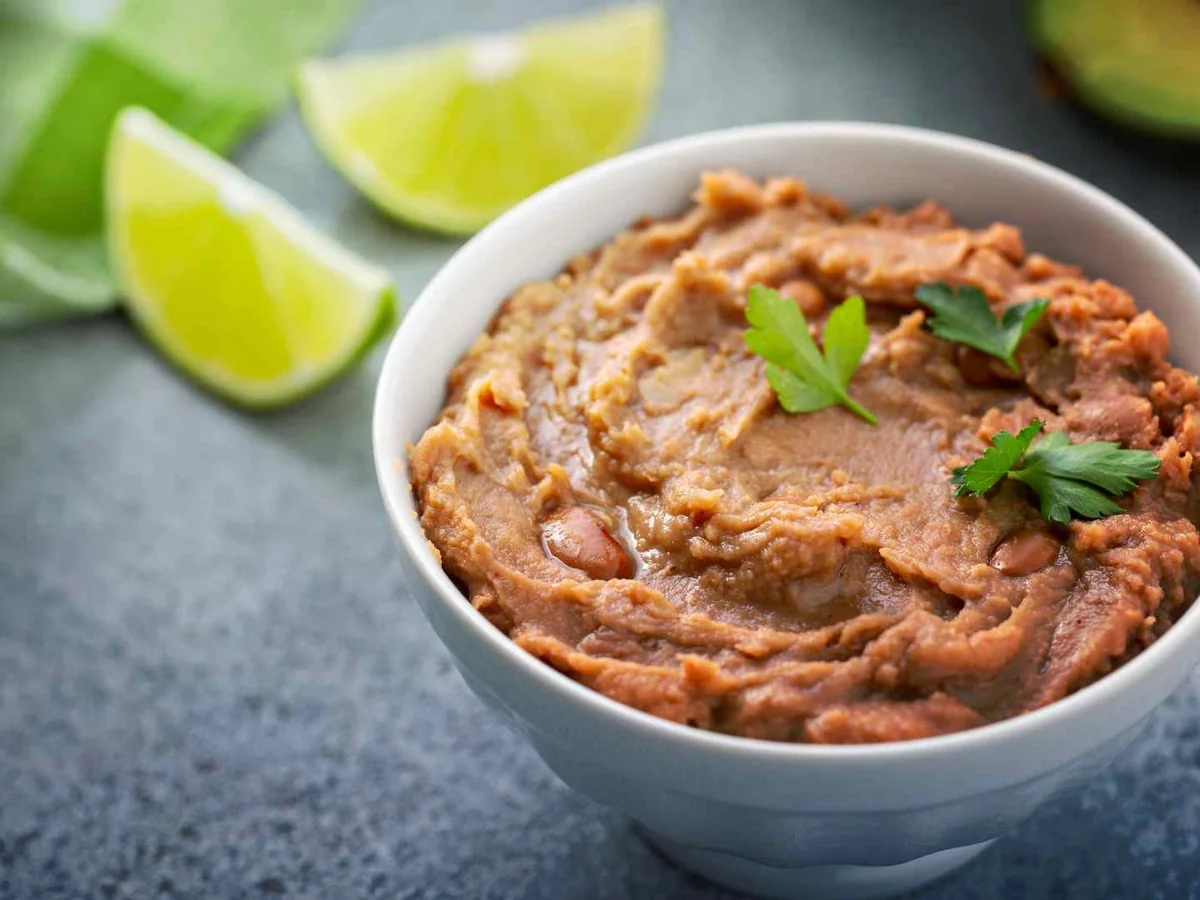
Chile is irritating, but identify the pepper before naming the risk
Jalapeño, chipotle, cayenne, hot sauce, and chile powder can irritate the mouth and digestive tract, causing drooling, mouth pawing, vomiting, diarrhea, or frantic grooming after residue reaches the fur. Sweet paprika and mild colorings do not imply the same capsaicin exposure.
Move the cat away from the food and ask how to clean contaminated fur or eyes without spreading it. Do not force milk, oil, or water into the mouth, and seek urgent care for breathing trouble, severe eye pain, or marked distress.
The toppings can be more obvious than the beans
| Plate addition | What to check |
| Shredded cheese or queso | Fat, sodium, dairy tolerance, hot temperature |
| Sour cream | Fat, lactose, spoilage, flavored varieties |
| Salsa or pico de gallo | Onion, garlic, chile, lime, salt |
| Guacamole | Onion, garlic, fat, chile, pit or peel nearby |
| Meat | Seasoning, onion, garlic, bone, gristle, fat |
| Tortilla or chips | Salt, hard edges, seasoning, bag or foil |
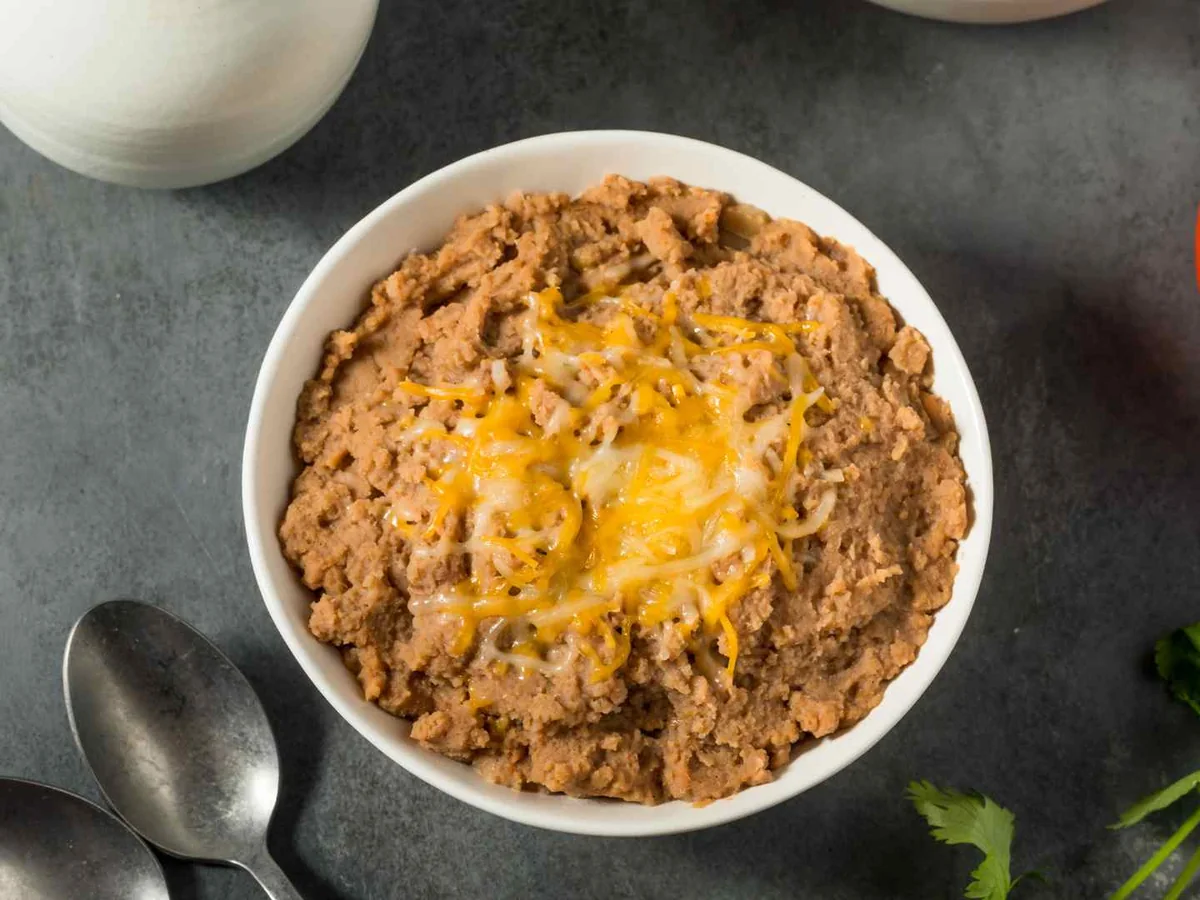
Scraping off visible cheese does not return the mash to its earlier recipe. Report the assembled dish as eaten, including whatever the cat dragged across the plate.
Cans, pouches, and instant cups create physical hazards
A jagged can rim or detached pull tab can cut the lips, tongue, paw, or esophagus, while a foil lid can curl into a sharp swallowable strip. Instant bean cups may add boiling water, seasoning sachets, and plastic film to the scene.
Blood in the mouth, sudden drooling, repeated swallowing, gagging, or a missing metal or foil piece warrants prompt veterinary attention. Do not reach blindly into the throat or induce vomiting after a possible sharp object.
A bean burrito is not a larger bean question
Burritos, tostadas, nachos, seven-layer dip, and enchiladas combine refried beans with flour or corn tortillas, rice, meat, sauce, cheese, onion, garlic, avocado, chiles, and wrappers. The cat may eat the aromatic filling while leaving enough tortilla behind to make the theft look smaller.
Use the guide to guacamole for cats when that topping is present, but keep one master inventory. Several individually modest ingredients can still create a recipe that merits professional review.
Who should never get the ceremonial lick
Kittens and cats with diabetes, obesity, gastrointestinal disease, food allergy, kidney or heart disease, anemia, pancreatitis history, or therapeutic diets should stick to approved food. Smooth table scraps make poor medication vehicles too, because the recipe may conflict with a drug or make dosing unreliable.
Beans provide plant protein and fiber, but neither fact turns refried paste into balanced feline nutrition. The FDA’s nutritional adequacy explanation is a better standard for the main diet than the protein line on a human label.
The ten-minute cleanup plan
- Move the cat to a clean room and collect the plate, takeout container, cans, foil, and utensils.
- Identify every seasoning and topping, with special attention to onion, garlic, chives, leeks, and shallots.
- Estimate the amount and time, then photograph labels before anything goes into the bin.
- Call promptly for Alliums, an unknown recipe, a large portion, abnormal signs, or missing packaging.
- Follow the professional’s monitoring window even if the cat looks ordinary after the first cleanup.
Do not induce vomiting or give peroxide, salt, oil, milk, activated charcoal, or a human stomach remedy. Veterinary decontamination choices depend on timing, ingredients, amount, signs, and the patient’s examination.
A genuinely plain alternative is easy to arrange
If someone wants to share cooking time, set aside one fully cooked, no-salt-added bean before fat and seasoning enter the pan, then mash only a fragment after it cools. Even that tiny taste is optional and should not become a daily scoop.
A few pieces of the cat’s normal ration are simpler, nutritionally appropriate, and remarkably persuasive when delivered as though they came from a secret chef. The beans can remain on the human plate with their recipe intact.
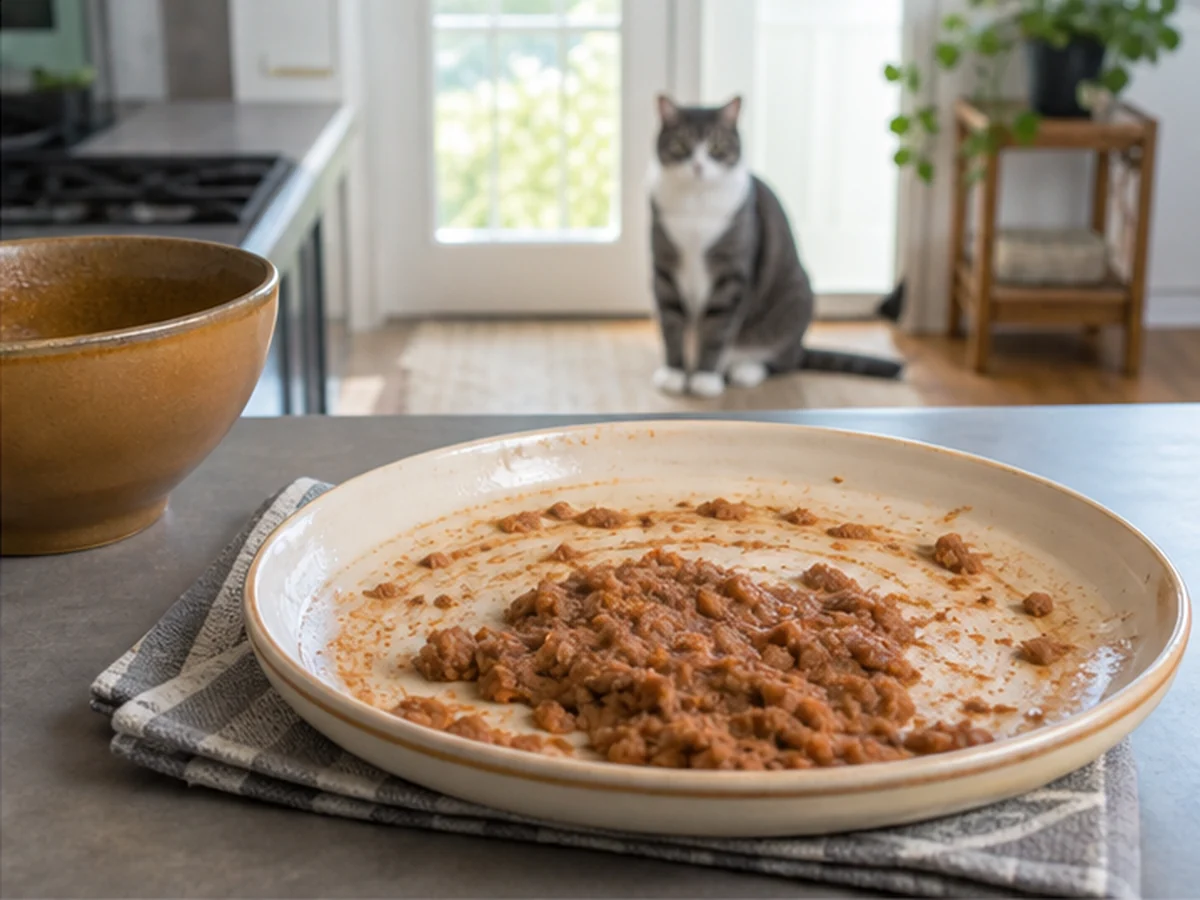
Repeated plate-licking is a diet pattern, not a series of accidents
A teaspoon of refried beans can look trivial beside an adult’s meal, yet a cat receiving that amount several nights a week accumulates calories, sodium, fat, and repeated seasoning exposure. The pattern also teaches the cat to patrol plates before diners finish.
Include all table extras when a veterinarian reviews weight, stool, glucose control, or appetite, even if each item seems too small to mention. Refried beans, cheese, tortilla, meat, and sour cream should not be recorded as one innocent lick when they routinely arrive together.
Multi-cat homes need separate estimates after a raid because the boldest cat may open access while a quieter one eats most of the evidence. Check whiskers, paws, vomit, and hiding spots without assuming guilt from whoever is still standing nearest the plate.
Instant refried-bean flakes and shelf-stable pouches deserve extra attention because dehydrated onion or garlic can sit directly in the dry mix. Powder scattered on paws may be swallowed during grooming, while a freshly reconstituted cup can cause a heat burn before seasoning risk is assessed.
Move the cat away from airborne seasoning, wipe contaminated surfaces, and ask for help with eye or fur exposure if irritation develops. Keep the empty sachet, since the outer cup may list only the bean variety while the seasoning formula appears on a separate panel.
Frequently asked questions
Can cats eat canned refried beans?
They are best avoided because canned formulas often include salt, fat, onion, garlic, chile, or flavoring. Read the current label and call about confirmed Alliums, a substantial amount, or an uncertain recipe.
Are vegetarian refried beans safe for cats?
Vegetarian usually means no lard, not no onion, garlic, oil, salt, or chile. The full ingredient list and serving size still decide the response.
What if my cat only licked the spoon?
A thin residue is lower exposure than a missing scoop, but standard recipes often contain hidden Alliums. Save the recipe, estimate the residue, and ask your veterinary clinic or animal poison service whether monitoring is sufficient.
Can refried beans help a constipated cat?
No, not as an unsupervised remedy. Constipation can involve dehydration, pain, pelvic narrowing, medication, neurologic disease, or obstruction, and salty seasoned paste may complicate the situation.
Bottom line
Refried beans are a variable, smooth food that often hides onion or garlic and carries extra salt and fat. Treat a stolen serving as a recipe investigation, call promptly for Alliums or uncertainty, and use complete cat food rather than seasoned bean mash for everyday rewards.