Can Cats Eat Salmon Skin? Cooked Pieces, Raw Fish, Bones, and Fat
A tiny piece of fully cooked, boneless, unseasoned salmon skin may be tolerated by a healthy cat, but there is no reason to serve a greasy strip. Raw fish, H5N1 concerns, bacteria, bones, salt, smoke, marinades, excess fat, spoilage, and packaging all change the advice.
Start with the fish, not the word skin
Confirm the species, whether it was farmed or wild, raw or cooked, fresh or spoiled, seasoned or plain, and sold for people or pets. Save the label and photograph any missing bones, skewers, absorbent pads, clips, or vacuum film.
Estimate the size and whether the cat chewed or swallowed it whole. A thumbnail-sized cooked flake is nothing like dragging a raw side of salmon off the counter.
Call promptly for raw salmon, a large fatty strip, bones, an unknown marinade, swallowed packaging, repeated vomiting, severe lethargy, breathing difficulty, tremors, incoordination, seizures, or sudden vision changes. Do not induce vomiting.
When a cooked skin taste is a small problem
Thorough cooking and complete bone removal reduce several important hazards, but the skin remains fatty and calorie-dense. A healthy adult cat that nabs one tiny plain piece may simply need observation.
Cool the fish fully, remove access, and continue the normal complete diet. The cat salmon guide covers the flesh as well as preparation and portions.
Do not interpret a peaceful nap after theft as proof that weekly salmon skin is beneficial. Cats are exceptionally skilled at looking innocent beside an empty plate.
Skin concentrates fat and cooking drippings
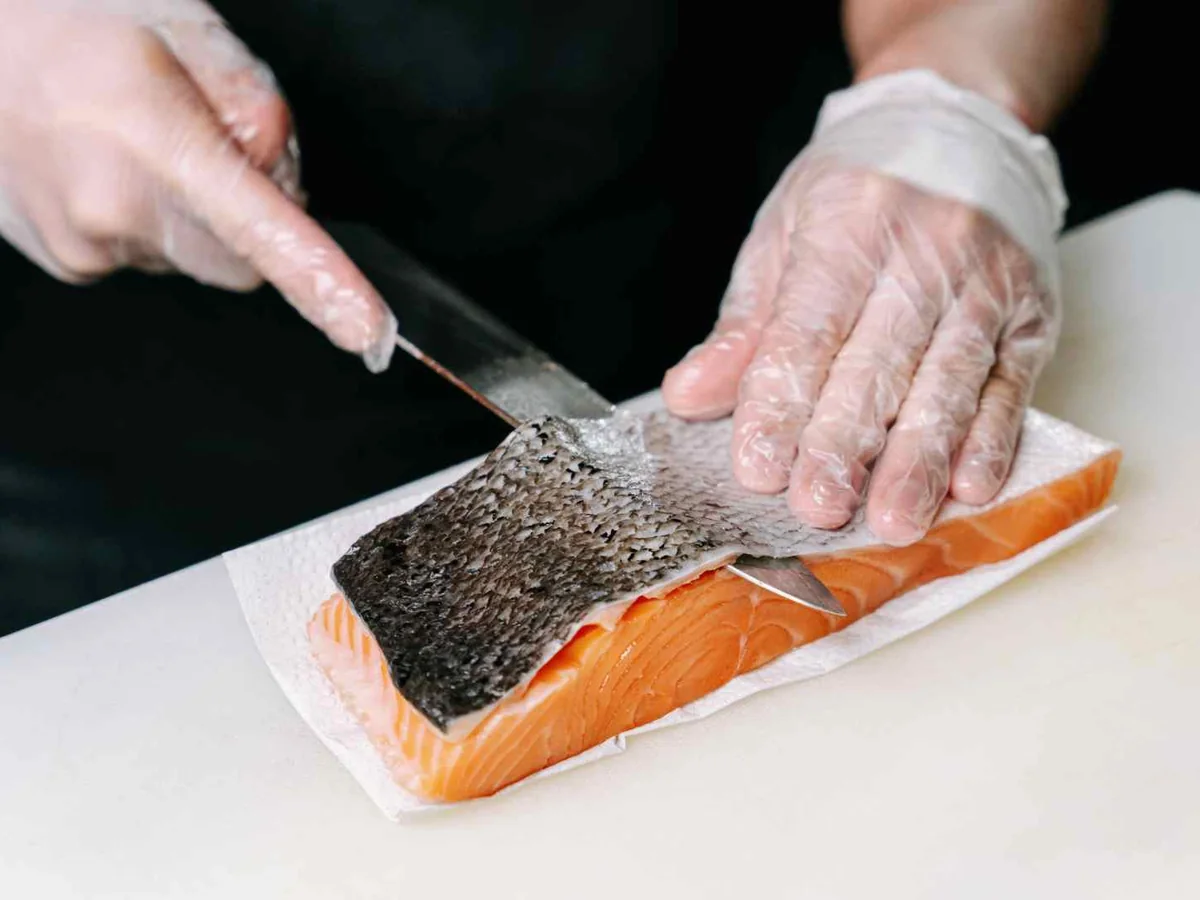
Salmon skin holds natural fat and can collect butter, oil, glaze, and pan juices. Larger servings may lead to vomiting, diarrhea, abdominal discomfort, or refusal to eat.
A single bite does not justify declaring pancreatitis, because diagnosis requires veterinary assessment. Persistent vomiting, pain, hunched posture, marked lethargy, or appetite loss warrants a call.
Cats with obesity, diabetes, inflammatory bowel disease, prior pancreatitis, or a prescribed fat-controlled plan should not receive skin scraps. Ask before using salmon to hide medication.
Raw salmon now carries an H5N1 reason for caution
Raw animal products can carry bacteria and parasites, and current avian influenza events add a serious feline concern. Although salmon is a fish, raw diets and kitchen cross-contamination may involve poultry ingredients or contaminated equipment, so the label and complete exposure matter.
The CDC advises owners not to feed pets raw pet food and lists appetite loss, fever, eye or nasal inflammation, breathing trouble, and neurologic signs among possible bird-flu signs. Cats can become severely ill.
The Cornell Feline Health Center’s current H5N1 guidance recommends avoiding raw and freeze-dried raw meat products. Call the clinic before arriving if a raw-fed cat develops suspicious respiratory or neurologic illness so the team can prepare.
Keep H5N1 claims precise
Current evidence has linked feline cases to contaminated raw poultry-based pet foods, raw milk, infected animals, and affected environments. That does not prove every raw salmon fillet contains H5N1, and it does not make raw feeding worth the avoidable uncertainty.
FDA has required covered pet-food manufacturers using uncooked poultry or cattle ingredients to consider H5N1 in food-safety plans. A current recall applies to named products and lots, not to every package with a raw label.
Check the FDA animal-food recall page when a raw pet product is involved. Preserve the lot code and do not feed a recalled product while asking for disposal instructions.
Cooking means cooked through
A quick sear can crisp the outside while leaving flesh near the skin undercooked. Use normal food-safety cooking practices for the entire fillet and avoid offering scraps from the preparation stage.
The FDA seafood-safety guidance explains safe selection, storage, and preparation for people. Thorough heat also makes skin less rubbery, though it does not remove bones or seasoning.
Microwaving can create uneven hot spots and does not guarantee every thick area reached a safe temperature. Let cooked fish cool before handling it near a curious cat.
Raw-fish bacteria affect cats and households
Salmonella, Listeria, and other microorganisms can be present without making fish look or smell spoiled. Cats may become ill or shed organisms that expose people, especially children, older adults, pregnant people, and immunocompromised family members.
Wash hands, utensils, counters, bowls, and refrigerator surfaces after raw fish. Do not let the cat lick the cutting board, sink, grocery tray, or thawing liquid.
The CDC pet-food safety page advises against raw pet food because it can sicken pets and people. Gloves do not replace proper cleanup.
Parasites and salmon poisoning disease
Raw fish can harbor parasites, and freezing or visual inspection is not a home guarantee that every hazard is gone. Do not feed trimmings because they look sushi-grade or because a seller used the word fresh.
Salmon poisoning disease is a well-known, often severe syndrome in dogs associated with a parasite-hosted bacterium in certain Pacific fish. It should not be automatically transferred to cats as an established feline syndrome.
That species boundary does not make raw salmon skin sensible for a cat. General microbial, parasitic, bone, and current raw-product concerns remain enough to choose cooked cat food.
Bones can hide along the skin
Pin bones, fin spines, rib fragments, and trimmed edges may remain even in a fillet. Cooking can make some bones brittle rather than harmless.
Coughing, gagging, repeated swallowing, drooling, mouth pain, vomiting, or difficulty breathing requires urgent help. Do not reach deeply into the mouth or pull a lodged object without professional direction.
The cat raw-fish guide gives broader context on species, thiaminase, pathogens, and bones. Skin does not shield a cat from any hidden fragment.
Salted, smoked, cured, and candied skin
Smoked salmon skin may carry substantial salt, sugar, spices, smoke flavor, or curing ingredients. Candied salmon can add syrups and sticky glazes that cling to teeth and fur.
One tiny stolen flake is different from eating a pile of salty trimmings. Marked thirst, repeated vomiting, weakness, disorientation, tremors, seizures, or collapse after a major salty exposure is urgent.
Cold-smoked fish may not be cooked in the ordinary sense, while hot-smoked products vary. Check the processing description rather than trusting the word smoked.
Garlic, onion, teriyaki, and lemon pepper
Restaurant salmon often arrives with garlic butter, onion powder, scallions, soy sauce, teriyaki glaze, chile, citrus oils, or pepper blends. Cats are especially susceptible to Allium-related red blood cell injury.
The cat garlic guide helps assess a seasoned fillet. Save the menu or recipe because scraping the surface cannot recover seasoning already absorbed into fatty skin.
Pale gums, rapid breathing, weakness, dark urine, or collapse may be delayed and require urgent care. Call before those signs appear when garlic or onion was eaten.
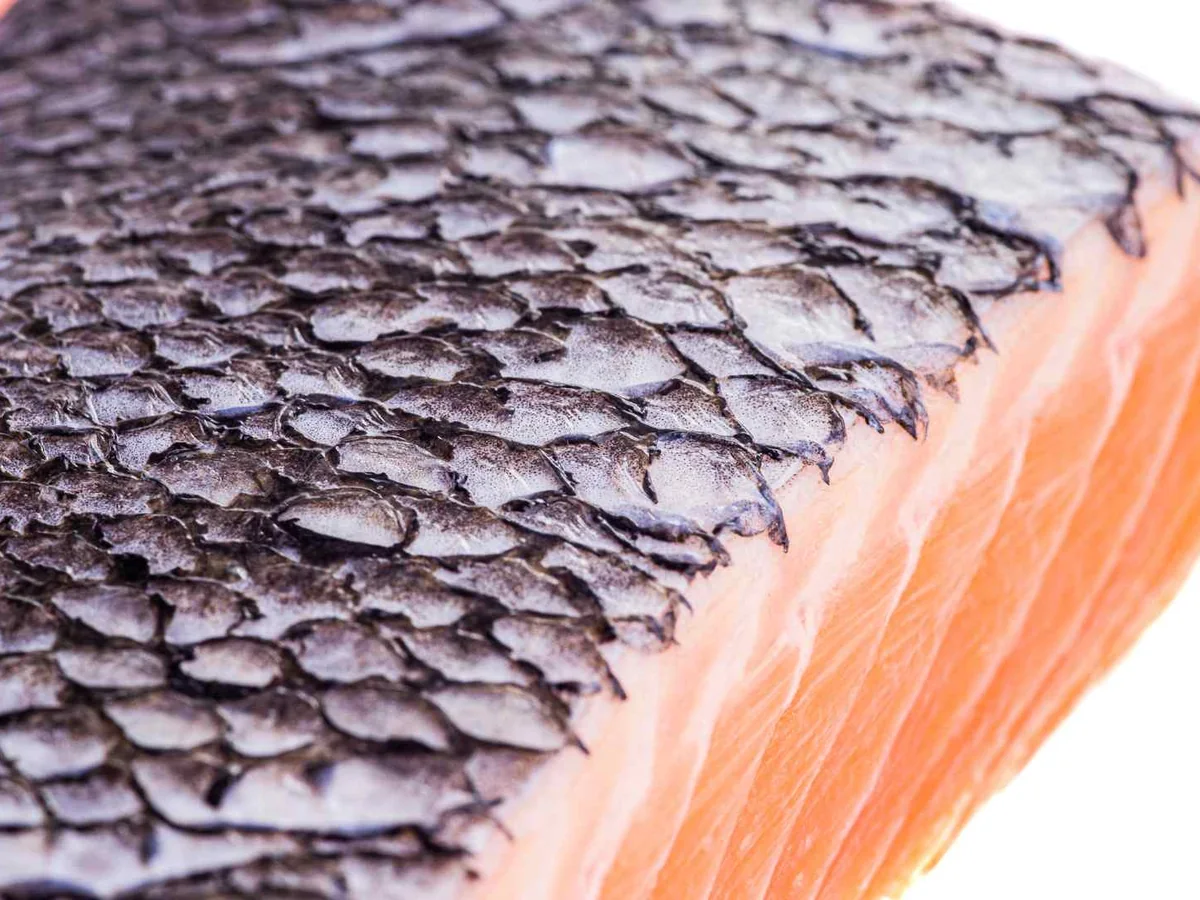
Air-fried and crispy salmon skin snacks
Air frying can make skin brittle enough to splinter into hard points, and commercial crisps may be salted or flavored. Crunch is not a dental benefit.
Pet treats need a full ingredient panel too. Look for added smoke, garlic, onion, preservatives, other species, and a feeding statement.
Treat calories belong inside the daily plan, even when the package features a salmon jumping through pristine water. Marketing scenery has never balanced a cat’s diet.
Canned salmon skin and liquid
Canned salmon may include skin and soft bones, plus water, oil, or brine. A product formulated for people is not complete cat food, and brine can deliver unnecessary sodium.
Sharp can rims and detached pull tabs are physical hazards. Transfer leftovers to a covered container instead of refrigerating an open can where a cat can investigate the edge.
Bulging, leaking, spurting, badly damaged, or foul cans should be secured and discarded according to food-safety guidance. Do not taste questionable fish to test it.
Spoilage and histamine are separate questions
Fish deteriorates quickly when temperature control fails. Sour, ammonia-like, rancid, or otherwise off odors mean the skin belongs in a secure bin, though hazardous contamination can exist without an obvious smell.
Some fish-associated histamine illness is better documented in people and in particular species; do not invent a feline dose from human guidance. Vomiting, facial changes, breathing difficulty, tremors, or collapse after spoiled fish needs immediate assessment.
Record purchase time, storage temperature, thawing method, and how long the fish sat out. That history may help both the veterinary team and human household members.
Vacuum bags, pads, hooks, and twine
Fish packages can include cling film, absorbent pads, vacuum plastic, metal clips, labels, and butcher’s twine. Grease makes every piece smell edible.
Count the packaging before cleanup and call if anything is missing. Do not pull string or film protruding from the mouth or anus because internal attachment can make pulling dangerous.
A swallowed pad may expand with fluid, while a hook or skewer can puncture tissue. Those are urgent foreign-object situations, not wait-and-see food questions.
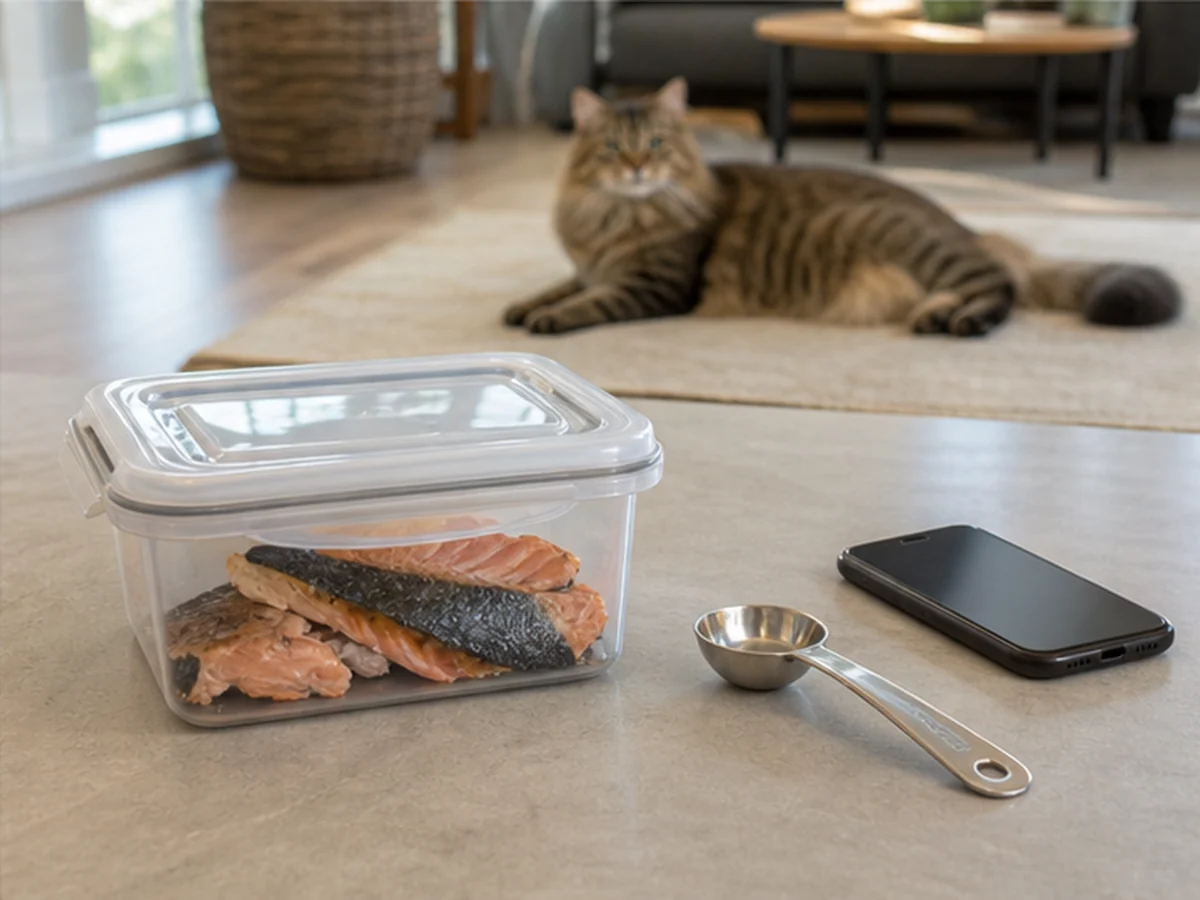
Watching after one known cooked morsel
For a healthy adult that ate one tiny, fully cooked, boneless, unseasoned piece, continue normal food and water and watch appetite, stool, vomiting, comfort, breathing, and energy. Keep the recipe and package available.
Call for any developing sign, a larger amount, uncertainty about bones, or underlying gastrointestinal, pancreatic, kidney, heart, or metabolic disease. Kittens and seniors can dehydrate faster after vomiting or diarrhea.
Do not compensate by skipping balanced meals or adding supplements. The correct long-term answer is a complete cat diet and carefully chosen treats, not a bowl of fish skin.
FAQ
Can cats eat cooked salmon skin?
A tiny piece that is fully cooked, boneless, plain, and cooled is generally low risk for a healthy cat, but fatty skin is unnecessary and should not become routine.
Can cats eat raw salmon skin?
Do not offer it. Raw fish adds microbial, parasitic, bone, and handling risks, while current guidance also advises cats against raw pet foods during H5N1 concerns.
Does smoking cook salmon skin?
Not always. Cold-smoked products may remain effectively raw, and both cold- and hot-smoked products can be heavily salted or seasoned.
What if my cat ate salmon skin with bones?
Call promptly, especially for coughing, gagging, drooling, repeated swallowing, vomiting, pain, or breathing difficulty, and do not induce vomiting.
Bottom line
Plain cooked salmon skin is not a poison, but its fat, hidden bones, seasonings, and portion make it a poor planned treat. Avoid raw products, follow current H5N1 and recall guidance, and call quickly for illness, bones, or missing packaging.