Can Dogs Eat Sardines? Canned, Fresh, Bones, and Portions
Yes, many healthy dogs can eat a small amount of plain, fully cooked sardine or low-sodium sardines canned in water. The useful answer depends on the can, bones, salt, oil, seasoning, portion, and the dog’s medical needs, so sardines are an optional extra rather than an automatic daily supplement.
The simplest sardine choice
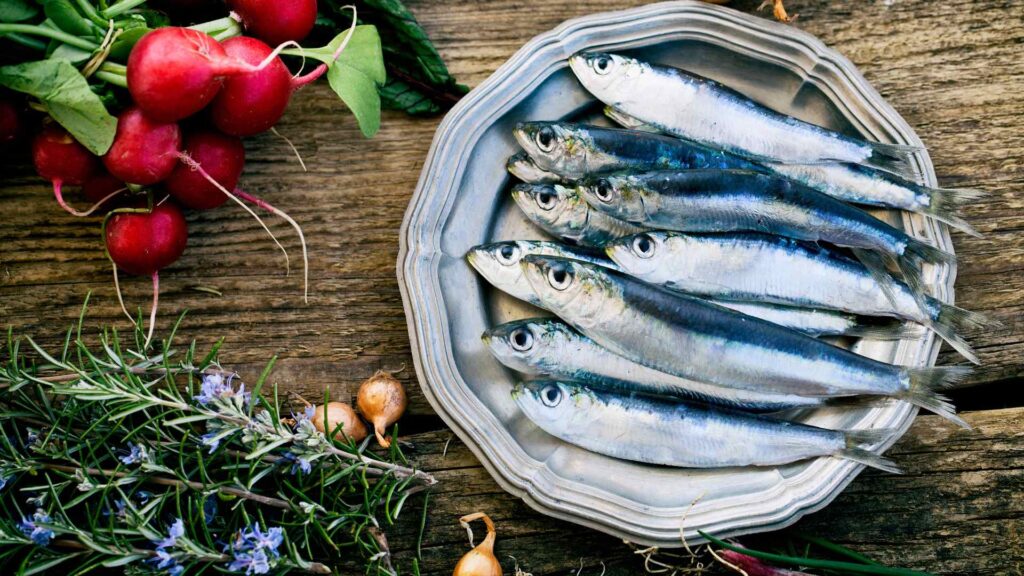
Look for sardines packed in water with no added salt and no sauce, then read the ingredient list and nutrition panel. Choose a product labeled boneless or inspect a small soft-boned canned fish carefully, and mash it into bite-size flakes before serving.
Fresh or frozen sardines should be cooked thoroughly without oil, butter, garlic, onion, chile, lemon sauce, or salt. Let the fish cool, remove hard or sharp bones, and break the flesh into pieces suited to the dog’s mouth.
A dog-safe serving is not the same as a complete meal. Sardines can add protein, fat, minerals, and marine fatty acids, but adding more of a nutrient does not automatically improve a balanced diet.
Canned sardines vary more than the little tins suggest
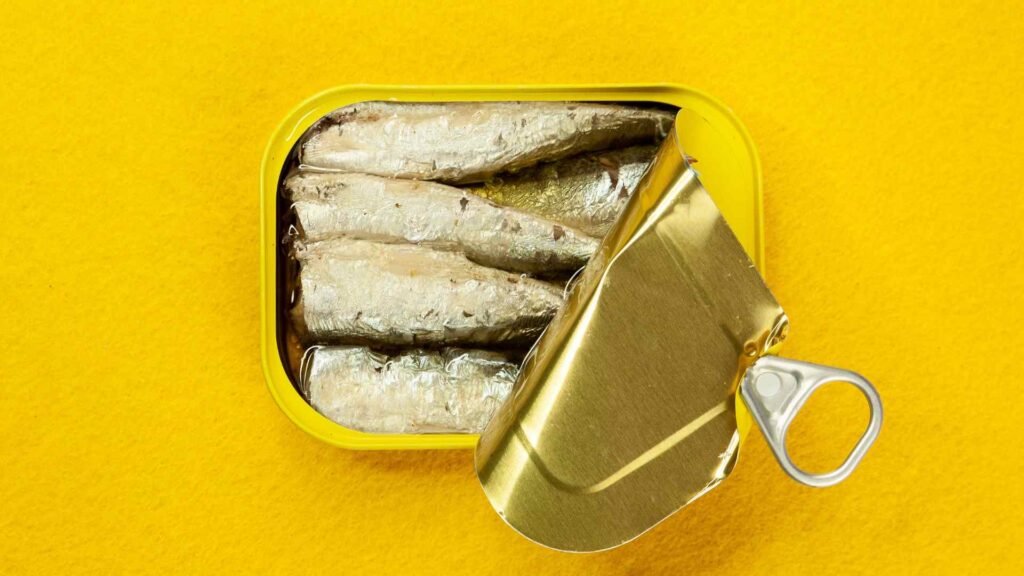
Packed in water
Water-packed is usually the easiest option to evaluate, but water-packed does not always mean low sodium. Compare milligrams of sodium per serving, serving size, and number of servings per can.
Drain the liquid, especially if the label mentions brine. Draining may remove some surface liquid, but it does not erase sodium absorbed into the fish, so a salty product remains a poor routine choice.
Packed in oil
Oil-packed sardines add fat and calories even after draining. A small accidental taste is different from an entire oily tin, which can cause digestive upset and is especially unsuitable for dogs with pancreatitis or prescribed fat restriction.
Merck notes that low-fat feeding is important for dogs being treated for pancreatitis in its pancreatitis review. A dog with a history of the disease needs individualized approval before receiving oily fish.
Sauces and seasoning
Tomato sauce, mustard, hot sauce, teriyaki, barbecue flavor, smoked seasoning, and herb blends complicate the answer. Onion and garlic may appear as powders, broth, natural flavor components, or pieces rather than obvious whole vegetables.
Lemon itself is not the main issue in one lightly flavored morsel, but acidic sauce, salt, oil, garlic, and onion often travel together. Treat the complete recipe as the exposure.
What about the bones?
Commercial canning softens the small bones in many sardine products, and those bones may crumble easily when mashed. That does not make every bone in every product automatically safe for every dog.
Inspect the fish under good light and remove anything hard, long, or sharp. Boneless canned sardines are the lower-hassle choice for tiny dogs, dogs that gulp food, dogs with dental disease, and owners who cannot confidently assess the bones.
Fresh sardine bones have not undergone the same pressure-canning process. Debone fresh fish carefully after cooking, and never offer skewers, hooks, line, whole bait fish, or discarded fishing gear.
Raw sardines are not the safer natural option
Raw seafood can carry bacteria or parasites, and freezing practices that control some parasites do not make raw fish sterile. The FDA seafood safety guide recommends thorough cooking and careful cold storage.
Raw feeding also increases contamination opportunities for people through hands, bowls, counters, floors, saliva, and stool. Children, pregnant people, older adults, and immunocompromised household members deserve special protection from raw-animal-food handling.
Cook fish until the flesh is opaque and separates easily, following reliable food-safety instructions for the product. Refrigerate leftovers promptly and discard fish that smells spoiled, feels unusually slimy, or sat warm too long.
Mercury deserves context, not panic
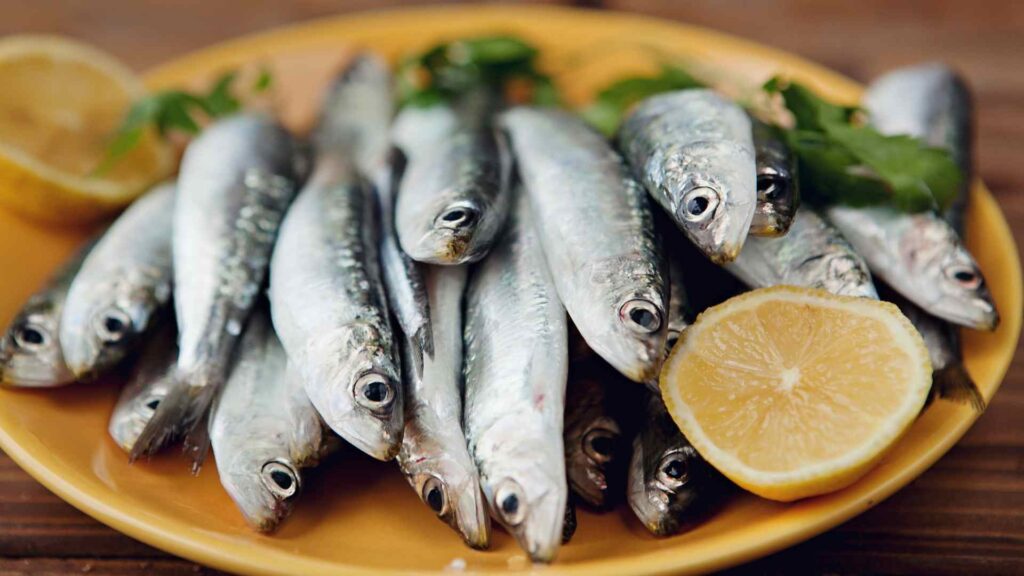
Sardines are small, short-lived fish and appear on the FDA and EPA “Best Choices” list for lower-mercury seafood. The FDA fish-advice questions and answers specifically includes sardines among its lower-mercury choices.
That human guidance is not a canine serving schedule, but it supports a useful comparison: sardines generally raise less mercury concern than larger predatory fish. It does not justify unlimited sardines or eliminate every contaminant and nutrition consideration.
For comparison, the site’s tuna guide explains why species and product form change mercury exposure. Rotating food extras is not necessary if the dog already eats a complete diet.
Omega-3 claims need a reality check
Oily fish can provide EPA and DHA, and Merck lists oily fish among dietary sources of these fatty acids in its small-animal nutrient review. The amount in a sardine tin varies by species, processing, drained weight, and product.
That variability makes a spoonful of fish a poor substitute for a veterinarian-selected therapeutic product with a known dose. Do not promise that sardines will treat arthritis, allergies, heart disease, kidney disease, cognitive changes, dry skin, or cancer.
If a veterinarian wants a specific EPA and DHA intake, ask whether the dog’s complete food already supplies it and whether a measured supplement is preferable. More fish oil can add calories and may interact with the larger health plan.
Calories and diet displacement
All extras together should remain a small share of daily intake; the WSAVA treat guide recommends less than 10 percent of daily calories. Sardines, training treats, chews, table scraps, and toppers all share that same allowance.
Can sizes, fish sizes, oil, and calorie counts vary too much for a universal one-sardine-per-size chart. Use the product’s calorie statement and your dog’s daily target, then ask the veterinary team for a tailored amount if weight, growth, or disease is involved.
Puppies need tightly balanced calcium, phosphorus, energy, and other nutrients for growth. Tossing several whole sardines into a puppy’s bowl can unbalance the diet even when the fish itself is edible.
Salt and brine are not small details
Sodium varies widely across canned fish, smoked products, and seasoned snacks. The Merck salt-toxicosis guide explains that excessive salt exposure becomes more dangerous when fresh water is restricted.
One small flake from an ordinary salted sardine is not automatically salt poisoning, but a whole tin of briny fish can be a meaningful exposure for a small dog. Report the sodium panel, missing amount, water access, weight, and symptoms when calling.
Dogs with heart disease, kidney disease, fluid-balance problems, or a veterinary sodium restriction need stricter label standards. A product advertised as natural, Mediterranean, smoked, or artisanal may still be far too salty.
Fish allergy and intolerance
Dogs can develop an allergy to dietary proteins, including fish, although vomiting after a rich tin can also reflect intolerance or dietary indiscretion. The Merck food-allergy guide describes controlled elimination and rechallenge as the reliable diagnostic approach.
Itching, recurrent ear trouble, skin infections, vomiting, or diarrhea after fish should be discussed with a veterinarian. Do not repeatedly feed sardines to prove an allergy, especially during a formal diet trial.
A dog on a hydrolyzed, novel-protein, renal, cardiac, low-fat, or other therapeutic diet should not receive a fish topper unless the prescribing veterinarian approves it. A tiny extra can defeat a carefully controlled plan.
How to prepare a small taste
- Choose fully cooked plain sardines or a low-sodium product canned in water.
- Read the complete ingredient list and sodium, fat, calorie, and serving information.
- Drain the liquid and inspect the fish for hard or sharp bones and foreign material.
- Mash a small amount into soft flakes sized for the dog rather than offering a whole slippery fish.
- Refrigerate the opened product in a covered food-safe container and follow its storage directions.
Serve the taste separately or mix it into the dog’s measured complete meal. Do not turn a topper into an unbalanced homemade dinner of fish and rice without a recipe formulated for that individual dog.
If salmon is the fish on hand, use the preparation and regional parasite guidance in the site’s salmon guide. The shrimp guide covers shell, tail, and seasoning issues that do not map neatly onto sardines.
Cans, lids, and fishing gear
A sharp can rim or detached lid can cut the mouth, throat, or paws. A dog that licks an open can may also push its face inside, so transfer leftovers and secure the metal immediately.
Plastic multipack wrap, pull tabs, paper labels, oil-soaked towels, hooks, line, and bait containers can be swallowed during a raid. Missing sharp metal, line, or a hook is an emergency even if the fish ingredients were plain.
What to do after a sardine raid
- Identify raw, cooked, water-packed, oil-packed, brined, smoked, sauced, or seasoned fish.
- Photograph the ingredients and nutrition panel, including sodium, calories, fat, drained weight, and servings per container.
- Estimate the missing amount, time, each dog’s weight, symptoms, conditions, medications, and normal diet.
- Account for the can, lid, pull tab, plastic, paper, hooks, line, skewers, and any spilled cooking oil.
- Call promptly for raw fish, a large fatty or salty amount, hazardous seasonings, missing sharp objects, or significant symptoms.
A healthy adult dog that steals one small flake of plain cooked sardine and remains comfortable can usually be monitored. Offer normal water, skip additional rich treats, and return to the measured complete diet.
Repeated vomiting, marked diarrhea, abdominal pain, a hunched posture, unusual lethargy, tremors, weakness, choking, trouble swallowing, a swollen abdomen, or inability to keep water down needs veterinary attention. Do not wait if a hook, lid, or sharp bone may be involved.
Do not induce vomiting after a possible hook, sharp metal, or bone ingestion. Do not give bread to pad a sharp object, and do not pull visible fishing line from the mouth or rectum because it may be anchored internally.
Frequently asked questions
Are canned sardine bones safe?
Many are softened by pressure canning and crumble when mashed, but inspect every product. Choose boneless sardines or remove anything hard or sharp for a dog at greater choking risk.
Can dogs eat sardines in olive oil?
A tiny drained flake is different from a whole oily tin, but water-packed low-sodium fish is the easier choice. Dogs with pancreatitis or fat restriction should follow their veterinary plan.
Can dogs eat sardines every day?
Daily feeding is not automatically appropriate. Calories, sodium, fat, the complete diet, medical conditions, and any therapeutic fatty-acid target should determine frequency.
Are sardines better than tuna?
Sardines are generally lower in mercury than larger tuna species, but that does not make them unlimited. Product salt, oil, bones, calories, and preparation still decide whether a taste fits.
Can sardines treat itchy skin or stiff joints?
Do not use an unmeasured food as disease treatment. A veterinarian can diagnose the problem and decide whether a known EPA and DHA dose belongs in the plan.
The bottom line
Plain fully cooked sardines or low-sodium sardines canned in water can be an occasional small extra for many healthy dogs. Mash the fish, inspect the bones, count the calories, and keep the serving modest.
Raw fish, oil, brine, smoke, sauces, Allium seasonings, excess calories, medical diets, and sharp packaging all change the answer. Sardines can be food, but they are not a universal supplement or a cure in a tin.