Can Cats Eat Shrimp Tails? Shell Fragments, Choking, Raw Seafood, and Triage
Do not feed shrimp tails to cats. Their hard segmented shell can cut the mouth, lodge, choke, or obstruct, while raw seafood, seasoning, cocktail sauce, frying oil, skewers, plastic trays, absorbent pads, and stolen trash create separate hazards that plain fully cooked tail-free shrimp meat avoids.
A tail is shell, not bonus meat
The fan and adjoining shell segments are made of tough exoskeleton that cats do not need. Cooking can make shell brittle without reliably making it digestible.
The cat shrimp guide covers safe preparation of the meat after head, shell, tail, and vein are removed.
Shape determines urgency
A whole tail fan can catch in the throat, while jagged fragments can scrape or puncture. Photograph a matching tail beside a ruler and note whether the missing piece was raw, boiled, grilled, or fried.
Gagging, drooling, repeated swallowing, retching, blood, vomiting, abdominal pain, or food refusal needs prompt veterinary assessment.
Raw tails carry residue
Raw shell and its juices can carry foodborne organisms onto paws, fur, counters, sinks, and dishes. The CDC describes illness linked to raw or undercooked seafood.
Clean the contact route and protect vulnerable people, but never put household disinfectant on the cat.
Skewers and picks may disappear too
Grilled shrimp often arrives on wood or metal skewers, and party shrimp may have picks. A missing sharp object is an emergency concern independent of the tail.
Do not induce vomiting or feed bread to cushion shell or skewer material.
Cocktail and fried shrimp
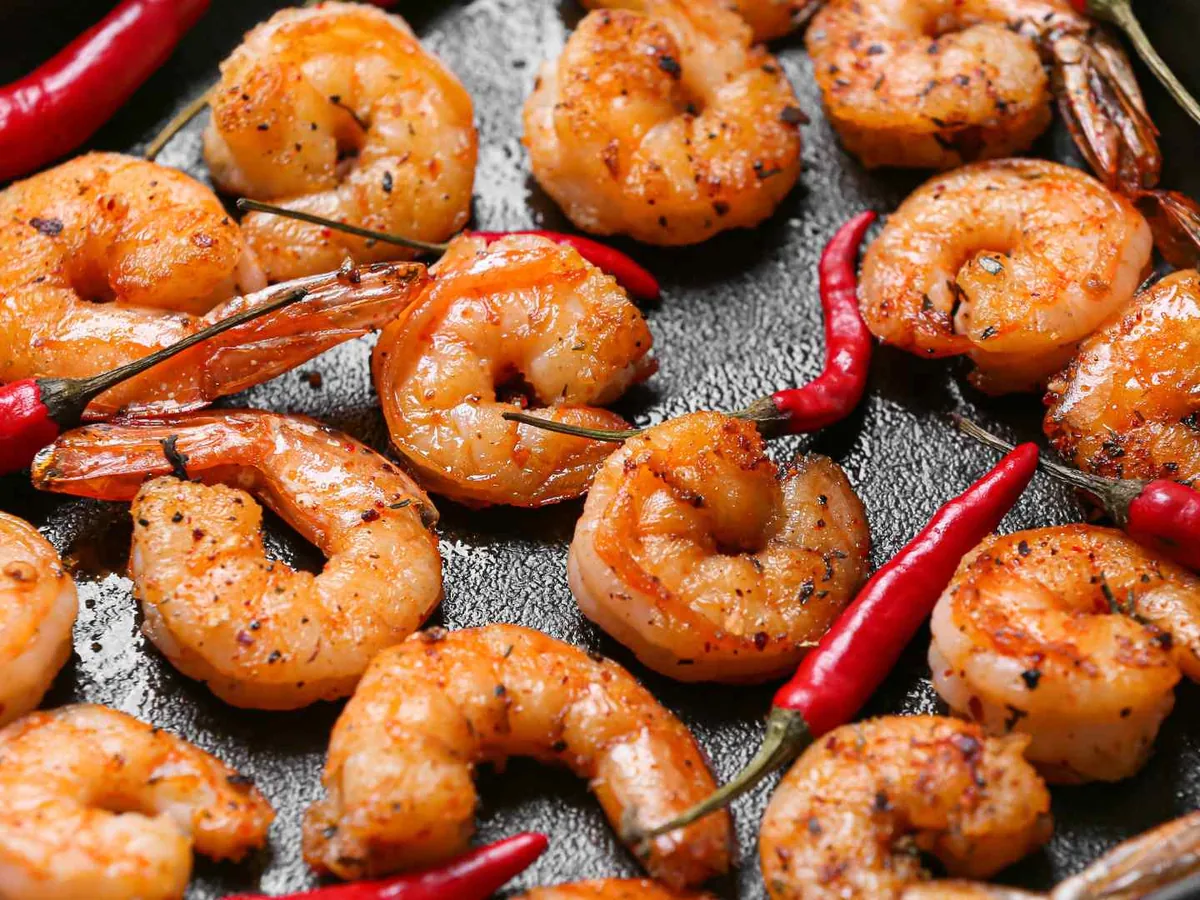
Cocktail sauce may contain horseradish, chili, salt, lemon, onion, or garlic, while fried tails add batter, dairy, oil, and seasoning. The cat bread guide
Seafood handling
The FDA seafood guide covers selection, refrigeration, thawing, and cooking. Discard questionable shrimp rather than letting a cat clean the plate.
Nutrition comes from complete food
The FDA explains pet-food nutritional adequacy. Shell provides no reason to displace a formulated meal.
The mouth check comes first
If the cat allows safe viewing, look for obvious bleeding or a loose fragment without reaching blindly into the throat. A distressed cat can bite and a hidden shard can be pushed deeper.
Breathing effort, blue-gray gums, collapse, or inability to move air requires immediate emergency transport. Call ahead while leaving.
Do not wait for obstruction signs
A swallowed tail can initially pass the throat and later cause repeated vomiting, pain, hunched posture, appetite loss, lethargy, or reduced stool. Normal behavior in the first hour does not guarantee passage.
Call with tail dimensions, amount, time, cat weight, and prior gastrointestinal disease. Home bulky-food strategies can worsen delay.
Shell-on leftovers invite trash raids
Restaurant boxes may contain dozens of tails with sauce, lemon wedges, napkins, foil, rubber bands, and utensils. Count the trash contents before assuming one shell vanished.
Secure the entire bag in a latched bin or closed room. A second raid can add enough material to change the mechanical risk.
Peel-and-eat shrimp water
Boiling liquid can contain salt, spice blends, onion, garlic, lemon, beer, or seafood seasoning. It is not broth for cats.
Hot liquid can burn paws and mouths, while cooled liquid permits rapid sodium intake. Preserve the recipe after lapping.
Frozen tail-on shrimp
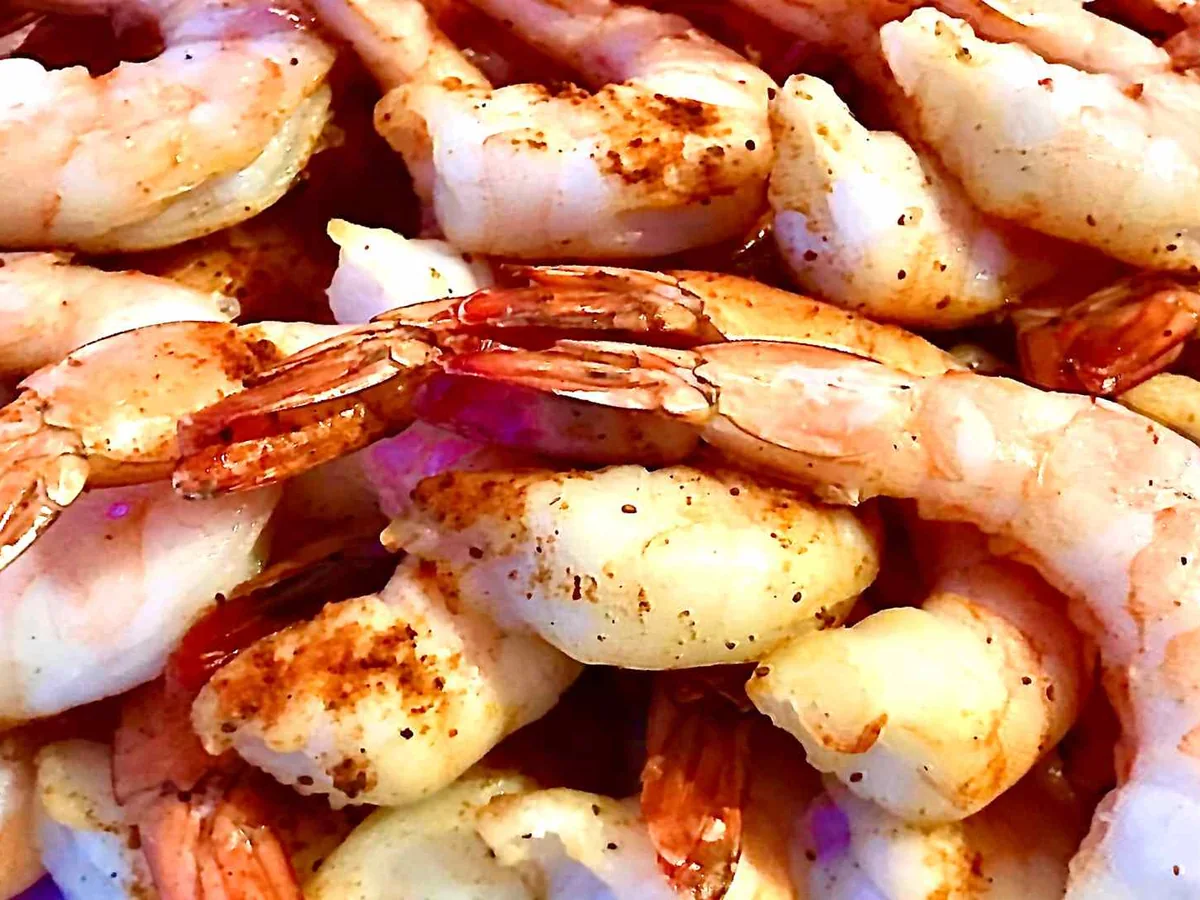
Frozen tails are especially hard and can fracture teeth or be swallowed with ice glaze. Thaw only in a contained location the cat cannot access.
A torn freezer bag, clip, or liner can be swallowed with food odor. Inventory packaging before disposal.
Shell dust and crushed tails
Grinding or crushing dried shrimp can create sharp flakes and airborne dust. Move the cat to clean air after a spill and avoid sweeping particles toward its face.
Persistent cough, wheeze, squinting, or breathing change needs advice. Do not force water into the mouth.
Allergy is not the only explanation
Vomiting after fried shrimp can reflect fat, batter, spice, shell irritation, infection, or an adverse food reaction. One mixed meal cannot diagnose shellfish allergy.
Sudden facial swelling, hives, breathing trouble, or collapse needs emergency care regardless of the cause.
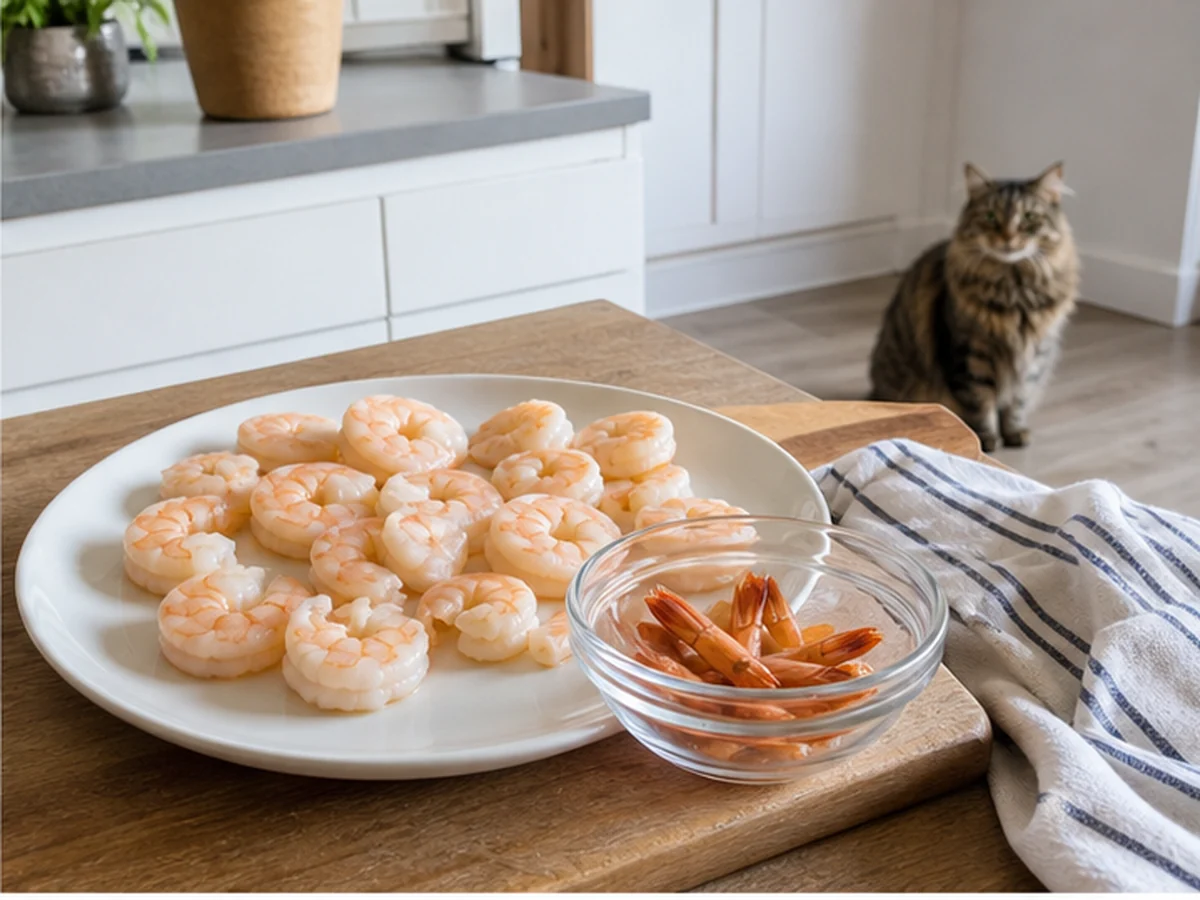
Cooked meat without the tail
If a veterinarian approves shrimp, use a tiny piece of fully cooked plain meat after removing shell, tail, head, and vein. Cool it and inspect for fragments.
The cat tuna guide
Frequently asked questions
Will a shrimp tail dissolve in a cat’s stomach?
Do not rely on digestion because shell may lodge, scrape, or obstruct before it breaks down. Seek case-specific advice.
Can kittens chew shrimp tails?
No. Small mouths and limited stomach capacity make hard shell especially inappropriate, and kittens need complete growth food.
What if the cat vomited the tail?
Call because fragments may remain and vomiting itself can indicate irritation or obstruction. Save the recovered material for comparison.
Can I cut the tail into tiny pieces?
No. Cutting can create sharper fragments without creating nutritional value. Remove and discard it securely.
Bottom line
Shrimp tails are foreign-object hazards dressed in seafood smell. Remove every shell segment before any approved meat taste, count skewers and packaging after raids, and seek early advice rather than waiting for a hard fragment to prove it cannot pass.
Shrimp tail injuries are not limited to the digestive tract: a cat can step on an upward-pointing fan, bat one into an eye, or wedge a segment beneath the tongue. Squinting, corneal cloudiness, paw guarding, oral bleeding, or persistent face rubbing warrants examination even when no shell was swallowed.
Boil seasoning packets can contain concentrated salt, cayenne, garlic, onion, mustard, and other spices, and a punctured sachet may coat many tails at once. Preserve the packet and product weight, move the cat away from dust, and seek advice for coughing, drooling, vomiting, tremors, or eye pain.
A shrimp-ring tray combines tail-on seafood with cocktail sauce, a central cup, clear dome, adhesive label, absorbent pad, and sometimes decorative picks. Count the cup lid and tray fragments, estimate the number of missing shrimp from the ring pattern, and note whether the product remained chilled.
Do not rely on a symptom-free night to declare a jagged shell harmless because irritation or obstruction may become apparent later. Follow the clinic’s observation window precisely and record meals, vomiting, stool, posture, energy, and abdominal comfort without adding fiber or laxatives.
A shell fragment embedded between teeth can produce drooling, bad breath, mouth-pawing, one-sided chewing, or refusal of hard food without an intestinal obstruction. Oral examination may require veterinary equipment and safe restraint, so do not probe painfully beneath the tongue or gumline with fingers or tweezers.
Shrimp fried rice can combine tail fragments with onion, garlic, soy sauce, egg, oil, peas, and long takeout staples or handles. The cat rice guide
Shell-on shrimp sold from outdoor vendors may sit beside bait, fishing line, hooks, fuel, sunscreen, ice packs, and seawater. Report the entire dock or picnic environment, and never assume a found tail was cooked or handled for human consumption.
A cat that repeatedly seeks shell, plastic, string, or other nonfood objects may have pica that deserves veterinary evaluation. Environmental barriers address the immediate tail risk, while the clinician can investigate diet, gastrointestinal disease, stress, dental pain, or other contributors.
Shrimp heads and legs often remain attached in whole-seafood dishes, multiplying sharp shell surfaces and adding tissues not represented by plain tail-free muscle. A cat raiding a boil bag may also encounter crab shell, corn cob, sausage casing, onion, garlic, lemon rind, butter, salt, and plastic, so inventory every missing component rather than counting shrimp alone.
Dried shrimp tails can become brittle points that fracture into multiple pieces, while freeze-dried products may absorb saliva and swell after rapid gulping. Pet-product branding does not make an attached tail appropriate, and imported seafood snacks may include salt, sugar, smoke, spices, preservatives, oxygen absorbers, or a serving size designed for another species.
A tail found in vomit does not prove the entire object returned because the fan or shell segments may have broken off before or after swallowing. Save the recovered material, compare it with an intact tail, photograph the pieces, and call for continued vomiting, blood, pain, poor appetite, lethargy, or any uncertainty about what remains.
Shrimp tacos and rolls can hide tails beneath tortilla, rice, avocado, mayonnaise, cabbage, chili sauce, onion, garlic, toothpicks, and foil. Sushi-style rolls may also include raw seafood and long strips of seaweed, making a restaurant theft a mixed-food and foreign-object event rather than a simple cooked-shrimp exposure.
Cats sometimes bat a discarded tail before chewing it, spreading raw residue beneath furniture and onto paws. Confine pets, locate every fragment with good lighting, clean the route, and keep children or immunocompromised household members away until seafood-contaminated surfaces and textiles have been handled appropriately.
Never clip a shrimp tail into smaller pieces for dental cleaning, calcium, chitin, joint support, or crunch because sharper fragments do not become evidence-based supplements. A veterinarian can recommend complete diets or measured products when fiber, minerals, dental health, or mobility genuinely needs support.
A cat with prior obstruction, pica, dental disease, swallowing trouble, intestinal surgery, or chronic vomiting has even less margin for hard shell. Provide those details on the initial call, since a tail size that might pass in one adult cannot be generalized to every patient.
For a safe seafood moment, cook a plain shrimp thoroughly, peel off head, shell, legs, and tail, remove the vein, inspect the meat, cool it, and offer a pinhead-sized flake only if the veterinarian approves. The remainder belongs in secured waste, not on a low plate where the cat can return for shell.