Can Dogs Eat Ground Turkey? Cooking, Fat, and Seasonings
Many healthy dogs can eat a small amount of plain ground turkey cooked to 165°F, drained, cooled, and served without seasoning. Raw meat, fatty or skin-heavy blends, garlic and onion, bones, deli or processed products, spoilage, oversized portions, and swallowed packaging change the answer.
Plain means more than no sauce
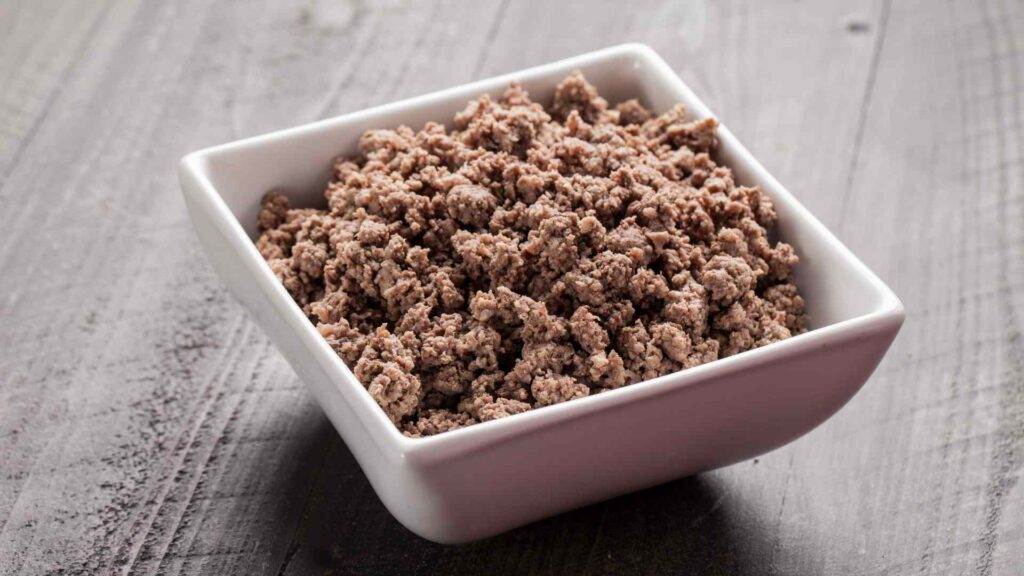
Ground turkey may contain breast meat, dark meat, skin, and varying percentages of fat. Preseasoned patties, meatballs, sausages, taco filling, burgers, and deli mixtures can include salt, garlic, onion, spices, cheese, breadcrumbs, preservatives, or sweeteners.
Save the package and identify the lean percentage, ingredients, safe-handling instructions, amount, timing, dog’s weight, symptoms, and any tray material missing. A plain lean crumble is not the same exposure as seasoned turkey sausage.
Ground turkey is not needed as a protein booster, muscle treatment, recovery food, or meal replacement. Complete dog food already balances amino acids, fat, vitamins, and minerals for the intended life stage.
Cook ground turkey to 165°F
Ground poultry needs thorough cooking because grinding can distribute surface bacteria throughout the batch. Color is not a reliable safety test, and browned meat may still be undercooked in the center.
The USDA food-thermometer chart sets 165°F as the safe minimum internal temperature for all poultry, including ground poultry. Measure the thickest center of a patty or the mass before crumbling it fully.
Cook in a clean pan without oil, butter, salt, stock, or seasoning, then drain excess fat and cool. Do not serve steaming crumbles directly from the skillet because hot fat can burn the mouth.
Microwave cooking can leave cold spots, so stir and check temperature in several places. Wash the thermometer probe after it touches raw meat and again after use.
Raw turkey risks the dog and household
Raw ground turkey can carry Salmonella, Campylobacter, and other pathogens. Dogs may develop gastrointestinal illness and can spread organisms through saliva, stool, bowls, floors, hands, and shared surfaces.
Do not rinse raw poultry because splashing spreads contamination around the sink. Use separate utensils, wash hands, clean surfaces, and keep raw packages away from children and other animals.
A dog that steals raw turkey needs veterinary advice based on amount, temperature history, symptoms, age, immune status, and packaging. Repeated vomiting, bloody diarrhea, feverishness, severe lethargy, or dehydration needs prompt care.
Do not advocate a raw diet from one ingredient. A safe complete home-prepared diet requires formulation by a qualified veterinary nutrition professional and careful hygiene, not a bowl of unbalanced ground meat.
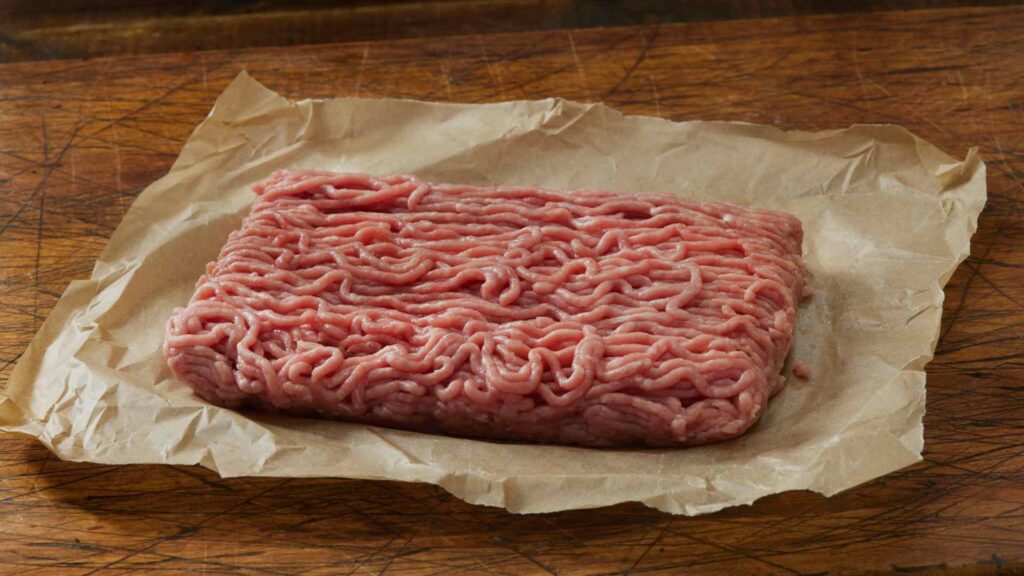
Fat and skin matter
Ground turkey labeled lean may still contain more fat than expected, and blends with skin or dark meat can be richer. A large serving can cause vomiting, diarrhea, and substantial calorie intake.
High-fat dietary indiscretion is a concern in pancreatitis-prone dogs. The Merck Veterinary Manual’s pancreatitis review lists vomiting, poor appetite, weakness, dehydration, diarrhea, and abdominal pain among common severe signs.
Dogs with previous pancreatitis, obesity, diabetes, high blood fats, or a prescribed low-fat diet should receive only clinician-approved food. Draining helps remove rendered surface fat but does not turn every blend into a therapeutic low-fat product.
Seek urgent care for repeated vomiting, severe abdominal pain, a swollen abdomen, collapse, marked weakness, or inability to keep water down. Do not add another meat serving as a stomach test.
Seasonings and mixed dishes
Garlic, onion, chive, leek, and related powders can damage canine red blood cells even after cooking. Turkey burgers, taco meat, meatloaf, meatballs, stuffing, gravy, soup, and casseroles commonly contain one or more Alliums.
Our cooked onion guide covers delayed and cumulative hemolysis, while the garlic guide addresses fresh and powdered forms. Report the complete recipe.
Salt, cheese, bacon, butter, hot pepper, barbecue sauce, xylitol-containing condiments, alcohol, and raw yeast dough add their own risks. Picking out visible onion does not remove seasoning distributed through the meat.
Turkey burgers also involve buns, skewers, foil, grill brushes, and toothpicks. A missing sharp object or wrapper may be more urgent than the meat.
Bones do not belong in ground turkey
Commercial ground meat should not contain bone fragments unless the product is specifically formulated and labeled otherwise, but home grinding or mixed leftovers can introduce sharp pieces. Cooked bones can splinter and injure the mouth or digestive tract.
Gagging, drooling, repeated swallowing, mouth pain, vomiting, abdominal pain, blood, straining, or appetite loss after a possible bone needs veterinary assessment. Do not feed bread to push a bone through and do not induce vomiting.
Turkey necks, wings, carcass scraps, and ground-bone raw products are different from boneless ground turkey. There is no safe-size rule that guarantees a bone will not fracture teeth, choke, obstruct, or perforate.
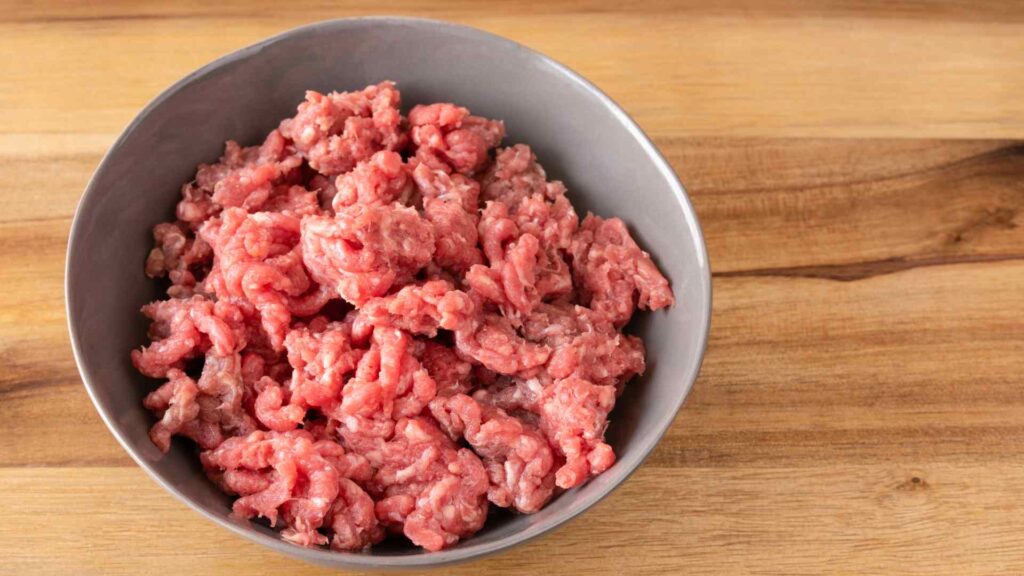
Deli and processed turkey
Deli turkey, sausage, hot dogs, frozen patties, and seasoned crumbles can be high in sodium and may contain garlic, onion, smoke flavor, preservatives, sugar, or substantial fat. A turkey picture on the label does not make a processed product plain.
Our hot dog guide covers processed-meat salt, fat, seasoning, and shape. The ground beef guide offers a useful preparation comparison without treating meat as a nutritional miracle.
Keep deli films, clips, strings, casing, and absorbent pads away from dogs. Processed slices can also fold into a sticky choking wad when swallowed quickly.
Storage and leftovers
Refrigerate cooked turkey promptly in shallow covered containers. The USDA turkey-leftover guidance advises refrigeration within two hours and use within three to four days.
Discard meat with a sour odor, slime, mold, damaged package, or uncertain warm-storage history. Reheating does not reliably undo every toxin produced during improper storage.
Keep raw turkey below ready-to-eat foods in the refrigerator and contain drips. Thaw in the refrigerator, cold water under safe handling, or the microwave followed by immediate cooking, not on the counter.
Trays, pads, and clips
Foam trays, plastic film, absorbent pads, labels, metal clips, and freezer bags can disappear during a counter raid. Pads may expand or obstruct, and chewed trays can form sharp edges.
Do not induce vomiting or wait for packaging to pass without advice. Repeated vomiting, appetite loss, abdominal pain, lethargy, straining, or reduced stool after missing material needs veterinary attention.
Take a photograph of an identical pad or package when possible and tell the clinic how much is missing. Do not pull material protruding from the mouth or rectum.
What to do after a turkey raid
- Remove the meat, pan, trash, bones, and packaging, then save the ingredient and safe-handling labels.
- Record raw or cooked status, internal temperature if known, lean percentage, amount, time, dog’s weight, symptoms, and storage history.
- List garlic, onion, salt, cheese, fat, sauce, bones, skewers, wrappers, pads, clips, and every other missing component.
- Call for raw or undercooked meat, a large fatty serving, dangerous seasoning, symptoms, spoiled food, high-risk illness, bones, or packaging.
- Seek emergency care for choking, collapse, repeated vomiting, severe pain, marked weakness, breathing trouble, or inability to keep water down.
Do not give hydrogen peroxide, salt, oil, bread, milk, antacids, antibiotics, or human medicine unless a veterinarian directs it. Bones and packages can make home vomiting unsafe, and leftover antibiotics are not appropriate pathogen treatment.
How a small plain portion fits
If a veterinarian approves turkey, use fully cooked plain boneless crumbles, drain fat, cool, and offer a small measured amount. Stop if vomiting, diarrhea, gas, itching, ear trouble, or discomfort follows.
The UC Davis dog treat guidelines advise that at least 90 percent of daily calories come from complete and balanced food. Ground turkey, training treats, toppers, and chews share the remaining allowance.
Dogs on allergy trials or kidney, heart, urinary, gastrointestinal, diabetic, or weight diets need clinician approval first. Plain meat can still disrupt a controlled diet or add too many calories.
Turkey allergy and elimination diets
Turkey can be an allergen for an individual dog even though it is not toxic. Possible adverse-food signs include itching, recurrent ear or skin trouble, vomiting, diarrhea, or gas, but those symptoms have many other causes.
Do not diagnose allergy from one loose stool after seasoned turkey. A veterinarian may use a strict elimination diet and controlled challenge, and unplanned ground turkey can invalidate that process.
Check treats, flavored medicines, broths, chews, and supplements during a food trial because turkey can hide beyond the dinner bowl. Follow the prescribed ingredient list exactly rather than substituting another poultry product.
Frequently asked questions
Can dogs eat ground turkey every day?
Not as an unbalanced meal or automatic topper. Daily use requires calorie accounting and a complete diet plan approved for the individual dog.
Is pink ground turkey safe?
Do not judge by color. Use a clean food thermometer and cook ground poultry to 165°F.
Can dogs eat turkey seasoned with onion powder?
No. Onion powder remains an Allium concern after cooking and may be concentrated.
The bottom line
Plain ground turkey can be an occasional approved extra when cooked to 165°F, drained, cooled, and kept boneless and unseasoned. Raw pathogens, fat, Alliums, bones, processed products, storage, and packaging are the practical hazards.
Skip protein and recovery claims, preserve the package after a theft, and report the complete recipe. A complete dog food is safer and nutritionally smarter than turning ground turkey into an improvised diet.