Can Cats Have Chicken Broth? Labels, Bones, and Sodium Risks
Cats can have a teaspoon or two of plain, cooled chicken broth when its ingredients and sodium fit their health plan. Most human broths need scrutiny for onion, garlic, salt, seasonings, fat, bones, and concentrated serving directions, and broth cannot replace water, complete food, or veterinary fluid therapy.
Begin at the ingredient panel, not the chicken picture
Cartons with nearly identical roast-chicken artwork can contain different stocks, flavors, vegetable concentrates, yeast extracts, spices, preservatives, and sodium. Read every line on the product actually opened today, because familiar brands reformulate.
| Form | The useful question |
| Ready-to-serve carton | Alliums, sodium per serving, open date |
| Condensed can | Required water and sharp lid |
| Bouillon cube or paste | Concentration, salt, seasoning |
| Pet broth topper | Intended species, adequacy, directions |
| Homemade stock | Bones, vegetables, storage, fat |
| Soup or pan broth | Noodles, dairy, herbs, drippings, heat |
Chicken flavor does not mean chicken is the only ingredient, and natural flavors do not answer an Allium question. Photograph the ingredient panel, Nutrition Facts, preparation instructions, and lot code after an accidental drink.
Onion and garlic are common stock shortcuts
Many broths use onion, onion juice, garlic, leek, scallion, chive, or powdered soup base to build flavor. These ingredients remain relevant after cooking and straining because the concerning compounds do not depend on visible vegetable pieces.
Merck’s current Allium toxicosis review states that cats are especially susceptible and that concentrated powders are common exposure forms. Clinical anemia may emerge days after the broth bowl looks forgotten.
Contact a veterinarian or animal poison service with the complete recipe and estimated amount instead of waiting for weakness, pale gums, fast breathing, dark urine, or collapse. The site’s garlic guide helps organize the information a clinician will request.
Sodium math must use the prepared product
A condensed can, bouillon cube, paste, powder, and ready-to-drink carton may display nutrition for very different amounts. Determine whether the cat reached concentrate or correctly diluted broth before comparing sodium numbers.
FDA’s Nutrition Facts sodium resource explains how human labels display sodium, but a human Daily Value is not a feline allowance. Reduced sodium also means less than a reference product, not necessarily little enough for a medically restricted cat.
Large salty exposures can cause thirst and gastrointestinal or neurologic signs, particularly when water access is limited. Repeated vomiting, weakness, wobbliness, tremors, or seizures requires immediate care and controlled veterinary correction rather than forced water.
Homemade stock has no invisible safety department
A home cook can omit onion and salt, but must still control raw-poultry contamination, bones, hot liquid, fat, storage, utensils, string, and recipe identity. Memory becomes surprisingly creative after several unlabeled freezer containers accumulate.
CDC advises that raw pet food can carry germs affecting cats and people. Handle raw chicken separately, clean surfaces and hands, and never use the cat as the taste test for partly cooked stock ingredients.
Kittens, seniors, immunocompromised cats, and homes with medically vulnerable people deserve extra food-safety care. A clear liquid can still carry organisms when cooking, cooling, or storage went wrong.
Every bone must stay behind
Chicken carcasses contain small vertebrae, ribs, joints, keel fragments, and brittle cooked pieces that can escape coarse strainers. Even a soft-looking stock solid can conceal a sharp sliver.
The chicken-bone guide explains choking, dental injury, perforation, and obstruction risks. Do not claim that pressure cooking or long simmering makes an intact bone reliably safe for a domestic cat.
Call for gagging, drooling, repeated swallowing, vomiting, blood, abdominal pain, reduced stool, or appetite loss after possible fragments. Making a cat vomit can drive sharp material back through the esophagus.
Chicken fat creates the golden circles on top
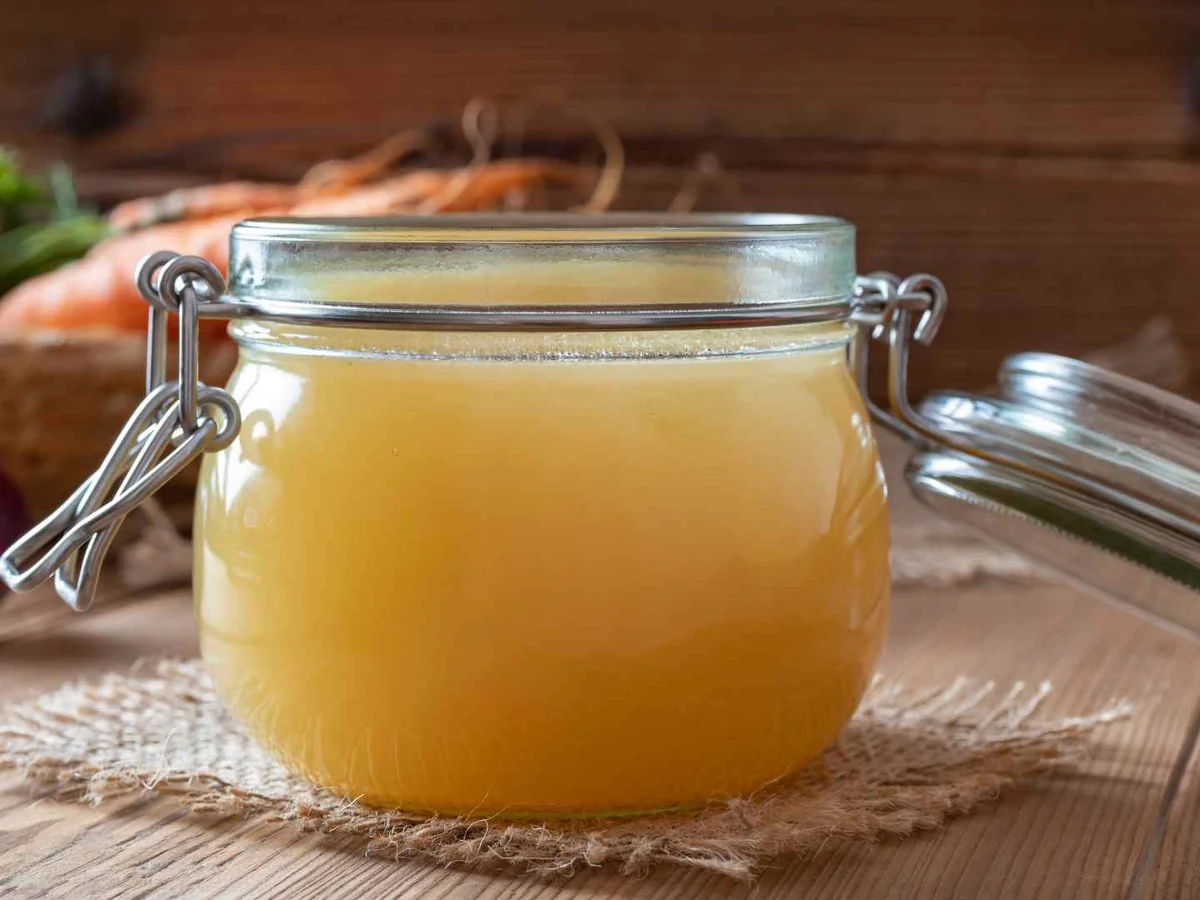
Rendered fat can float, cling to the pot, or remain emulsified after reheating. A rich serving can produce vomiting or diarrhea and adds considerable calories without making the broth nutritionally complete.
Skimming a chilled fat cap may reduce visible fat but does not transform a seasoned human stock into prescribed feline food. Cats with prior pancreatitis, obesity, diabetes, or sensitive digestion need individualized permission for toppers.
Stock, broth, consommé, soup, and gravy are different
Culinary labels overlap, but consommé may be clarified and seasoned, soup adds solids, and gravy uses thickeners and pan fat. The cat’s exposure should be described by its full recipe, not whichever liquid word sounds gentlest.
Chicken noodle soup can contain onion, garlic, salt, noodles, celery, herbs, and hot chicken pieces; cream of chicken soup adds dairy and more concentrated texture. Gravy may contain drippings, flour, butter, and seasoning packets.
The site’s plain chicken article applies only after meat is separated from broth ingredients, skin, bones, and seasoning. A spoonful of soup is not equivalent to a cooled piece of unseasoned cooked muscle meat.
Pet-labeled broth still needs a job description
Some cat and dog broths are sold as treats, meal toppers, hydration aids, or supplemental foods. Look for the intended species, ingredients, calorie content, feeding directions, manufacturer, and nutritional adequacy statement.
FDA explains that foods labeled complete and balanced must substantiate a full nutrient profile or feeding-trial claim. A topper without that statement should not displace a meaningful portion of the everyday meal.
Broth can invite drinking without treating dehydration
A veterinarian may approve a little suitable broth as flavor for some cats, but increased voluntary intake is not the same as correcting a measured fluid deficit. Disease can continue while the bowl empties attractively.
Cornell’s hydration guidance prioritizes clean accessible water and notes that dehydrated cats may need clinical fluid therapy. Persistent vomiting, diarrhea, lethargy, dry gums, or poor appetite deserves prompt evaluation.
Sick cats should not live on flavored water
A cat refusing solid food may lap broth because it is aromatic and easy to swallow, but that does not provide enough energy, amino acids, vitamins, or minerals. Prolonged inadequate intake can become dangerous, particularly in overweight cats.
Report how long normal food has been refused and whether swallowing, dental pain, nausea, congestion, or medication is involved. Do not allow a few sips to postpone assessment of a cat that is not eating.
Food allergies and elimination trials change the rules
Chicken protein can interfere with a prescribed novel-protein or hydrolyzed diet even when the amount seems tiny. Broths may also use turkey, beef, pork, yeast, or vague flavor ingredients that complicate a controlled trial.
Ask the prescribing veterinarian which treats, pill vehicles, flavored medicines, and broths are allowed. Itching or vomiting after soup does not prove chicken allergy because Alliums, fat, salt, spoilage, and unrelated illness remain alternatives.
Bouillon is concentrated convenience
Cubes, granules, and pastes can pack salt and seasoning into a small object that smells strongly of meat. A swallowed cube is not the same dose as one teaspoon from a properly diluted pot.
A bouillon dust cloud can sting eyes and irritate the respiratory tract when a container drops. Move the cat to clean air, prevent grooming of a heavily coated coat, and seek urgent help for open-mouth breathing, persistent coughing, severe eye pain, or collapse.
Freezer cubes need labels and thawing
Frozen homemade broth can be useful for human meal prep, but a hard cube can damage a tooth or lodge if gulped. Thaw a known portion in a covered container and cool it fully before any veterinarian-approved taste.
Date every batch and list its ingredients directly on the container. Discard mystery cubes, leaking bags, spoiled odors, visible mold, or broth that repeatedly thawed on the counter.
Broth inside baby food and purée
Meat baby foods and squeeze purées sometimes use broth, starch, lemon juice, onion, garlic, or other flavoring. They are human products, and front-label chicken does not disclose every ingredient.
A veterinarian may occasionally select a specific product for a short-term feeding or medication purpose, but substitutions require a new label check. Do not build a long-term cat diet from jars that lack feline nutritional adequacy.
Hot bowls and opened cans introduce objects
Steam and recently microwaved broth can burn the tongue even when the bowl rim feels cool. Stir, check temperature carefully, and keep cats away from the stove, microwave door, cords, and ladles.
Can rims, detached lids, pull tabs, carton seals, foil membranes, plastic caps, and takeout staples belong in a secured bin. A missing sharp or flexible piece can be more urgent than the broth ingredients.
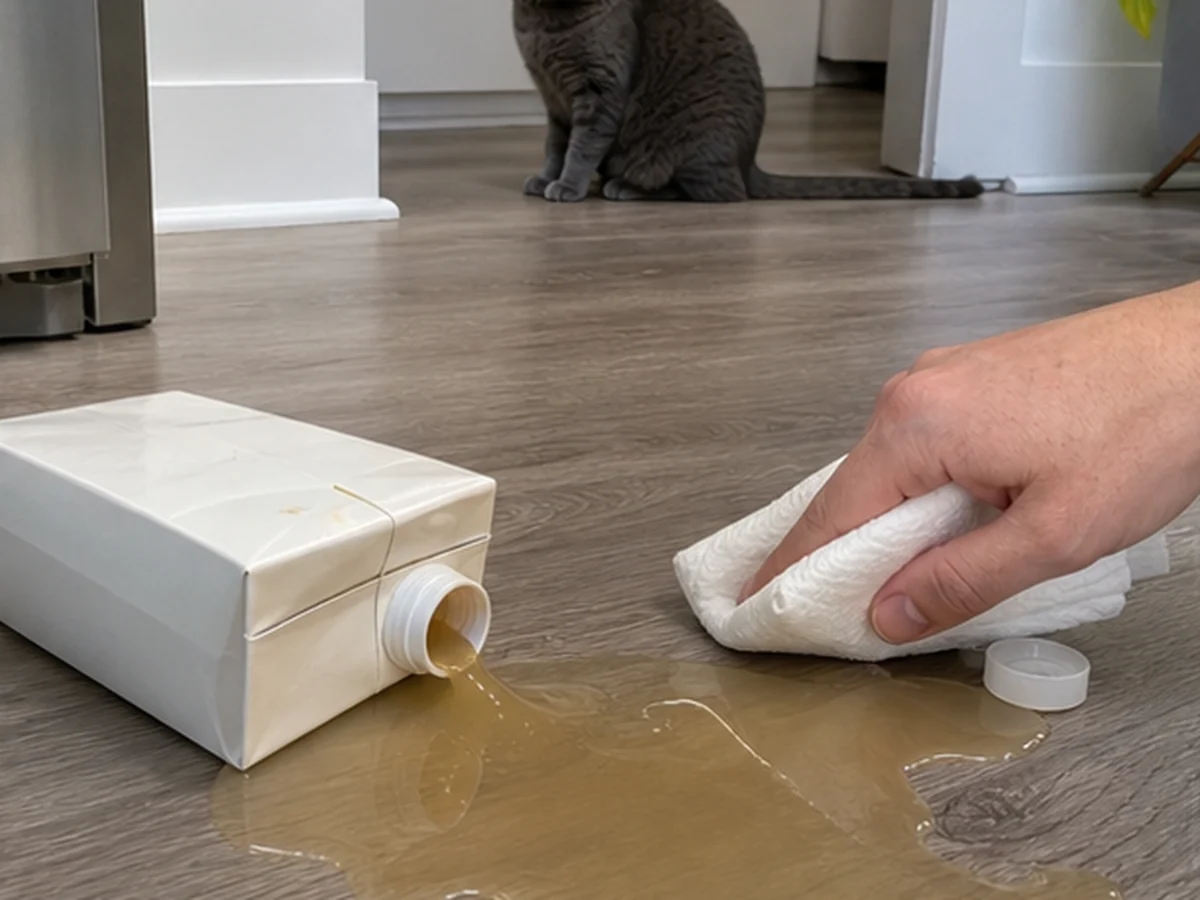
A sensible response to the tipped carton
- Separate the cat from liquid, concentrate, bones, hot vessels, sharp lids, packaging, and raw chicken.
- Identify product form, dilution, every ingredient, sodium, storage history, temperature, and maximum amount.
- Write down time, weight, health conditions, diet trial, current signs, and missing objects.
- Call for Alliums, bone, concentrate, large volume, spoilage, burns, vulnerable cats, packaging, or symptoms.
- If observation is advised, return to normal complete food and fresh water rather than creating a broth-only diet.
Frequently asked questions
Can cats drink low-sodium chicken broth?
A teaspoon or two may suit some healthy cats when the label is Allium-free and the veterinarian approves extras. Low sodium on a human package does not guarantee suitability for a therapeutic diet.
Can cats have homemade chicken broth?
Only when every ingredient is appropriate, bones are completely excluded, food safety is controlled, and the portion stays supplemental. Homemade does not automatically mean balanced or sterile.
Is chicken broth good for a dehydrated cat?
It may encourage intake in a selected case, but it does not diagnose the cause or replace prescribed fluids. A cat suspected of dehydration needs veterinary advice.
What if the broth contains onion powder?
Call promptly with the package, concentration, amount, time, and cat’s weight because powdered Allium is relevant and signs can be delayed. Do not attempt home vomiting.
Bottom line
Plain, cooled, correctly diluted, Allium-free chicken broth can be an occasional flavor in a small measured amount. Labels, sodium, bones, raw-poultry hygiene, fat, storage, nutrition, and the reason a cat needs encouragement all matter more than the chicken drawing on the carton.