Can Cats Eat Almond Flour? Powder, Batter, Baking, and Ingredient Risks
A small lick of plain almond flour is unlikely to be an acute poisoning event for most healthy cats, but do not feed it deliberately. Dry powder can irritate, raw batter brings separate food-safety issues, and finished almond-flour recipes may contain chocolate, sweeteners, yeast, spices, or rich fats.
Three scenes that require three different answers
“My cat ate almond flour” can describe a dusty paw, a mouthful of cookie batter, or half a baked muffin. The almond meal is only one clue, so sort the exposure before deciding what matters.
| Scene | Main questions | Immediate priority |
|---|---|---|
| Loose dry flour | Was powder inhaled or ground into eyes and fur? | Move into clean air, prevent grooming, and assess breathing and eyes. |
| Raw batter or dough | Which eggs, flours, yeast, cocoa, sweeteners, and flavorings were used? | Save the recipe and call about hazardous ingredients or a large amount. |
| Fully baked plain item | How rich, large, hard, or moldy was the piece? | Check the ingredient list, packaging, and current comfort. |
| Packaged baking mix | Does it contain wheat flour, leaveners, salt, dairy, or sweetener? | Use the exact box rather than assuming it is pure almond. |
| Defatted almond protein flour | Is it a specialized human supplement ingredient? | Do not equate it with ordinary almond meal or cat food. |
| Craft dough or homemade ornament | Were salt, glue, paint, fragrance, or raw grain flour added? | Treat the complete craft recipe as the exposure. |
Almond flour and almond meal are ground nuts
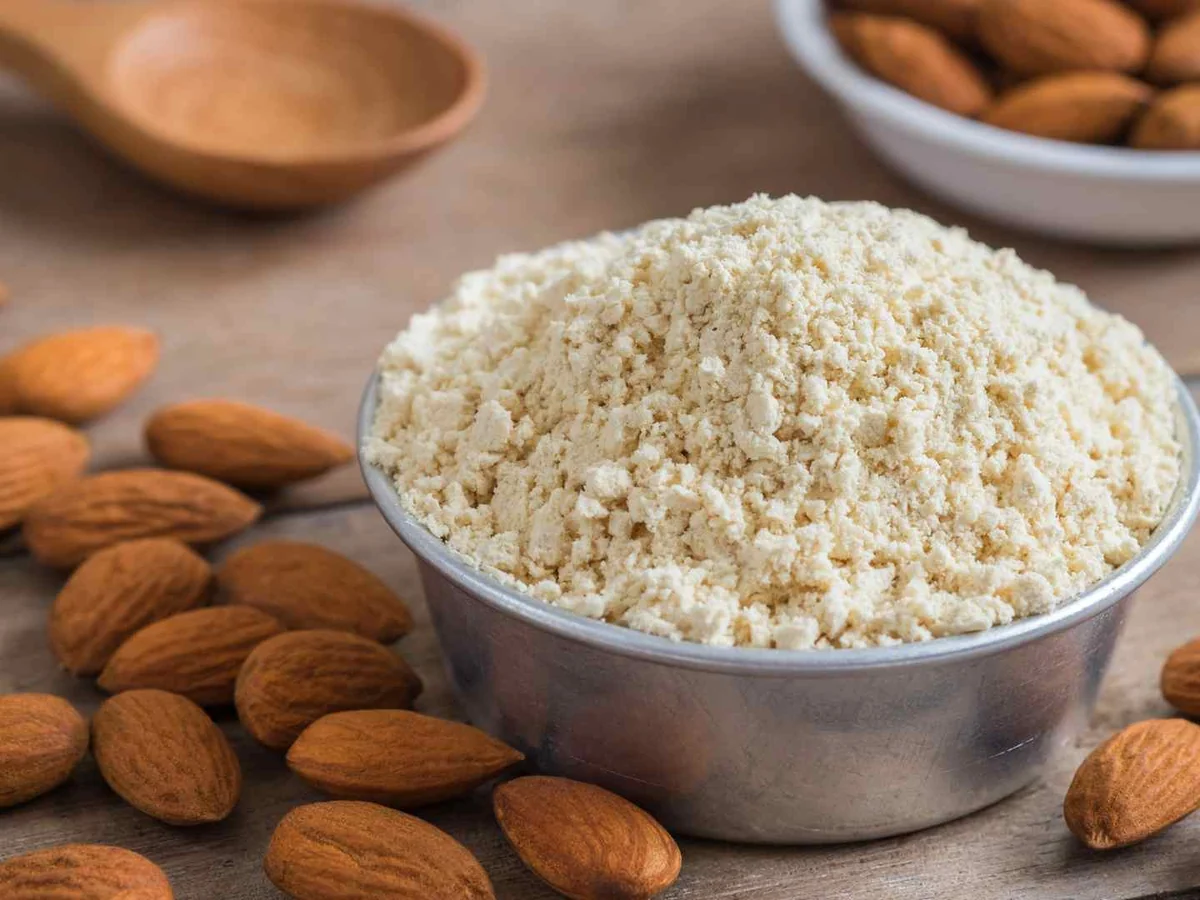
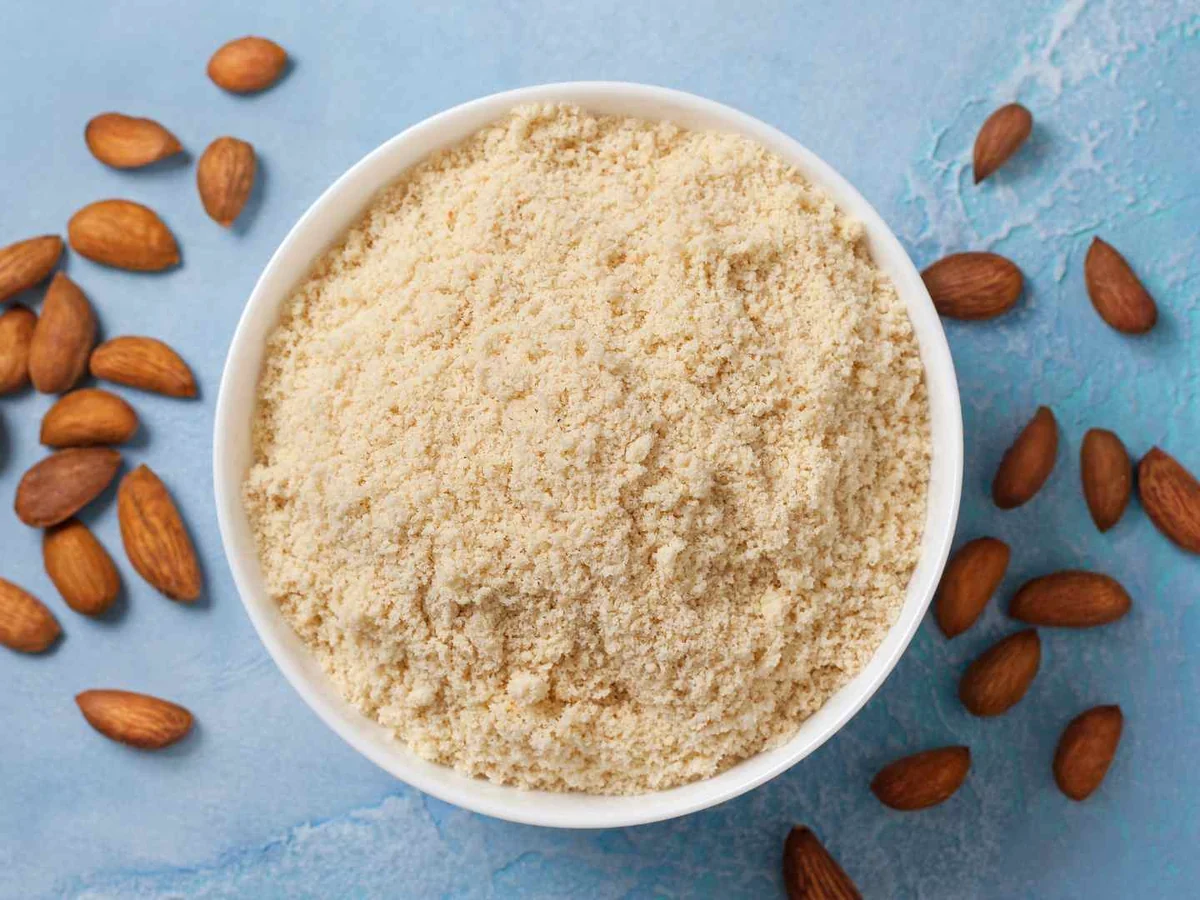
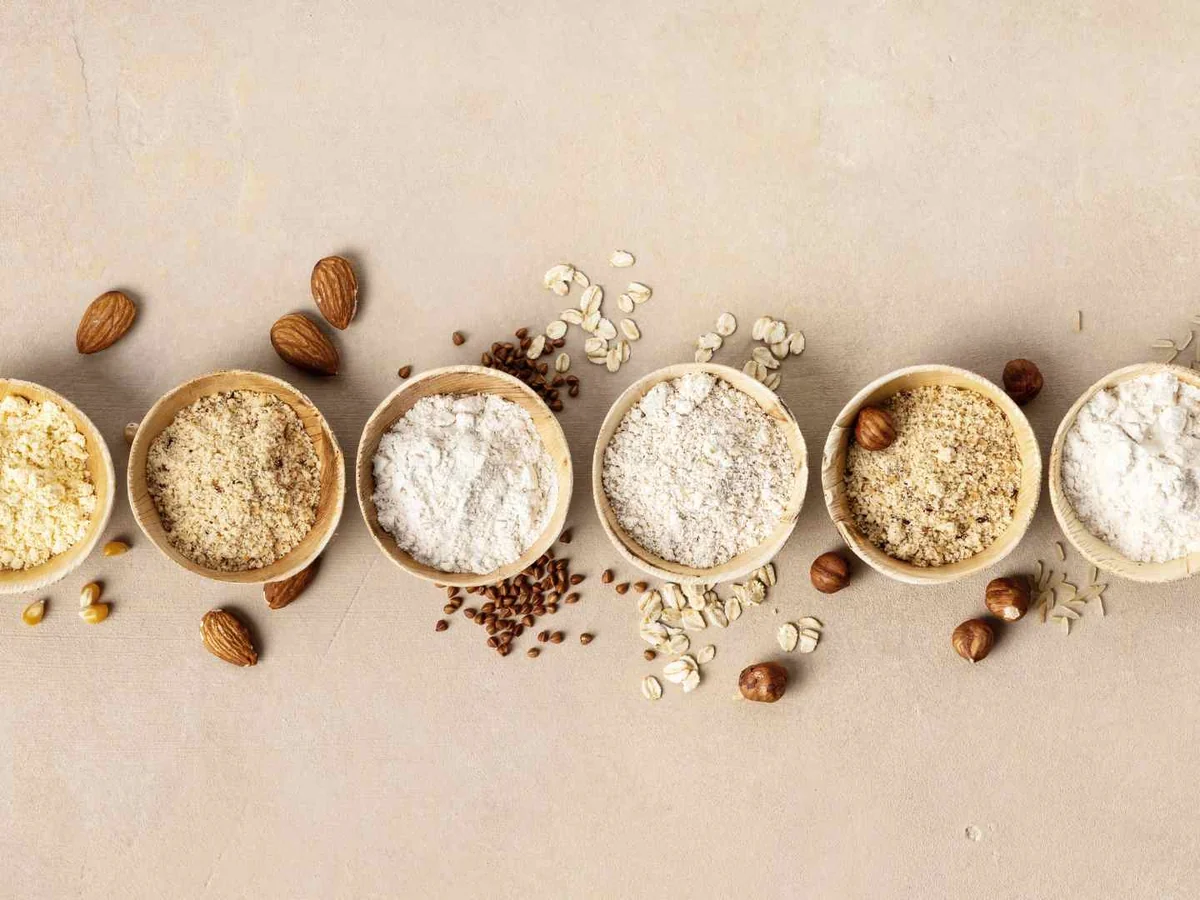
Almond flour is usually made from finely ground blanched sweet almonds, while almond meal may be coarser and retain skins. Product definitions and particle sizes vary, so the package remains the best description of what spilled.
Grinding removes the whole nut’s hard shape but concentrates many small particles into an easy mouthful. It does not turn almonds into a balanced protein source for an obligate carnivore.
A small taste of plain product is usually a digestive-monitoring question, not a reason to announce certain toxicity. A larger portion can deliver substantial fat, fiber, and calories, with vomiting, diarrhea, appetite change, or abdominal discomfort as possible results.
For the unground version, our almond article for cats covers shells, seasonings, hard pieces, and storage. Flour has fewer choking edges but far more dust.
A flour cloud can become an airway problem
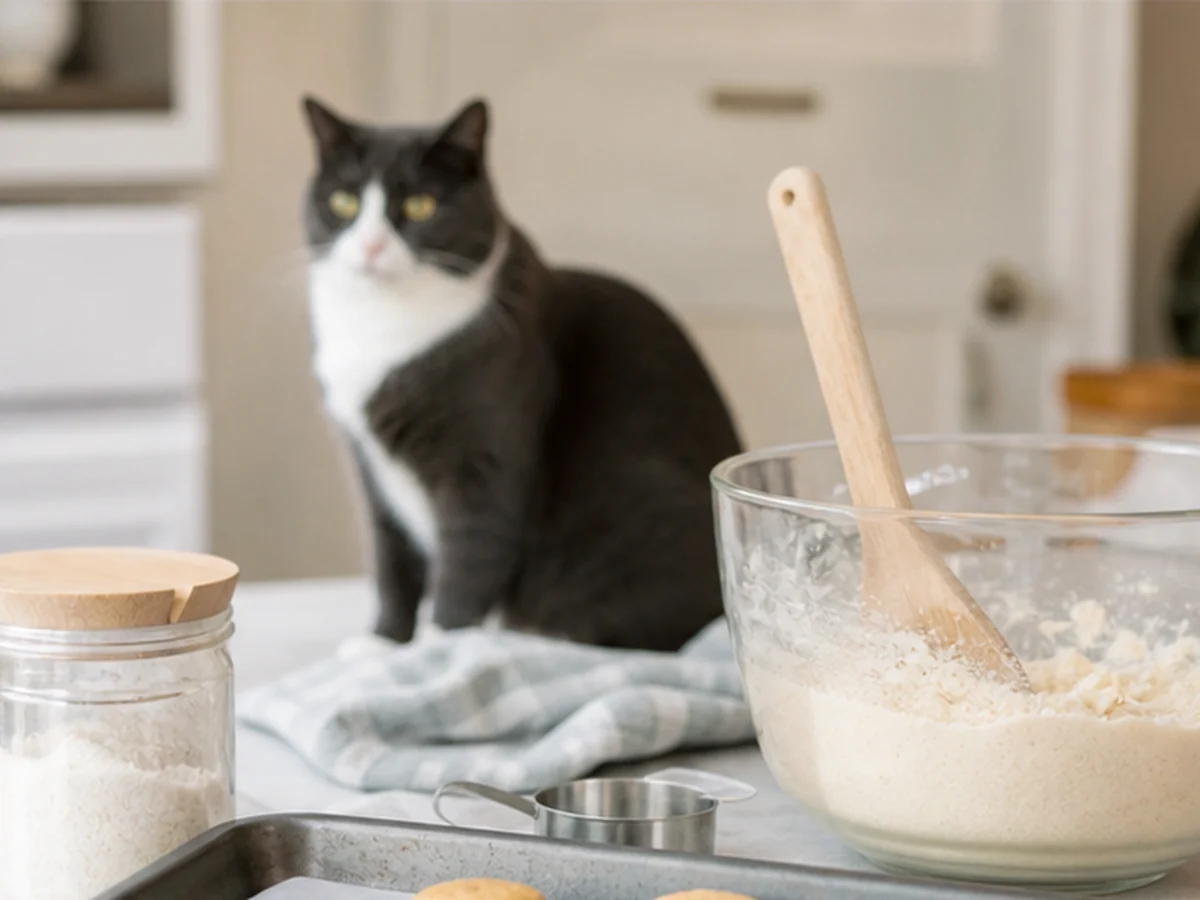
Fine powder travels when a bag falls, a mixer starts too fast, or a cat lands in the bowl. It can coat the nose, eyes, mouth, coat, and paws, then produce a second exposure when the cat grooms.
Move the animal away from airborne dust without chasing it through the cloud. Turn off fans, isolate other pets, and call the veterinarian for safe coat and eye-cleaning instructions when contamination is extensive.
Persistent coughing, wheezing, noisy breathing, open-mouth breathing, blue or gray gums, marked eye pain, or collapse is urgent. Do not pour water into the nose or mouth, and do not apply human eye drops unless a clinic directs you.
Vacuum or damp-wipe settled powder according to the product’s cleanup guidance after pets leave the area. Dry sweeping can launch the same flour into the air again.
Plain flour still carries nutrition and digestion limits
Almond flour is dense in fat and energy because it is made from nuts. A tablespoon that looks modest to a baker can be a large, unbalanced extra for a cat.
Its plant protein cannot replace the complete nutrient pattern supplied by formulated cat food. The FDA explains how a pet food supports a “complete and balanced” claim, which a pantry flour does not.
Repeatedly dusting cat food with almond flour may also alter palatability and displace necessary calories. If a cat needs more energy, fiber, or protein, the veterinarian should choose a strategy appropriate to the diagnosis.
Food safety: use the actual product instructions
Tree nuts and nut products can be contaminated before or during processing, even though contamination is not visible. The FDA notes that Salmonella on tree nuts has caused outbreaks and recalls and includes almonds in its risk-assessment work.
That does not mean every bag of almond flour is dangerous or that baking is the only approved use for every brand. Follow the label, heed recalls, discard damaged packages, and do not assume an unlabeled bulk-bin flour is ready to eat.
Raw batter often includes eggs and may combine almond flour with wheat or another grain flour. The CDC warns against raw dough and batter because uncooked flour and raw eggs can carry germs, while noting that products specifically made with heat-treated flour and pasteurized eggs are different.
That CDC grain-flour explanation should not be misrepresented as a study of every almond flour. Its practical lesson is to evaluate all flours and eggs in the recipe and follow cooking directions instead of treating raw batter as a pet snack.
Raw eggs add a distinct risk
Cookie, cake, pancake, and bread batters frequently contain raw shell egg. Salmonella risk and the nutritional problems of repeated raw-egg feeding exist independently of the almond flour.
Our raw egg guide for cats separates one accidental lick from an ongoing raw diet and explains why clean-looking shells are not a safety test. Batter quantity and every other ingredient still matter.
Do not let a cat lick beaters, spatulas, or bowls before washing. A stand mixer paddle can also injure an animal if the appliance is connected and unexpectedly activated.
Yeast dough changes urgency
Almond flour is common in quick breads and cookies, but some recipes blend it into yeast dough. Live dough can expand in the warm stomach and produce ethanol during fermentation.
A swallowed lump of rising dough warrants immediate veterinary contact. Abdominal distention, unproductive retching, weakness, wobbliness, depression, or collapse should be treated as an emergency.
The site’s cat bread guide distinguishes a crumb of finished loaf from yeast dough, raisins, mold, and hard packaging ties. Gluten-free and grain-free labels do not remove fermentation chemistry.
Chocolate can dominate the entire recipe
Almond flour appears in brownies, macarons, cakes, cookies, snack bars, and chocolate tortes. Cocoa powder, baking chocolate, dark chips, coffee, and cacao nibs contribute methylxanthines that cats should not consume.
The amount and type of cocoa matter much more than whether the recipe is grain-free. Gather the recipe, percentage cacao, missing weight, time, and cat’s body weight, then contact a veterinary professional.
Our chocolate safety guide for cats helps identify concentrated cocoa products and early signs. Do not wait for restlessness, vomiting, a fast heartbeat, tremors, or seizures after a credible amount.
Sweeteners need evidence, not species swapping
Sugar and syrups add calories but are not the main acute toxin in an ordinary baked crumb. Sugar-free recipes can use erythritol, stevia, monk fruit, xylitol, or blends, each of which should be identified precisely.
Xylitol’s severe hypoglycemia and liver-injury syndrome is established in dogs, whereas comparable feline sensitivity has not been demonstrated. Because cat evidence is limited, call with the exact label rather than applying a dog dose or assuming complete safety.
Keto mixes may concentrate fats and include unfamiliar fibers, protein isolates, chocolate, or supplement ingredients. “Low carb” is a human nutrition claim, not a feline feeding endorsement.
Macarons are not merely almond flour
French macarons combine almond flour with sugar and egg whites, then sandwich buttercream, ganache, jam, or another filling. Flavor varieties may add chocolate, coffee, pistachio, citrus oils, alcohol, or food color.
A single plain crumb might cause no sign, but an entire macaron is a rich multi-ingredient exposure with a firm shell and wrapper. Identify the filling before deciding it was only almond.
Macaroons, with two o’s, are usually coconut-based and may be dipped in chocolate. The names are close enough to confuse a search and different enough to require separate recipes.
Crackers, breads, and savory baking
Almond-flour crackers can be hard and sharp, and commercial versions may contain substantial salt, cheese powder, onion, garlic, seeds, or herbs. Flavored crumbs should be assessed from the box rather than the visible flour base.
Savory breads may include olives, sun-dried tomato, pesto, cured meat, or spice blends. Onion and garlic remain unsafe after baking and are especially important for cats because Allium compounds can damage red blood cells.
Muffins and breakfast loaves can hide raisins, chocolate chips, walnuts, or sweetener. If cinnamon is prominent, our cinnamon guide distinguishes baked traces from loose powder and concentrated oil.
Moldy baked goods go straight to secure trash
Almond-rich foods can become rancid or moldy in storage. Do not cut away a suspicious patch for the cat, since visible growth may not show the full affected area and some molds can produce dangerous toxins.
Tremors, incoordination, vomiting, agitation, seizures, or elevated temperature after moldy food requires emergency care. Bring a sample safely enclosed and report when the food was found.
Bags and clips are not baking ingredients
Flour sacks, zip seals, twist ties, scoops, oxygen absorbers, silica packets, and plastic clips can be swallowed during a pantry break-in. A missing object changes the follow-up even when very little flour was eaten.
Keep almond flour in its labeled package inside a rigid closed container. Retaining the original lot code also makes recall checks possible if a product alert appears.
Repeated vomiting, drooling, gagging, appetite loss, abdominal pain, reduced stool, or marked lethargy after packaging disappears deserves a clinic call. Never induce vomiting after suspected sharp or foreign material.
Cats who are poor candidates for almond-flour foods
Avoid them for kittens, cats with obesity, pancreatitis history, chronic bowel disease, food allergy, swallowing difficulty, or any prescription diet. Elimination trials fail when surprise nut protein or baked ingredients enter the week.
A cat losing weight or refusing normal food needs veterinary evaluation, not calorie-dense pastry. Cats can develop serious complications from inadequate intake, so disguising appetite loss with treats can delay diagnosis.
What to do when baking and the cat intervenes
- Stop access first. Turn off appliances, move the bowl, isolate the spill, and keep other animals away.
- Decide the form. Record dry powder, raw batter, yeast dough, baked product, moldy food, or packaged mix.
- Save the full formula. Photograph the flour bag, recipe, box, eggs, sweeteners, cocoa, and add-ins.
- Account for objects. Find clips, seals, ties, scoops, wrappers, beaters, foil cups, and broken glass.
- Match action to the hazard. Breathing signs, yeast dough, chocolate, alliums, mold, foreign material, a large amount, or illness warrants veterinary contact.
After one tiny lick of plain flour with no respiratory or eye sign, gently prevent more grooming and ask the clinic if any cleaning is needed. Do not improvise with oil, milk, peroxide, or forced water.
Frequently asked questions
Can cats eat baked almond-flour bread?
One small plain crumb may be low risk after the recipe is checked, but it adds unbalanced calories and can contain salt, sweetener, yeast, seeds, or seasoning. There is no reason to offer it regularly.
Is almond flour safer than wheat flour for cats?
They present different nutrition, allergy, fat, and recipe questions, so “safer” is too broad. Neither is a needed standalone cat food, and raw mixed batter should stay off the menu.
What if my cat inhaled almond flour?
Move the cat to clean air and call for advice, especially if powder coats the face or fur. Coughing, wheezing, open-mouth breathing, blue-gray gums, weakness, or eye pain needs urgent evaluation.
Can almond flour be added for fiber?
Do not use it as a fiber supplement without a veterinary plan. The right fiber type and dose depend on the diagnosis, diet, hydration, and individual response.
Bottom line
Plain almond flour is more nuisance than poison in a tiny taste, but powder clouds, raw batter, rising dough, chocolate recipes, and missing bag parts can be serious. Identify the scene, preserve the recipe, clean thoughtfully, and keep feline nutrition out of the baking aisle.