Can Cats Eat Canned Tuna? Water, Oil, Mercury, and Tuna-Only Diets
A healthy adult cat can usually have a tiny taste of plain canned tuna, but human tuna should not become a meal or daily topper. It is not a complete feline diet, and sodium, oil, mercury, flavorings, spoilage, tuna-only feeding, and sharp cans can turn a familiar treat into a poor habit.
The practical verdict
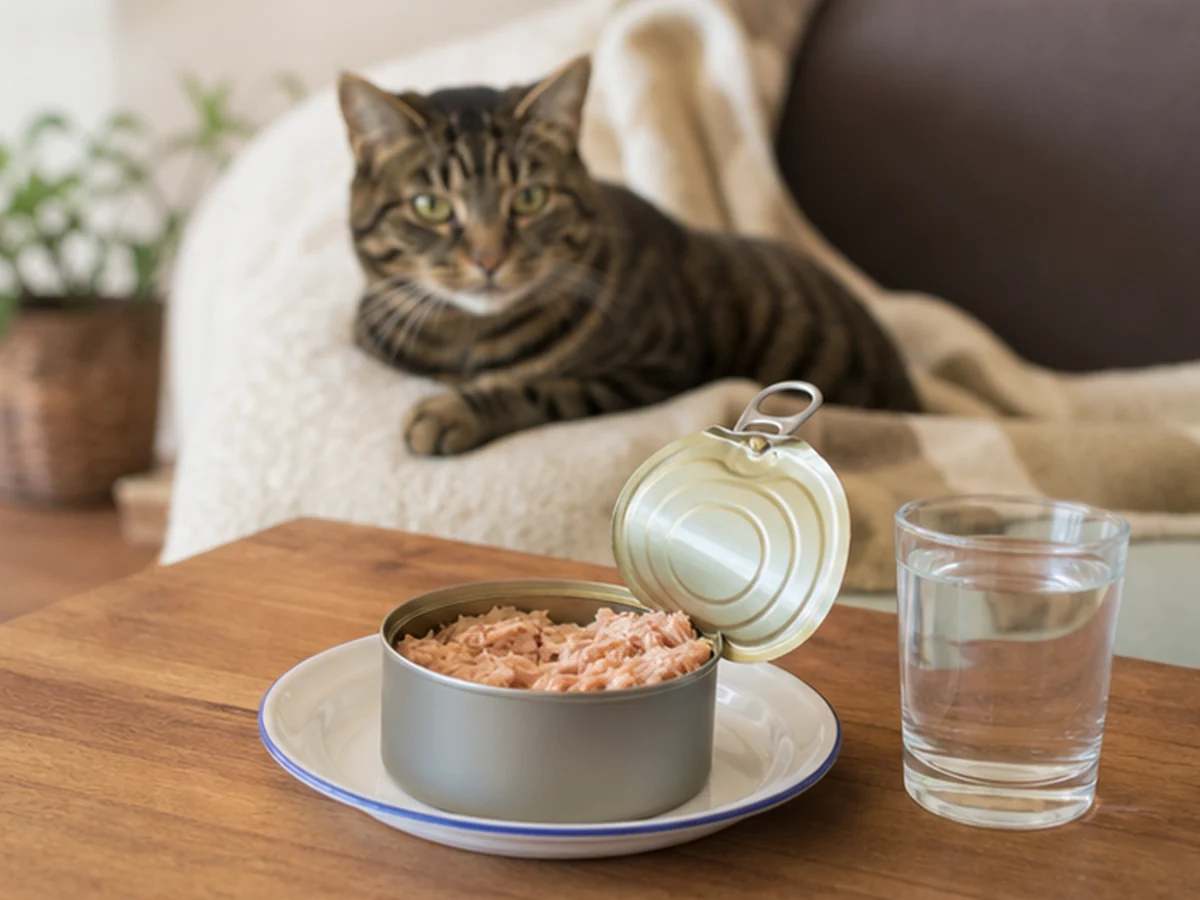
If you choose to share, use a teaspoon-sized taste or less of plain tuna packed in water, drained, and offered rarely. A few flakes are enough to satisfy the kitchen inspection without letting tuna take over the menu.
Do not feed the can as a meal, use tuna juice as daily hydration, or rely on tuna to coax a cat through ongoing appetite loss. A cat that is not eating normal food needs veterinary advice, because a powerful smell can disguise the pattern without fixing its cause.
Human canned tuna is not complete cat food
Food labeled for people is formulated for people, not to meet feline life-stage requirements. Tuna meat alone does not provide the correct balance of taurine, fatty acids, vitamins, minerals, calcium, phosphorus, and calories for long-term feeding.
The Cornell Feline Health Center warns that some cats eating canned fish products meant for humans have developed potentially serious neurologic disorders. Cornell recommends nutritionally complete and balanced cat food and keeping treats occasional.
A commercial cat food that includes tuna is different because the manufacturer formulates the entire recipe to meet a nutritional standard. Check the adequacy statement, life stage, and feeding directions rather than assuming the word tuna guarantees completeness.
Tuna-only feeding can cause nutritional disease
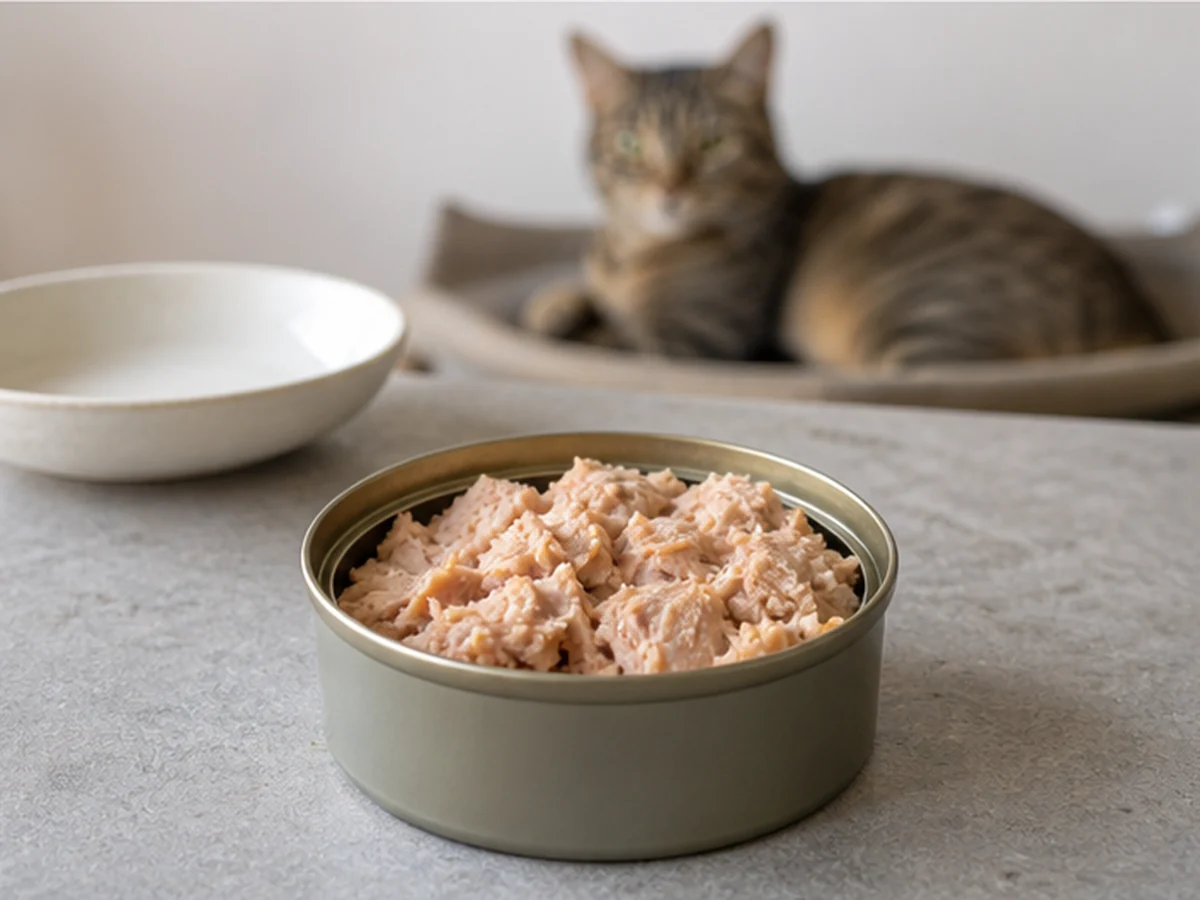
Repeated large servings of canned tuna can crowd out balanced food and create deficiencies or excesses. The Merck Veterinary Manual nutrition review notes that cats given large quantities of canned tuna have developed vitamin E deficiency and pansteatitis, sometimes called yellow fat disease.
Pansteatitis is painful inflammation of body fat, not a cosmetic concern. A cat with pain when handled, reluctance to move, fever, lethargy, or appetite loss needs veterinary examination rather than another fish-based meal.
Do not try to balance a tuna-heavy diet by adding a random vitamin E supplement. Supplements can create new imbalances, and correcting a deficient homemade diet requires a veterinarian or board-certified veterinary nutritionist.
Mercury is a long-term reason for restraint
Tuna are predatory fish that accumulate methylmercury, and mercury content varies by species and product. FDA data for human food show that albacore, or white tuna, typically contains more mercury than canned light tuna.
The FDA fish-advice questions and answers state that albacore typically has about three times the mercury of canned light tuna. Those human serving recommendations cannot be converted into a feline allowance, but the product difference supports variety and rare tastes instead of daily tuna.
One tiny taste does not equal mercury poisoning, because cumulative exposure is the concern behind routine feeding. Avoid trying to calculate a safe lifetime dose from human charts and ask your veterinarian about fish choices for a cat that already eats a fish-heavy commercial diet.
Our tuna guide for dogs maps albacore, light tuna, mercury, cans, and mixed products. Use it for product identification, not to scale a dog portion down for a cat.
Water-packed versus oil-packed tuna
Plain tuna packed in water is the simpler choice for an occasional taste, although the liquid may still contain salt or broth. Drain it and check the ingredient panel before assuming water-packed means low-sodium or unseasoned.
Oil-packed tuna adds concentrated fat and calories that can cause vomiting, diarrhea, or appetite change after a larger amount. Oil also coats fur and paws during spills, prompting a cat to swallow more while grooming.
Do not use tuna oil as a coat supplement, constipation treatment, or daily medication vehicle. A cat with pancreatitis, obesity, diabetes, gastrointestinal disease, or a prescribed diet should not have its plan improvised with oil from the pantry.
Salt, broth, and flavored cans
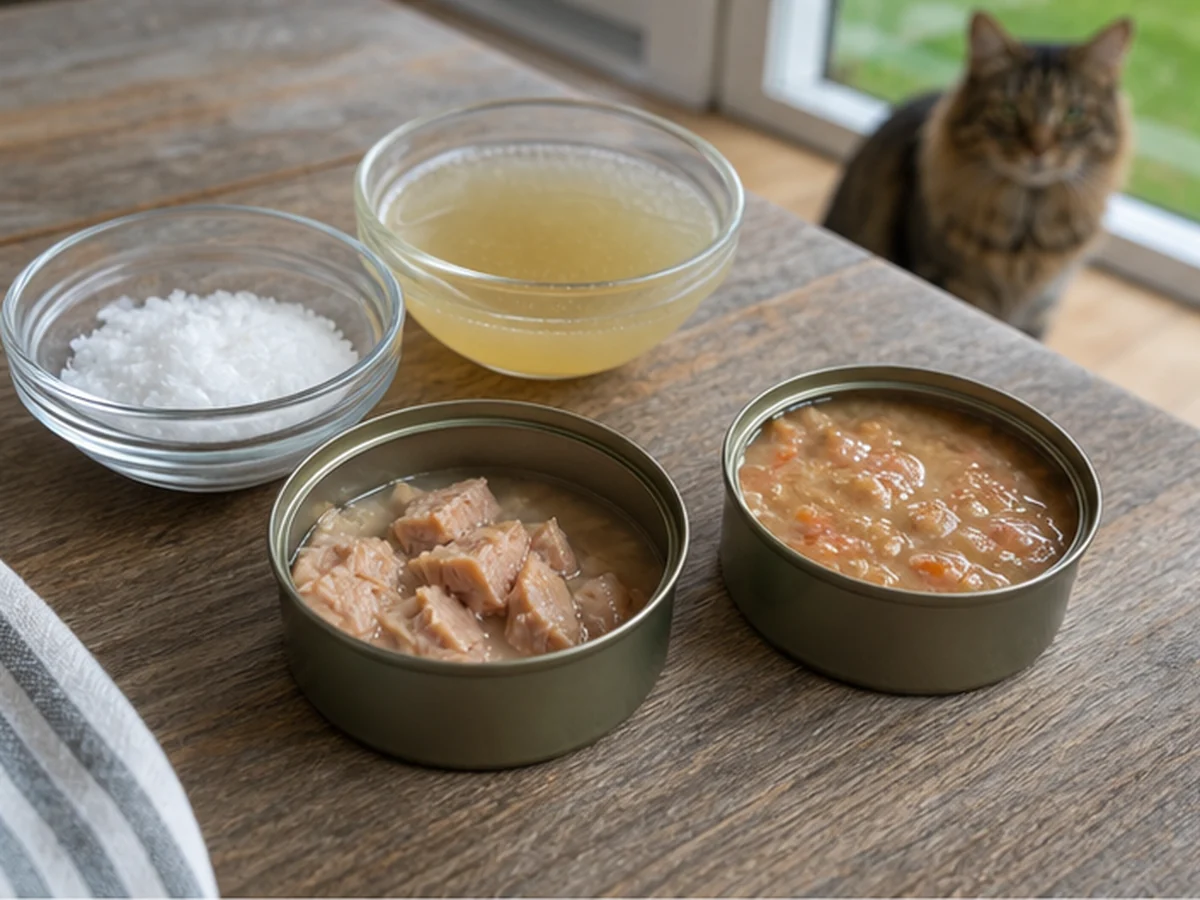
Canned tuna may contain salt, vegetable broth, hydrolyzed protein, spices, smoke flavor, or other additions. Tuna salad, meal kits, and flavored pouches may add onion, garlic, mayonnaise, chili, cheese, lemon, pickles, sweeteners, and preservatives.
Onion and garlic can damage feline red blood cells, including in powdered or cooked forms. Call with the label and amount instead of waiting for weakness, pale gums, rapid breathing, dark urine, or collapse because anemia may be delayed.
Heavy salt matters most after a significant exposure or when water access and health are compromised, not after one ordinary flake. Kidney disease, heart disease, hypertension, and sodium-restricted diets make salty human fish an especially poor choice.
Signs that need prompt help
- Repeated vomiting or diarrhea, inability to keep water down, or abdominal pain.
- Marked lethargy, food refusal, weakness, wobbliness, tremors, or seizures.
- Pale gums, fast breathing, dark urine, or collapse after onion or garlic exposure.
- Facial swelling, hives, breathing changes, or sudden severe itching.
- Bleeding, mouth injury, heavy drooling, or repeated swallowing after contact with a can lid.
Open-mouth breathing, seizures, collapse, severe bleeding, and profound distress are emergencies. A cat that merely yells because the can closed is expressing an opinion, but a cat that becomes weak or stops eating is giving medical information.
Tuna juice is not a hydration plan
A spoonful of plain unsalted tuna water can sometimes flavor food or water when a veterinarian approves it, but liquid from a salted can can add sodium quickly. Oil, broth, seasonings, and spoilage make other can liquids unsuitable.
A cat that drinks poorly, strains to urinate, vomits, or seems dehydrated needs assessment rather than a permanent tuna-water workaround. Fresh water, complete wet food, and a veterinarian-guided hydration plan are more reliable.
Raw tuna and canned tuna are different exposures
Canning uses heat, so ordinary canned tuna does not carry the same thiaminase issue as raw fish. Merck notes that thiaminase found in some raw fish is destroyed by cooking, although overheating or improper processing can also affect nutrients.
Raw fish adds bacterial, parasitic, bone, and species-identification concerns. Our cat-specific raw fish guide covers those problems without confusing a canned product with sushi or a fresh fillet.
For a wider fish comparison, the fish guide helps identify species, bones, raw forms, and mercury questions. Its canine serving information does not establish what a cat should eat.
Sardines, salmon, and variety
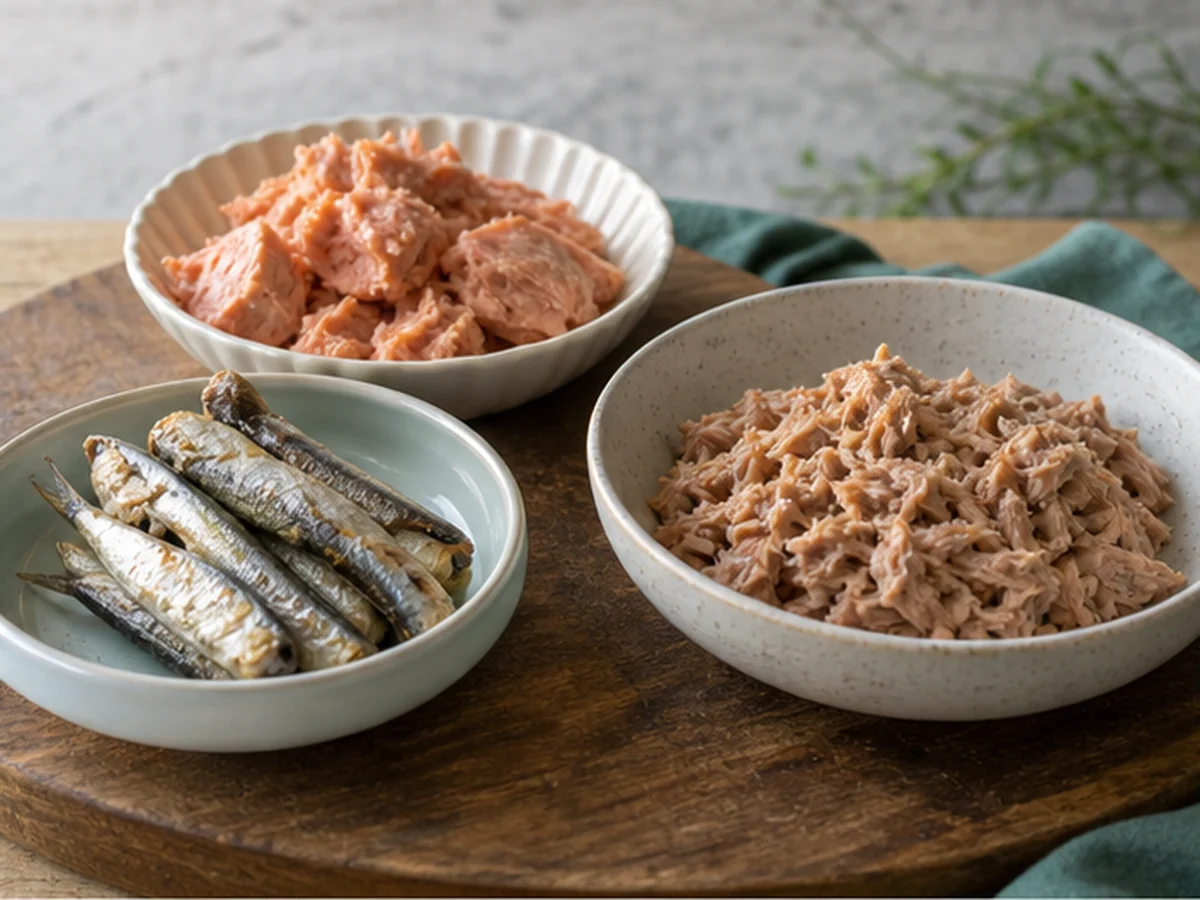
Switching from tuna to another human canned fish does not automatically create a balanced cat diet. Sardines may be lower on the food chain but can be salty, oily, smoked, flavored, or packed with bones and skin.
The sardine product guide shows how water, oil, sodium, bones, flavoring, and cans change the household question. Use complete cat food for dietary variety rather than rotating people-food tins.
Cans, lids, pouches, and food safety
Open can lids and pull tabs can cut the tongue, lips, paws, or esophagus, and a cat may push its head into a can chasing residue. Transfer any saved fish to a covered food-safe container and dispose of the rinsed can securely.
Pouch corners, foil seals, and plastic wrappers can become foreign bodies. Report missing packaging, do not pull material that seems anchored in the mouth or anus, and seek prompt care for repeated vomiting or food refusal.
Refrigerate opened tuna promptly and discard it when storage time, smell, texture, or temperature is questionable. Do not feed spoiled fish to avoid waste, because the veterinary bill is a deeply inefficient leftovers strategy.
Cats that should skip human tuna
- Kittens, pregnant cats, and nursing cats that need complete life-stage nutrition.
- Cats with kidney disease, heart disease, hypertension, or a sodium restriction.
- Cats with pancreatitis, obesity, diabetes, or chronic gastrointestinal disease.
- Human tuna can undermine a fish-free elimination trial or the nutrient targets of a prescribed feline diet.
- Cats with fish allergy, food-triggered skin disease, or a history of pansteatitis.
A tiny flake does not become a universal toxin in these cats. Human tuna is simply optional, nutritionally incomplete, and capable of complicating a medical diet that was chosen carefully.
What to do if your cat ate canned tuna
- Remove the tuna, can, lid, pouch, wrapper, and utensils.
- Check breathing, swallowing, gum color, alertness, and mouth injuries.
- Identify light or albacore, water or oil, amount, ingredients, and storage condition.
- Save the label and check for onion, garlic, heavy salt, sauces, and missing packaging.
- Call for a large amount, unsafe ingredients, spoiled fish, a cut, missing material, a vulnerable cat, or any symptom.
Do not try to bring tuna back up or reach for peroxide, salt, oil, milk, bread, or charcoal without veterinary direction. Keep fresh water available to an otherwise normal cat and do not force food into a nauseated cat.
Frequently asked questions
Can kittens eat canned tuna?
Kittens need complete kitten food for growth, and human tuna can displace those nutrients quickly in a small stomach. Use kitten-appropriate treats instead.
Can cats eat tuna every day?
Not as human canned tuna. Daily feeding raises concerns about incomplete nutrition, vitamin E deficiency, mercury exposure, sodium, calories, and a cat refusing more balanced food.
Is light tuna safer than albacore?
Canned light tuna generally contains less mercury than albacore, but neither should become a routine feline meal. Choose plain water-packed tuna for any rare approved taste and keep the serving tiny.
Can I use tuna to give medicine?
Ask the prescribing clinic because some medications should not be crushed or given with certain foods. A clinic-approved pill treat or small amount of complete wet cat food is easier to use consistently.
The bottom line
A few flakes of plain water-packed canned tuna can be an occasional taste for many healthy adult cats, but human tuna is not a meal. Protect the balanced diet, limit cumulative mercury and sodium, avoid oil and flavorings, store fish safely, secure sharp cans, and call promptly for symptoms or risky ingredients.