Can Cats Eat Sardines? Water, Oil, Brine, Bones, and Cans
A healthy cat can have a small flake of plain, cooked sardine once in a while. The best candidate is unseasoned and packed in water without added salt, while brine, oil, tomato sauce, mustard, chili, smoke, raw fish, whole dried fish, and sharp can lids complicate the snack.
After a can raid, keep the label and count missing fish, bones, metal, and wrappers. Call for symptoms or swallowed objects.
Pick the quietest can on the shelf
Start with the ingredient panel rather than the vintage fisherman artwork. Sardines and water is a shorter safety puzzle than sardines with salt, oil, broth, smoke flavor, pepper, mustard, tomato, onion, or garlic.
No-salt-added is preferable when available, but it does not create a therapeutic food for kidney or heart disease. Drain the liquid, inspect the fish, and reserve one small flake rather than serving the tin.
Oil-packed sardines bring extra calories and may cause vomiting or diarrhea in a sensitive cat. Pouring off the oil does not remove everything absorbed into the fish, so water-packed fish remains easier to judge.
Soft bones are still a question, not a guarantee
Canning pressure softens sardine bones, and many people eat them. A cat with dental pain, swallowing difficulty, gastrointestinal disease, constipation, or a controlled mineral prescription may still be a poor candidate.
Mash the selected flake between clean fingers and remove any firm, sharp, or conspicuous structure. “Edible for people” is not a command to make a small cat process every spine in the tin.
Fresh sardines require a much more deliberate bone check because their skeleton has not been pressure-softened. Cook them thoroughly, remove the head, tail, fins, and bones, and offer only flesh if the veterinarian approves.
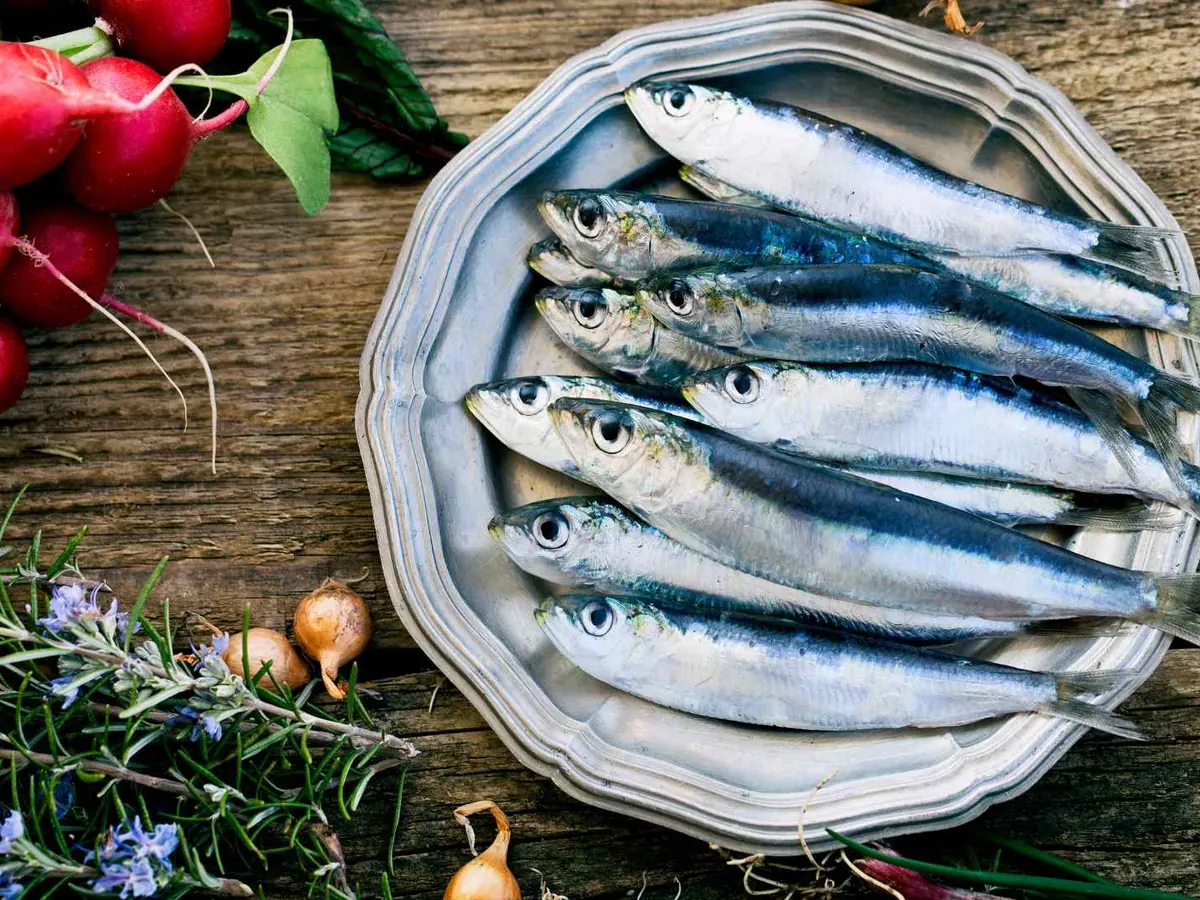
Brine turns a fish taste into a salt problem
Brine-packed products can be very salty, and the liquid is not a hydration supplement. Cats with kidney disease, heart disease, hypertension, or a prescribed sodium target should not receive a casual splash from the can.
An accidental lick is different from drinking the tin, and risk depends on concentration, amount, access to water, and the cat’s health. Call for vomiting, marked thirst, weakness, disorientation, tremors, seizures, or a substantial brine exposure.
Do not use salt water to induce vomiting after any food theft. Salt itself can cause dangerous neurologic and fluid-balance problems.
Tomato, mustard, chili, and other energetic sauces
Tomato sauce commonly hides onion or garlic, and mustard preparations may add salt, vinegar, sugar, spice, alcohol, or sweetener. Chili products can cause mouth and gastrointestinal irritation even when they do not create a systemic toxin.
Our pizza guide explains why a tomato-based name never replaces an ingredient list. Cooked alliums remain hazardous, and powder disappears too neatly to pick out.
Mediterranean tins may include lemon, olive, caper, herb, pepper, or seasoned oil. None is needed for the cat, and a plain flake avoids arguing with the entire antipasto aisle.
Dried sardines are small fish with concentrated logistics
Drying removes water, making each piece firmer and more concentrated in calories and sodium. A whole dried sardine may be too large, hard, or pointed for a cat that swallows treats quickly.
Pet treats should list the target species and feeding directions, but those labels do not make unlimited servings appropriate. Break an approved treat into a cat-size piece and count it within the day’s treat allowance.
Desiccant packets, oxygen absorbers, plastic bags, clips, and resealable strips can be swallowed during a cupboard break-in. Bring the packet to the clinic without opening it if any portion is missing.
Raw sardines keep all the raw-fish problems
Raw sardines may carry pathogens and parasites, while freezing does not eliminate every harmful organism. Choose thorough cooking and clean handling rather than assuming small fish are naturally sanitized.
Visit our raw fish article for parasite, thiaminase, bone, and kitchen-contamination details. The fish’s size changes mercury patterns more than it changes the need for food safety.
Clean boards, knives, hands, and counters after raw seafood prep. Keep raw juices out of the cat’s bowl and off surfaces a child or immunocompromised person may touch.
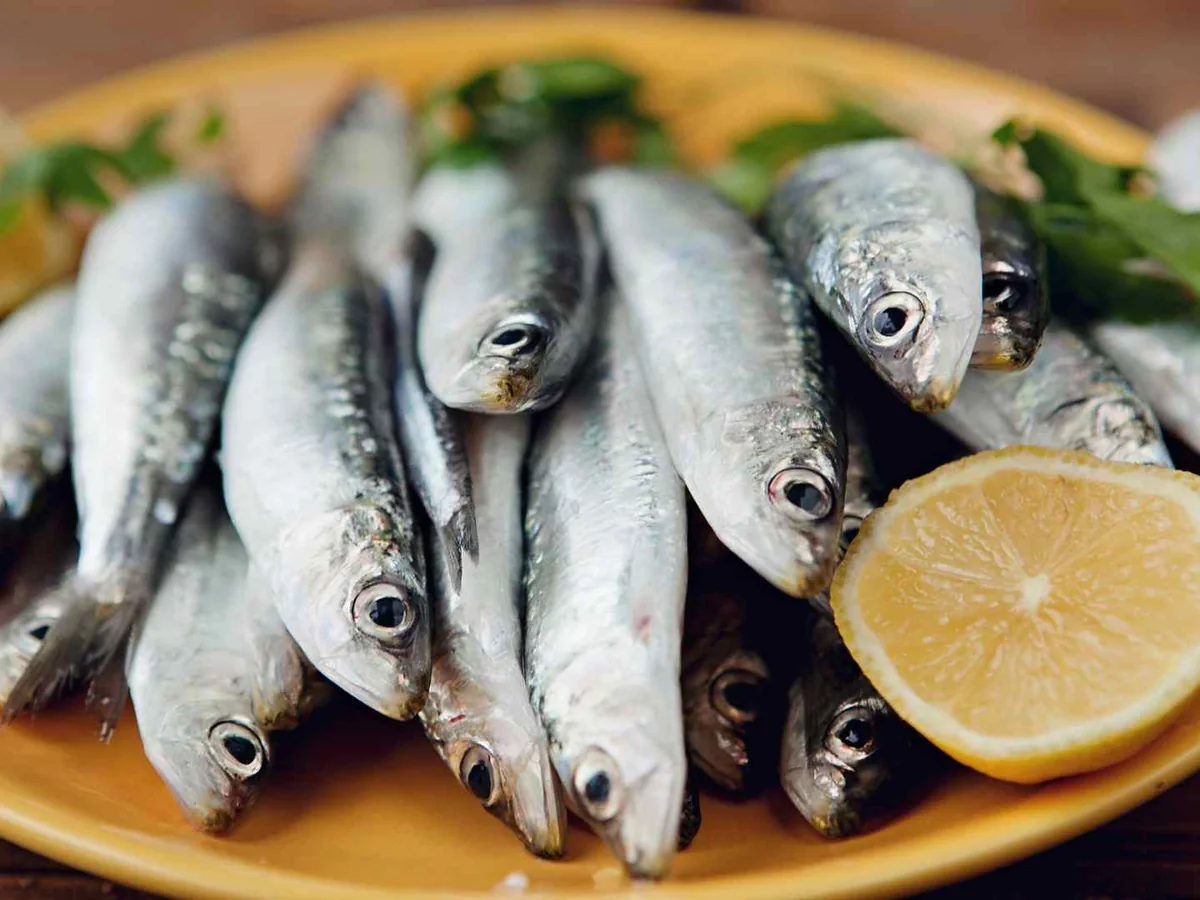
Mercury is a point in sardines’ favor, not a blank check
The FDA human fish chart categorizes sardines among lower-mercury choices. Small, short-lived fish generally accumulate less methylmercury than large predatory species.
That chart was not written as a cat-treat schedule, and lower mercury does not solve sodium, bones, sauces, calories, or nutritional imbalance. Rotate complete feline foods based on veterinary needs rather than building a sardine tower from one favorable trait.
Why a sardine-only cat menu comes apart
Sardines offer protein and fat but cannot reliably provide every feline nutrient in the necessary amount and ratio. Human canned fish is manufactured for human taste and labeling rules, not feline life-stage adequacy.
Cornell’s feeding guidance notes that some cats consuming human canned-fish products developed serious neurologic problems. The lesson is not that every sardine bite is toxic, but that repeated unbalanced fish feeding has real consequences.
Choose a cat food bearing a complete-and-balanced statement if your cat loves fish flavor. A topper or treat labeled for intermittent feeding should remain a garnish, even if opening the package summons the cat from another postal code.
Freshness, dents, and leftovers
Reject bulging, leaking, rusted, or badly dented cans, particularly when damage involves a seam. Do not taste a questionable product to decide whether the cat may have it.
Once opened, transfer leftover sardines to a clean covered container, refrigerate promptly, and follow label timing. Discard fish with sour, rancid, strongly fishy, or ammonia-like odors.
Sharp lids and detached pull tabs can cut the mouth or become foreign bodies. Open the can away from the cat and put metal directly into a secured receptacle.
Who should not join sardine night
Kittens need complete growth food, while seniors often have diseases that affect sodium, phosphorus, calories, or fat tolerance. Cats with pancreatitis, kidney disease, heart disease, obesity, or a prescription diet need a specific answer from their clinic.
Fish can also be a food allergen, and sardines should not appear during an elimination trial unless they are part of the veterinary plan. Itching, recurrent ear trouble, vomiting, or diarrhea deserve a controlled workup rather than random protein rotation.
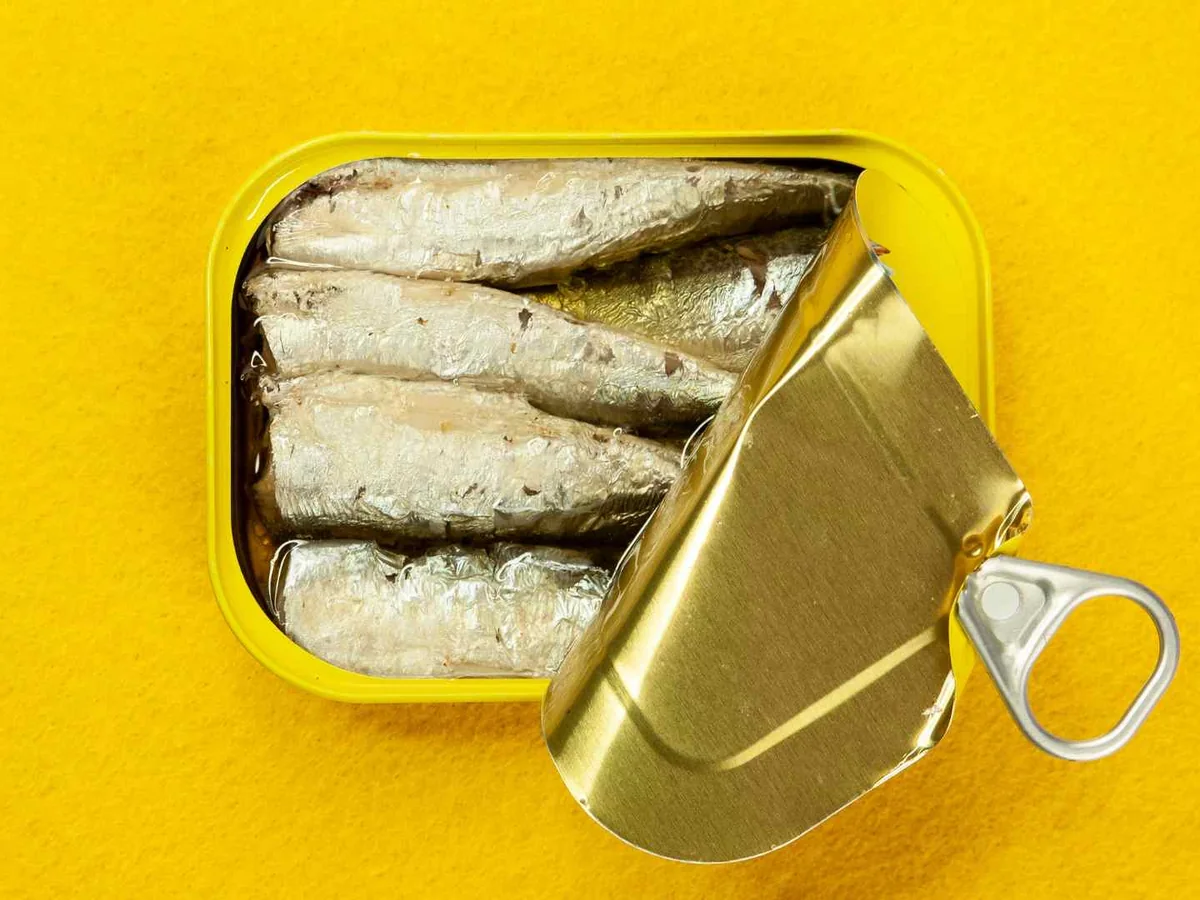
A can-opening mishap checklist
- Move the fish and metal. Secure the lid, pull tab, can, fork, and remaining sardines.
- Photograph both panels. Capture ingredients, sodium, lot, best-by date, and manufacturer.
- Estimate the largest serving. Count how many fish and how much liquid could be gone.
- Identify the sauce. Flag onion, garlic, alcohol, xylitol, hot pepper, and other seasonings.
- Call for illness or objects. Contact a veterinarian for symptoms, a vulnerable cat, sharp metal, or packaging.
Do not induce vomiting after suspected metal or bone ingestion, because material can injure tissue on the way back up. Trouble breathing, collapse, seizures, repeated retching, severe pain, or inability to swallow require emergency care.
Phosphorus, calories, and prescription-food boundaries
Fish naturally contributes phosphorus, and canned preparations vary in sodium and fat. Those nutrients can conflict with a renal, cardiac, weight-loss, or gastrointestinal prescription even when the ingredient is otherwise non-toxic.
The FDA’s nutritional-adequacy explanation shows why a complete diet is judged as a whole formula. One nutrient-rich ingredient does not automatically improve a therapeutic meal.
Ask the prescribing clinic whether any human sardine fits the plan, including the exact brand and packing liquid. “Fish is healthy” is too vague to guide a cat with laboratory targets.
Fishy breath is not dental care
Crunching a dried sardine does not substitute for tooth brushing, oral examination, or treatment of periodontal disease. Hard food may fracture a diseased tooth while leaving plaque along the gumline untouched.
A cat who drops food, chews on one side, drools, or paws at the mouth needs a veterinary dental assessment. Soft sardine may hide discomfort temporarily without treating it.
Use products accepted for feline dental benefit when the veterinarian recommends them, and account for their calories. The strongest-smelling snack is not automatically the most hardworking toothbrush.
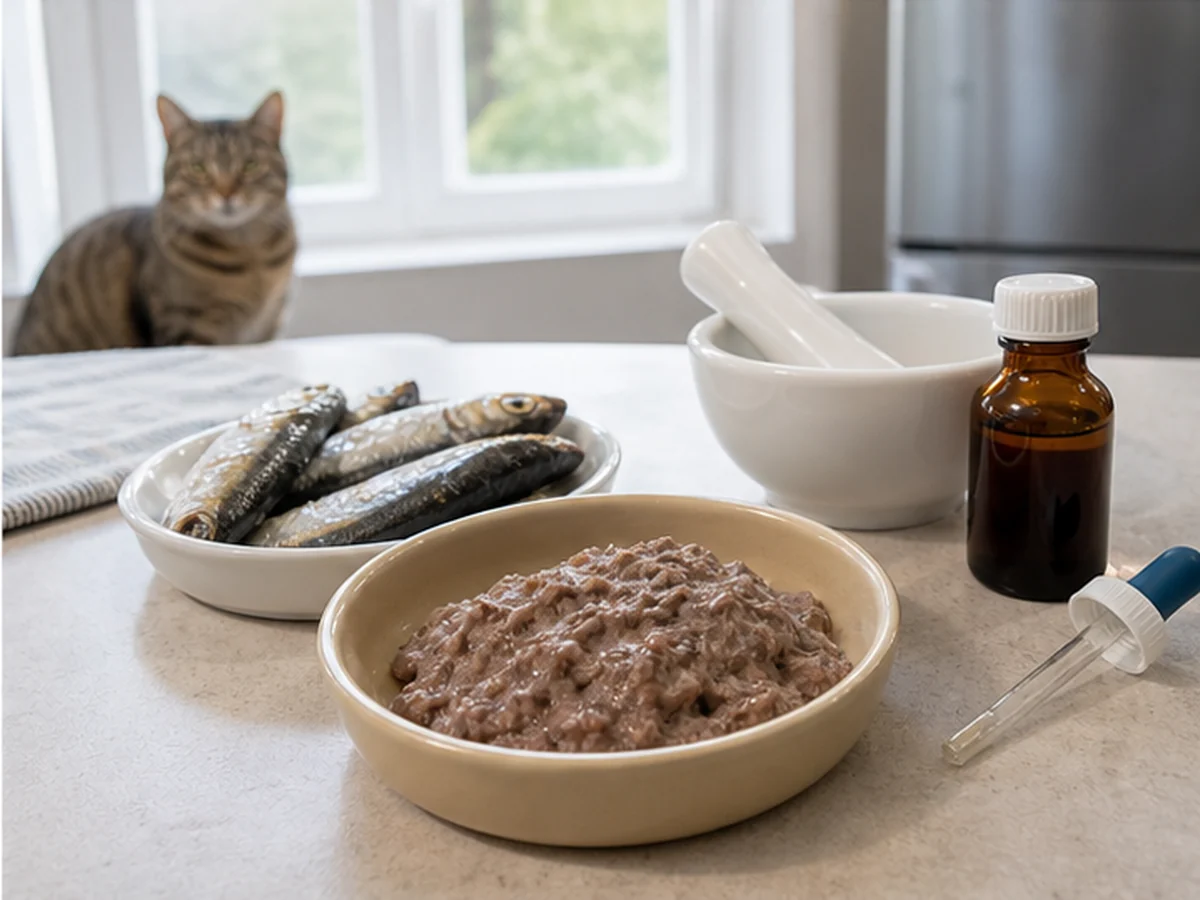
Sardine paste and medication
Mashing fish around a tablet can work once, but it may teach the cat to distrust sardines after tasting medicine. Confirm that the drug may be given with food and that the full dose was swallowed.
Commercial fish pastes can contain oil, salt, starch, flavor, preservatives, or sugar. Read the tube label and keep the cap away from cats who regard plastic as a side dish.
Sardine questions from the kitchen doorway
Can cats drink sardine water?
Only a tiny amount from a plain no-salt-added water pack is even worth considering, and many cats need to skip it. Brine, oil, broth, and seasoned liquid are not drinking water.
Can cats eat sardines every day?
Daily human sardines can distort nutrients and calories while increasing exposure to sodium and product-specific additives. Use complete cat food for regular feeding.
Are sardines better than tuna?
Sardines are generally lower in mercury, but product preparation and nutritional completeness still decide suitability. Our canned tuna guide compares another popular fish where mercury, sodium, oil, and nutritional completeness all deserve separate attention.
Final verdict from the tin
Rinse neither a seasoned sardine nor a brined one as a way to certify it plain, because salt and flavors penetrate the flesh. Set that can aside for human use and open a feline treat whose ingredients and calories fit the cat’s plan.
If multiple cats share the home, supervise the tasting so one fish enthusiast does not vacuum every portion while the cautious cat watches. Separate dishes also reveal which animal vomited or refused the new food later.
One drained, mashed flake from a plain water-packed sardine can be an occasional treat for an appropriate cat. Keep brine, oil, sauces, raw fish, whole hard treats, damaged cans, and fish-only diets outside the feeding plan.