Can Cats Eat Pesto? Garlic, Basil, Oil, Cheese, and Recipe Variations
Standard basil pesto is not a cat-safe sauce because it normally contains garlic, and recipes can also be salty and very fatty. If your cat stole a lick, find the jar or recipe before panicking: a faint smear, a spoonful of garlic-heavy pesto, and a swallowed glass shard are three different calls.
Reconstruct the pesto, not the menu name
Pesto is a method, not a fixed formula. Traditional basil pesto often combines basil, garlic, hard cheese, pine nuts, olive oil, and salt, while supermarket and restaurant versions may swap the nut, cheese, herb, or oil without advertising the change on the plate.
- Keep the jar, tub, meal-kit card, or restaurant ingredient list.
- Estimate the amount as a lick, smear, teaspoon, or unknown quantity.
- Note whether the cat also reached pasta, chicken, bread, foil, a blender blade, or broken glass.
- Record the time and the cat’s current behavior before cleaning everything away.
That short inventory matters because pesto’s most serious routine ingredient is often present in a form you cannot see. Garlic crushed into oil does not leave an obvious chunk behind.
Garlic is the reason not to offer a taste
Garlic belongs to the Allium group, whose sulfur-containing oxidants can damage feline red blood cells. The Merck Veterinary Manual’s Allium review notes that cats are particularly sensitive and that cooked, dehydrated, and granulated forms have caused toxicosis.
Pesto often uses fresh crushed garlic, but commercial versions may include garlic powder or concentrate instead. There is no honest universal spoonful that can be declared safe because recipes, concentrations, cat size, repeated exposure, and individual health differ.
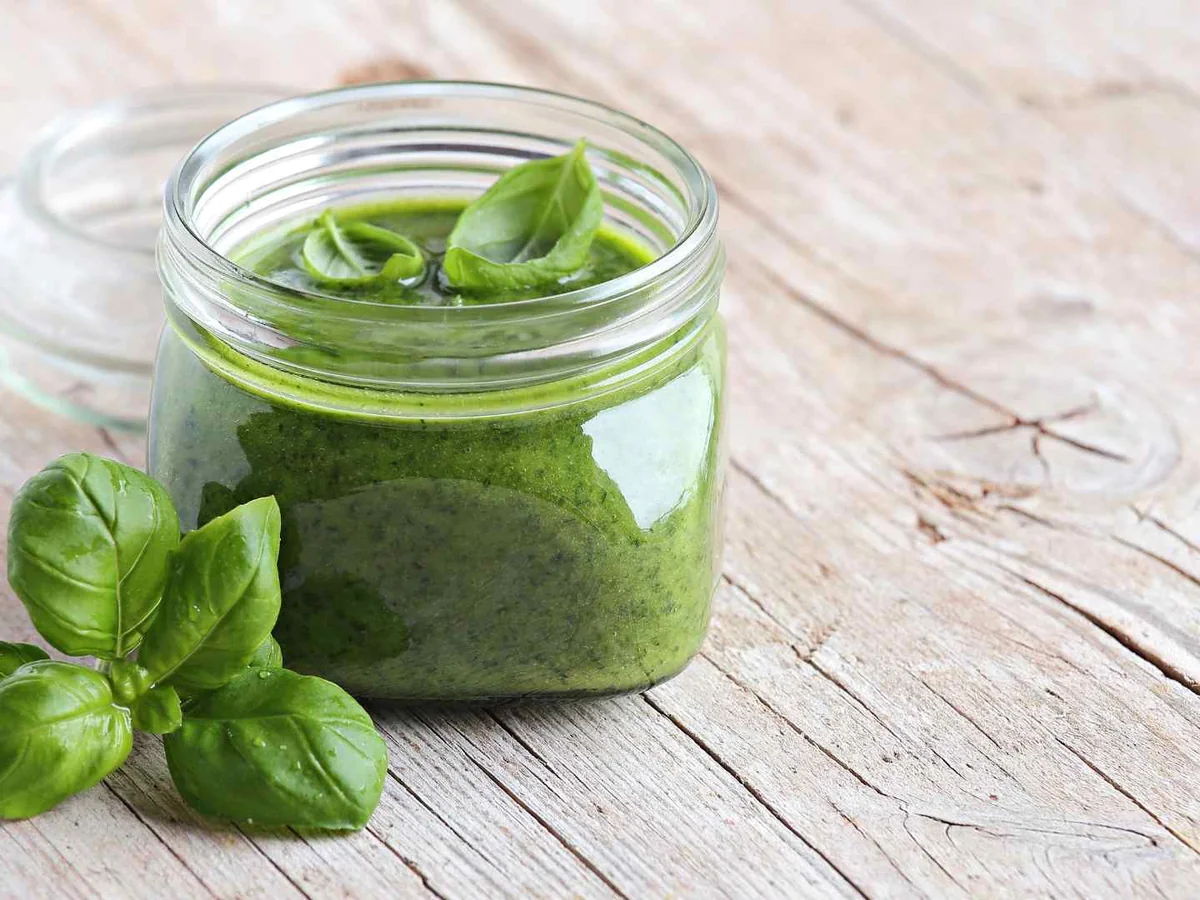
A cat may look normal before anemia appears
Stomach upset can occur earlier, while clinically important red-cell damage may take days to become obvious. Watch for unusual tiredness, weakness, reduced appetite, pale or yellow-tinged gums, fast breathing, rapid heartbeat, dark urine, or collapse after a meaningful Allium exposure.
Do not let an energetic evening erase the ingredient history. Call your veterinarian or an animal poison service promptly when garlic is confirmed, the amount is more than a trace, the quantity is unknown, or the cat has signs.
Basil is not the villain in the bowl
The ASPCA lists sweet basil as non-toxic to cats, which helps separate the herb from the finished sauce. Non-toxic does not mean a cat needs a basil serving, and a large wad of leaves can still upset the stomach.
The basil fact also does not make pesto safe by association. Think of it as one low-concern passenger in a crowded car that still contains garlic, oil, cheese, salt, and possibly nuts.
Oil turns a green smear into a rich snack
Olive oil is not usually the toxic component, but pesto may be nearly spoonable fat. A lick may only produce greasy whiskers, whereas a larger helping can trigger vomiting or diarrhea and can be especially unwise for a cat with prior pancreatitis, obesity, or a fat-restricted plan.
Do not claim that one small lick will cause pancreatitis, because that cannot be predicted from the sauce alone. Do treat repeated vomiting, abdominal discomfort, profound lethargy, or refusal of food as reasons for veterinary assessment.
Cheese and salt add different problems
Parmesan or Pecorino contributes sodium and dairy components, while some vegan pestos use nutritional yeast or a salty cheese substitute. Many adult cats do not digest lactose well, although a mature hard cheese may contain less lactose than milk; fat and salt still remain.
A cat with heart disease, kidney disease, high blood pressure, urinary concerns, or a sodium-controlled prescription diet should not have casual pesto extras. The site’s Parmesan guide explains why a hard cheese should be judged by more than lactose.
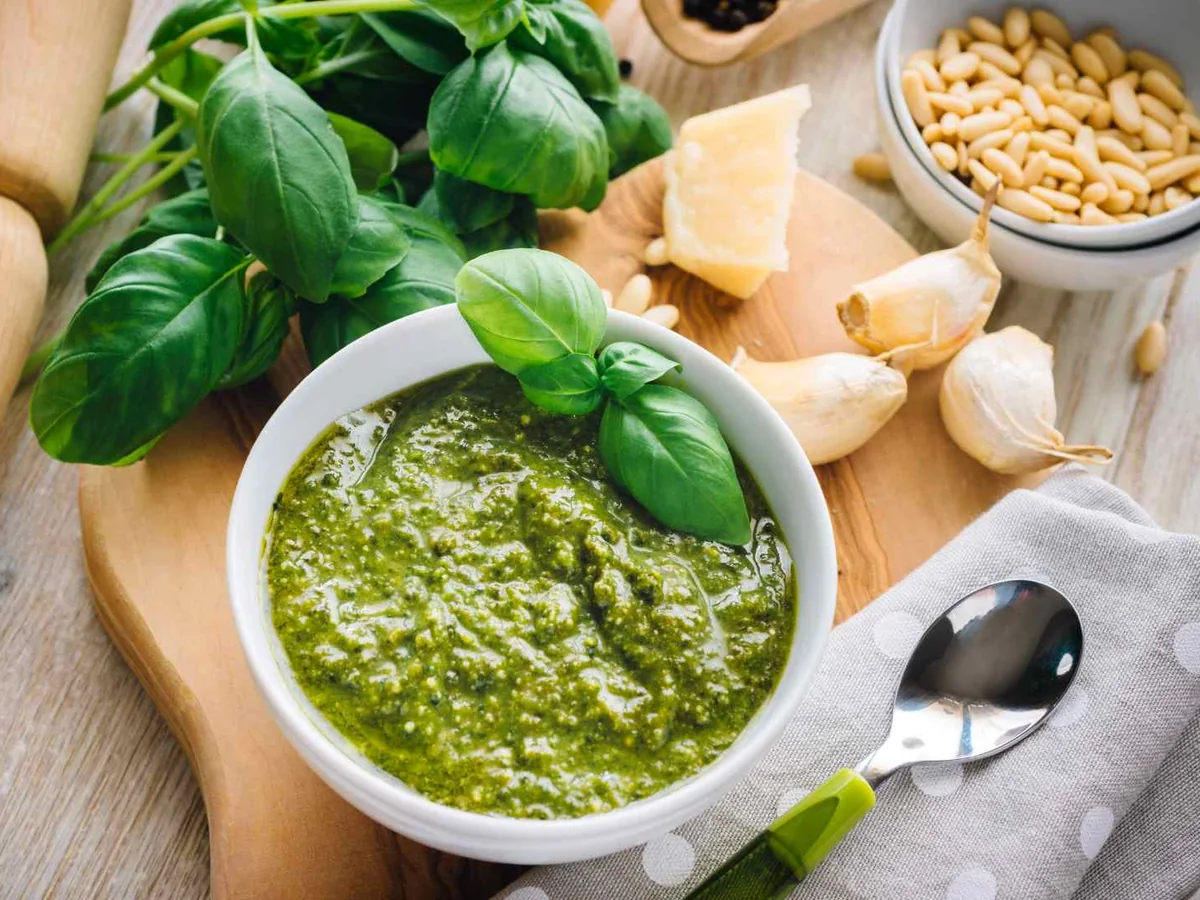
Pine nuts are only one possible nut
Classic pesto uses pine nuts, but walnuts, cashews, pistachios, almonds, sunflower seeds, and seed blends all appear in modern jars. Nuts add fat and choking texture, while stale or moldy nuts introduce a separate spoilage concern.
A nut-free label does not answer the garlic question, and “vegan” only tells you that dairy ingredients were omitted. Read every line instead of using one front-label claim as a safety shortcut.
Five pesto styles, five ingredient puzzles
| Style | Ingredients worth checking |
| Genovese or green basil pesto | Garlic, pine nuts, hard cheese, salt, oil |
| Red or sun-dried tomato pesto | Garlic, tomato, chile, cheese, salt |
| Vegan pesto | Garlic, nuts or seeds, nutritional yeast, sodium |
| Kale, arugula, spinach, or herb pesto | Garlic plus the exact greens and seasoning |
| Pesto cream sauce | Original pesto plus cream, butter, and more cheese |
The table is a label-reading map, not a ranking of safe sauces. Any style may be reformulated, and homemade pesto can be stronger than a commercial jar.
The food under the pesto still counts
Pesto pasta can include onion, sausage, chicken skin, cream, or a surprising amount of sauce pooled at the bottom. Pesto pizza adds seasoned crust, cheese, cured meat, and sometimes a little white plastic pizza saver that a cat can bat and swallow.
Pesto bread and sandwiches may leave greasy foil, toothpicks, twist ties, or hard crusts behind. Compare the bread component with bread for cats, but do not let the plain base distract from garlic in the topping.
Glass jars and blender cleanup deserve respect
A broken pesto jar creates a cut and glass-ingestion emergency even if the sauce itself was barely touched. Keep the cat out of the room, do not sweep blindly around paws, and seek veterinary advice if any shard could have entered the mouth.
At home, unplug the blender before scraping it, rinse the lid gasket, and wipe oil from counters before the cat investigates. Discard loose foil seals and put the blade assembly somewhere a jumping cat cannot reach.
How to respond to the ordinary stolen lick
For a tiny smear from a known recipe, remove access, offer normal water, and call your veterinarian to discuss the garlic content and the cat’s health. Do not give peroxide, salt, charcoal, milk, or oil, and never attempt home vomiting in a cat.
If the clinic recommends observation, ask how long delayed Allium signs should be watched and what gum color or breathing changes should trigger reassessment. Keep the label because a second call is much easier when the ingredient percentages and serving size are still available.
Situations that should not wait
- The cat ate a spoonful, a large unknown amount, or concentrated garlic pesto.
- The recipe contains onion, chives, leeks, shallots, or another Allium as well as garlic.
- There is weakness, repeated vomiting, breathing change, pale gums, dark urine, collapse, or marked lethargy.
- A glass shard, skewer, foil wad, string, plastic seal, or blender part may be missing.
- The cat is a kitten, medically fragile, or already being treated for anemia.
Bring the product or clear photos to the clinic when possible. Product name, lot, recipe, missing quantity, time, body weight, and current signs are more useful than trying to calculate a dose from an online comment.
Why pesto should stay an accident, not a topper
Even a garlic-free custom pesto is not complete cat food and can displace protein, vitamins, minerals, and taurine supplied in the correct balance. The FDA’s pet-food adequacy explanation is a useful reality check for any human-food topper.
If your cat appears because basil chicken smells interesting, set aside an unseasoned, fully cooked cat-size morsel before sauce touches it. Better yet, use part of the cat’s normal meal as the kitchen participation fee.
Refrigeration does not make an open jar timeless
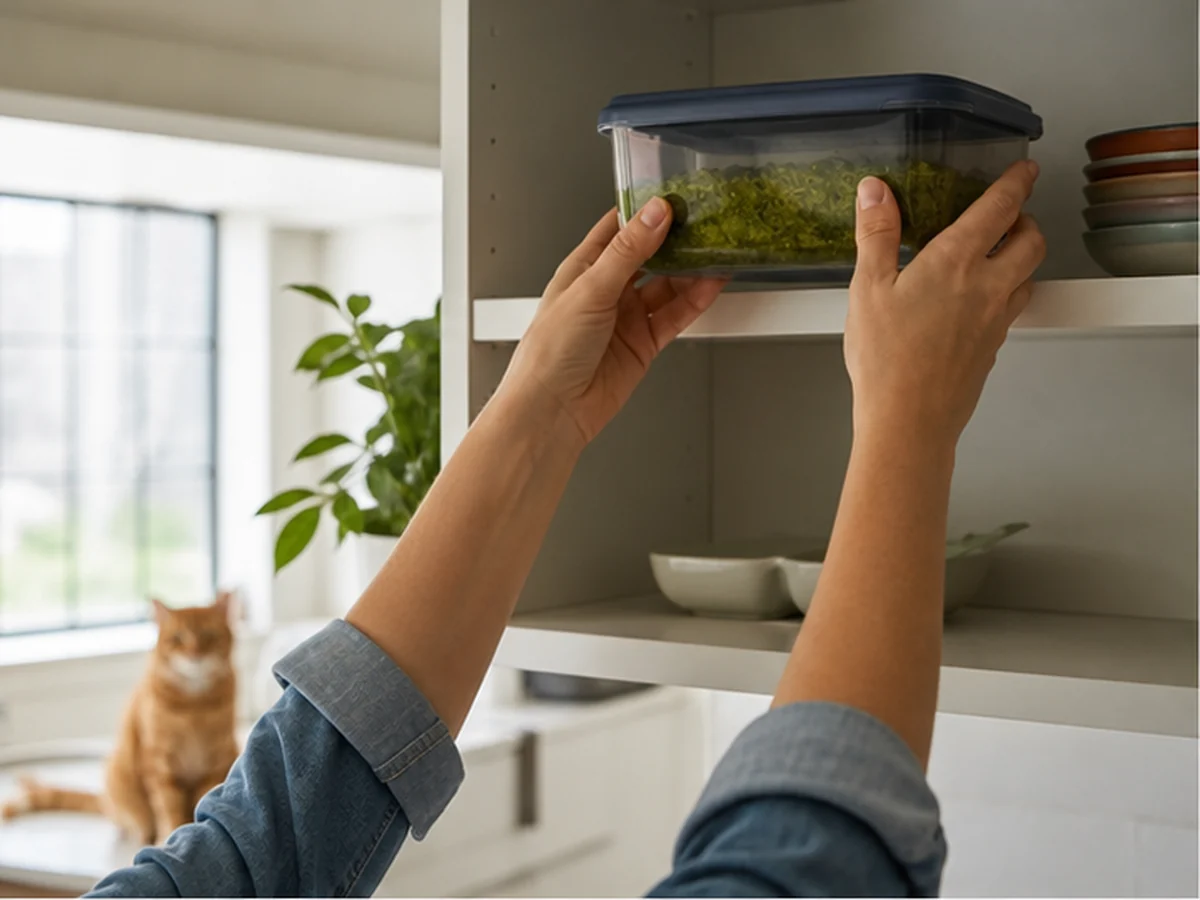
Homemade pesto and opened refrigerated tubs can support spoilage, especially after a used spoon, bread crumb, or raw-meat utensil enters the container. Discard a product with mold, bubbling, leaking, a swollen lid, an off odor, or storage beyond the label’s instructions instead of offering the questionable portion to a pet.
Oil can make surface changes hard to interpret, and scraping away one discolored spot does not identify what grew or spread. Note whether a stolen sauce was fresh, shelf-stable but unopened, refrigerated after opening, frozen, or left on the table through a long meal.
If pesto arrived on a slice, the site’s cat and pizza guide helps inventory crust, sauce, toppings, grease, and box parts separately. A green swirl does not erase the rest of dinner.
Freezing pesto in an ice-cube tray prevents some waste but creates dense portions a cat may carry away, along with silicone lids or tray fragments. Count the cubes, check whether the recipe contained raw dairy or another perishable ingredient, and thaw human portions under controlled refrigeration.
Frequently asked questions
Can cats eat pesto without garlic?
Garlic-free pesto removes the central Allium concern only if onion, chives, leek, and shallot are absent too. Oil, cheese, salt, nuts, portion size, and the cat’s medical needs can still make it a poor choice.
My cat licked a pesto plate. Is that an emergency?
A trace lick is different from a missing spoonful, but standard pesto commonly contains garlic, so call for case-specific guidance with the label in hand. Seek urgent help for concerning signs or any possible sharp-object exposure.
Is red pesto safer than green pesto?
Not automatically, because red pesto commonly contains garlic and may add tomato, chile, cheese, and substantial salt. Judge the precise recipe and amount rather than the color.
Can I use pesto to hide my cat’s medicine?
No standard pesto is a sensible medication vehicle because of garlic and recipe variability. Ask the prescribing clinic about a compatible commercial pill treat or a small amount of the cat’s own food, since some medicines have food restrictions.
Bottom line
Basil itself is not the reason to worry, but ordinary pesto is a garlic-containing, oily, salty mixture with variable nuts and cheese. Save the recipe, call about meaningful or uncertain exposure, monitor for delayed Allium signs as directed, and keep sauce, jars, blades, and seals beyond paw range.