Cat Ate a Chicken Bone? Cooked and Raw Risks, Plus What to Do
Do not intentionally feed chicken bones to cats, whether cooked or raw. A swallowed bone can choke, lodge in the esophagus, obstruct the stomach or intestines, fracture a tooth, or injure digestive tissue, while raw bones add foodborne pathogen risk.
What to do right now
Take away the remaining food and keep your cat calm. Check the plate or trash to identify the bone type, whether it was cooked, how much is missing, when it happened, and whether seasoning, skewers, foil, string, or packaging may also have been swallowed.
Call your veterinarian or an emergency clinic promptly for case-specific advice, even if your cat looks normal. The size, shape, location, cooking method, cat’s size, symptoms, and time since ingestion determine whether home observation, imaging, endoscopy, or another step is appropriate.
Go directly to emergency care for trouble breathing, blue or pale gums, collapse, repeated unproductive retching, severe drooling, frantic pawing at the mouth, or obvious choking. If you can see a loose object at the very front of the mouth, avoid pushing it deeper, and never perform a blind finger sweep.
Do not make the bone come back up
Do not induce vomiting unless a veterinarian explicitly directs it, which is uncommon with sharp foreign objects. A bone can cut or lodge during the return trip and may be aspirated into the airway.
Do not give bread, cotton balls, pumpkin, oil, butter, milk, bulky food, or hydrogen peroxide in an attempt to wrap or move the bone. These internet remedies are not reliable, can create new problems, and may interfere with sedation or procedures.
Do not pull a bone, string, or other material that appears stuck under the tongue or protrudes from the mouth or rectum. Pulling an anchored object can damage internal tissue, so let a veterinary professional assess it.
Why cooked chicken bones are dangerous
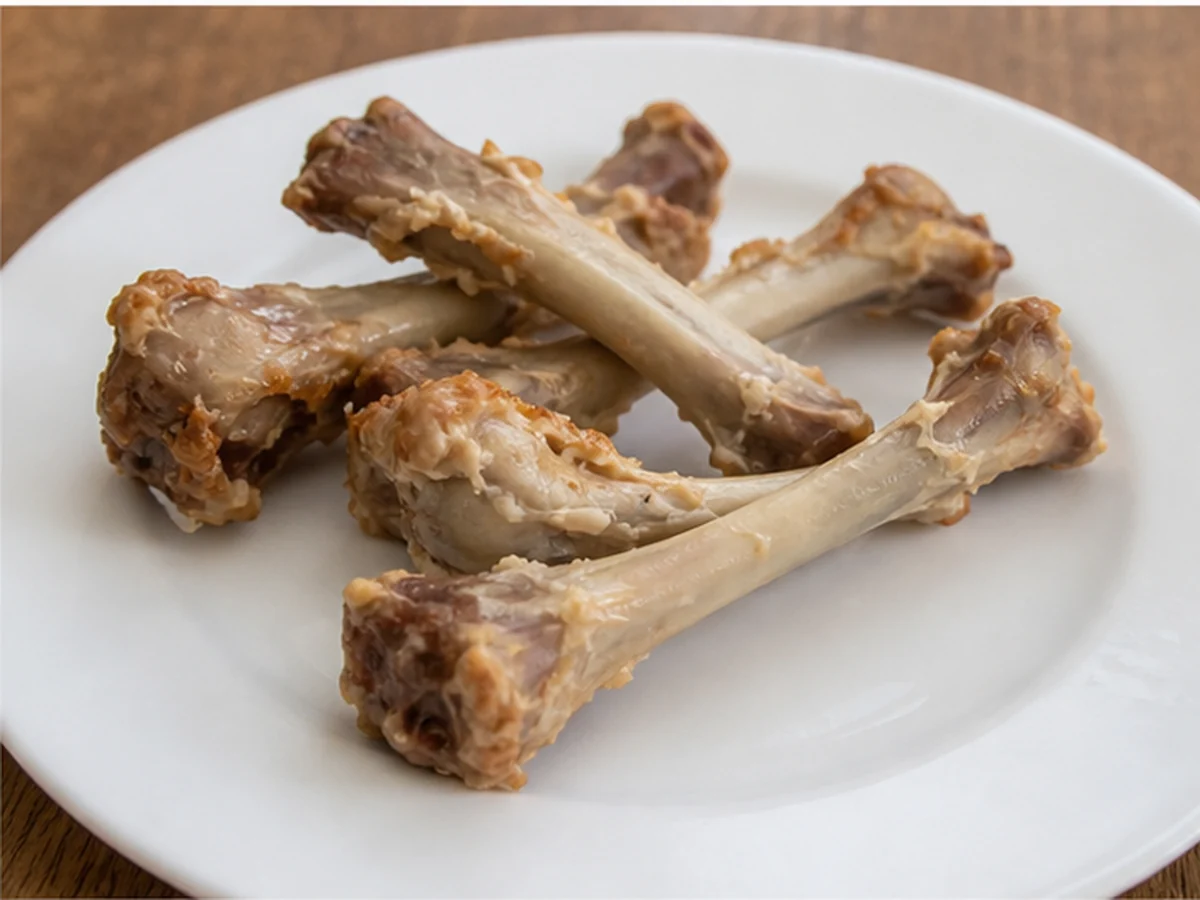
Cooking changes bone structure and may make a chicken bone more brittle, but the danger is not limited to dramatic splinters. Whole or broken cooked bones can become sharp, wedge across the esophagus, or move slowly enough to obstruct farther down.
The FDA’s pet hazard guidance lists bones among objects that can become stuck in the esophagus, stomach, or intestines. A soft-looking wing tip or small rib is not automatically safe for a small cat.
Roasted, fried, grilled, smoked, rotisserie, pressure-cooked, and air-fried bones all remain inappropriate. Sauces and rubs can add onion, garlic, salt, pepper, chile, sugar, or concentrated flavorings to the physical bone risk.
Raw bones are not a safe loophole
A raw chicken bone may be less brittle than a cooked one, but it can still choke, lodge, obstruct, puncture, or break a tooth. Flexible does not mean digestible on a schedule you can predict.
Raw poultry can also carry Salmonella, Campylobacter, and other pathogens. The CDC does not recommend raw pet food or treats because raw animal proteins can make pets and people sick and contaminate bowls, counters, floors, hands, and litter areas.
Freezing, freeze-drying, or dehydrating does not reliably remove every pathogen. A commercially packaged raw bone still requires the same foreign-body caution and household hygiene concerns as a grocery-store bone.
Signs a bone may be stuck in the esophagus
Watch for sudden drooling, gagging, repeated swallowing, regurgitation, coughing, neck extension, refusal to eat, or pawing at the mouth. A cat may still breathe with a partial esophageal blockage, so the absence of classic choking does not make these signs safe to watch overnight.
The Merck Veterinary Manual notes that bones are the most common esophageal foreign body in small animals, although these cases occur more often in dogs than cats. Duration matters because pressure and irritation can damage the esophagus even before the object travels elsewhere.
Do not offer another meal to test whether your cat can swallow unless the veterinary clinic tells you to do so. Food and water may be withheld in preparation for sedation or endoscopy.
Signs of stomach or intestinal trouble
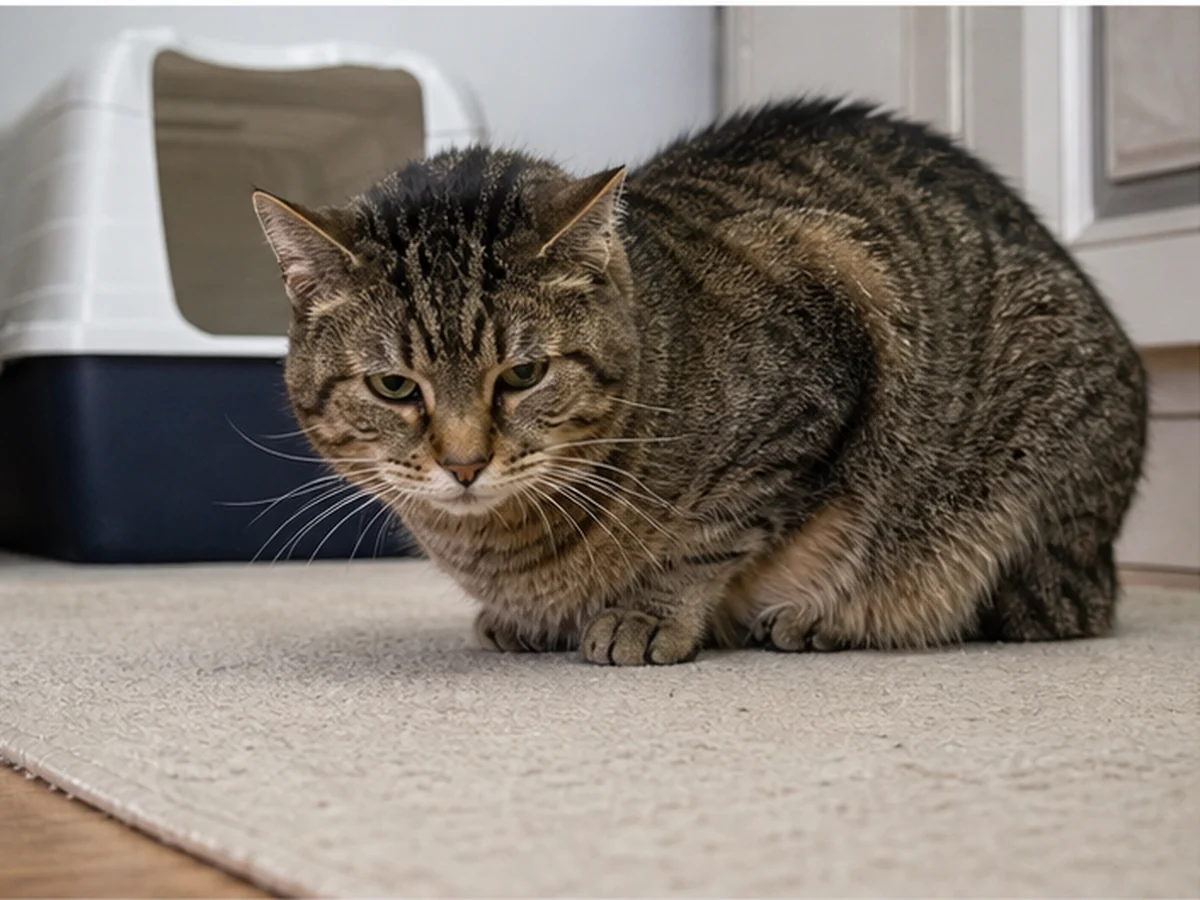
Symptoms can include repeated vomiting, loss of appetite, lethargy, hiding, abdominal tenderness, a hunched posture, diarrhea, straining, reduced stool, or blood in vomit or stool. Perforation can lead to severe pain, fever, weakness, collapse, and life-threatening infection.
A cat with a partial obstruction may have intermittent symptoms and may still pass stool. The Merck obstruction overview explains that unresolved blockages can damage tissue, disturb fluids and electrolytes, and progress to shock.
Symptoms may begin quickly or after an apparently quiet interval. Follow the monitoring timeline your veterinarian gives you and report any change rather than waiting for every possible sign to appear.
How veterinarians assess a swallowed bone
The veterinary team will consider the history, physical examination, oral and throat findings, and your cat’s vital signs. Bring a matching bone or clear photo if it can be collected safely because shape and size can help the discussion.
X-rays may show many bones, but imaging cannot promise that every fragment or tissue injury is visible. Ultrasound, contrast studies, endoscopy, repeat imaging, or surgical exploration may be considered depending on the case.
An object in the esophagus or stomach may sometimes be retrieved with an endoscope under anesthesia. A bone causing obstruction, perforation, or deterioration may require surgery, while carefully selected stable cases may be monitored under veterinary direction.
There is no honest online countdown that guarantees a chicken bone has passed. The plan must be tailored to the individual cat and updated if symptoms develop.
Which bones cause concern?
Wings and wing tips: Their small bones can be gulped whole or broken into angular pieces. Buffalo sauce, garlic seasoning, toothpicks, and foil often join the risk list.
Drumsticks and thighs: These contain larger load-bearing bones that can fracture teeth or produce substantial fragments. Meat left on the bone may encourage a cat to chew harder and swallow quickly.
Ribs, backs, necks, and carcasses: These present multiple small bones and sharp edges, making the missing amount hard to estimate. A roast carcass in an open trash bag is an especially efficient way to turn dinner cleanup into veterinary triage.
Ground bone and bone meal: Properly formulated commercial cat foods may use regulated mineral ingredients, which is not equivalent to sprinkling homemade ground bone onto meals. Excess or imbalanced calcium and phosphorus can harm a diet, while coarse fragments retain physical risk.
Seasoning and side-dish risks
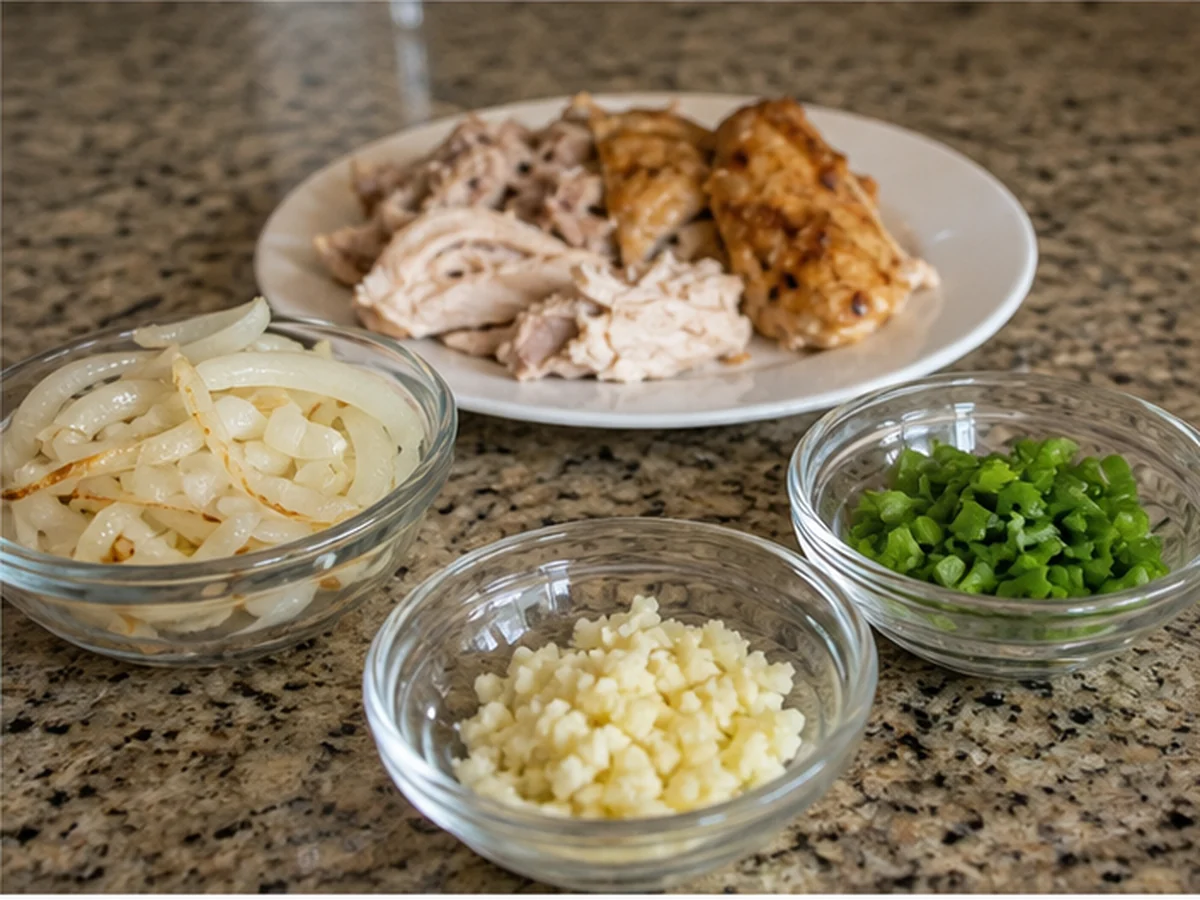
Rotisserie chicken bones may carry onion or garlic seasoning, and fried bones bring batter, grease, and salt. Barbecue bones may be coated in sauces containing alliums, chile, alcohol, sweeteners, or concentrated salt.
If the cat raided a whole plate, account for skewers, kitchen twine, toothpicks, corn cobs, plastic wrap, absorbent meat pads, and napkins. Tell the clinic about everything missing, not just the ingredient that first caught your attention.
Our guide to cats and pizza explains why onion and garlic hidden in sauces matter. The chicken broth guide also helps identify bone, salt, and seasoning issues in a related product, though feline medical advice remains species-specific.
Cats at higher risk
Kittens and small cats have narrower digestive passages and less body reserve if vomiting or infection develops. Seniors and cats with dental disease may fracture teeth or fail to chew a bone into smaller pieces.
Cats with previous gastrointestinal surgery, motility disorders, chronic bowel disease, swallowing problems, or pica need particular caution. Immunocompromised cats, very young kittens, seniors, and households with vulnerable people also face greater consequences from raw-food pathogens.
A cat acting normal immediately after ingestion can still develop a complication. Risk category affects urgency, but it never converts a chicken bone into an approved treat.
Safer ways to serve chicken
If your healthy cat enjoys chicken, offer a tiny amount of fully cooked, unseasoned, boneless meat after removing skin, visible fat, cartilage, and every bone fragment. Chicken offered as an extra should remain a treat, not replace complete cat food.
Commercial cat food containing chicken is designed to supply nutrients in a balanced formula. Plain muscle meat alone does not provide all the calcium, vitamins, fatty acids, and other nutrients a cat needs over time.
Read our guide to raw chicken for dogs for household contamination and handling context, but do not translate dog portions or recommendations to cats. Safer still, keep raw poultry off the feline menu.
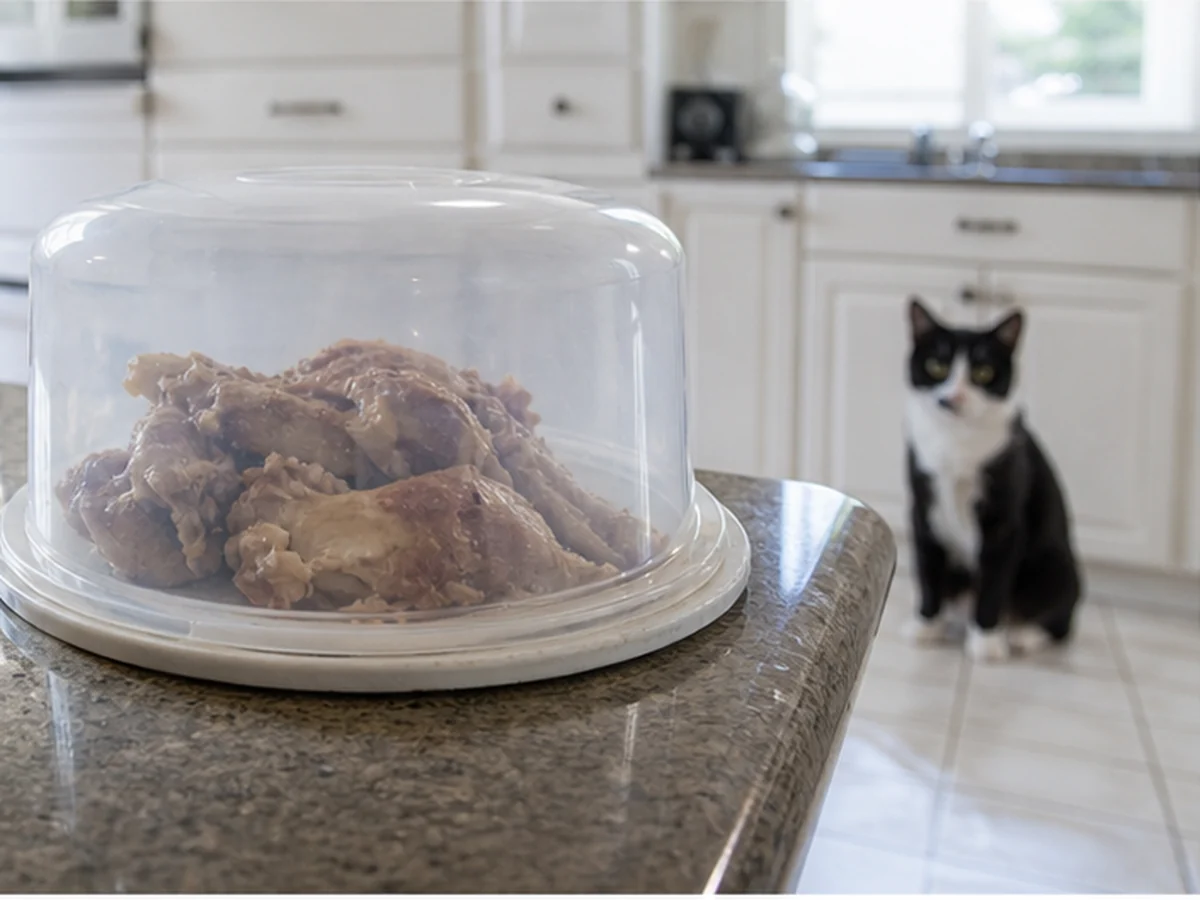
Preventing bone raids
Clear plates promptly and place bones in a rigid, lidded trash container or a sealed bag inside a secured bin. Do not leave a carcass cooling on the stove or tied in a flimsy bag by the door.
Supervise children and guests who may believe a cat deserves a bone because the dog once had one. A short, direct house rule works best: cats get boneless meat only, and the humans handle disposal.
Wash hands, boards, knives, counters, and bowls after raw poultry contact, and prevent the cat from licking the sink. Kitchen access management is easier than disinfecting paw prints that have already toured the house.
Frequently asked questions
My cat crunched one cooked bone and seems fine. Should I still call?
Yes, call for individualized triage because fragments can lodge or injure tissue before obvious signs appear. The clinic can weigh the bone type, cat’s size, timing, and current condition.
Can cats digest small chicken bones?
Some swallowed material may soften or pass, but no one can guarantee that outcome for a specific bone. Small bones can still choke, lodge, perforate, or obstruct.
Should I check my cat’s stool?
Follow your veterinarian’s instructions, which may include monitoring stool and symptoms. Do not squeeze stool with bare hands or assume that seeing one fragment proves all pieces have passed.
Bottom line
Chicken bones are not safe cat treats, cooked or raw. Remove access, avoid vomiting and food-based remedies, call a veterinarian promptly with the details, and seek emergency care for breathing trouble, repeated gagging, severe drooling, collapse, persistent vomiting, pain, or marked lethargy.