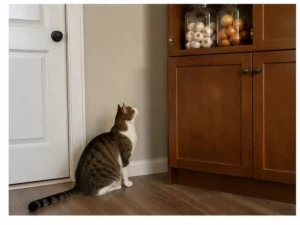
Can Cats Eat Raw Eggs? Salmonella, Batter, Shells, and Safer Options
Cats should not be routinely fed raw eggs. Even clean, uncracked eggs can contain Salmonella, and a cat can spread bacteria around the home without looking sick; raw batter, discarded shells, and egg cartons may add flour, chocolate, raisins, xylitol, sharp fragments, or packaging hazards.
After a lick, remove access and clean the area. Call for a vulnerable or symptomatic cat, mixed batter, or missing packaging.
The quick answer by egg product
| Egg or product | Main concern | Better choice or next step |
|---|---|---|
| Raw shell egg | Salmonella and cross-contamination | Use a fully cooked, plain egg instead. |
| Pasteurized raw egg | Lower Salmonella risk, but still unnecessary and not a complete cat food | Cook it for a cat treat unless a veterinarian directs otherwise. |
| Raw yolk | Pathogen risk and concentrated calories | Offer a tiny piece of cooked whole egg. |
| Raw egg white | Pathogen risk; repeated large amounts also raise avidin and biotin concerns | Cook until firm. |
| Cookie or cake batter | Raw egg and flour plus possible chocolate, raisins, xylitol, alcohol, nuts, or dough expansion | Save the recipe and call for risky ingredients. |
| Broken shell or carton | Sharp pieces, choking, obstruction, and surface contamination | Call if material is missing or symptoms occur. |
| Cooked plain egg | Calories and possible food sensitivity | A tiny occasional piece may suit a healthy cat. |
Why a fresh-looking egg can still carry Salmonella
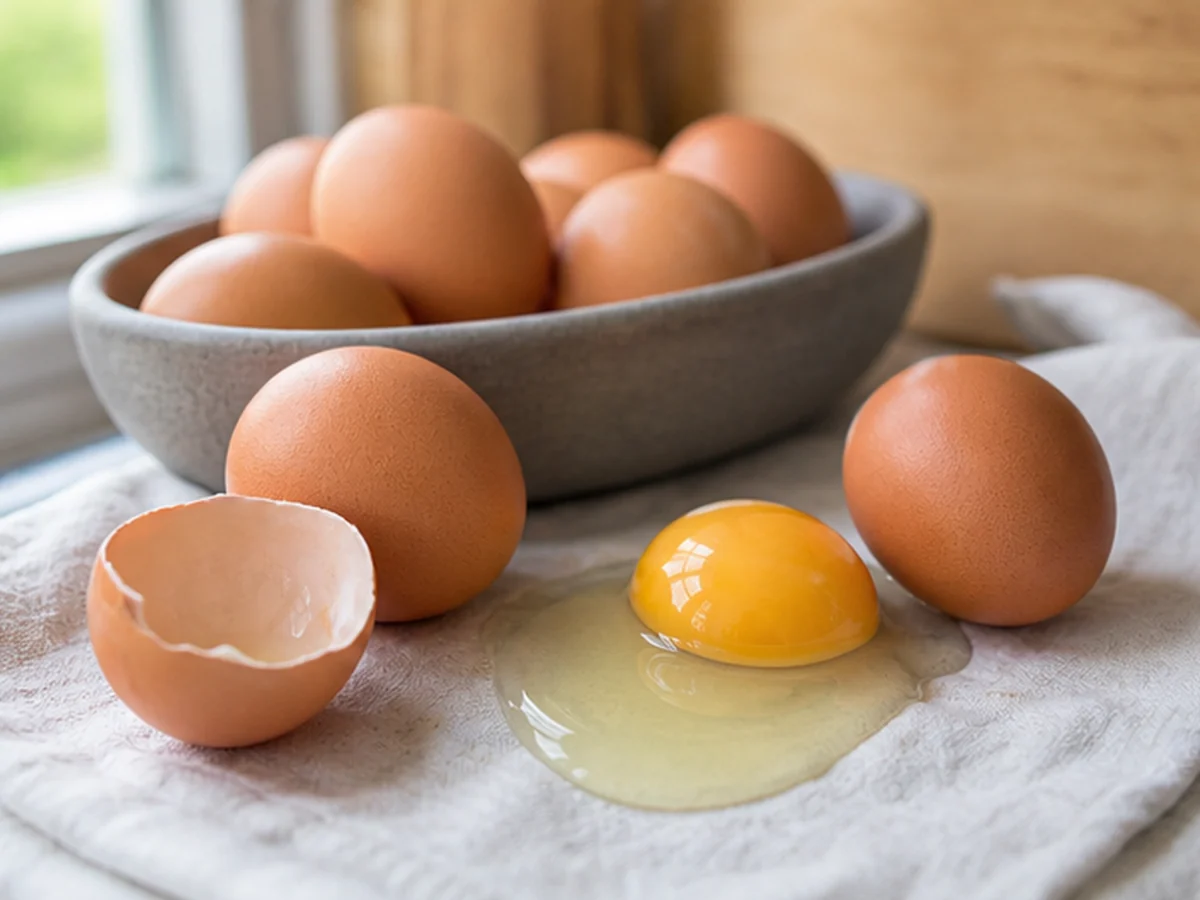
You cannot see or smell Salmonella. The FDA’s egg-safety guidance states that even fresh eggs with clean, uncracked shells may contain the bacteria and advises refrigerating eggs and cooking until yolks and whites are firm.
Contamination can be inside the egg, so washing the shell does not turn a standard raw egg into a pasteurized one. Washing can also splash microbes around the sink and counter.
Cats can develop vomiting, diarrhea, fever, reduced appetite, or lethargy from salmonellosis, but some infected animals show no obvious signs. The FDA’s pet-focused Salmonella page notes that raw or undercooked meat, poultry, and egg products can make pets and people sick.
An asymptomatic carrier can shed bacteria in feces and contaminate fur, paws, litter, bowls, and surfaces. That is why “my cat has eaten raw egg before and looked fine” does not prove the practice is safe for the household.
Who has the least room for error
Kittens, senior cats, pregnant or nursing cats, and cats with chronic disease or weakened immunity may have more difficulty with infection. A cat taking immunosuppressive medicine or recovering from surgery deserves a particularly boring food-safety plan.
People under five, adults 65 and older, pregnant people, and anyone with weakened immunity have higher risk from foodborne germs. If someone in the home falls into one of these groups, avoiding raw animal products for pets helps reduce a preventable exposure route.
The CDC does not recommend raw pet food or treats, and its definition includes uncooked eggs. Freeze-dried, dehydrated, or frozen raw toppers are still raw unless they received a validated treatment that kills pathogens.
Raw eggs share the household-contamination problem seen with other raw animal foods, although each ingredient adds its own details. Our raw fish guide explains the additional concerns created by bones, parasites, and thiaminase.
Raw yolk, raw white, or whole egg: does the part matter?
Any part of a standard unpasteurized raw egg can be contaminated, so separating the yolk from the white does not remove the immediate pathogen concern. The shell, hands, separator, bowl, and counter can transfer bacteria between parts.
Raw egg white contains avidin, a protein that binds biotin. Cooking denatures avidin, and a one-time lick is not a reason to diagnose biotin deficiency, but repeated large raw-white feeding is another reason an unbalanced habit is a poor idea.
Raw yolk supplies fat and calories but does not balance the rest of a cat’s diet. It can also be too rich for cats with digestive disease, pancreatitis history, obesity, or a fat-restricted plan.
A cooked whole egg avoids the false puzzle of deciding which raw half is “best.” Our complete cat-and-eggs guide compares cooked methods, raw forms, shells, portions, and ingredient add-ons.
Pasteurized eggs reduce one risk, not every question
Pasteurized shell eggs and pasteurized liquid egg products have been treated to destroy Salmonella, and their labels usually say so. That makes them a safer choice for human recipes that remain raw or undercooked.
Pasteurization does not make raw egg nutritionally complete for a cat, prevent food sensitivity, remove calories, or make a mixed recipe safe. It also does not protect against chocolate, xylitol, raisins, alcohol, onion, garlic, or raw flour added later.
If a veterinarian recommends a pasteurized product for a specific medical feeding plan, follow that plan exactly. Otherwise, fully cooking a tiny plain portion is simpler than building a tiny feline brunch protocol around raw egg.
Batter and dough are not just raw egg
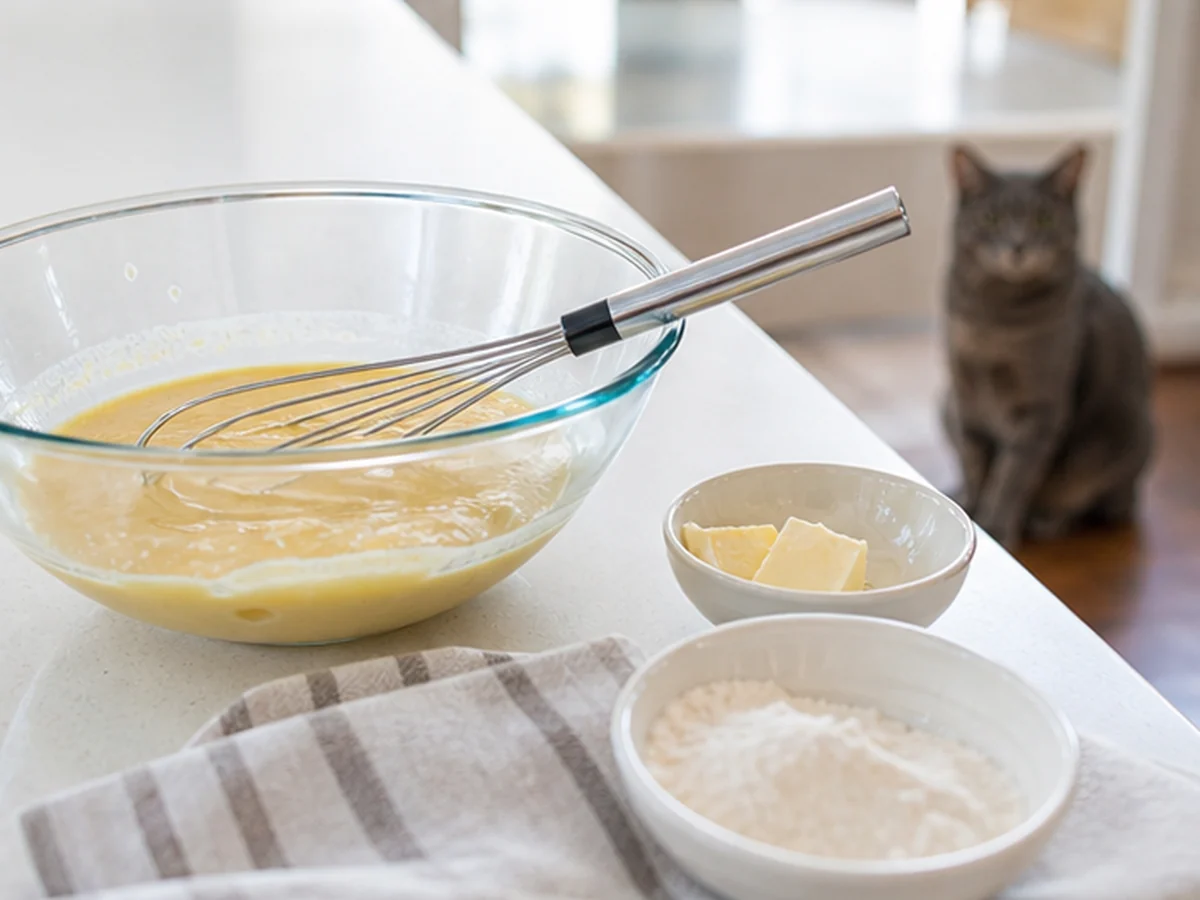
Cookie dough, cake batter, brownie batter, pancake mix, mousse, tiramisu, eggnog, homemade mayonnaise, Caesar dressing, hollandaise, and homemade ice cream can contain raw or undercooked egg. Each has a different ingredient list, and the extra ingredients often drive urgency.
Chocolate or cocoa adds methylxanthines, raisins add an uncertain but potentially serious feline risk, and sugar-free products may contain xylitol. Coffee, espresso, matcha, alcohol, macadamias, nutmeg, and concentrated flavor extracts can also appear in desserts.
Raw flour can carry pathogens too, while active yeast dough can expand in the stomach and produce ethanol. A bowl labeled “batter” therefore deserves more detective work than a cracked egg on the floor.
Save the recipe, packaging, brand, ingredient list, and remaining mixture. A veterinarian or poison specialist needs the most concerning possible amount, not a confident guess that your cat “probably just licked the spoon.”
Eggshells, cartons, string, and kitchen debris
Eggshell is not a casual calcium supplement. Fragments can cut the mouth, choke, irritate the digestive tract, and deliver too much or too little calcium when owners improvise homemade diets.
A cardboard carton may swell when wet and become an obstruction if a chunk is swallowed. Foam or plastic cartons, freshness seals, rubber bands, plastic wrap, and trash-bag ties create additional choking and obstruction hazards.
If shell or packaging is missing, call rather than feeding bread, oil, pumpkin, or extra food to push it through. Repeated vomiting, drooling, gagging, refusal to eat, a painful belly, straining, or reduced stool need urgent veterinary assessment.
How to serve egg more safely
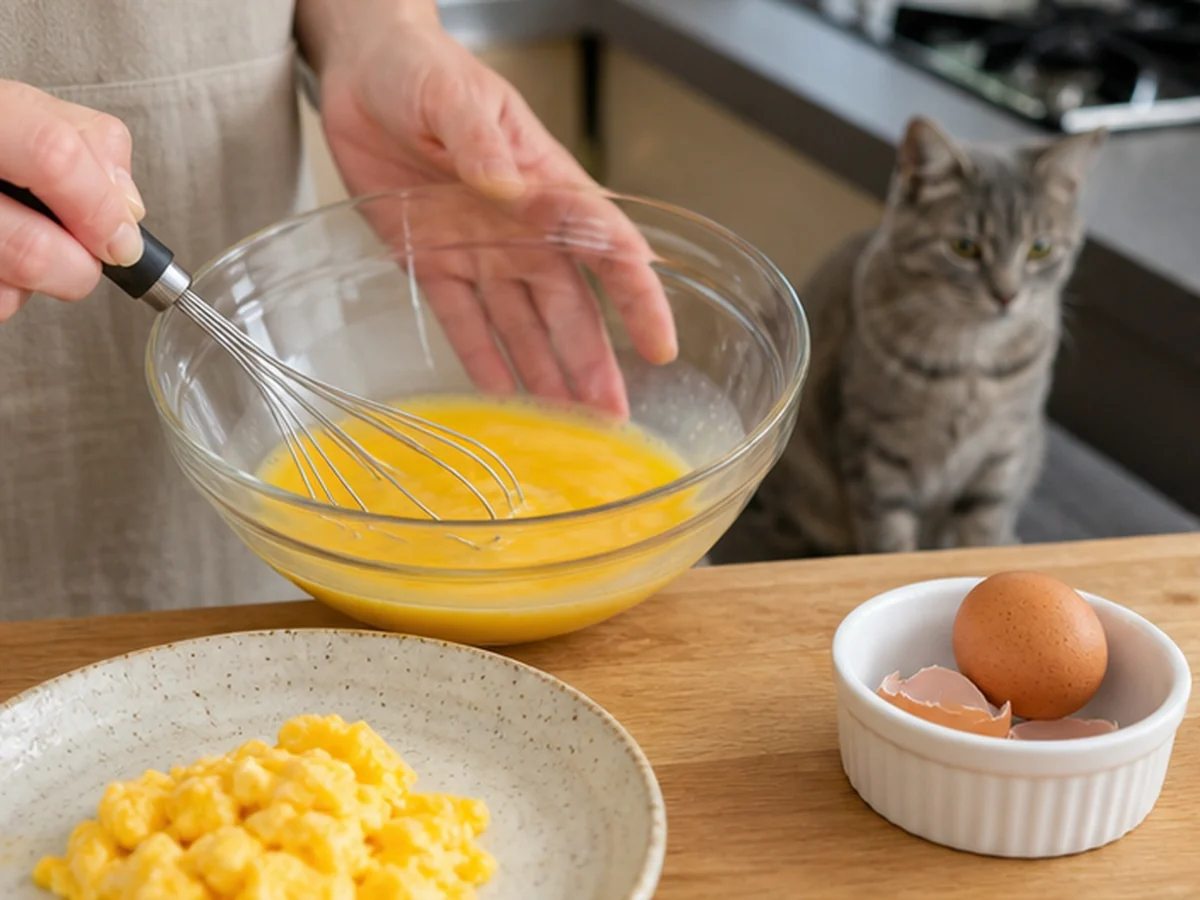
Cook the egg until both yolk and white are firm, then let it cool. Hard-boiling, poaching, or scrambling in a clean dry pan can work without butter, oil, milk, cream, cheese, salt, onion, garlic, or seasoning.
Cut a pea-size piece for a healthy adult cat and put the rest away. Egg is calorie-dense, so a generous scoop can quietly become a large share of a small cat’s day.
The FDA advises using hard-cooked eggs within one week and refrigerated cooked egg dishes within three to four days. Our boiled egg guide covers refrigeration, cutting, and spoiled-egg clues in cat-specific detail.
Do not serve Easter eggs that have been hidden, handled, or left out for play. Dye ingredients are only one question; time, temperature, cracked shells, outdoor contamination, and missing decorations matter too.
Egg is a treat, not the diet
Cats require a precise balance of taurine, fatty acids, vitamins, minerals, protein, fat, and energy. Egg contributes useful nutrients but cannot supply that entire profile in the correct proportions.
Cornell’s feline nutrition guidance recommends nutritionally complete cat food and warns that homemade diets are difficult to formulate correctly. Adding shell powder, liver, supplements, and raw yolk from an online recipe is not a reliable substitute for professional formulation.
Keep treats small enough that they do not unbalance the main food or encourage meal refusal. A cat who suddenly stops eating needs veterinary attention, not an escalating series of richer toppings.
What to do when your cat eats raw egg
- Remove access. Keep the cat away from the bowl, counter, trash, and broken shell.
- Identify the product. Note whether it was a plain egg, pasteurized product, recalled carton, batter, dressing, dough, or dessert.
- List every ingredient. Flag chocolate, cocoa, caffeine, raisins, grapes, xylitol, alcohol, onion, garlic, yeast, and raw flour.
- Account for objects. Check shell pieces, carton, plastic, foil, string, beaters, and wrappers.
- Clean safely. Wash hands, utensils, and surfaces with hot soapy water and keep the cat away from cleaning chemicals.
- Call when indicated. Contact a veterinarian for a high-risk cat, symptoms, mixed hazardous ingredients, recalled eggs, or swallowed material.
Do not induce vomiting or give antibiotics, antidiarrheals, milk, charcoal, hydrogen peroxide, or another home remedy without veterinary direction. Treatment depends on the entire exposure and your cat’s current condition.
Seek emergency care for collapse, trouble breathing, seizures, severe weakness, repeated vomiting or diarrhea, blood, pale gums, a swollen or painful abdomen, or inability to swallow. Call ahead and bring the package or recipe.
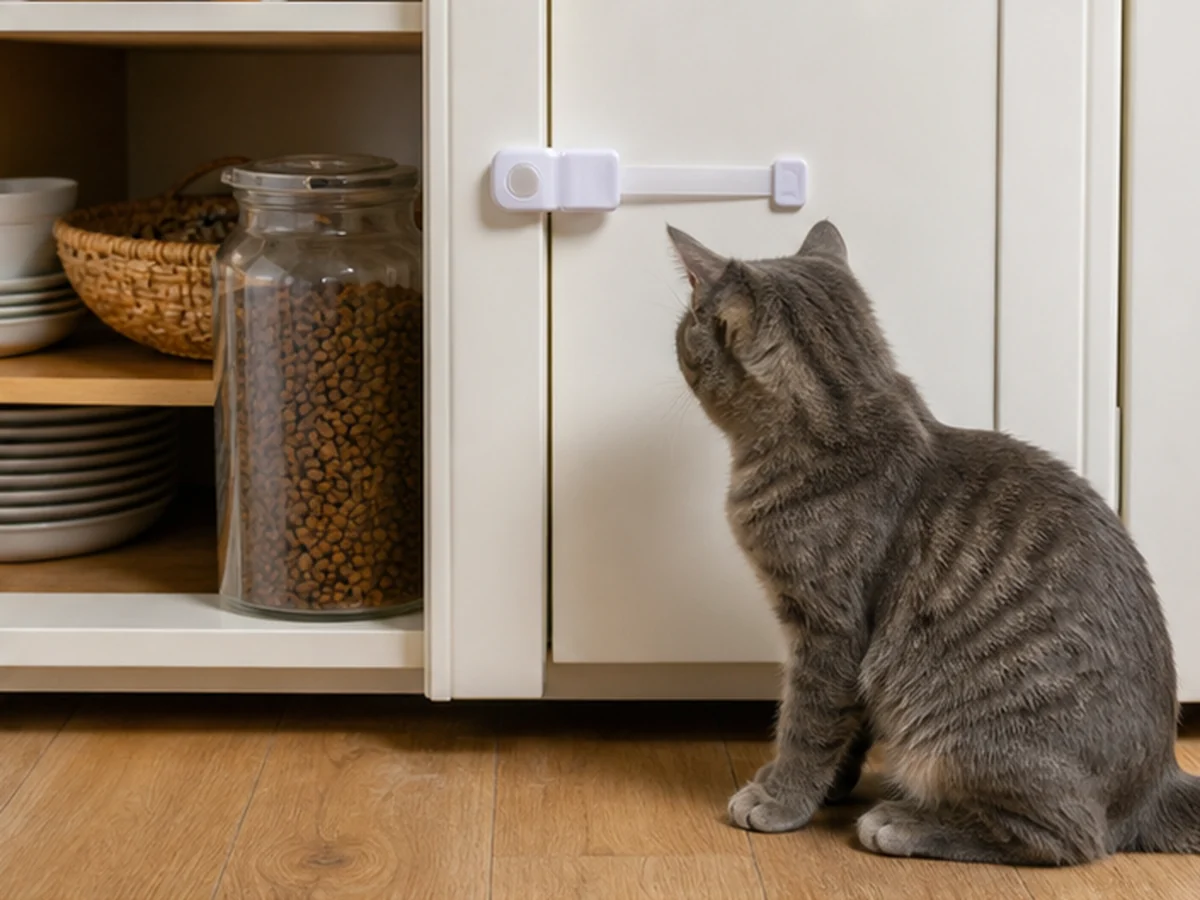
Preventing repeat raids
Crack eggs into the bowl only when you are ready to cook, and put shells directly into a closed trash container. Wipe spills immediately, wash utensils, and keep cooling egg dishes beyond jumping range.
Store eggs in their carton in a refrigerator at 40°F or below, rather than in a warm door rack. Check recall notices and lot information before using a carton included in an alert.
If your cat is attracted to breakfast prep, offer part of the regular meal in a puzzle feeder away from the counter. Management works better than a lecture delivered to an animal who has already learned where omelets begin.
Frequently asked questions
Can cats eat one raw egg as a meal?
No. It introduces pathogen risk and does not provide complete nutrition, while its calories can displace balanced cat food.
Are organic or backyard eggs safer raw?
Production label and appearance do not guarantee absence of Salmonella. Treat any egg as unpasteurized unless its label specifically states it was pasteurized or otherwise treated to destroy the bacteria.
Can cats eat runny scrambled or soft-boiled eggs?
A runny yolk or white is undercooked, so choose a firm, fully cooked portion for a cat. Leave out butter, dairy, salt, onion, garlic, and toppings.
Can cats eat raw quail or duck eggs?
Different bird species do not remove pathogen, handling, calorie, or nutritional-balance concerns. Cook the egg fully and ask your veterinarian before introducing an unfamiliar protein to a cat with allergies or digestive disease.
Bottom line
Skip raw eggs and serve a tiny piece of fully cooked, plain egg if your healthy cat’s treat plan allows it. When the theft involves batter, shells, cartons, symptoms, or a vulnerable cat, save the evidence and call rather than letting breakfast become an uncontrolled science experiment.