Can Cats Eat Spinach? Oxalates, Kidney and Urinary Diets, and Prep
A tiny amount of plain spinach is not classified as poisonous to a healthy cat, but it is unnecessary and may conflict with kidney, urinary, or calcium-related care. Skip creamed spinach, canned brine, smoothies, supplements, tough stems, onion, garlic, butter, cheese, and large portions.
For stone history or a prescription urinary diet, ask before sharing spinach. A seasoned-dish theft needs a complete ingredient check.
Why one leaf inspires so much internet drama
Spinach contains soluble oxalates, compounds that can bind calcium and are relevant in some health contexts. That chemistry does not prove that one leaf instantly creates a bladder stone in every cat.
The ASPCA lists spinach as non-toxic to cats, which supports a calm answer for a small accidental taste. Medical suitability still depends on the cat’s urinary history, kidney function, diet, and amount eaten.
Exact oxalate exposure varies with cultivar, growing conditions, leaf age, and preparation. Avoid universal toxic-dose claims when feline evidence does not justify them.
The cats who should not join salad prep
Cats with calcium oxalate stones, chronic kidney disease, urinary disease, low blood calcium, or a prescribed mineral target need individual guidance. Their main diet may be designed around urine concentration, pH, minerals, or hydration.
Adding a “healthy” green can undermine a therapeutic plan precisely because the plan is specific. Bring the exact spinach product and portion question to the veterinarian who knows the laboratory and imaging history.
Cats on elimination diets also need an extras-free boundary. Spinach dip, green powder, or a flavored treat can introduce several ingredients and muddy weeks of diagnostic work.
Raw leaf versus softly cooked spinach
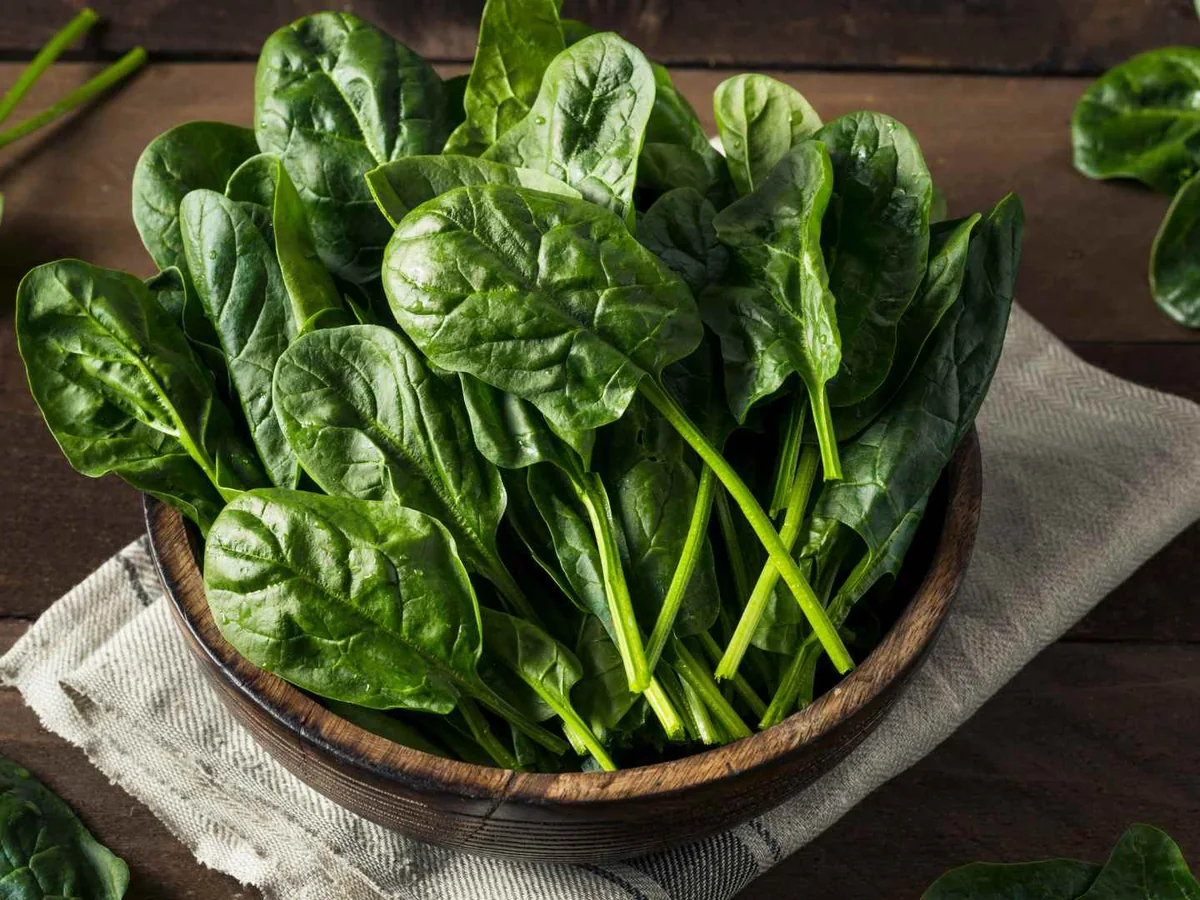
Raw spinach is fibrous, and long stems can trigger gagging or be swallowed in awkward strands. Cooking until soft and chopping finely reduces that physical problem, though it does not make the vegetable nutritionally necessary.
Rinse fresh leaves under running water without soap, remove damaged tissue and thick stems, then steam in plain water. Cool a speck before offering it to a healthy cat whose veterinarian has no objection.
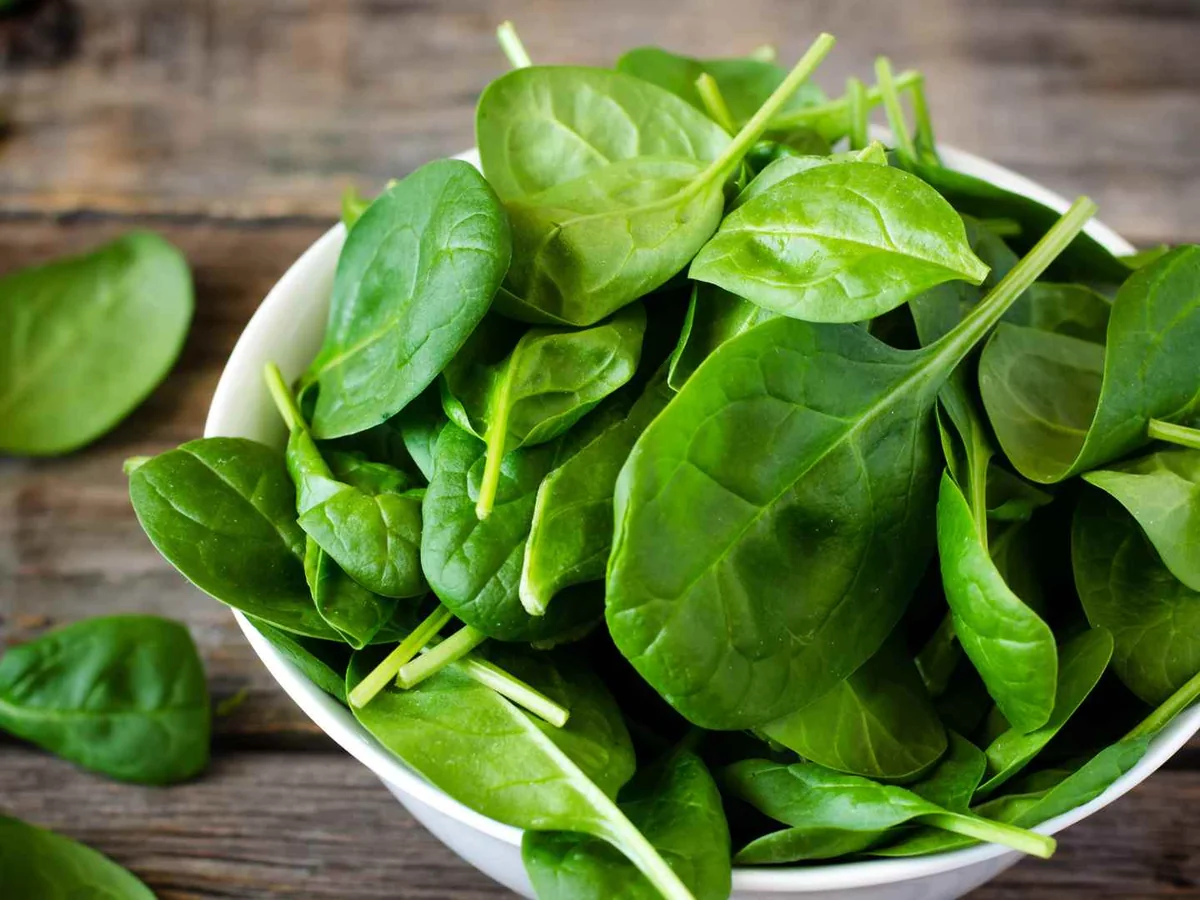
Baby spinach is tender but not specially formulated for pets. Bagged salad also brings clips, plastic film, absorbent pads, dressings, and other leaves that need separate identification.
Frozen blocks and canned greens
Plain frozen spinach can be acceptable after full cooking, but many blocks contain salt, sauce, or seasoning. A frozen chunk is too hard to serve and can contain concentrated clumps once thawed.
Canned spinach is often salty, and draining does not remove every dissolved ingredient from the leaves. Dented seams, bulging cans, sharp lids, and spoiled leftovers add avoidable hazards.
Do not use spinach water as broth for the cat. It may contain salt or seasonings and offers no hydration advantage over fresh water or a veterinarian-approved wet-food plan.
Creamed spinach has become a dairy dish
Creamed spinach commonly uses butter, cream, cheese, salt, onion, garlic, stock, and flour. Many adult cats digest lactose poorly, while Allium ingredients can damage red blood cells even after cooking.
Restaurant recipes may use onion or garlic powder that cannot be picked out. Our pizza guide explains why cheese and sauce require the same whole-dish investigation.
Spinach-artichoke dip adds mayonnaise, cheese, oil, seasonings, chips, and possibly plastic seals or foil. Save the container if a cat empties it, because the dip name leaves most of the recipe unsaid.
Smoothies and green powders are concentrated mysteries
A smoothie may add grapes, chocolate protein powder, caffeine, xylitol, dairy, nut butter, supplements, or avocado. The spinach pictured on the cup may not control the risk at all.
Greens powders can contain kelp, tea extracts, vitamins, sweeteners, herbs, probiotics, and minerals in concentrated forms. Never add them to cat food unless a veterinarian has reviewed the exact formulation and dose.
Airborne powder can irritate eyes and airways, then cling to paws for grooming. Move the cat before cleaning a spill and keep the tub for ingredient and lot information.
Spinach cannot replace feline fiber advice
People sometimes offer spinach for constipation, hairballs, or weight control, but those problems deserve diagnosis and a cat-specific plan. A leaf may change stool while a painful obstruction, dehydration, arthritis, or gastrointestinal disease continues.
Cornell’s feline nutrition overview emphasizes complete diets and careful homemade formulation. Cats need animal-source nutrients, and spinach is not a substitute for properly balanced food.
Sudden straining, frequent litter-box visits, crying, or little urine can indicate a urinary emergency, especially in a male cat. Do not treat those signs with vegetables or wait to see whether extra fiber helps.
How small is “a little”?
There is no required spinach serving. One finely chopped cooked speck is enough to satisfy curiosity, and refusal should end the project without disguising the leaf in cheese.
Treat calories from spinach itself are modest, but the butter and dairy used to make it appealing are not. Count every extra against the day’s allowance and keep the regular meal predictable.
The FDA complete-and-balanced explanation shows why a formulated main food outranks an isolated ingredient. Nutrient relationships matter more than the presence of a fashionable vegetable.
A salad-bag spill in real time
- Separate the greens. Identify spinach versus onion, chive, garlic shoots, unknown herbs, or toxic houseplant leaves.
- Collect the hardware. Find clips, ties, plastic, labels, packets, and absorbent paper.
- Check dressing. Record sweeteners, alliums, dairy, raisins, grapes, alcohol, and seasonings.
- Review the cat. Note urinary or kidney disease, medications, prescription food, and current signs.
- Make the call. Contact the veterinarian for a high-risk cat, a mixed salad, symptoms, or missing packaging.
Do not induce vomiting or give calcium, milk, oil, charcoal, or urinary supplements without instructions. Bring a photo of the plant or bag when identification is uncertain.
Spinach questions that deserve context
Can kittens eat spinach?
Kittens need growth food and have little room for unnecessary extras. A piece of the regular kitten ration works better as a reward.
Does cooking remove oxalates?
Cooking and discarding water can reduce some soluble oxalate, but results vary and the method does not turn spinach into a treatment. A cat with stone or kidney history still needs veterinary approval.
Can cats eat spinach every day?
Daily use offers no established feline benefit and can complicate medical diets. Keep spinach occasional for an appropriate healthy cat or leave it off the menu entirely.
A practical spinach verdict
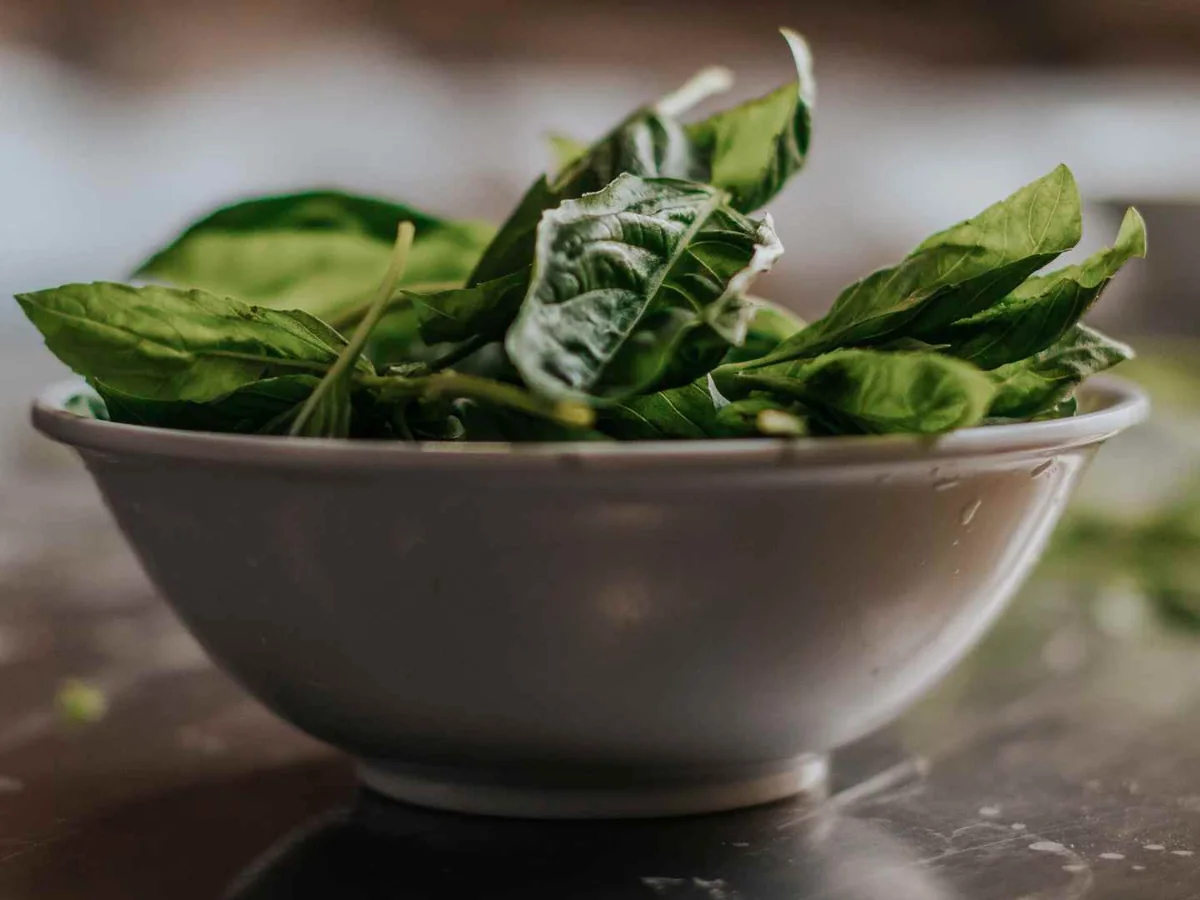
For a different washed green with its own preparation questions, compare our cilantro guide. Similar color does not make leaves nutritionally or chemically interchangeable.
Food leaf or lookalike houseplant?
Grocery spinach is Spinacia oleracea, but a chewed ornamental is not necessarily spinach. Use the plant tag, nursery receipt, and clear photographs rather than applying vegetable advice to a similar leaf.
Pesticides, fertilizers, and slug bait can determine urgency even when the crop is non-toxic. Keep labels for every product used around an edible garden.
Loose netting and plant ties introduce entanglement and linear-foreign-body hazards. Rigid barriers are safer around cats than chewable mesh.
Spinach inside commercial cat food
A formulated feline food may include spinach while balancing the entire nutrient profile. That is not equivalent to sprinkling greens onto a meal whose minerals and calories were already calculated.
Ingredient order cannot reveal a finished food’s complete nutritional performance. Review the adequacy statement, life stage, calories, and veterinary purpose rather than celebrating or rejecting one leaf.
A therapeutic urinary formula works as a whole diet. Copying a plant ingredient into another bowl cannot reproduce its effect on urine composition.
Litter-box changes outrank vegetable questions
Increased thirst, larger urine clumps, weight loss, or frequent box visits warrant examination. Kidney disease, diabetes, hyperthyroidism, infection, and urinary disorders are not spinach problems.
A male cat straining with little or no urine may have a fatal urethral blockage. Go to emergency care instead of trying wet vegetables overnight.
An ordinary digestive reaction still counts
One loose stool may resolve when spinach stops, but recurrence retires it as a treat. Note whether the leaf was raw, cooked, canned, seasoned, or mixed into dip.
Persistent signs, blood, fever, pain, lethargy, or poor appetite need veterinary review. Do not replace meals with homemade chicken and greens without a prescribed recipe.
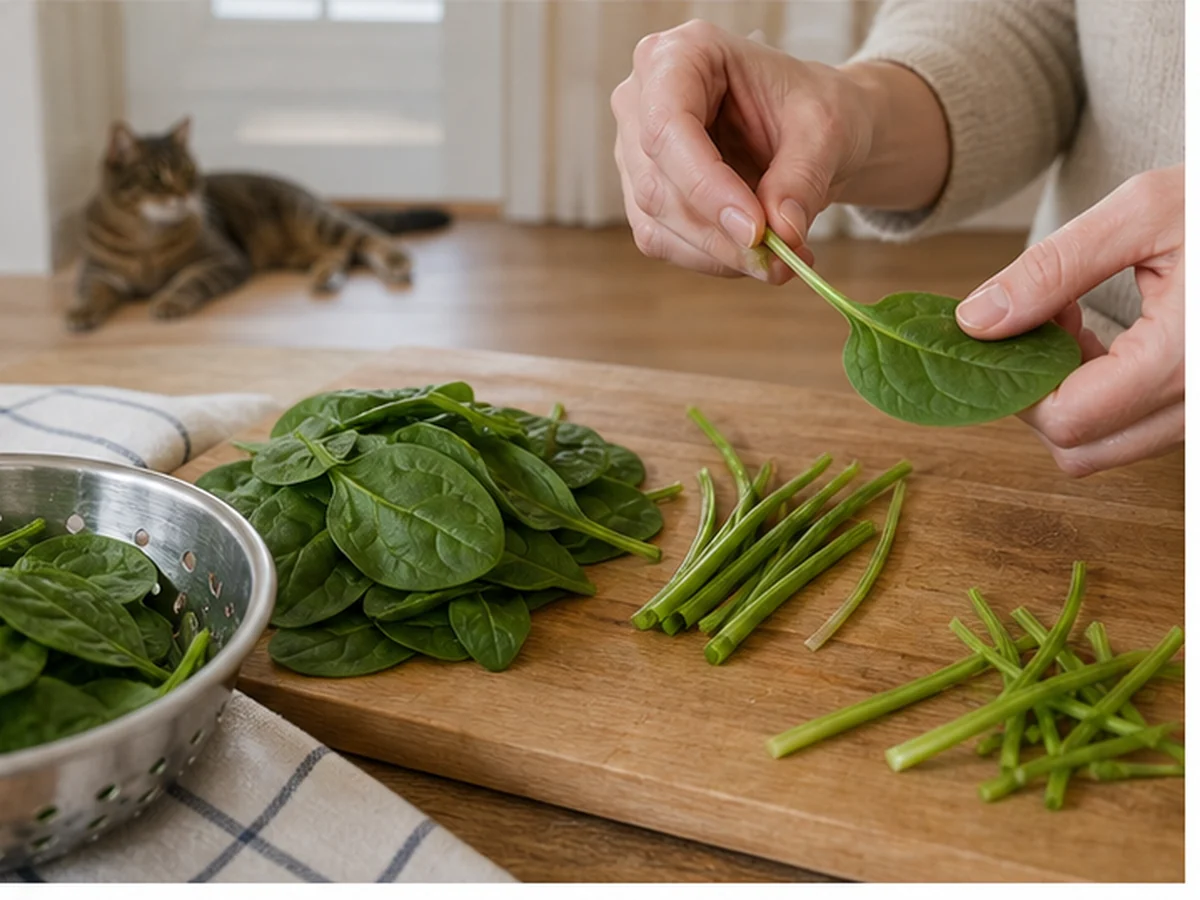
Leaves, stems, and chewing style
A flat leaf can stick to the palate, while a long stem can trigger gagging in a cat that gulps. Soft cooking, stem removal, and fine chopping address shape without pretending spinach has become necessary.
Do not leave a bowl of wilted greens at room temperature after dinner. Damp leaves spoil quickly, cling to floors, and may be swallowed with string, hair, or cleaner residue.
If a leaf is hanging from the mouth, remove only material clearly loose at the front. Resistance, repeated swallowing, distress, or breathing changes require veterinary help rather than deeper reaching.
Calcium supplements are not an antidote
Do not give calcium, dairy, antacids, or urinary acidifiers after spinach unless a veterinarian directs them. Minerals and urine pH are medically linked, and an improvised correction can create a second problem.
Bring supplement bottles to appointments because minerals may come from powders, treats, and human products in addition to the main diet. A complete list helps the clinician interpret laboratory values and stone risk.
A practical way to say no
Reserve a teaspoon of the regular wet meal before dinner and use that as the kitchen reward. The cat receives something appealing without new oxalate, dairy, or seasoning variables.
Family members should follow one rule rather than each offering a separate “tiny” leaf. A note on the refrigerator can be remarkably effective when a cat has several highly persuadable humans.
For a healthy cat, a tiny piece of washed, softly cooked, plain spinach is low risk, not a wellness requirement. Cats with urinary, kidney, calcium, or therapeutic-diet concerns should skip the leaf unless their veterinarian says otherwise, and brined vegetables stay in a separate, saltier category.