Can Cats Eat Dog Food? Stolen Bites, Daily Meals, and Nutrition Gaps
A healthy cat who steals a bite or one small meal of ordinary dog food will usually be fine. Dog food is not poisonous by definition, but it is the wrong everyday diet for a cat and can create serious nutrient deficiencies when it repeatedly replaces complete cat food.
What to do right now
Put the dog food away, offer fresh water, and return to your cat’s usual complete food at the next normal mealtime. Do not try to make your cat vomit, and do not give hydrogen peroxide, salt, oil, milk, or another home remedy.
Check the dog-food bag, can, topper, or leftovers for ingredients that matter more than the species label. Call your veterinarian or a pet poison service promptly if the food contained onion, garlic, chocolate, grapes or raisins, alcohol, caffeine, or another known hazard.
- One bite of plain dog food: usually a watch-and-reset situation for an otherwise healthy adult cat.
- A whole meal: often still uneventful, but monitor closely for vomiting, diarrhea, itching, swelling, or unusual behavior.
- Repeated meals or several days: contact your veterinarian, especially if the cat is refusing cat food.
- A kitten, pregnant or nursing cat, or medically fragile cat: seek advice sooner because nutritional needs and medical margins are tighter.
- Severe or repeated symptoms: urgent veterinary care is the sensible next stop.
Why dog food cannot be a cat’s regular diet
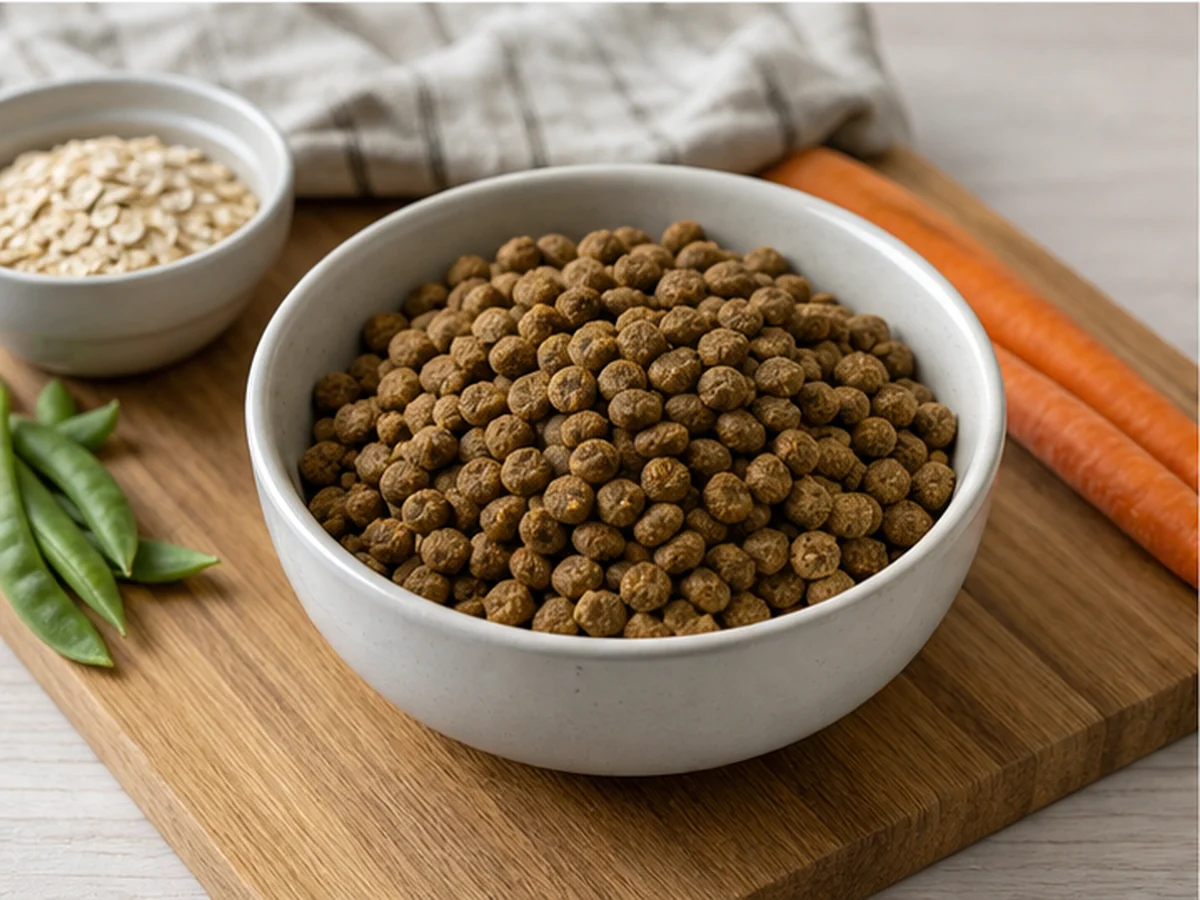
Cats and dogs do not merely prefer different menu designs. Cats have species-specific requirements for nutrients such as taurine, preformed vitamin A, and arachidonic acid, and they have higher requirements for several amino acids and vitamins.
The Merck Veterinary Manual’s guide to dog and cat foods states that dog foods are generally unsatisfactory for cats because they may be lower in protein and may not provide assured concentrations of taurine or other feline essentials. That is a formulation problem, not a judgment about whether the ingredient list looks meaty.
A dog food can be excellent dog food and still be incomplete for a cat. Think of it as a perfectly good key cut for the wrong lock.
Taurine
Cats must receive adequate taurine in the diet because their bodies cannot make enough to cover their needs. Long-term taurine deficiency can damage the retina and contribute to dilated cardiomyopathy, but these are chronic consequences rather than the expected result of one bowl raid.
Some dog foods contain taurine, particularly formulas made for certain dogs, but that does not turn them into cat food. The amount, overall nutrient profile, life-stage target, and evidence behind the nutritional-adequacy claim all matter together.
Preformed vitamin A and arachidonic acid
Cats need dietary preformed vitamin A because they cannot rely on converting plant carotenoids efficiently enough to meet the requirement. They also need a dietary source of arachidonic acid, a fatty acid that dogs can synthesize from linoleic acid more effectively.
The Merck overview of small-animal nutrient requirements also highlights feline requirements for taurine, vitamin A, arachidonic acid, arginine, niacin, and vitamin B6. These linked requirements explain why fixing dog food with one supplement is not a safe home project.
Protein, amino acids, minerals, and life stage
Cats use protein differently and generally need more dietary protein and particular amino acids than dogs. A dog formula may also miss feline targets for fat, vitamins, minerals, or urinary health even when its protein number looks impressive.
Do not compare the crude-protein percentages on a can and a bag without accounting for moisture. The FDA explains dry-matter comparison and complete-and-balanced claims, including why a wet food’s modest-looking as-fed protein number may exceed a kibble’s after water is removed from the math.
Read the nutritional adequacy statement, not the front of the bag
The reliable clue is the small nutritional-adequacy statement, often near the guaranteed analysis and ingredient list. Look for language saying the food is complete and balanced for cats at the correct life stage, supported by an AAFCO nutrient profile or feeding test.
A product labeled for intermittent or supplemental feeding only is not meant to be the sole diet. Treats, toppers, broths, and many lickable products may be delightful bargaining chips, but they do not automatically qualify as nutritionally complete meals.
A product bearing an adequacy statement for dogs is still dog food, even if chicken is its first ingredient and a cat is campaigning loudly for it. Ingredient-list theater cannot replace a feline nutritional-adequacy statement.
Is wet dog food safer than dry dog food for cats?
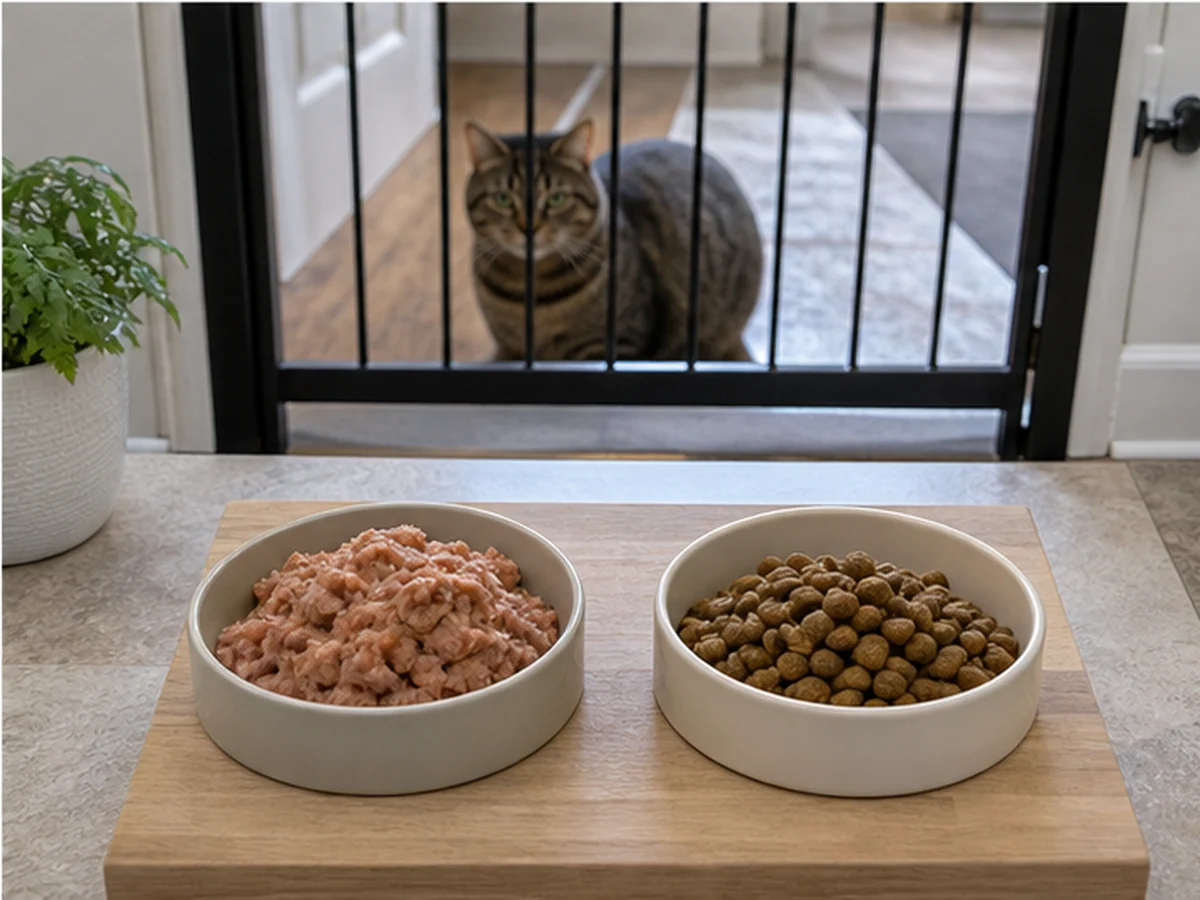
Wet dog food is not inherently a better long-term choice for cats. Its extra water may make a stolen serving easier to chew and can support hydration, but moisture does not supply missing feline nutrients.
Dry dog kibble presents a few practical differences: large pieces may be awkward for a small cat, gulping can provoke vomiting, and a torn bag can lead to a much larger feast. Neither texture earns a regular place in the cat’s bowl unless the label specifically says the product is complete and balanced for cats too.
What about foods labeled for both cats and dogs?
Some treats or supplemental products are marketed for both species, and a smaller number of foods may carry nutritional-adequacy language covering both. Judge the exact label, intended use, and life stage rather than assuming every dual-species product is a complete meal.
If a food genuinely states that it is complete and balanced for cats as well as dogs, it is different from ordinary dog food. Ask your veterinarian before using a cross-species formula as a routine diet for a kitten, a pregnant cat, or a cat with kidney, urinary, heart, digestive, or weight concerns.
When dog food is more than a nutrition issue
Plain commercial dog food is usually the least dramatic part of the story. The dangerous surprises tend to be mixed-in human foods, prescription-diet mismatches, raw products, spoiled food, packets, cans, and packaging.
- Onion and garlic: gravies, broths, meatloaf, toppers, and seasoned leftovers can expose cats to Allium compounds that damage red blood cells.
- Raw dog food: may contain pathogenic bacteria and bones, so wash bowls, surfaces, hands, and any fur contaminated by the meal.
- High-fat extras: bacon grease, skin, cheese, butter, and rich gravy can trigger digestive trouble and add many calories quickly.
- Mold or rancidity: discard food that smells off, has been stored improperly, or sat out beyond the manufacturer’s directions.
- Packaging: torn pouches, oxygen absorbers, cans, foil lids, plastic, and clips can cause choking, cuts, or gastrointestinal obstruction.
If the stolen meal included seasoned people food, our guides to pizza risks for cats and salami risks for cats help sort the ingredient and packaging problems. If it was a raw formula, start with the guide to raw fish and cats.
Symptoms worth watching after a stolen meal
A small amount may cause no symptoms at all. Mild vomiting, soft stool, gas, or appetite disruption can occur after an unfamiliar meal, especially if the cat ate quickly or has a sensitive digestive system.
Call a veterinarian promptly for repeated vomiting, repeated diarrhea, marked lethargy, abdominal pain, facial swelling, hives, coughing, breathing difficulty, collapse, pale gums, yellow gums, dark urine, tremors, or seizures. Trouble breathing, collapse, severe weakness, and seizures warrant emergency care.
Do not wait for symptoms when the label reveals a known toxin or your cat swallowed packaging. Some toxic effects and obstructions are delayed, so a quiet hour after the heist is not proof that the case is closed.
Why a cat may keep choosing the dog’s bowl
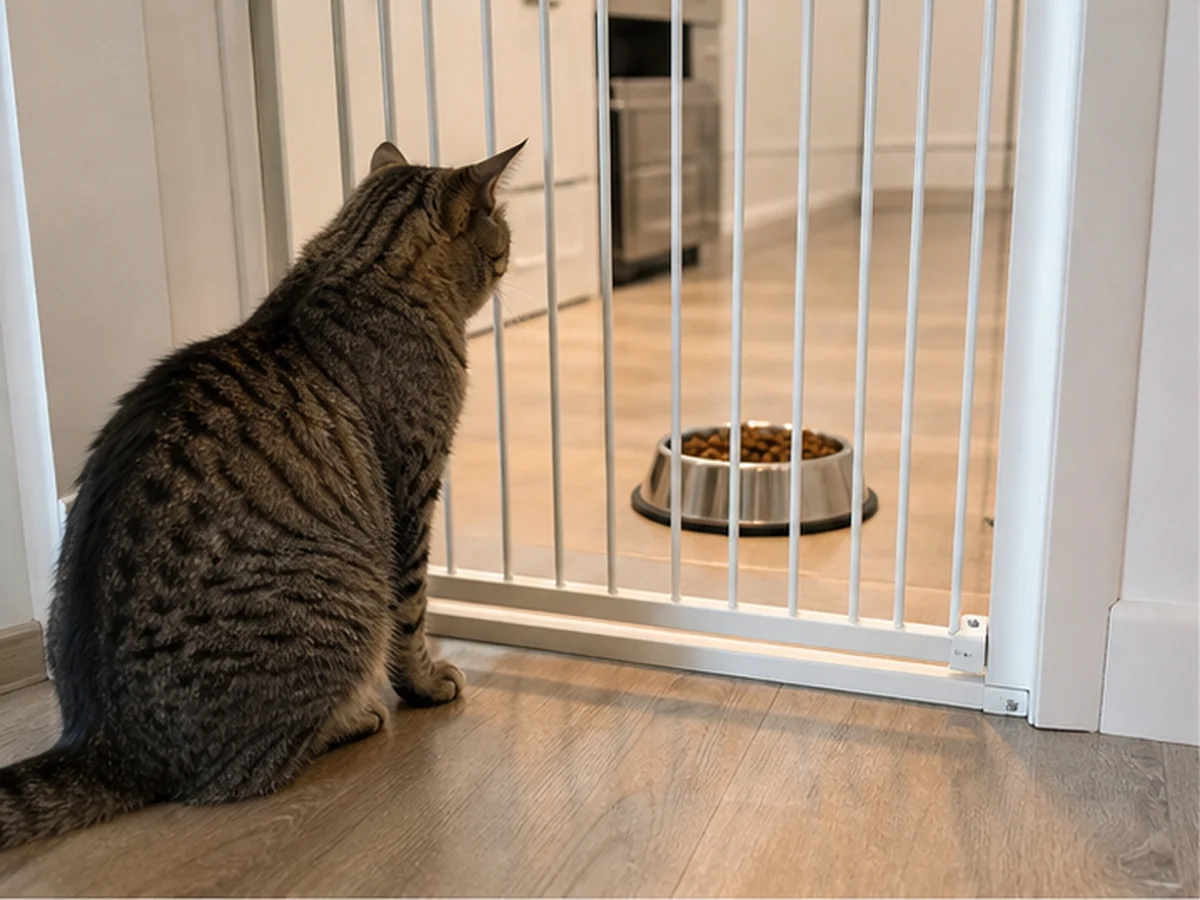
The explanation may be wonderfully ordinary: novelty, smell, texture, easy access, social competition, or a dog who leaves food available all day. Cats are skilled researchers when the study protocol involves someone else’s dinner.
Persistent preference deserves more thought because appetite changes can accompany dental pain, nausea, stress, an unsuitable cat-food texture, or illness. A cat who stops eating an appropriate cat diet, loses weight, drinks or urinates more, vomits repeatedly, or seems unwell should be examined rather than negotiated with indefinitely.
Sudden food refusal is particularly concerning in overweight cats because prolonged inadequate intake can precede hepatic lipidosis. Contact the veterinary team early instead of waiting several days for hunger to win.
How to stop the daily bowl swap
- Serve measured meals: put bowls down at set times, supervise, and remove leftovers when each pet is finished.
- Use separate rooms: a closed door is clearer than asking a cat to respect a dining-room boundary.
- Try access-controlled feeders: microchip or collar-tag feeders can protect each pet’s ration in a free-feeding household.
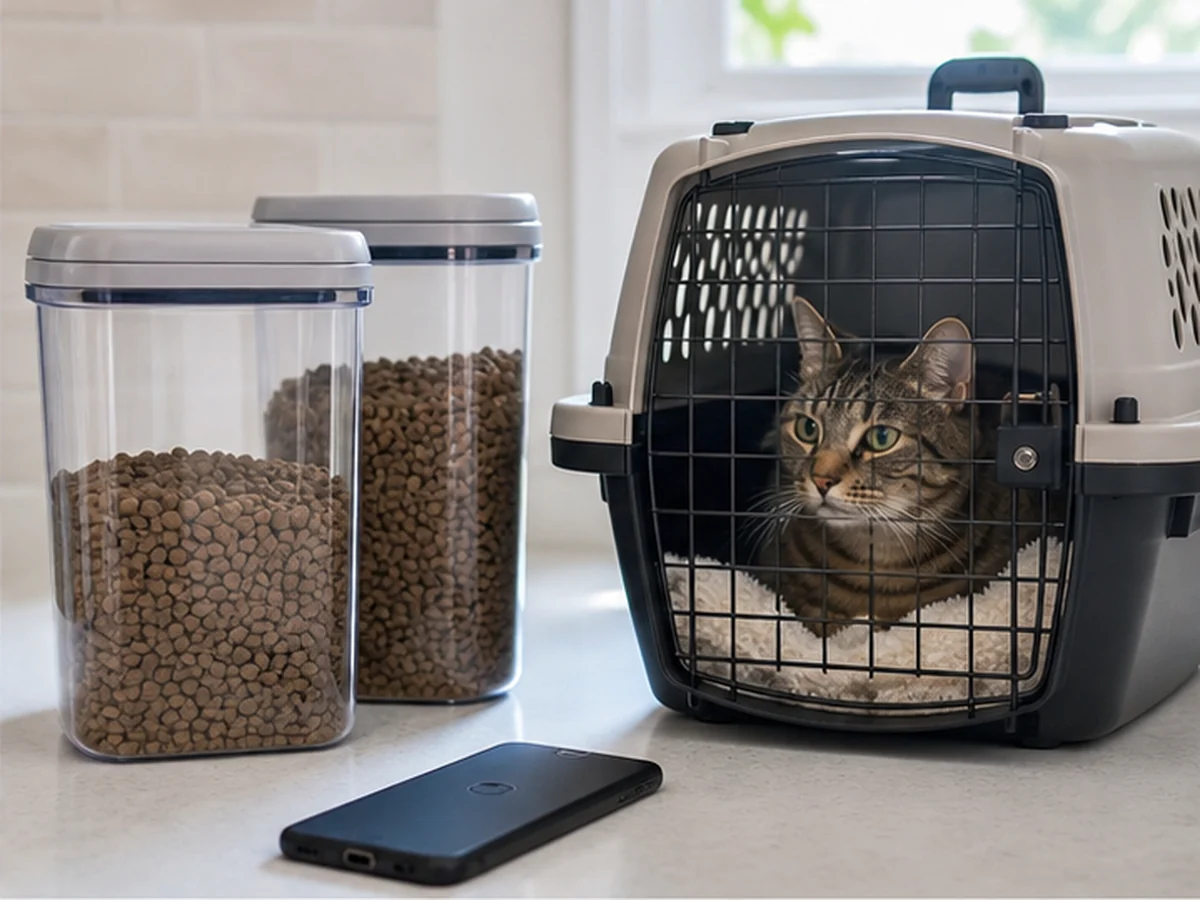
- Store food securely: use the original bag inside a lidded bin so the lot code, expiration date, and feeding instructions remain available.
- Check the cat’s own meal: confirm freshness, serving temperature, bowl cleanliness, location, texture, and nutritional-adequacy statement.
Elevation alone is rarely a reliable cat barrier, and it may simply turn dinner into enrichment. A closed door or access-controlled feeder is usually less theatrical and more effective.
What to feed instead
Choose a complete and balanced cat food appropriate for the cat’s life stage and medical needs. The Cornell Feline Health Center’s feeding guide explains why commercial balanced diets are the practical foundation and why extras should remain a small share of calories.
If you need a tiny topper while solving a preference problem, ask the veterinarian what fits the cat’s health plan. Plain, fully cooked egg can be an occasional extra for many healthy cats, and our guides cover both eggs for cats and boiled eggs for cats.
Do not formulate a homemade cat diet by copying an ingredient list or adding a multivitamin to meat. A recipe intended as the sole diet should be created for that individual cat by a properly qualified veterinary nutrition professional and followed exactly.
Special cases that need a faster call
Kittens, pregnant or nursing cats, and cats recovering from illness need dependable nutrition with little room for substitution. Cats with kidney disease, urinary disease, diabetes, food allergy, pancreatitis, heart disease, or a prescription diet may also be affected by one stolen meal in ways that a healthy adult is not.
Call the prescribing veterinarian if dog food displaced a therapeutic meal or if the cat ate the dog’s medication-containing diet. Bring the package or send clear photos of the front, ingredient list, nutritional-adequacy statement, lot code, and amount missing.
Frequently asked questions
Can a cat eat dog food for one day?
A healthy adult cat will usually tolerate ordinary dog food for a day if no harmful extras or packaging were eaten. Return to complete cat food promptly, monitor the cat, and call the veterinarian if the cat is ill or continues refusing appropriate food.
Can cats eat dog food in an emergency?
If the choice is a short gap before you can obtain cat food, a little ordinary dog food is generally more reasonable than intentionally letting a healthy cat go without food. Call a veterinary clinic for case-specific advice, especially for a kitten, a sick cat, or a cat on a prescription diet.
Will one dog-food meal cause taurine deficiency?
No, deficiency develops from an inadequate dietary pattern over time rather than a single accidental meal. The practical response to one plain meal is to restore the proper diet, not to add a taurine supplement without veterinary direction.
Can dogs and cats share treats?
They can share a product only when its label says it is intended for both species and the ingredients fit each animal’s health needs. Treats are not automatically complete and balanced, so keep them modest and count them as part of daily calories.
The bottom line
A stolen bite of plain dog food is usually a minor household plot twist, not a poisoning emergency. Repeatedly feeding dog food is different because cats need a feline-specific nutrient profile, so restore complete cat food, investigate persistent bowl stealing, and call the veterinarian promptly when ingredients, symptoms, medical conditions, or packaging raise the stakes.