Can Cats Eat Apple Skin? A Peel, Core, and Portion Guide
A healthy cat can usually handle a tiny, thin piece of washed apple skin attached to seed-free flesh, but peel is chewy, fibrous, and unnecessary. Remove the stem, core, and every seed, cut any sample very small, and do not offer long ribbons that can be gulped like string.
Start with the part your cat actually ate
A fingertip-sized bit of peel is different from a core, several seeds, a long strip from a spiral peeler, or a chunk of rotten fruit. Before deciding what to do, inspect the apple and account for each missing part.
If only a little clean peel disappeared and your cat is acting normally, remove the remaining fruit and monitor. Offer the usual food and water, with no need to add milk, oil, fiber powder, or another improvised digestive project.
Call a veterinarian promptly if seeds or core pieces may have been chewed, a large peel ribbon is missing, the apple was moldy or fermented, or symptoms begin. Do not induce vomiting at home unless a veterinary professional gives case-specific directions.
Apple skin is not the toxic part people mean
The apple plant discussion becomes confusing because different structures carry different hazards. The ASPCA apple entry identifies stems, leaves, and seeds as the cyanogenic parts, while excluding the ripe flesh around the seeds from that toxic principle.
The peel surrounding ripe flesh is not a known cyanide source comparable to crushed seeds. Its realistic drawbacks are texture, fiber, surface contamination, excess portion size, and whatever has been added to the fruit.
That distinction should not become permission to serve a core. Seeds can be cracked by teeth, and a hard core or stem can choke or obstruct regardless of whether a toxic compound causes the first concern.
Why the peel can still cause trouble
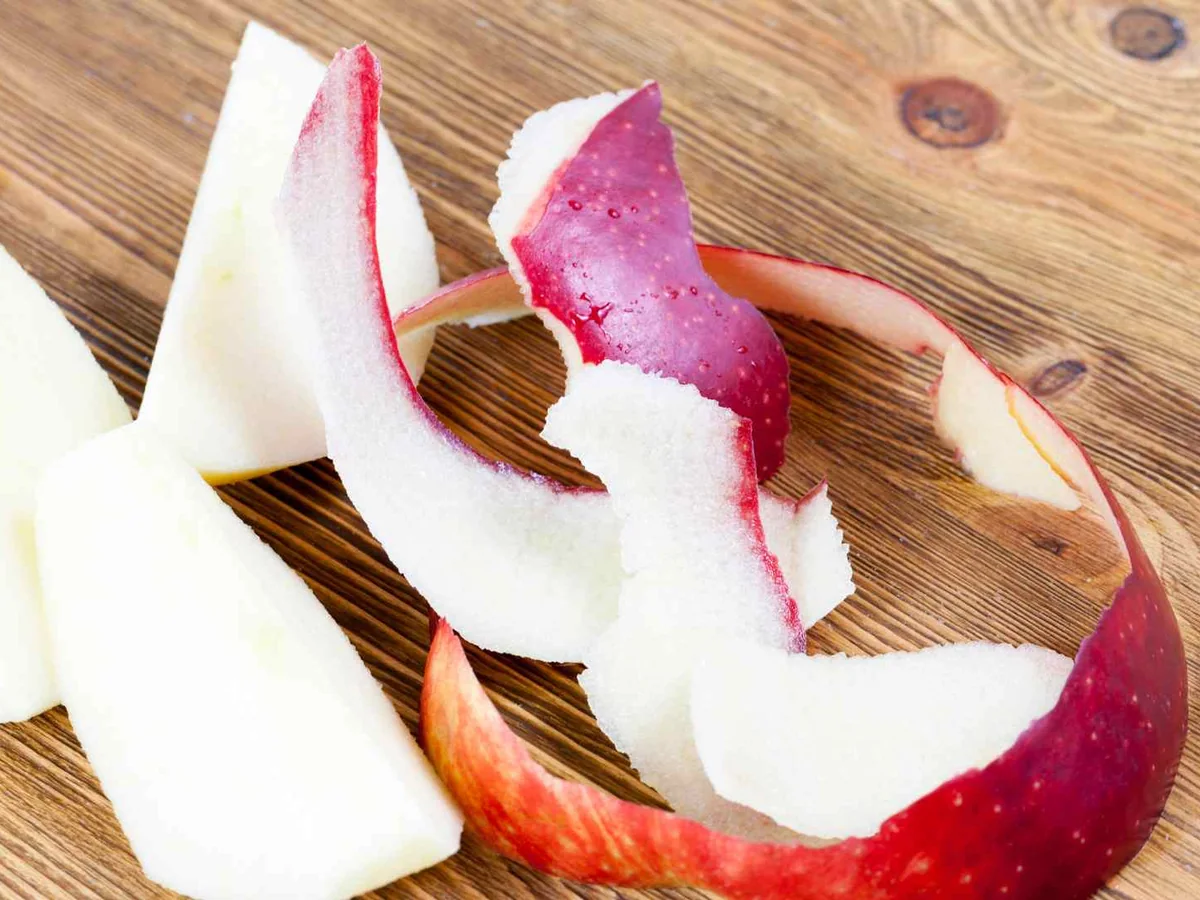
Apple skin is tougher than the juicy flesh and can be awkward for a cat who bolts food. A long wet ribbon may fold in the mouth, stick to the palate, or be swallowed before it has been chewed into a sensible shape.
Even small pieces add insoluble plant material to an animal whose normal diet should be built around complete feline nutrition. Some cats tolerate a sliver without drama, while others answer novel fiber with gas, vomiting, or loose stool.
The Merck Veterinary Manual’s obstruction overview describes vomiting, appetite loss, lethargy, and abdominal pain among signs of gastrointestinal blockage. Peel is not a common obstruction object, but a long piece plus concerning signs should not be dismissed as merely fruit.
Wash first, even if you planned to peel
Rinse the intact apple under running water and rub the surface before cutting it. The FDA’s produce-safety guidance advises washing produce under running water, avoiding soap or commercial produce wash, and drying it with a clean towel.
Washing reduces dirt and some surface bacteria, but it does not sterilize fruit or make spoiled areas usable. Cut away bruised or damaged spots for human use, and do not give a cat fruit that smells alcoholic, looks moldy, or has begun to rot.
Wax on supermarket apples is food-grade when used legally, yet that fact does not add any feline benefit. A washed, peeled morsel is easier to chew, so removing the skin is a reasonable choice for any planned taste.
How to prepare the lowest-risk taste
Choose fresh ripe apple with nothing added, wash it, remove the stem and entire core, and inspect the cutting board for loose seeds. Peel it if your cat tends to gulp, then mince one small piece rather than handing over a wedge.
A sample should be closer to a pea than to a human snack slice. Let the cat sniff first, because many cats will make an excellent safety decision by walking away with the expression of a restaurant critic.
Offer it only occasionally and separately from the regular meal so you can see what was consumed. The Cornell Feline Health Center recommends complete and balanced food and keeping treats to a small share of daily calories.
Cores, seeds, stems, and leaves need a firmer answer
Apple seeds contain cyanogenic compounds that can release cyanide when sufficiently crushed and digested. A single intact seed does not guarantee poisoning, but deliberately feeding seeds is indefensible and chewing an unknown number warrants professional advice.
The FDA’s pet hazard resource notes cyanide in seeds and pits from related fruits while explaining that obstruction can be the larger practical concern. This is exactly why separating chemistry from object size produces better decisions.
Leaves and fresh stems belong outside the food bowl, whether they came from an orchard, backyard tree, or decorative branch. If plant material was chewed, take a clear photo and identify the tree rather than assuming every apple-like plant is the same.
Cooked, dried, candied, and sauced skins
Baking softens peel but often surrounds it with butter, sugar, pastry, spices, or raisins. Evaluate the whole pie or crisp recipe, because the softened apple may be the least interesting ingredient medically.
Plain unsweetened applesauce has no tough skin or core, yet it still offers sugar and little feline value. Our applesauce guide for cats covers sweeteners, flavored cups, and portion questions.
Dried apple peel is concentrated, leathery, and easier to overfeed than fresh fruit. Candied peel adds sugar, while commercial chips may contain cinnamon, oils, salt, or sweeteners, so the label deserves more attention than the word apple.
Apple juice removes the choking geometry of peel but concentrates an unnecessary sweet liquid. The site’s apple juice product overview can help decode blends, although all canine advice must be rechecked for feline relevance.
Cats who should simply skip apple peel
Kittens, cats with dental pain, swallowing problems, previous intestinal obstruction, inflammatory bowel disease, diabetes, or a prescribed diet gain nothing from testing this food. A tiny piece can be low risk without being a sensible choice for every individual.
Overweight cats also have little room for random fruit calories when their plan is already carefully measured. Use part of the normal ration as a treat so the daily total stays honest.
If food allergy investigation is underway, do not introduce apple because it seems simple. A clean elimination trial depends on controlling every bite, including the innocent-looking one offered from a cutting board.
When observation becomes a veterinary call
Monitor a cat after a minor peel theft for vomiting, diarrhea, repeated swallowing, gagging, drooling, reduced appetite, abdominal discomfort, lethargy, weakness, unusual breathing, or collapse. The amount, time, preparation, and missing apple parts help a professional rank those signs.
Breathing difficulty, collapse, severe weakness, repeated vomiting, a painful or swollen abdomen, or suspected choking needs urgent care. If a strip is visible from the mouth or anus, do not pull it because attached material can injure the digestive tract.
For seed or plant-part exposure, call your veterinarian or an animal poison service promptly and keep a sample or photo. Do not wait for dramatic signs simply because the cat currently looks offended rather than ill.
Preventing the next peel heist
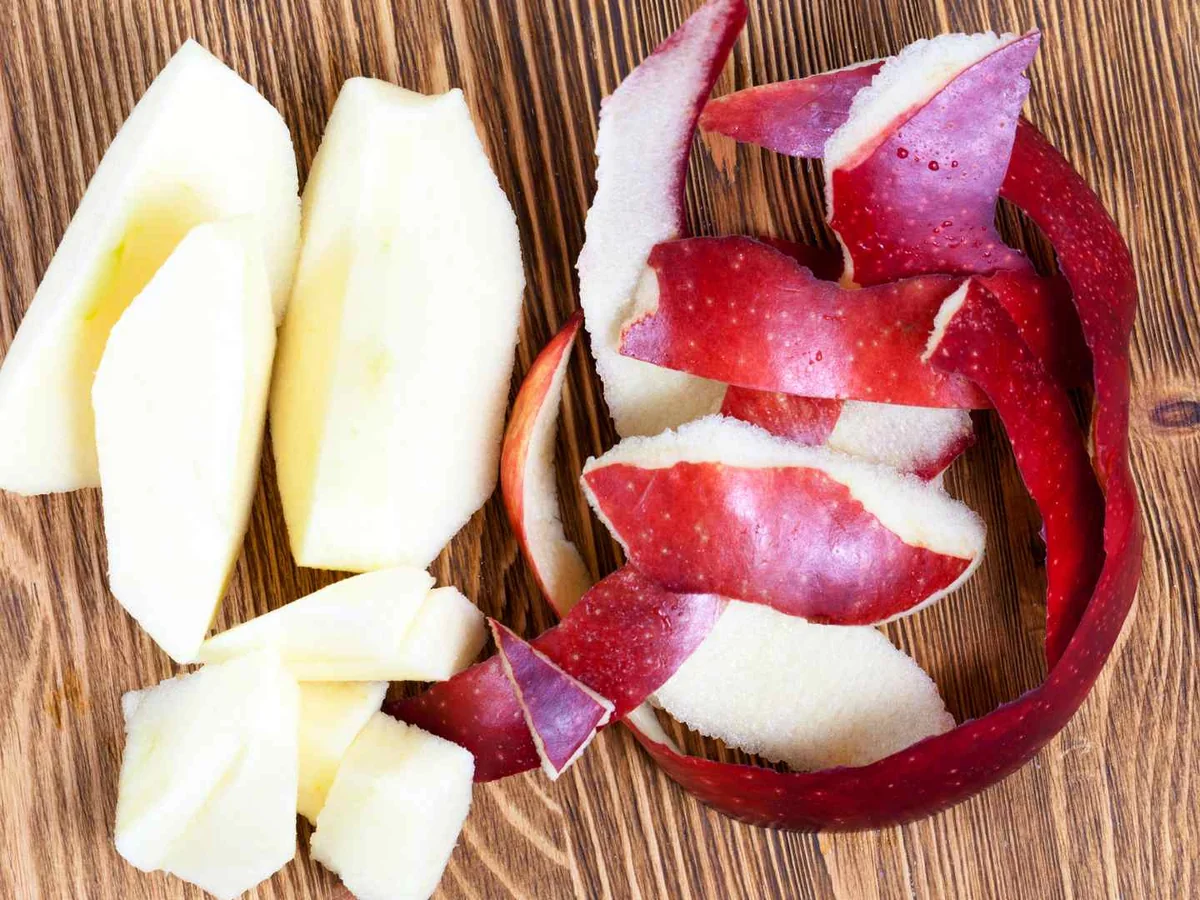
Put cores and long peel ribbons directly into a lidded trash or compost container. Clean loose seeds from the counter and floor, especially after children prepare fruit or a spiral peeler sends strips farther than expected.
Keep fruit bowls away from climbing routes if your cat chews stems or knocks produce around. A stable closed cabinet is less decorative, but it also prevents the three-in-the-morning apple hockey tournament.
If your cat seeks moisture or novelty, rotate approved wet-food textures, use a puzzle feeder, or offer a few pieces of regular food in a new location. That meets the behavioral request without turning produce preparation into a recurring negotiation.
Apple exposure compared with other fruit scares
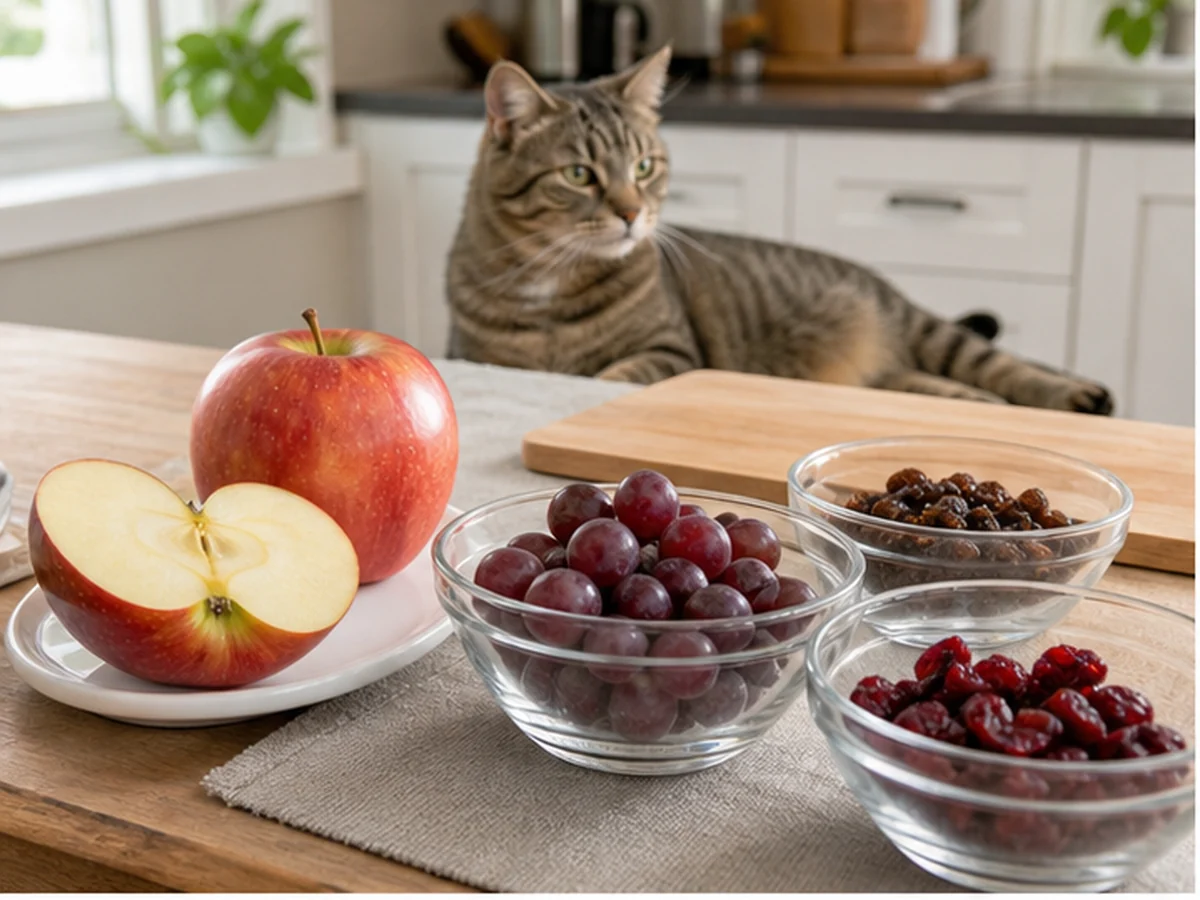
Apple peel does not belong in the same risk bucket as every fruit skin. For example, a grape exposure has different uncertainty and deserves its own response, which our cats and grapes guide explains.
Likewise, stone fruits add a hard pit that apples do not have, while citrus carries aromatic oils and acidity that change the practical concerns. Broad rules such as all peels are poisonous or all fruit is safe erase the part that usually determines the next step.
When the exact fruit is uncertain, photograph it, its sticker, leaves, and any cut surface before disposal. A poison specialist can work with identifiable plant material far more reliably than with the description round red thing from the counter.
FAQ
Is apple peel poisonous to cats?
Ripe apple peel is not identified as the cyanogenic part of the apple plant. Its main concerns are tough texture, digestive upset, surface contamination, and unsafe portions such as attached seeds, core, or stem.
What if my cat ate one apple seed?
One intact seed is less concerning than several crushed seeds, but call a veterinarian or poison service for case-specific guidance. Share whether it was chewed, the possible number, the time, and your cat’s size and health.
Should I peel apples before offering a taste?
Peeling is sensible because it removes the toughest portion, but wash the whole apple before cutting it. The crucial preparation step is complete removal of the core, stem, leaves, and seeds.
Can cats eat green or red apple skin?
Color does not change the basic advice, although tart apples may be less appealing and any variety can cause stomach upset. Use only a tiny washed piece from fresh ripe fruit if you offer one at all.
Bottom line
A minuscule washed piece of apple skin is usually low risk for a healthy adult cat, but peeled seed-free flesh is easier to handle and neither form is needed. Reserve urgency for seeds, core, long strips, spoiled fruit, large amounts, or any concerning symptom.