Can Cats Eat Beef Jerky? Salt, Garlic, Texture, and Packet Risks
Human beef jerky is not a good cat treat. One small piece may only cause thirst or stomach upset, but sodium, onion, garlic, smoke, sugar, spicy coatings, tough texture, homemade processing, and the packet inside the bag can make an apparently simple meat theft much more serious.
Start by sorting the jerky into the right category
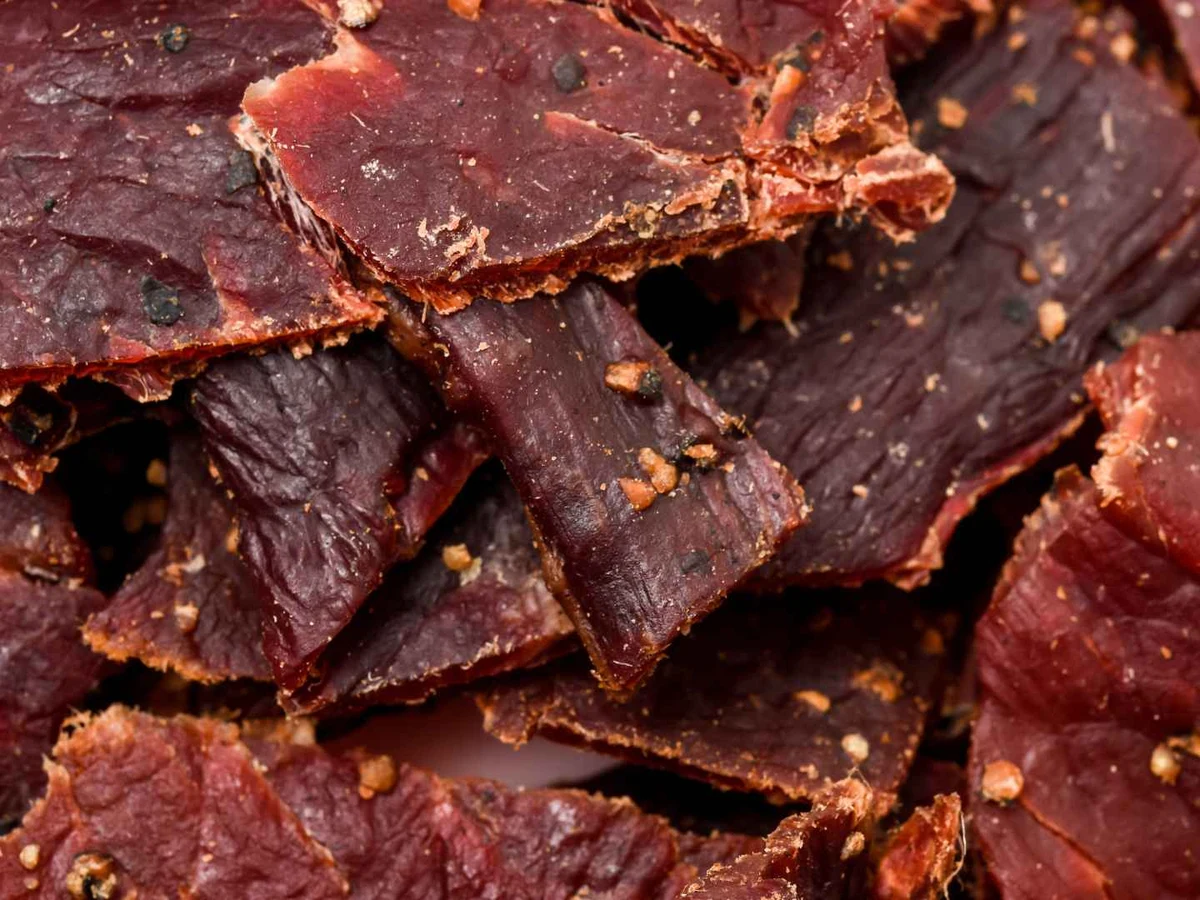
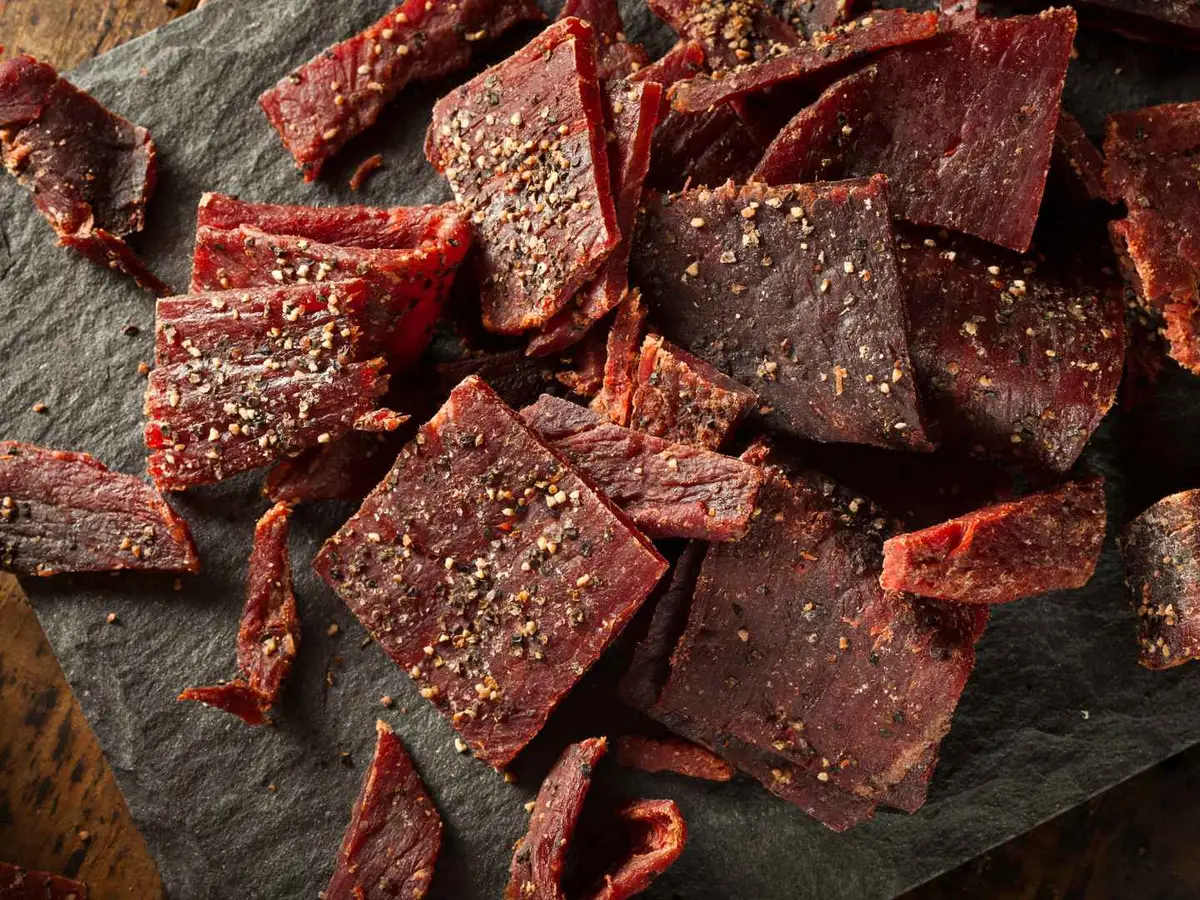
The word jerky can mean a human snack, a cat treat, a dog chew, homemade dried meat, raw freeze-dried strips, meat sticks, or plant-based imitation. Those products differ in formulation, processing, intended species, texture, and serving size.
| Product | Most useful question | General answer |
|---|---|---|
| Plain human beef jerky | How much sodium and seasoning? | Not recommended; check the label after a theft. |
| Peppered or spicy jerky | Which peppers, extracts, onion, and garlic? | Keep away because irritation and toxic seasonings may be present. |
| Beef stick or sausage stick | Fat, curing salts, casing, and additives? | Richer and easier to gulp than a thin strip. |
| Homemade jerky | Was meat safely heated before drying? | Recipe and process both need review. |
| Raw or freeze-dried raw jerky | Is it truly uncooked? | Pathogen concerns apply despite the dry feel. |
| Cat-labeled beef treat | Does the package name cats and give portions? | Use as directed, while remembering treats are not a complete diet. |
| Dog jerky chew | Size, hardness, and species label? | Do not hand a dog-sized chew to a cat. |
Why “beef” does not settle the nutrition question
Cats require animal-derived nutrients, but that does not mean any dried meat works as a balanced meal. Human jerky is formulated for flavor and shelf stability, not feline amino acids, minerals, vitamins, hydration, or calorie needs.
A plain, thoroughly cooked, boneless bite of beef is a much simpler occasional food. Our steak guide for cats separates cooked lean meat from fat caps, seasoning, bones, and raw centers.
Drying concentrates what remains as water leaves, including sodium and calories per bite. A strip that looks modest to a hiker can represent a disproportionate snack for a ten-pound animal.
Cat-specific jerky treats should carry feeding directions and a calorie statement, but most are still treats rather than complete food. Count them within the day’s extras and store the bag where one determined paw cannot self-serve.
Sodium is a pattern and portion problem
Salt helps flavor and preserve many jerkies, and it can also arrive through soy sauce, Worcestershire sauce, curing mixtures, broth, cheese flavor, and spice blends. The sodium number on a human Nutrition Facts panel assumes a human serving.
One small stolen shred from ordinary jerky does not automatically equal salt poisoning. The concern increases when a cat eats much of a bag, consumes a concentrated curing mix, lacks water, has a sodium-sensitive condition, or develops neurologic and digestive signs.
Watch for vomiting, diarrhea, marked thirst, weakness, tremors, incoordination, seizures, or unusual behavior. Provide normal access to fresh water, but do not force water or attempt rapid home correction.
Kidney, heart, urinary, and blood-pressure patients may have individualized sodium targets. Their veterinary team should decide whether even a moderate jerky raid affects the medical plan.
Garlic and onion can have delayed consequences
Jerky marinades and seasoning powders commonly use garlic or onion for a savory base. Cats are particularly vulnerable to Allium-related oxidative damage to red blood cells, and dried powders remain active after the meat is cooked.
Merck reports that cats have been affected by raw, cooked, dehydrated, and granulated Alliums and that clinical anemia may not appear for several days. A cat acting normal immediately after the snack can still need a veterinarian’s plan.
Possible signs include low appetite, lethargy, weakness, pale or yellow gums, rapid breathing, dark urine, and collapse. Call about a confirmed Allium ingredient rather than using the absence of symptoms as permission to wait.
Use our feline guides to garlic and onions for species-specific context. Do not reuse a dog dose chart when the patient is a cat.
Tough, leathery food can be swallowed badly
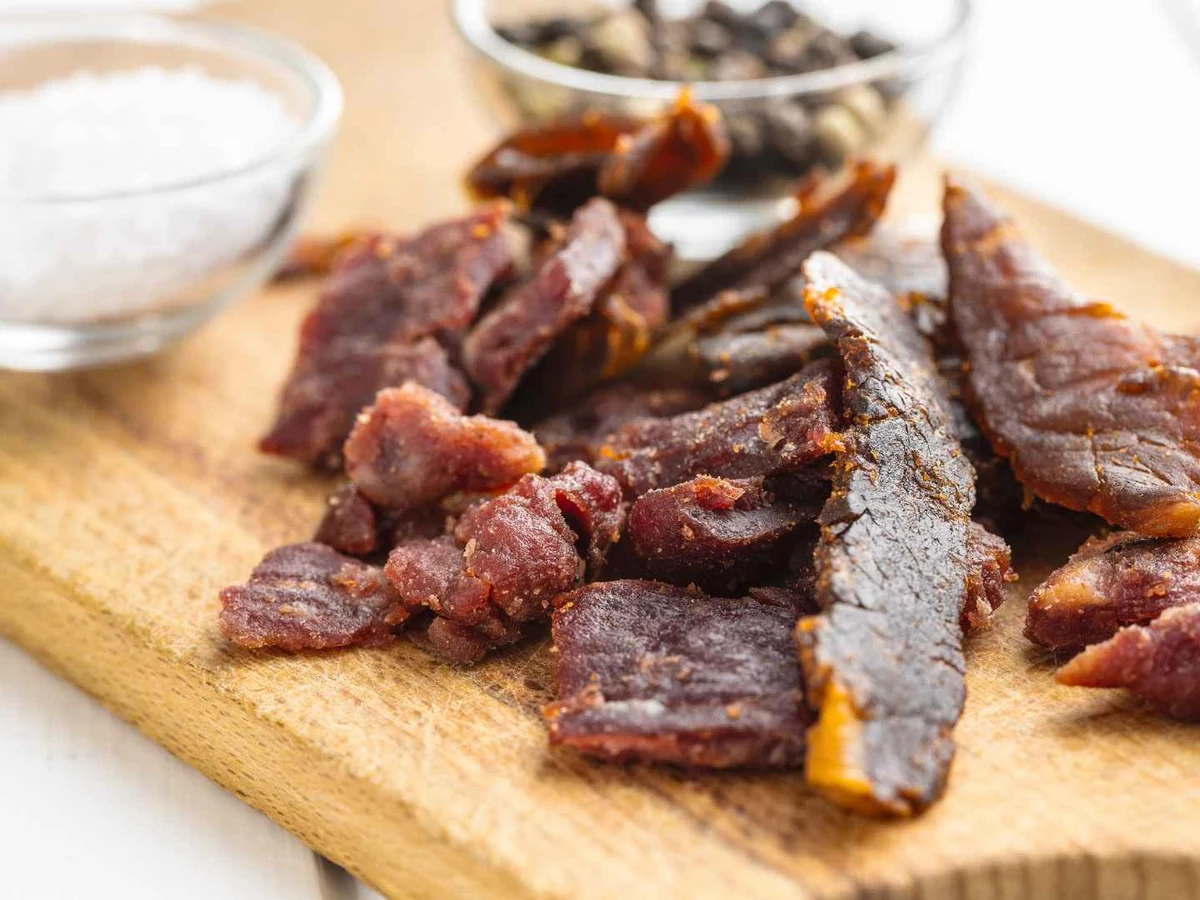
Jerky is designed to resist tearing and demand chewing, two features that do not help a cat who gulps. Long strips can lodge in the throat, while hard edges may scrape the mouth or esophagus.
Older cats with dental disease, kittens, flat-faced cats, and animals with swallowing or neurologic disorders have even less margin. Dog chews and thick meat slabs are especially inappropriate sizes.
Gagging, frantic mouth-pawing, repeated swallowing, drooling, regurgitation, or breathing difficulty requires rapid action. Blue-gray gums, collapse, or inability to move air is an emergency.
Do not blindly sweep a finger deep into the mouth and do not pull on firmly lodged material. An emergency clinic can advise safe transport while preparing to remove the obstruction.
Fat, sugar, and smoke add up
Some beef jerky uses relatively lean cuts, while meat sticks, brisket jerky, and bacon-style products can be much fattier. Rich food can produce vomiting, loose stool, nausea, and abdominal discomfort in susceptible cats.
Sugar, maple syrup, honey, and fruit concentrate create glaze and help flavor. They add calories without improving feline nutrition, while sticky pieces can cling to teeth and packaging.
Smoke flavor, liquid smoke, and actual smoking describe different processes and formulas. None makes a human jerky nutritionally suitable for cats, and concentrated flavor products deserve an exact label review.
For a similar cured-meat problem with even more fat and salt, the cat bacon guide covers grease, seasoning, hot pans, and packages. “Meat” remains too broad to function as a safety conclusion.
Hot peppers and black pepper
Black pepper dust can irritate the nose and eyes, and cayenne, chili flakes, hot sauce, or pepper extract can cause much stronger mouth and stomach discomfort. Cats gain no benefit from proving their spice tolerance.
After a powder spill, move the cat away from airborne dust and prevent grooming of heavily coated fur. Call for eye pain, persistent coughing, breathing effort, repeated vomiting, or a concentrated capsaicin product.
Homemade jerky safety depends on heat before drying
A dehydrator makes meat dry, but dry is not a synonym for safely cooked. Low heat may remove moisture without rapidly destroying pathogenic bacteria.
The USDA jerky guidance recommends heating beef to 160°F before dehydration because bacteria can survive traditional low-temperature drying. Marinade should stay refrigerated, and raw juices must not contaminate the finished batch.
A cat who ate homemade jerky needs an honest process history: meat source, cut or ground meat, preheating temperature, dehydrator temperature, storage, mold, seasonings, and amount. Do not assume a family recipe is pathogen-free because nobody has been sick before.
Raw and freeze-dried strips are not conventional jerky
Some pet products are sold as raw, air-dried, or freeze-dried and may not receive the same lethal heat step as ready-to-eat cooked jerky. Read the processing claim and handling directions instead of judging by appearance.
The FDA recommends that consumers consider H5N1 risk before feeding uncooked meat to cats and notes that felines are particularly sensitive to the virus. That warning applies to uncooked meat products, not an ordinary fully cooked beef strip simply because it is dry.
Raw meat can also carry bacterial pathogens and contaminate bowls, hands, counters, saliva, feces, and litter areas. Our raw meat guide covers household exposure and feline illness signs.
The packet inside the bag may be the most urgent item
Jerky packaging may contain an oxygen absorber, desiccant, moisture regulator, or freshness packet. Contents differ: some use iron, others use silica gel, clay, salts, or proprietary materials.
Do not decide safety from the words “do not eat” or from packet color. Save an identical packet and outer bag, check whether it was punctured, estimate missing contents, and call a veterinarian or animal poison service.
Iron-containing packets can create a toxic exposure, while even low-toxicity granules and wrapper film can irritate or obstruct. The correct response depends on the material, packet size, cat, damage, and symptoms.
Human jerky, cat treats, and dog treats
A cat-labeled treat is the most reasonable jerky-style choice because its shape and directions consider cats. It still needs portion control, recall awareness, and clean handling.
The FDA advises handwashing, clean bowls, intact packages, and secure storage because pet food and treats can carry harmful bacteria. Discard old or spoiled treats in a covered trash container.
Dog jerky may be too large, hard, or calorie-dense, and its label was not written for feline feeding. Never cut around mold or assume a pet-store product is complete food merely because an animal appears on the bag.
When to call and what to report
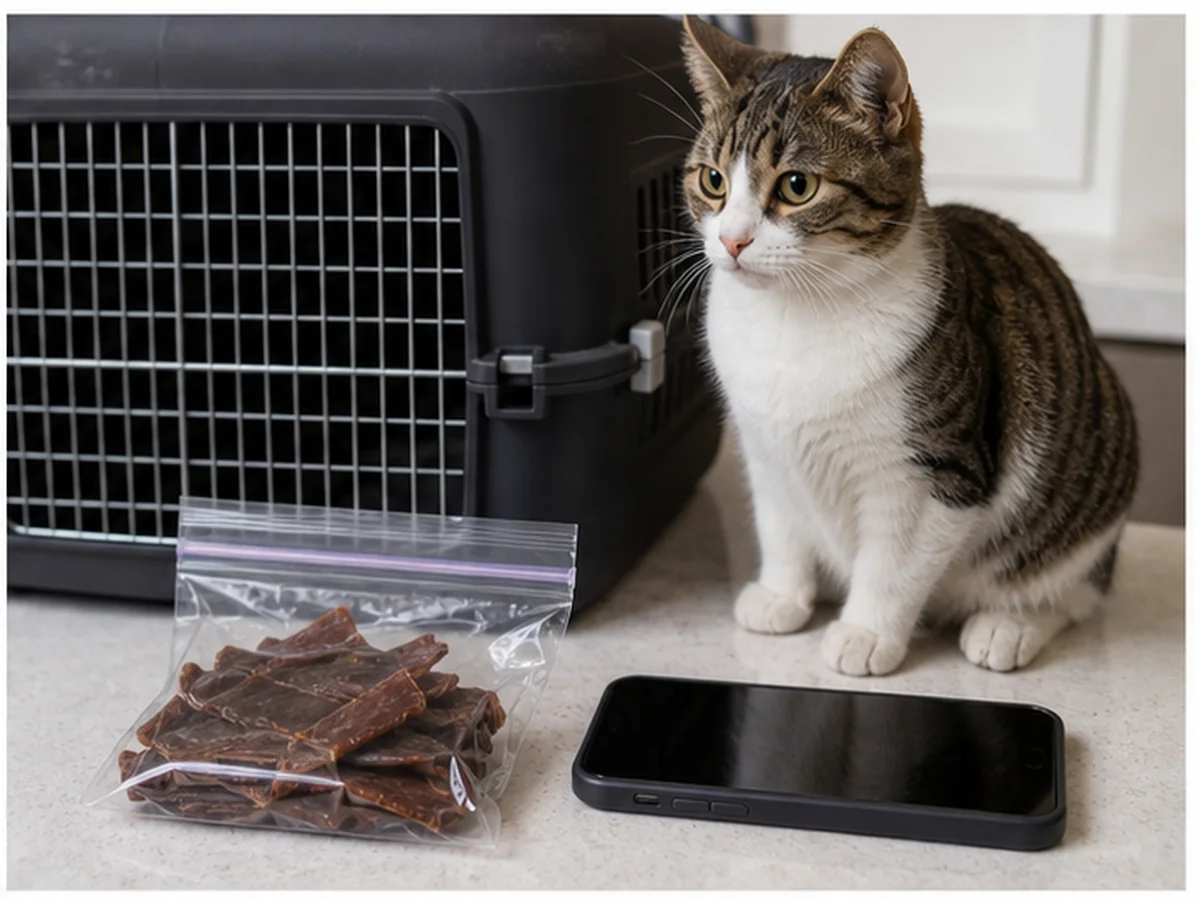
- Call now for: onion or garlic, a large amount, raw or questionably processed meat, severe spice, damaged freshness packets, or an uncertain recipe.
- Go urgently for: choking, breathing changes, collapse, tremors, seizures, repeated vomiting, marked weakness, or severe abdominal pain.
- Bring specifics: brand, flavor, sodium, ingredients, servings missing, processing method, lot code, packet type, time, and cat’s weight.
- Remember delay: Allium-related anemia may emerge days after the jerky, so follow the clinic’s monitoring instructions.
- Avoid kitchen treatment: do not induce vomiting, force water, give milk, or feed a bulky meal to push material through.
A healthy cat that stole one small, plainly seasoned commercial shred and remains normal may only need label review and observation. Fresh water and the ordinary cat food are the appropriate follow-up menu.
Frequently asked questions
Can cats eat plain unsalted beef jerky?
A tiny soft piece may be low risk if it is fully cooked, free of Alliums, and stored safely, but it is still concentrated and tough. A morsel of plain cooked beef is easier to portion and assess.
Can cats eat beef sticks?
Human meat sticks are often fatty, salty, seasoned, and enclosed in a casing that can be gulped. Check the label after an accident and do not offer them routinely.
What if my cat ate the oxygen absorber?
Call immediately with the jerky brand, packet printing, package size, and whether the sachet was torn. Packet chemistry varies, so appearance alone cannot rule out iron or another important ingredient.
Is homemade jerky safe for cats?
Only a veterinarian-approved recipe and a validated cooking process can answer that for planned feeding. Human homemade jerky often contains salt and Alliums, while inadequate preheating can leave pathogens alive.
Bottom line
Beef jerky takes ordinary meat and concentrates its salt, seasoning, calories, and chewing difficulty. Choose a feline treat instead, protect the freshness packet, ask how homemade strips were heated, and make the call before delayed garlic or onion injury has time to hide.