Can Cats Eat Cooked Mushrooms? Grocery Varieties Versus Wild Risks
A tiny piece of plain, fully cooked, correctly identified grocery-store mushroom is generally low risk for a healthy adult cat, though it offers little nutritional value. Any wild, yard, foraged, unknown, psychoactive, medicinal, or moldy mushroom should be treated as potentially dangerous and discussed with a veterinarian immediately.
The first question is identity, not doneness
Cooking does not make an unknown mushroom safe because some fungal toxins withstand heat, drying, or freezing. Confirm whether the food came from a labeled grocery package or appeared outdoors, in a houseplant pot, in compost, or in a forager’s basket.
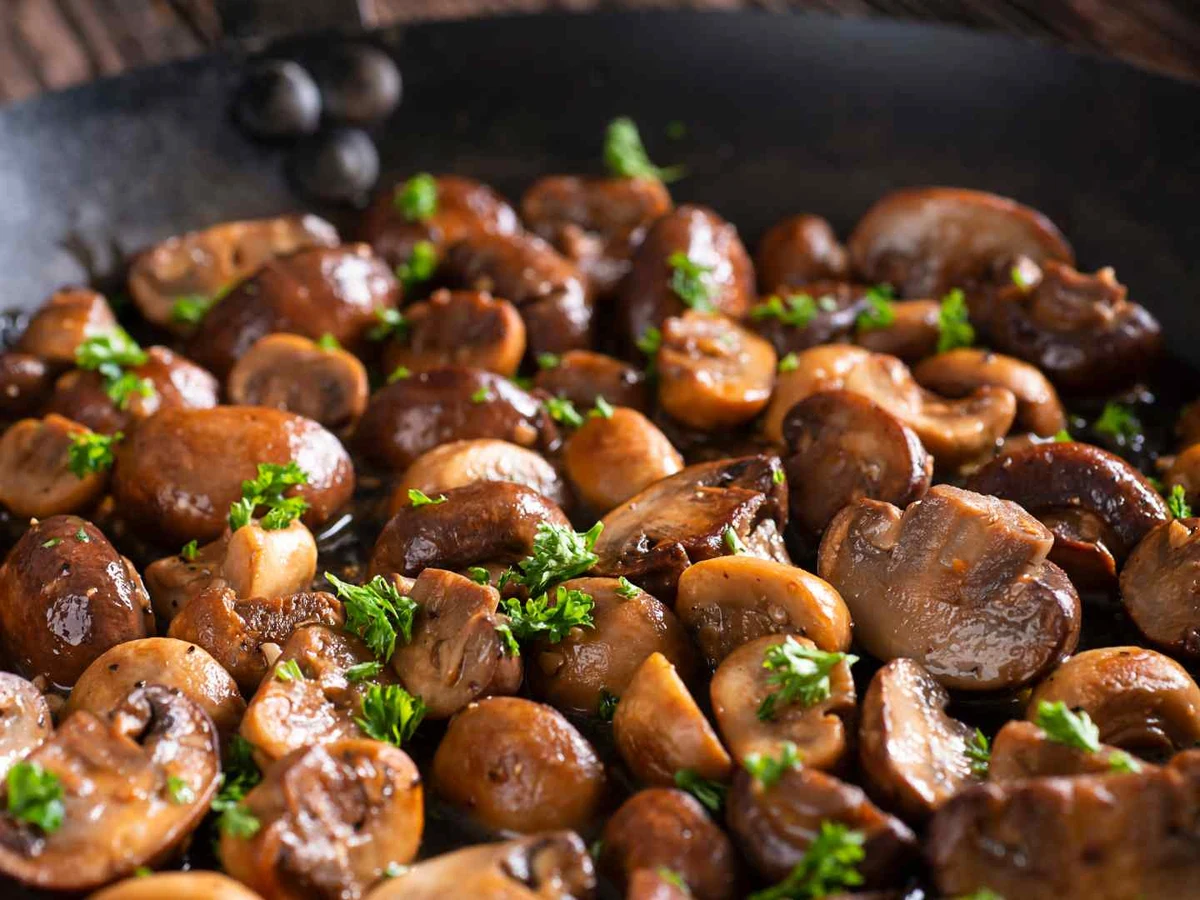
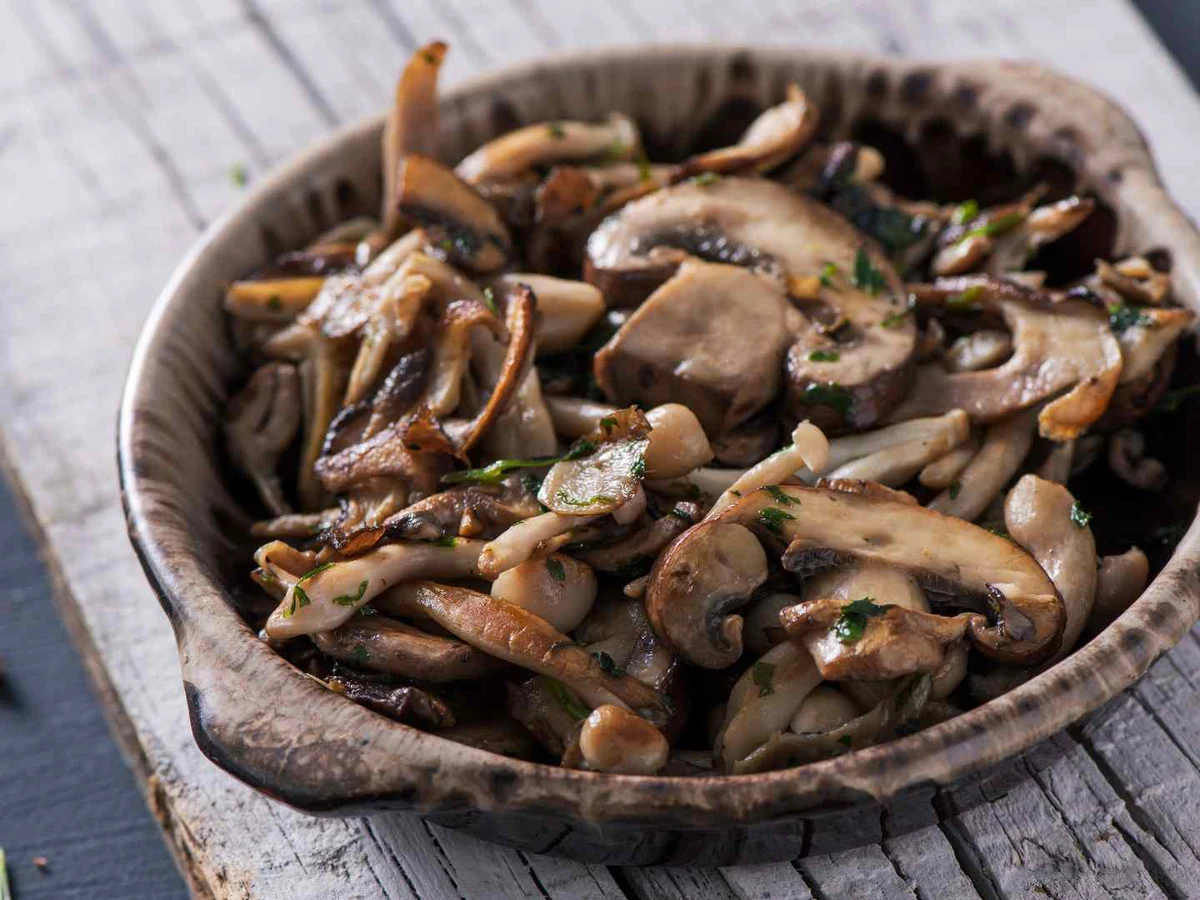
After one tiny bite of a plain cooked button, cremini, or portobello mushroom from a known retail package, remove access and monitor. Check the pan for butter, garlic, onion, wine, salt, sauce, skewers, and missing packaging before settling into watchful calm.
For any unknown or wild mushroom, call a veterinarian or animal poison service now, even if the cat looks normal. Do not induce vomiting, wait for an identification app, or feed charcoal without professional direction.
Known culinary mushrooms are the narrow low-risk category
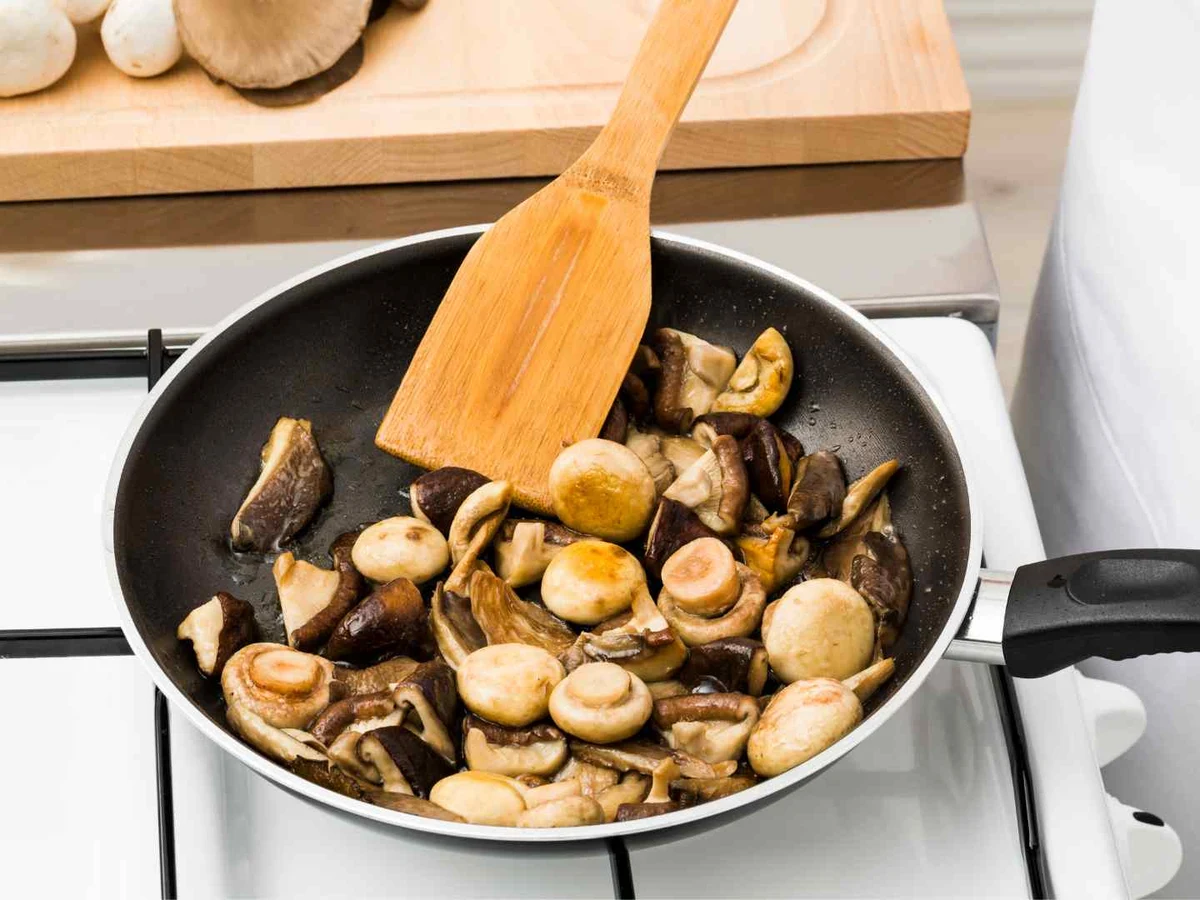
Common retail species include white button, cremini, portobello, shiitake, oyster, maitake, enoki, and properly cultivated specialty mushrooms. A sealed package and reliable commercial supply chain make identity more dependable than a cap found beside the porch.
The ASPCA states that store-bought culinary mushrooms generally do not cause problems for pets. That reassurance applies to the identified mushroom, not to heavy sauce, spoiled product, a large fibrous amount, or an unrelated wild look-alike.
Cats have no nutritional requirement for mushrooms and should not receive them as a protein replacement. Their main food must provide the complete animal-focused nutrient balance this species requires.
Cook plain, soft, and very small
If your veterinarian permits a taste, rinse or wipe a fresh known mushroom, discard spoiled areas, and cook it thoroughly without oil or seasoning. Cool and mince one piece smaller than a pea so the rubbery texture cannot become a gulped lump.
One small first sample is enough to test tolerance. This is a conservative practical serving, not a researched feline requirement or toxic threshold.
The FDA’s produce-safety guidance recommends clean hands, clean utensils, separation from raw meat, and discarding rotten produce. Cooking reduces microbial risk but cannot rescue decomposition or uncertain species identity.
Wild mushroom exposure is a time-sensitive problem
Toxic wild mushrooms can cause gastrointestinal, neurologic, liver, kidney, respiratory, or other syndromes, and some dangerous effects are delayed. A symptom-free interval does not prove the mushroom was harmless.
The ASPCA’s wild mushroom guidance describes vomiting, diarrhea, severe drooling, slow heart rate, agitation, unsteadiness, tremors, liver failure, and death depending on species. It recommends expert identification rather than trusting an untrained visual guess.
Some liver-toxic mushrooms can produce gastrointestinal signs only after a delay, creating false reassurance. Early veterinary contact may allow decontamination and monitoring before organ injury becomes obvious.
Treat cooked foraged mushrooms exactly like raw unknown ones unless a qualified mycologist established identity and the veterinarian agrees. Sauteing a dangerous cap does not revoke its chemistry.
Collect evidence without creating another exposure
Put on gloves, collect remaining mushroom pieces in a paper bag or ventilated container, and keep different specimens separate when possible. Photograph the cap, underside, entire stem, base, surrounding habitat, and nearby mushrooms from several angles.
Do not let the cat, children, or other pets revisit the area while you gather samples. Wash hands afterward and keep the sample available for the clinic or a mycologist instead of discarding the only identification evidence.
Report whether the mushroom was fresh, dried, cooked, frozen, powdered, brewed, or part of a food product. Include the time, possible amount, cat’s weight, medical history, medications, and every sign noticed.
A phone app cannot clear a mushroom emergency
Photo-identification tools can suggest possibilities but may confuse species that require examination of spores, microscopic features, bruising, habitat, or the complete base. A confident app result is not a toxicology consultation.
Contact a veterinarian or poison service first, then seek a trained mycologist if requested. Local universities, mycological societies, and specialist networks may assist, but treatment decisions should not wait for a social-media vote.
Butter, garlic, onion, and wine change grocery mushrooms
Restaurant mushrooms are commonly sauteed with butter or oil, garlic, onion, salt, pepper, and wine. The known mushroom may be low risk while its pan companions create the actual call.
Alliums are especially important for cats because they can damage red blood cells. The ASPCA notes feline susceptibility to onion, garlic, and chives, including the risk of anemia.
Call after meaningful allium exposure and watch for vomiting, weakness, pale gums, rapid breathing, or dark urine. Do not rinse a cooked mushroom and assume seasoning that soaked into it has disappeared.
Butter adds fat and may trigger digestive upset, particularly after several mushrooms. The butter guide for cats helps evaluate the rich-food component separately.
Pizza, pasta, soup, gravy, and stuffed caps
Mushroom pizza brings cheese, dough, sauce, cured meat, and alliums into the case, so use the cat pizza guide to inventory the complete slice. A plain grocery topping does not neutralize garlic sauce.
Cream soup may contain onion powder, garlic, dairy, high sodium, and concentrated mushroom flavor. Gravy can add drippings and seasoning, while stuffed caps may hide breadcrumbs, sausage, cheese, alcohol, or toothpicks.
Count skewers and wooden picks immediately and call if one is missing. Pointed foreign material can perforate tissue without producing dramatic early signs.
Dried mushrooms, powders, broths, and supplements
Dried culinary mushrooms are concentrated and leathery, while powder can be inhaled and is easy to consume by volume. Rehydrate and cook only for human use, and do not sprinkle mushroom powder over cat food unless it is part of a veterinary product used as directed.
Broth cubes and instant soup powders often contain onion, garlic, salt, yeast extract, and flavor concentrates. A mushroom picture on the front does not tell you whether the broth is safe for cats.
Medicinal mushroom supplements may contain extracts of reishi, lion’s mane, turkey tail, cordyceps, chaga, or blends with herbs and sweeteners. Evidence, purity, concentration, interactions, and feline dosing vary, so use them only under veterinary direction.
Psychoactive mushroom products and edibles are urgent exposures, whether the fungi are cooked, dried, powdered, or incorporated into chocolate. Report cannabis, chocolate, sweeteners, and every labeled active ingredient to the clinic.
Mold is fungus, but moldy food is not a mushroom snack
Visible mold on mushrooms, bread, compost, or leftovers can indicate spoilage and possible mycotoxin exposure. Cutting away the fuzzy spot does not guarantee the remainder is safe for a cat.
Keep compost bins closed because they may combine moldy food, coffee grounds, onions, bones, skewers, and plastic. Tremors, agitation, vomiting, seizures, weakness, or abnormal temperature after compost access requires urgent care.
Storage and leftovers
Refrigerate cooked mushrooms and mixed dishes promptly in shallow covered containers and discard them after the safe leftover window. The USDA leftover guidance recommends rapid chilling and careful reheating rather than leaving perishable food at room temperature.
Do not use smell alone to judge a forgotten saute. When storage is questionable, throw it away behind a secure lid instead of letting a cat perform the final inspection.
Mushroom texture can still cause trouble
Cooked mushrooms can remain rubbery and slippery, which encourages swallowing before thorough chewing. Large caps, long enoki clusters, and tough shiitake stems should stay away from cats even when the species is known.
The Merck Veterinary Manual lists vomiting, appetite loss, lethargy, and abdominal pain among obstruction signs. Call after a large swallowed piece or when those signs follow the meal.
Cats who should skip even known grocery mushrooms
Kittens, cats with chewing or swallowing trouble, chronic bowel disease, food allergies, prior obstruction, diabetes, or a prescription diet gain nothing from a mushroom taste. During an elimination trial, this unapproved ingredient can also compromise the result.
Cornell’s feline nutrition overview supports complete diets and keeping treats occasional. Use normal kibble or a commercial cat treat for rewards instead of creating a tiny saute order.
A cat refusing regular food but accepting buttered mushrooms still has an appetite problem. Seek veterinary guidance when reduced intake persists or comes with vomiting, weight loss, pain, or unusual behavior.
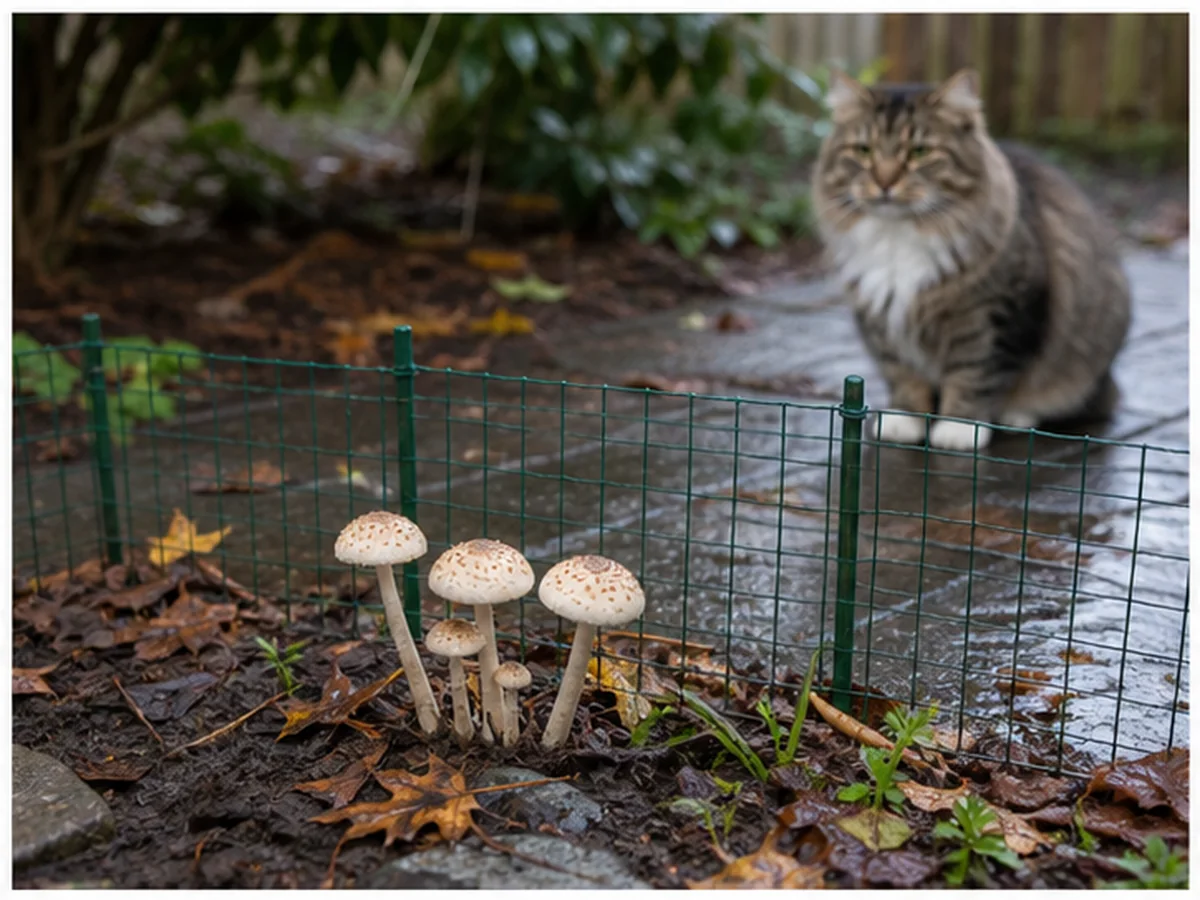
Yard prevention after rain
Inspect lawns, patios, mulch, greenhouses, and houseplant pots regularly during damp weather because mushrooms can appear quickly. Remove them before outdoor access while wearing gloves and collecting the entire base when possible.
Blocking the area is more reliable than teaching a cat which cap is dangerous. Check again after mowing or rainfall and keep compost, old stumps, and decaying wood inaccessible.
The site’s cooked mushroom overview and general mushroom guide can help household members recognize the store-bought versus wild split. Feline treatment still belongs with a veterinarian or poison specialist.
FAQ
Can cats eat cooked button mushrooms?
A minced piece from a known grocery package, cooked plain, is generally low risk. It supplies no needed benefit and should remain an occasional curiosity.
Does cooking make wild mushrooms safe for cats?
No, cooking cannot be trusted to destroy every mushroom toxin. Treat any wild, foraged, or unknown mushroom exposure as urgent.
What if my cat ate a mushroom from pizza?
The mushroom is likely a grocery variety, but pizza can contain garlic, onion, cheese, cured meat, and dough. Check the complete recipe and call about hazardous ingredients or symptoms.
Can cats take medicinal mushroom supplements?
Only with veterinary direction because extracts vary in identity, concentration, contaminants, additives, evidence, and interactions. Human dosing does not establish a safe feline regimen.
Bottom line
A speck of plain cooked grocery mushroom is usually low risk, but certainty about identity is the price of reassurance. Treat every wild, yard, foraged, psychoactive, medicinal, or unknown mushroom as a prompt veterinary call, whether cooked or not.