Can Cats Eat Nutella? Cocoa, Sweeteners, and Jar Risks
Do not offer Nutella or another chocolate-hazelnut spread to cats. A tiny lick may not cause serious illness, but cocoa, swallowed amount, cat size, fat and sugar, recipe differences, added sweeteners, nuts, foil seals, and the jar all matter.
Keep the jar and estimate the missing spread
Stop access, save the exact container, and note whether the cat licked a knife, ate a sandwich, opened a single-serve packet, or pushed its face into the jar. Look for missing foil, plastic, glass, bread, or toppings.
Call promptly with the product, amount, time, and cat’s weight. Restlessness, repeated vomiting, rapid heartbeat, tremors, seizures, collapse, breathing trouble, or severe weakness is urgent.
Do not induce vomiting or give milk, oil, bread, charcoal, or salt. Early professional advice is more useful than waiting for the chocolate question to answer itself.
Cocoa is the toxicology headline
Chocolate contains methylxanthines, including theobromine and caffeine, that cats metabolize poorly. The amount varies with cocoa type and product formula.
The cat chocolate guide explains why cocoa percentage, product weight, amount, timing, and cat weight guide triage. A spread is diluted compared with cocoa powder but remains a chocolate-containing food.
Do not assume a lick is fatal or that a spoonful is harmless. Use the actual label and poison-service calculation rather than a viral chocolate chart.
Brand name does not cover every spread
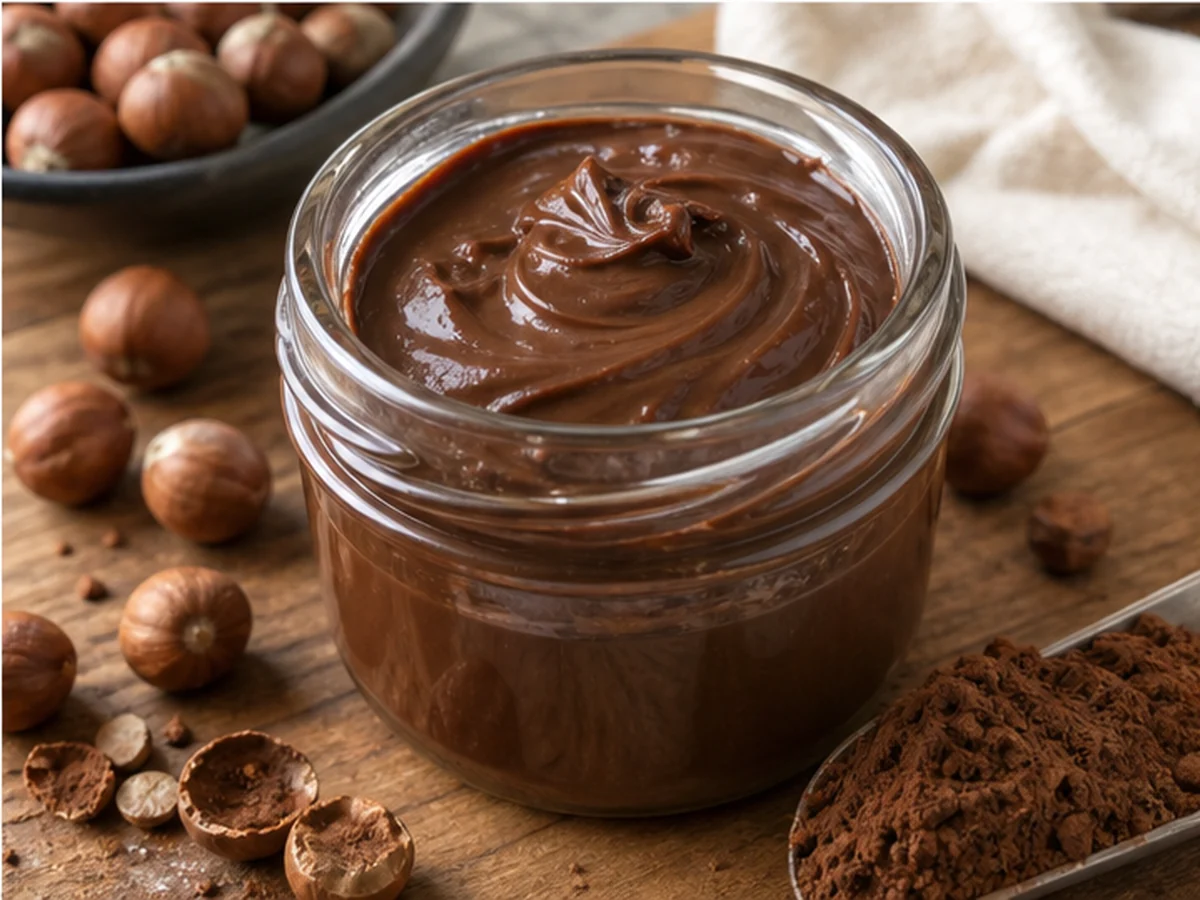
Nutella is one branded formula, while store brands, imported jars, bakery fillings, protein spreads, vegan versions, and homemade recipes differ. Manufacturers can also reformulate.
Read the current ingredient panel for cocoa, coffee, milk, nuts, sweeteners, protein additives, and serving size. A familiar brown jar is not a permanent recipe guarantee.
The FDA Nutrition Facts guide helps interpret portions, sugars, fat, and ingredients. Photograph all panels before calling.
The hazelnut is not the main poison
Plain hazelnut kernel is not known as a feline toxin, though whole nuts are hard, fatty, and capable of choking. In chocolate spread, cocoa and the total formulation deserve greater attention.
The cat hazelnut guide covers shells, whole kernels, mold, and mixed nuts. Ground hazelnut in a spread lacks the shell hazard but does not make chocolate safe.
Nut allergy cannot be diagnosed from one vomiting episode after a multi-ingredient sweet. Recurrent reactions need veterinary investigation.
Fat and sugar add a second layer
Chocolate-hazelnut spread is calorie-dense and rich. A larger amount can cause vomiting, diarrhea, abdominal discomfort, and appetite loss even when cocoa exposure remains below a severe threshold.
Cats with obesity, diabetes, pancreatitis history, or chronic gastrointestinal disease have no room for this experiment. Regular licking can displace balanced food and complicate medical management.
The Cornell Feline Health Center emphasizes complete feline nutrition and limited treats. Sugar spread does not become protein-rich cat food because it contains nuts.
Milk ingredients may upset digestion
Some spreads contain skim milk powder, whey, or other dairy ingredients. Many adult cats digest lactose poorly and may develop gas, soft stool, or vomiting.
Dairy intolerance is separate from chocolate toxicity and separate again from milk-protein allergy. Facial swelling, hives, breathing difficulty, or collapse requires urgent care.
Vegan labeling removes dairy but does not remove cocoa, sugar, fat, nuts, or product-specific additives. It is not a feline safety claim.
Sugar-free and keto products need species-specific language
Alternative spreads may use xylitol, erythritol, stevia, maltitol, or other sweeteners. Identify the actual compound rather than treating sugar-free as a toxicology result.
Xylitol causes severe hypoglycemia and liver injury in dogs, while the FDA notes it does not appear equally dangerous to cats. Do not borrow the canine mechanism or dose.
An unknown cat exposure still deserves a call because cocoa, caffeine, supplements, and other ingredients remain relevant. Honest feline uncertainty is better than dog-derived certainty.
Coffee and mocha spreads
Espresso, mocha, tiramisu, and energy spreads may add caffeine to cocoa. A small jar spoon can deliver a concentrated stimulant mixture.
Call immediately with caffeine milligrams if listed. Agitation, racing heart, tremors, abnormal temperature, seizures, or collapse is an emergency.
The FDA pet-hazard guide includes both caffeine and chocolate. Front-label words such as breakfast or energy should trigger careful panel reading.
Homemade chocolate-hazelnut spread
A home recipe may use cocoa powder, dark chocolate, roasted nuts, sugar, oil, milk, coffee, alcohol, or unusual sweeteners. The batch yield and measured ingredients make exposure estimates possible.
Write down the exact recipe and estimate how much spread is gone. Cocoa powder and baking chocolate are more concentrated than many finished spreads.
Do not assume homemade means cleaner or safer. It means the person with the mixing bowl may hold the most useful toxicology data.
Sandwiches, toast, crepes, and pastries
Bread and pastry add choking bulk, butter, raw dough, nuts, fruit, powdered sugar, and wrappers. Bananas or strawberries are usually less urgent than cocoa, but grape jelly or raisins require separate review.
A crepe may contain alcohol or coffee, while a bakery croissant can hide a larger filling than its surface suggests. Keep the menu or ingredient card.
The cat butter guide helps assess rich-food effects when pastry fat is substantial. It does not replace chocolate triage.
Jar rims, foil seals, and broken glass
Spread on a foil seal or plastic lid makes packaging smell edible. A cat may swallow film while licking, and a dropped glass jar adds cuts and shards.
Call whenever foil, plastic, or glass is missing. Do not feed bread to cushion a sharp fragment or pull material protruding from the mouth or anus.
Check paws and fur after a broken jar without squeezing injured pads. Transport for cuts, bleeding, or possible swallowed glass.

Sticky fur and face cleanup
Spread can mat whiskers and fur, encouraging prolonged grooming and increasing the swallowed amount. Wipe a minor surface smear with a damp cloth and keep the cat from spreading it.
Do not use essential oil, solvent, or more cooking oil to clean the coat. Seek veterinary help for eye exposure, a large coating, or skin irritation.
A cat with spread deep in the mouth may cough or swallow repeatedly. Breathing trouble and inability to clear the mouth is urgent.
How symptoms can unfold
Chocolate signs may include vomiting, diarrhea, restlessness, rapid heart rate, tremors, seizures, and collapse. Rich-food effects may instead look like digestive upset and appetite loss.
The absence of signs immediately after exposure does not confirm safety because absorption takes time. Call early when the amount is meaningful or uncertain.
Bring the jar and any vomited packaging to the clinic in a sealed bag if requested. Do not delay transport to make the evidence tidy.
Cats on medical diets
Cats with diabetes, obesity, kidney disease, food allergy, pancreatitis history, or prescription diets should have no chocolate spread. The product adds multiple uncontrolled variables.
Do not use Nutella as a pill vehicle. Besides toxicity and calories, the cat may lick around the medicine and leave the dose behind.
If appetite is poor, contact a veterinarian instead of offering progressively richer sweets. Prolonged under-eating can be dangerous for cats.
Preventing the jar raid
Single-serve hotel packets and snack cups can be especially easy to puncture and carry away. Count them after guests leave and do not assume an empty packet was licked clean without plastic ingestion.
Chocolate-hazelnut ice cream adds dairy, cold hard mix-ins, and sometimes coffee or alcohol flavoring. A tiny lick still requires cocoa awareness, while a swallowed wooden spoon or lid creates a separate emergency.
Brownie batter and no-bake desserts may contain more cocoa powder than finished spread. Raw flour, egg, cannabis, and concentrated extracts also require recipe-level disclosure.
If several pets shared the jar, avoid dividing the missing amount evenly without evidence. Report the maximum each animal could have consumed so the veterinarian can plan conservatively.
Keep children from offering additional food while the cat is being assessed. Extra treats can obscure vomiting, change the swallowed total, and delay a clear history.
A normal cat several minutes after a lick has not completed the risk window. Follow the monitoring duration given for the actual cocoa calculation and product.
Write the poison-service case number beside the jar if one is provided, so every caregiver and clinic can refer to the same calculation and recommendations.
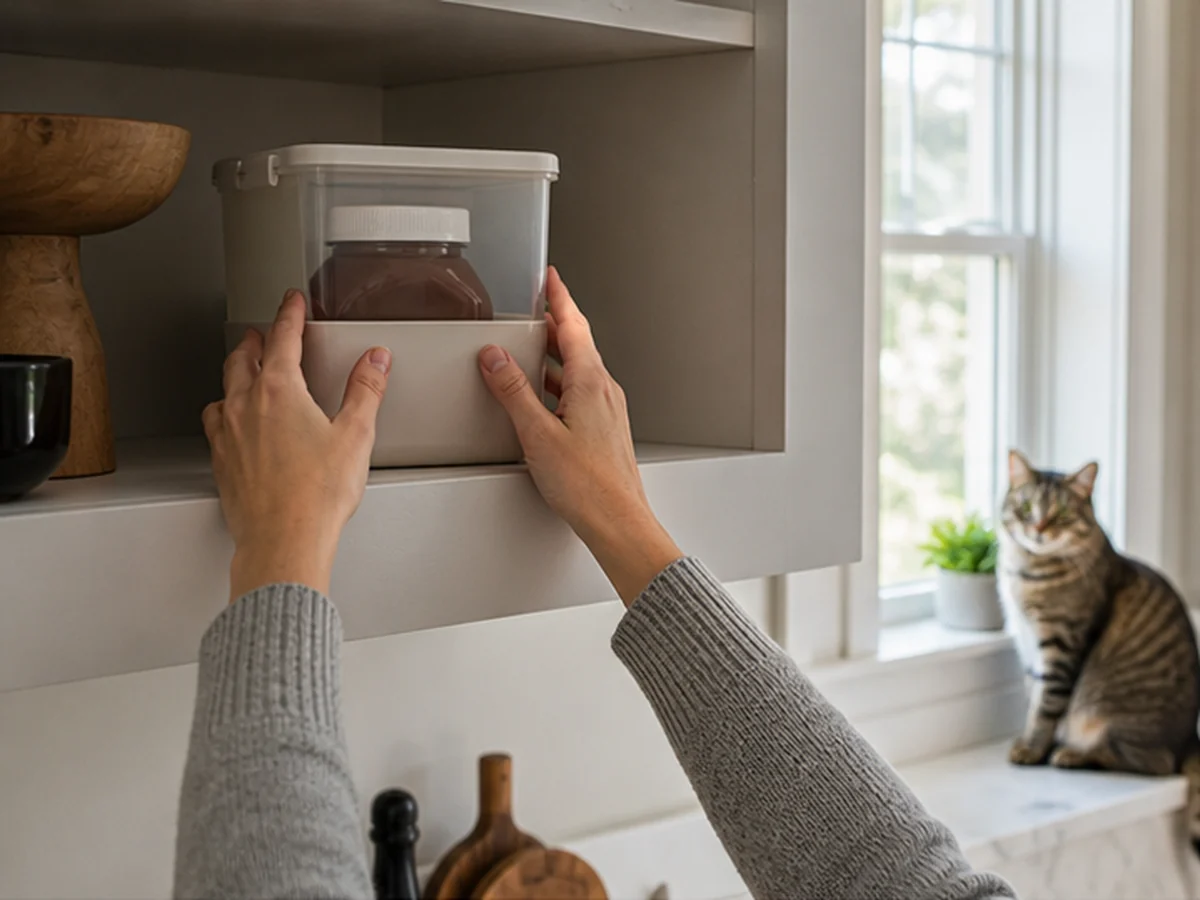
Wipe knives immediately, close the lid, and return the jar to a high closed cabinet rather than the counter. High alone is not a security system for a determined cat.
Put foil seals, single-serve packets, pastry paper, and broken containers into lidded trash. Clean drips from floors and chair legs before releasing the kitchen inspector.
Offer part of the cat’s daily ration in a puzzle feeder during breakfast. The shared ritual survives without chocolate.
FAQ
Will one lick of Nutella poison a cat?
A tiny lick may not cause serious illness, but cocoa exposure depends on product, amount, and cat size. Call for an uncertain amount or any symptoms.
Is Nutella safer than dark chocolate?
It is usually less cocoa-concentrated than dark chocolate, but it still contains cocoa plus fat and sugar. Product-specific assessment is required.
What if the spread was sugar-free?
Save the label and identify the sweetener. Do not transfer dog xylitol certainty to cats, but call because cocoa and other ingredients still matter.
Are hazelnuts the dangerous part?
Plain hazelnuts are not established feline poisons, although whole nuts can choke. In chocolate-hazelnut spread, cocoa and the full formula are the primary concerns.
Bottom line
Cats should not eat Nutella or similar spreads. Cocoa drives toxicology, while amount, cat size, fat, sugar, dairy, label variation, specialty sweeteners, coffee, foil, plastic, and glass determine the complete response.