Can Cats Have Bone Broth? Labels, Bones, Sodium, and Claims
Cats may have a small amount of plain, cat-appropriate bone broth, but the label must be free of onion, garlic, excessive sodium, and bone fragments. Broth is not a complete meal, a dehydration treatment, or a proven cure for joints, kidneys, digestion, immunity, or appetite.
The word bone tells you how it was made, not whether it suits a cat
Bone broth is usually produced by simmering bones and connective tissue for an extended period, often with meat scraps, vegetables, herbs, acid, and salt. A clear brown liquid can therefore conceal ingredients that matter more than the bones named on the front.
| Broth on hand | What to verify |
| Human boxed broth | Onion, garlic, salt, flavor blends, serving size |
| Pet-labeled topper | Species, adequacy statement, directions, lot |
| Homemade pot | Every bone, vegetable, seasoning, cooking step |
| Concentrate or powder | Dilution, sodium, Allium powders |
| Frozen cube | Recipe identity, freezer date, choking and temperature |
| Restaurant broth | Stock base, bouillon, pan drippings, garnish |
Do not rely on organic, natural, ancestral, collagen-rich, low sodium, or human grade as a safety shortcut. Turn the container around, read the current ingredient list and nutrition panel, and keep the batch or lot number.
Alliums can disappear into a perfectly smooth liquid
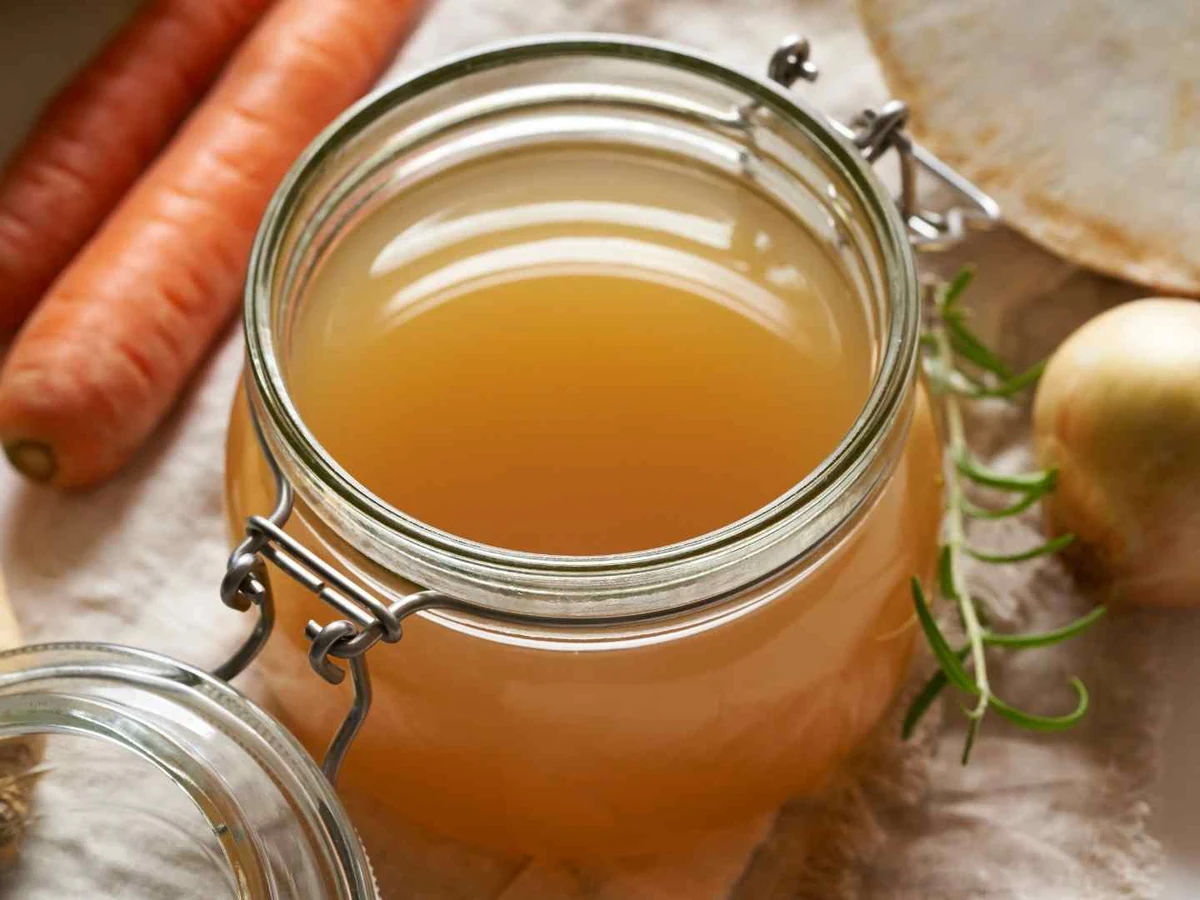
Onion, garlic, leek, scallion, and chive are common stock ingredients, while powders and concentrates distribute throughout the pot. Straining removes chunks but not the dissolved compounds that can damage feline red blood cells.
The Merck Veterinary Manual Allium review identifies cats as particularly susceptible and explains that signs of anemia may be delayed for days. Weakness, pale or yellow gums, rapid breathing, appetite loss, dark urine, or collapse after a credible exposure needs urgent care.
Use the site’s onion article when the recipe is known, and call promptly rather than waiting for a delayed symptom checklist to complete itself. Home vomiting is unsafe unless a veterinarian performs or specifically directs appropriate treatment.
Low sodium is a comparison claim, not a feline prescription
Human Nutrition Facts panels express sodium per labeled serving, which may be a cup even when the cat drank only a spoonful. Concentrates, bouillon, powders, and reduced products also require the stated dilution before numbers mean anything.
FDA explains that nutrient-content terms such as low and reduced have regulated meanings for human foods. Those labels do not establish suitability for a cat with kidney, heart, urinary, blood-pressure, or sodium-managed disease.
A small plain taste is different from an overturned carton. Marked thirst, repeated vomiting, diarrhea, weakness, poor coordination, tremors, or seizures after a substantial salty exposure warrants immediate veterinary advice.
The bones belong in the bin, not the bowl
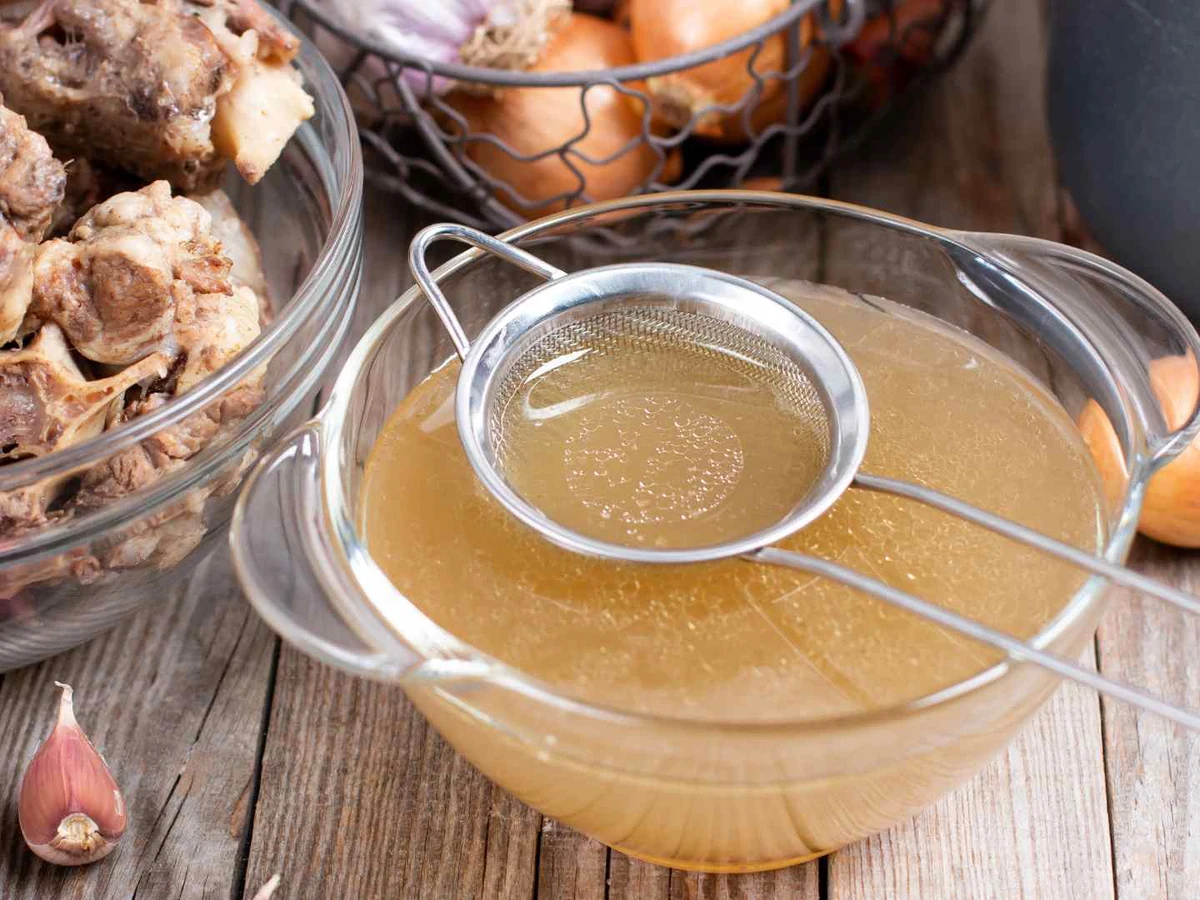
Cooked bones can splinter, and raw bones can fracture teeth, choke, obstruct, or carry pathogens. Long simmering does not guarantee that every pin-like fragment, joint chip, or gritty particle has vanished from homemade broth.
Strain through an appropriate fine filter, inspect the liquid under good light, and discard the solids securely. The site’s lamb-bone guide covers raw and cooked bone hazards without claiming stomach acid makes either form reliably safe.
Gagging, repeated swallowing, mouth pawing, blood, vomiting, abdominal pain, reduced stool, or food refusal after possible bone exposure deserves prompt assessment. Never induce vomiting after a sharp-object concern or sweep blindly through an alert cat’s mouth.
Homemade broth starts with kitchen discipline
A cat-only batch should use plain ingredients chosen with the veterinarian, clean equipment, safe refrigeration, and no seasoning by habit. Remove string, absorbent meat pads, clips, labels, skewers, thermometer covers, and plastic wrap from the work area.
Keep raw meat and bones away from ready-to-eat food, wash hands and surfaces, and chill finished liquid promptly in shallow covered containers. A slow cooker on a trailing cord creates a burn and spill hazard long before the broth is ready.
Do not leave a stockpot cooling on the counter while the cat investigates the lid. Hot fat floating on top can burn the mouth and paws, while a tipped heavy pot can cause serious injury.
Acid in the recipe does not make bones dissolve on command
Some recipes add vinegar or lemon juice with claims that acid extracts minerals or makes bone residue safe. Household cooking conditions vary, and acidity does not certify that every sharp fragment has disappeared.
An acidic broth may also irritate a sensitive stomach and can introduce citrus ingredients or flavored vinegar. Do not add more acid, calcium powder, eggshell, or mineral supplement to improve a homemade recipe by guesswork.
Fat is visible sometimes, hidden other times
Chilled broth may form a fat cap that can be removed for human cooking, yet some fat remains emulsified in the liquid. Greasy broth can cause vomiting or diarrhea and adds calories quickly for a small animal.
One fatty lick does not prove pancreatitis, and readers should not be told that it does. Cats with previous pancreatic disease, obesity, diabetes, or fat-sensitive digestive illness should receive only veterinarian-approved extras.
Collagen language outruns the feline evidence
Bone broth contains proteins and peptides derived from connective tissue, but product composition varies with species, bone type, time, water, and processing. A collagen statement on a human package does not prove a clinical effect in cats.
Do not promise improved joints, coat, gut lining, immunity, liver function, or recovery from illness. FDA notes that animal-food claims to cure, treat, prevent, or mitigate disease can change a product’s regulatory status, as explained in its pet-food claims guidance.
Broth is flavoring, not fluid therapy
A teaspoon of suitable broth may entice some cats to approach food or water, but drinking flavored liquid does not reveal whether dehydration, kidney disease, diabetes, vomiting, diarrhea, fever, dental pain, or urinary trouble is present. The cause matters.
Cornell’s feline hydration resource recommends fresh accessible water and explains that clinical dehydration may require intravenous or subcutaneous fluids. Broth cannot safely replace a veterinarian’s electrolyte and fluid plan.
Dry gums, weakness, sunken eyes, poor appetite, repeated vomiting, or suspected dehydration merits a call. A male cat straining with little or no urine has an emergency, not a broth-selection problem.
Pet broth and human broth use different label clues
A pet topper should name the intended species, ingredients, feeding directions, manufacturer, and whether it is a treat or nutritionally complete food. A human carton instead uses Nutrition Facts and human serving sizes.
FDA’s complete-and-balanced explanation shows why a supplement or topper cannot silently take over the meal. Most bone broths lack the full feline nutrient pattern required for long-term feeding.
Chicken, beef, pork, fish, and mixed bones are not nutritionally identical
Source species changes flavor, allergy-trial compatibility, fat, and the likely kitchen ingredients, while a mixed-bone product may not suit a controlled novel-protein diet. A generic bone broth label should identify animal sources clearly enough for the cat’s medical plan.
The beef broth guide helps with cattle-based cartons, while the chicken broth guide focuses on poultry recipes. Neither should be used to approve an unidentified restaurant stock.
Powders and concentrates make measuring important
A scoop of powdered broth or a spoonful of concentrate may represent several prepared servings and can puff into eyes and airways. Read dilution directions, close the container before cleanup, and move the cat away from airborne dust.
Persistent coughing, wheezing, eye pain, open-mouth breathing, or blue-gray gums after a powder spill is urgent. Do not pour water into the nose or mouth, and ask before cleaning a heavily coated coat that the cat will groom.
Freezing helps portioning, not indefinite safety
An ice-cube tray can create small portions, but every cube needs a known recipe and date. Frozen broth can crack a tooth or be gulped whole, so thaw it in a covered container and serve only a cooled liquid amount.
Discard freezer-burned, leaking, mislabeled, repeatedly thawed, moldy, or oddly smelling broth. A mystery brown cube is not a charming surprise for either the cook or the cat.
Medication use requires a pharmacist-level question
Broth can disguise a tablet, but some drugs require fasting, specific food timing, or a reliable complete dose. A cat may drink around medicine sediment and leave the amount administered uncertain.
Ask the prescribing clinic whether that exact broth and volume are compatible, and never dissolve a modified-release or hazardous tablet without permission. If another pet finishes medicated broth, report the drug, strength, missing amount, time, and both animals’ weights.
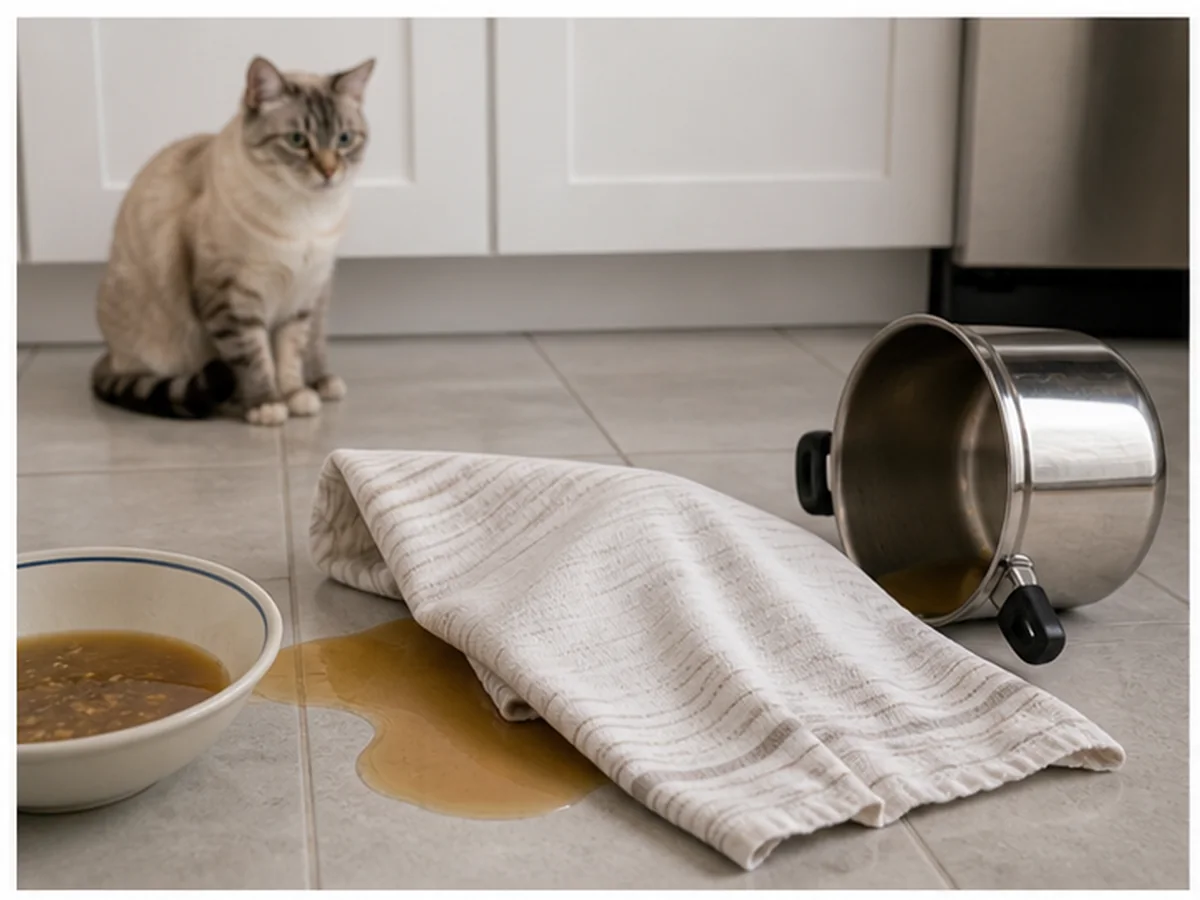
The broth-spill response
- Move the cat from liquid, bones, hot cookware, powder, packages, strings, and trash.
- Identify species, human or pet label, every ingredient, sodium, dilution, amount, temperature, and storage history.
- Record time, weight, conditions, medications, possible objects, and current signs.
- Call for Alliums, bones, concentrated salty product, spoilage, vulnerable cats, unknown amount, or symptoms.
- Use normal food and fresh water only as directed, and do not improvise vomiting, supplements, or rehydration therapy.
Frequently asked questions
Can cats drink store-bought bone broth?
Only a small amount of a verified cat-appropriate product may fit as an occasional topper. Skip cartons containing onion, garlic, excessive sodium, unsuitable flavorings, or unclear animal sources.
Is homemade bone broth automatically safer?
No. The cook controls the ingredients but also carries responsibility for bone removal, sanitation, chilling, storage, fat, and nutritional restraint.
Can bone broth treat dehydration or kidney disease?
It is not fluid therapy or a kidney treatment, and sodium or mineral content may be unsuitable for an individual patient. Dehydration and kidney disease require veterinary evaluation.
What if my cat drank broth made with onion?
Phone the veterinary team or an animal poison service promptly and have the full recipe, swallowed volume, timing, and body weight ready. Allium-related anemia can be delayed, so early advice matters even when the cat looks normal.
Bottom line
A little verified plain bone broth can function as flavor, but smooth liquid can hide Alliums, sodium, fat, fragments, and unsupported medical promises. Keep complete cat food as the nutritional foundation and let a veterinarian handle dehydration, disease, supplements, and recurring appetite loss.