Can Dogs Eat French Fries? One Fry, Large Servings, and Seasonings
One plain dropped French fry is unlikely to poison most healthy dogs, but fries are a poor routine treat. The potato is usually not the main problem; frying fat, salt, seasoning, rich toppings, portion size, and wrappers are what turn a stolen nibble into a veterinary question.
Start with what actually disappeared
- One ordinary plain fry: usually a monitor-at-home event for a healthy adult dog.
- A large order or fryer basket: call because fat, salt, calories, and quantity all matter.
- Seasoned, loaded, or dipping-sauce-covered fries: identify every ingredient.
- Green, sprouted, raw, or undercooked potato pieces: contact a veterinarian or poison-control service.
- Missing carton, foil, plastic cup, skewer, or sauce packet: include the object in the risk assessment.
This is a dose-and-recipe problem, not a reason to label every potato crumb toxic. A lick of salt from one fry and a dog emptying a family-size takeout bag are not medically equivalent.
The cooked potato is only one part of a fry
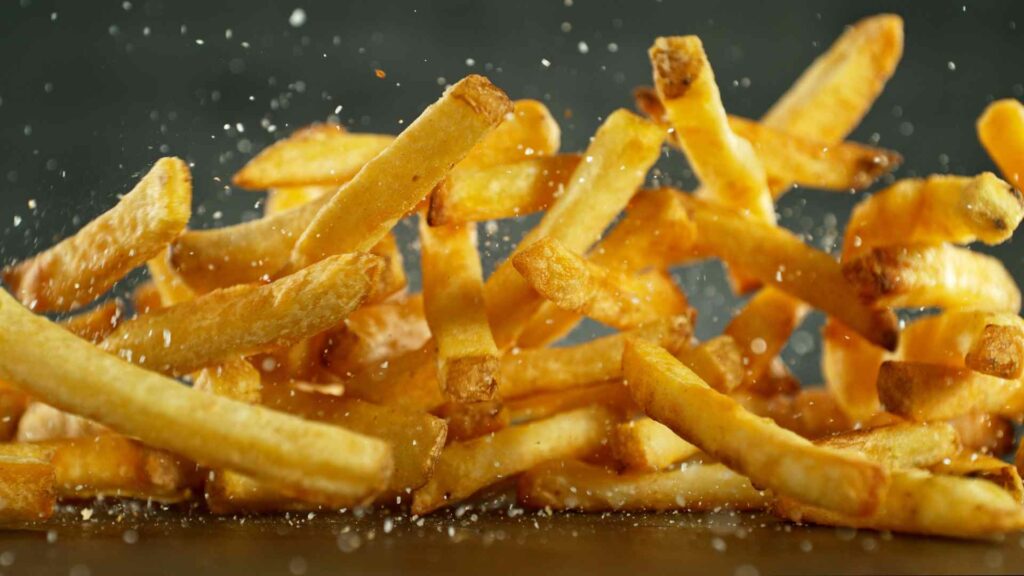
The ASPCA garden-safety guidance distinguishes cooked potatoes, which can be offered in moderation, from raw potatoes and problematic plant material. Standard fries are generally made from mature potato tubers that have been cooked.
That does not make fries a wholesome vegetable serving. Deep-frying adds substantial energy and fat, while restaurant and frozen products can add starch coatings, dextrose, salt, flavorings, preservatives, and shared-fryer residues.
Green potato and sprouts are a different exposure
Potatoes belong to the nightshade family, and green skin, sprouts, leaves, and stems can contain higher concentrations of glycoalkaloids such as solanine. Cooking is not a reliable permission slip for visibly green or sprouted potato material.
Do not cut away a green corner and save the rest for the dog. If a dog eats green tuber pieces, sprouts, leaves, or a potato plant, save a sample or photograph and call for case-specific advice.
Possible signs include drooling, vomiting, diarrhea, abdominal discomfort, weakness, confusion, or abnormal heart rate. The absence of green color in an ordinary cooked fry makes this particular plant-toxin scenario much less likely.
Fat is the everyday reason to skip the order
A single fry contains little fat in absolute terms, so it does not guarantee pancreatitis. A large greasy meal can cause vomiting or diarrhea and is especially unsuitable for a dog with previous pancreatitis, high blood triglycerides, obesity, diabetes, or a prescribed low-fat diet.
The Merck Veterinary Manual dog guide to pancreatitis identifies large amounts of table scraps or other inappropriate food as a suspected risk factor and notes that low-fat food is used in affected dogs. It also makes clear that pancreatitis has multiple possible risk factors, so one fry is not a diagnosis.
Repeated vomiting, a painful or tense abdomen, a hunched or prayer-like posture, refusal to eat, marked lethargy, weakness, or dehydration needs veterinary attention. Do not try to settle significant abdominal pain with another meal.
Salt deserves proportion, not panic
Salt makes fries unsuitable as a regular reward and can worsen the fit for dogs with heart, kidney, blood-pressure, or fluid-balance conditions. Still, the salt on one standard fry is not the same exposure as eating rock salt, salt dough, brine, or a concentrated seasoning container.
The Merck Veterinary Manual salt-toxicosis review explains that acute excess sodium is especially dangerous when water is limited. Signs can progress from vomiting and diarrhea to weakness, loss of coordination, tremors, and seizures.
Keep normal fresh water available after a minor fry theft, but do not force large volumes into a dog or improvise electrolyte treatment. A dog that ate a very salty product, cannot access water, or develops neurologic signs needs immediate professional guidance because sodium correction must be controlled.
Seasoning can matter more than salt
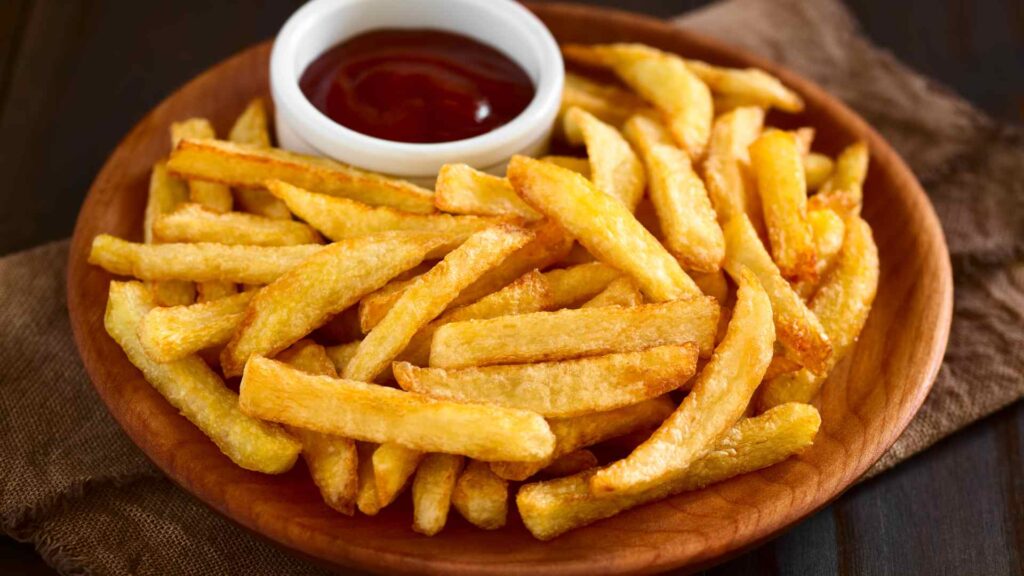
Garlic-parmesan fries, ranch fries, barbecue fries, Cajun fries, truffle fries, curly fries, and seasoned wedges may contain onion or garlic powder. Those powders can be concentrated, and cooking does not remove the Allium risk.
Use our garlic guide and onion guide to collect the product, amount, time, and dog’s weight. Red blood cell damage can produce delayed weakness, pale gums, rapid breathing, or dark urine, so do not wait for symptoms after a meaningful exposure.
Pepper, chili powder, hot sauce, and spicy coatings are more likely to irritate the mouth and gastrointestinal tract than to create a special canine flavor adventure. Heavy spice can cause drooling, pawing at the mouth, vomiting, diarrhea, and obvious discomfort.
Dips and loaded fries need their own ingredient check
Plain ketchup is not automatically poisonous, but it adds sugar, salt, vinegar, and seasonings, and sugar-free versions require a sweetener check. Mustard, barbecue sauce, ranch, aioli, and cheese sauce have different formulas and may contain onion, garlic, fat, alcohol, or xylitol.
Loaded fries add cheese, bacon, chili, gravy, sour cream, scallions, jalapeños, or pulled meat. A dog that empties this tray has eaten a rich mixed meal, not merely potato.
Our bacon guide covers its salt and fat, while the cheese guide separates a small plain piece from rich sauces and lactose concerns. Keep the restaurant listing or package instead of guessing from appearance.
Fast-food, frozen, homemade, and air-fried fries
Fast-food fries
Recipes differ by chain, country, supplier, and fryer practice. Check the current allergen and ingredient information if more than a token amount was eaten, and remember that the carton or dipping cup can be the bigger obstruction risk.
Frozen fries
A bag may contain oil, salt, starch coating, onion powder, garlic powder, dextrose, or flavored seasoning even before cooking. Frozen fries are hard enough to be a choking concern for a small dog, and a swallowed plastic bag needs prompt assessment.
Homemade fries
You control the recipe, but oil and calories remain after frying. A soft piece of plain baked mature potato is easier to portion than a crisp strip, though it still belongs in the treat allowance.
Air-fried or oven-baked fries
Less oil may make them less rich, but it does not erase salt, coatings, seasonings, or portion size. The cooking appliance does not transform fries into a balanced dog food.
Sweet potato fries
Sweet potatoes are botanically different from white potatoes, but restaurant versions are still fried, salted, and sometimes sugared or spiced. Plain fully cooked sweet potato in a small soft piece is a separate choice from a commercial fry.
Calories add up faster than the begging act suggests
The UC Davis veterinary treat guideline recommends that all treats and extras remain below 10 percent of daily calories, with at least 90 percent coming from a complete and balanced diet. A few fries can consume a meaningful share of that allowance for a small dog.
Fries are easy to hand over without counting because they arrive in a pile. If several people share one each, the dog may receive a small meal of oil, starch, and salt before anyone notices.
Dogs with obesity need measured calories, not a vaguely healthier fried snack. Replace the ritual with a piece of normal kibble, a veterinarian-approved low-calorie treat, or attention that does not come from the takeout bag.
Choking, hot oil, and packaging are practical hazards
A long limp fry can be swallowed whole, while a hard frozen fry can lodge in a small dog’s throat. Cut permitted alternatives into bite-size pieces and supervise instead of encouraging a dramatic midair catch.
Fresh fries can burn the mouth, and spilled fryer oil can cause severe burns or a massive fat exposure. Keep dogs out of the cooking area and never pour used oil where an animal can lick it.
Paper cartons often pass, but grease-soaked paper can wad up, and plastic cups, foil liners, skewers, sauce lids, and bags can obstruct or injure the digestive tract. Missing packaging plus vomiting, retching, abdominal pain, or appetite loss is a reason to call.
What to do after a fry theft
- Remove access and count what remains rather than relying on the dog’s innocent expression.
- Identify plain versus seasoned, white versus sweet potato, cooked versus frozen, and every dip or topping.
- Find the ingredient list and record the amount, time, dog’s weight, symptoms, and relevant medical conditions.
- Check for green potato, onion, garlic, xylitol, extreme salt, alcohol, hot oil, and missing packaging.
- Call for a large amount, risky ingredients, swallowed objects, a medically vulnerable dog, or any significant symptoms.
For one plain dropped fry eaten by a comfortable healthy adult dog, remove the rest, provide normal access to water, and monitor. Return to the regular diet rather than serving a compensatory homemade meal.
Do not induce vomiting with salt, peroxide, fingers, mustard, or another home method unless a veterinary professional specifically directs it. The right response depends on the ingredients, timing, symptoms, and aspiration risk.
Frequently asked questions
Are French fries toxic to dogs?
Ordinary fries are not a blanket toxin, but their fat, salt, calories, seasonings, and portions make them a poor treat. Green potato material and toxic seasonings are separate hazards.
Will one fry cause pancreatitis?
One fry is unlikely to cause illness in most healthy dogs and does not guarantee pancreatitis. Dogs with prior pancreatitis or a low-fat prescription need stricter avoidance.
Can dogs eat unsalted fries?
Removing salt addresses only one issue; the fry still contains oil and calories. A small piece of plain baked potato offers more control.
Should I give water after salty fries?
Keep normal fresh water available after a minor exposure, but do not force water. Call immediately for a very salty ingestion or neurologic signs.
The bottom line
One plain dropped fry is usually a small dietary mistake, not a poisoning crisis. A large, heavily salted, seasoned, loaded, or packaged meal deserves a closer look and sometimes a prompt veterinary call.
Skip fries as a routine reward, read the whole recipe, and keep the trash secured. Potato is only the opening ingredient in this story; fat, sodium, seasoning, quantity, and objects write the ending.