Can Dogs Eat Sweet Potatoes? Safe Prep and Portions
Yes, most healthy dogs can eat a little plain, fully cooked sweet potato. Peel it when the skin is tough, cook the flesh until soft, and mash or cut it into small pieces; raw chunks, oversized pieces, fries, pies, and holiday casseroles are poor choices because preparation and added ingredients change the risk.
The safest version is pleasantly boring
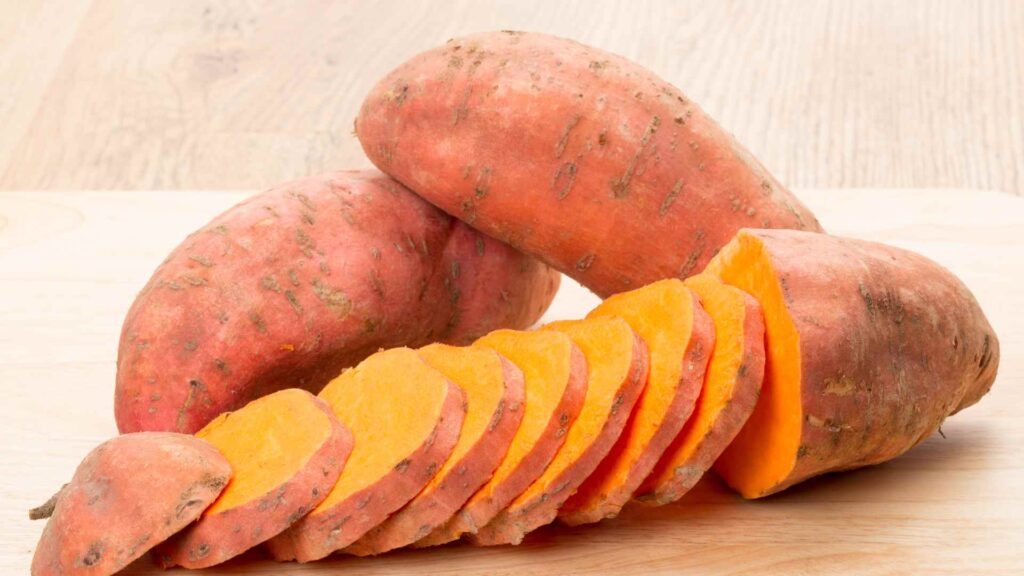
Plain boiled, steamed, baked, or microwaved sweet potato can be an occasional treat after it cools. The flesh should be soft enough to mash easily with a fork and served without butter, oil, salt, sugar, syrup, or spice.
Sweet potatoes are not the same plant as white potatoes, and they do not carry the same green-potato glycoalkaloid concern. Their main practical hazards are hard raw pieces, tough skin, excessive portions, and the rich or unsafe ingredients often added to human recipes.
The veterinarian-reviewed PetMD sweet potato guide likewise recommends fully cooked, plain sweet potato in moderation. That is a treat recommendation, not a prescription to add it to every meal.
What sweet potato can and cannot do
Sweet potato contains carbohydrate, fiber, and several micronutrients, including beta-carotene. Those facts describe the food, but they do not prove that a few spoonfuls will fix constipation, strengthen immunity, brighten a coat, improve eyesight, settle every stomach, or treat disease.
A dog eating a complete and balanced food already receives nutrients in amounts formulated for its life stage. Adding a concentrated source of one nutrient without considering the whole diet is not automatically beneficial, and more is not always better.
The honest appeal is simpler: many dogs enjoy the mild sweetness and soft texture. A small amount can provide variety or help fill a food toy, while a dog who dislikes it is not missing an essential snack.
Why raw chunks are the wrong shape and texture
Raw sweet potato is dense, hard, and fibrous. A large chunk can be difficult to chew, may lodge in the throat, and may move through the digestive tract poorly, particularly in a small dog or a determined gulper.
The Merck Veterinary Manual’s obstruction overview explains that swallowed foreign material can cause vomiting, appetite loss, abdominal pain, lethargy, and other serious signs. Some obstructions require endoscopy or surgery, which is a large price for a vegetable raid.
Cooking softens the structure but does not make size irrelevant. Cut cooked sweet potato into pieces suitable for the dog’s mouth, or mash it, and supervise the snack instead of handing over an entire cooked tuber.
Does the skin have to come off?
Sweet potato skin is not considered inherently poisonous, but it can remain chewy and fibrous even after cooking. Peeling is the conservative choice for puppies, toy breeds, seniors with poor teeth, dogs who gulp, and pets with sensitive digestion.
If a healthy dog gets a tiny bit of well-washed, thoroughly cooked skin, that is usually less concerning than a thick strip or a raw peel. Never feed spoiled, moldy, or badly damaged skin, and remove any hard ends before serving.
How to prepare sweet potato step by step
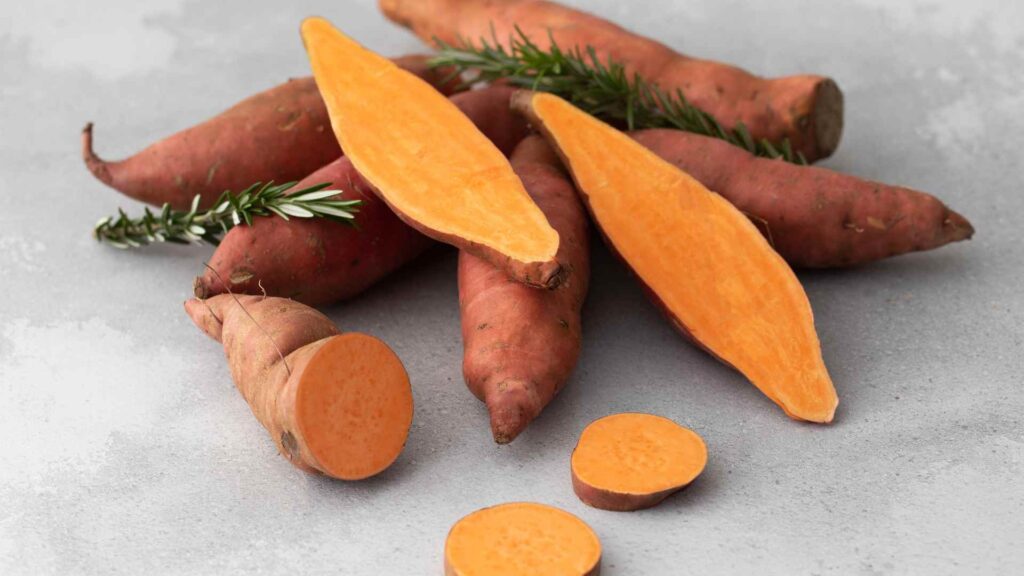
1. Choose a firm, sound sweet potato
Discard one that is moldy, rotten, leaking, or badly damaged. A little surface dirt is a washing job, while decay is a reason to use the compost bin rather than the dog bowl.
2. Wash, trim, and consider peeling
Scrub it under running water, trim off both ends and any damaged areas, then peel if the skin is thick or the dog is at higher choking or digestive risk. Do this before cooking so no tough strips disappear into the mash unnoticed.
3. Cook until completely soft
Boil, steam, bake, or microwave without seasonings until a fork passes through easily. Avoid frying, and let the sweet potato cool all the way through because dense pieces can stay surprisingly hot in the center.
4. Mash or cut it small
Mashing is useful for a food topper or lick mat, while small soft cubes work as treats. Do not freeze large chunks for chewing, since freezing turns a soft food into a hard object that can challenge teeth and invite gulping.
5. Introduce one bite
Start with a tiny amount and wait for the dog’s response. Too much unfamiliar fiber can cause gas, loose stool, vomiting, or abdominal discomfort, even when the ingredient itself is dog-safe.
How much is a sensible portion?
There is no universal tablespoon chart that accounts for every dog’s calories, health, body condition, regular food, and other treats. A taste-sized amount is enough: begin with a teaspoon or less for a small dog and a small bite or spoonful for a larger dog, then stop well before it resembles a side dish.
The UC Davis School of Veterinary Medicine treat guidance recommends that 90 percent or more of calories come from a complete and balanced diet. All extras share the remaining allowance, including chews, training rewards, table scraps, and sweet potato.
That limit protects nutrient balance, but it does not mean every dog should receive the full 10 percent as treats. Dogs losing weight, eating a therapeutic diet, or managing diabetes may need a smaller allowance or a different snack entirely.
Sweet potato fries, chips, and dried chews
Restaurant fries and packaged chips are typically oily, salty, and calorie-dense. They may also carry onion, garlic, chili, cheese powder, or other seasonings, so they are not the same food as a plain cooked cube.
A single dropped unseasoned fry is unlikely to poison a healthy dog, but intentionally serving fries adds avoidable fat and salt. Repeated rich snacks can cause gastrointestinal upset and are an especially poor choice for dogs with pancreatitis or a history of it.
Dried sweet potato chews look simple, yet drying concentrates calories and creates a tough strip that may be swallowed in a large piece. Choose a product sized for the dog, supervise closely, and take it away when the remaining piece becomes gulpable.
Check commercial treat labels for added sweeteners and flavorings, and remember that “natural” does not describe chewing safety. Dogs who bolt chews or have a history of gastrointestinal foreign bodies need a different enrichment option.
Why pies and casseroles stay on the human table
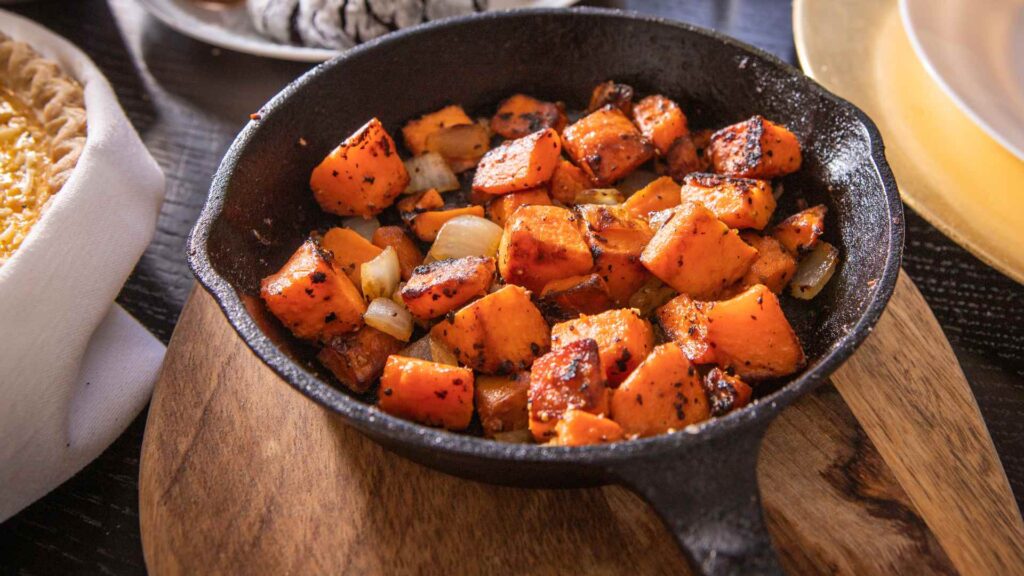
Sweet potato pie can contain butter, cream, sugar, pastry, and a heavy spice blend. A casserole may add marshmallows, brown sugar, syrup, pecans, butter, salt, or a crumb topping, turning a plain root into a rich dessert.
These dishes are not automatically an emergency after one tiny lick, but the recipe matters. Sugar and fat can trigger digestive upset, while pecans and other fatty additions can bring mold or pancreatitis concerns depending on the product and amount.
Check carefully for xylitol, sometimes labeled birch sugar, in sugar-free toppings or baked goods. The FDA’s pet hazard guide explains that xylitol can cause dangerously low blood sugar and liver injury in dogs, so any suspected exposure needs an immediate call to a veterinarian or animal poison service.
Onion and garlic are more likely in savory mashed sweet potatoes, soups, or fries than in dessert. Powders count too, and the full ingredient list is more informative than the dish’s friendly orange color.
Dogs who need a personalized answer
Dogs with diabetes: Sweet potato is a carbohydrate and can affect blood glucose. Do not add it to a diabetic dog’s meals or medication routine without the treating veterinarian’s approval.
Dogs on prescription or elimination diets: An unapproved topper can change nutrient targets or invalidate a food trial. Ask before adding even a plain ingredient that appears in many commercial foods.
Dogs prone to pancreatitis: Plain sweet potato is not notably fatty, but fries, butter, cream, oils, pies, and casseroles are. Keep the prepared dishes away and follow the dog’s prescribed dietary plan.
Dogs with chronic digestive disease: Fiber is not universally soothing and can worsen some conditions. Let the veterinary team decide whether sweet potato belongs in the management plan instead of using it as an at-home digestive treatment.
Puppies and small dogs: Their mouths and calorie budgets are small, so portions should be tiny and very soft. Growing puppies need balanced puppy food to do the nutritional heavy lifting.
What if your dog ate a raw chunk or a whole dish?
Identify what disappeared, how much, when, and whether packaging or a utensil is also missing. For a recipe, keep the label or ingredient list and look specifically for xylitol, onion, garlic, raisins, chocolate, macadamia nuts, alcohol, excessive fat, and excessive salt.
Seek urgent veterinary care for choking, trouble breathing, repeated retching, repeated vomiting, a painful or swollen abdomen, marked weakness, tremors, seizures, collapse, or an inability to keep water down. A large raw chunk swallowed by a small dog also deserves a prompt call even before symptoms appear.
If a healthy dog ate a small amount of plain cooked sweet potato and remains normal, monitor for gas, vomiting, or diarrhea and skip more treats that day. Call the clinic if signs persist, worsen, or involve a very young, elderly, or medically fragile dog.
Do not induce vomiting or give salt, hydrogen peroxide, oil, or another home remedy unless a veterinary professional directs you. The right response depends on the ingredient, amount, timing, and individual dog.
Simple serving ideas
Spread a thin smear of cooled mash on a lick mat, tuck a teaspoon into a familiar food toy, or use tiny soft cubes as occasional rewards. Refrigerate leftovers promptly and discard them if they smell sour, grow mold, or have sat out too long.
For vegetable variety, compare the preparation rules for carrots, green beans, and spinach. Introduce one new extra at a time so a digestive reaction has an obvious suspect.
Frequently asked questions
Can dogs eat canned sweet potatoes?
Plain canned sweet potato with no added salt, sugar, syrup, spice, or sweetener can be used in a small amount after checking the label. Products packed in syrup or pie filling are dessert ingredients, not dog treats.
Can dogs eat purple or white sweet potatoes?
Yes, the same safety rules apply to common sweet potato colors. Cook thoroughly, remove tough skin, serve plain, cut small, and introduce only a little.
Can sweet potato replace a bland diet?
Not without veterinary direction. Vomiting and diarrhea have many causes, and an improvised sweet potato diet is neither complete nor guaranteed to suit the problem.
The bottom line
Plain, fully cooked sweet potato can be a safe occasional treat for many healthy dogs. Keep it soft, small, unseasoned, and modest, with tough skin and raw chunks kept out of reach.
Skip fries, pies, casseroles, and sugary or fatty preparations, and check every recipe after a food raid. For diabetes, chronic digestive disease, prescription diets, or a history of pancreatitis, ask the dog’s veterinary team before adding it.