Can Dogs Have Tomato Soup? Labels, Alliums, Salt, and Heat
A tiny lick of ordinary tomato soup is often a minor event, but a bowl is not a suitable dog meal. Commercial and homemade soups frequently contain onion, garlic, sodium, cream, fat, sugar, seasonings, hot liquid, and packaging, so the exact label or recipe determines whether monitoring is enough.
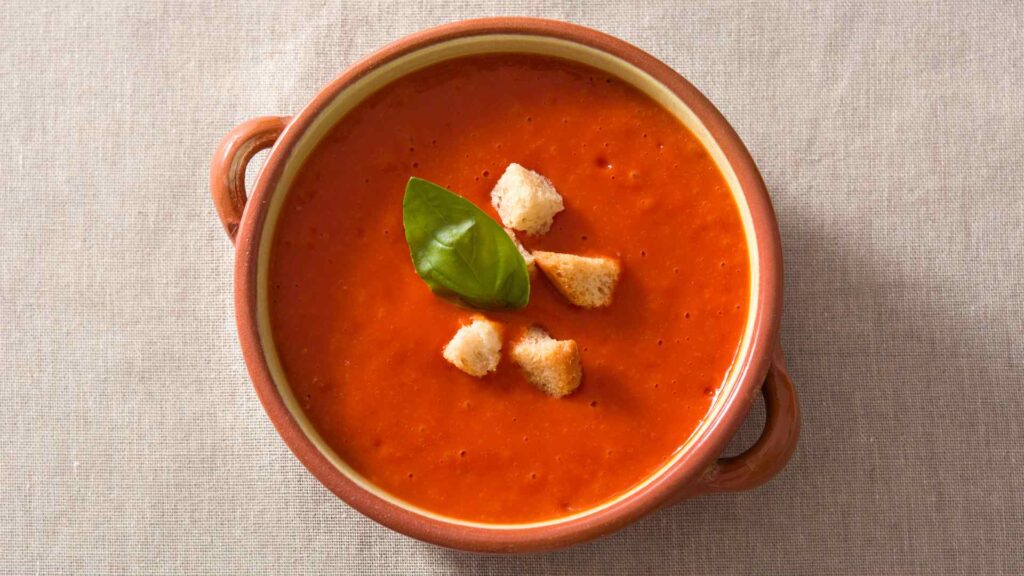
Tomato soup is a recipe, not one ingredient
Canned condensed soup, ready-to-eat cartons, restaurant bisque, homemade soup, powdered mix, and low-sodium products can have very different ingredients and concentrations. Save the label or recipe.
Ripe tomato pulp is often not the central risk. Onion, garlic, broth, salt, cream, butter, cheese, sweetener, alcohol, and spicy garnish commonly deserve more attention.
One lick from a cooled spoon differs from drinking a bowl of concentrate or soup mixed with milk. Estimate volume, dilution, time, and dog weight before calling.
Onion and garlic are common hidden hazards
Onion and garlic may appear as fresh pieces, puree, powder, flavoring, stock, broth, bouillon, or seasoning blend. Cooking does not make Alliums safe for dogs.
Merck’s Allium toxicosis guide explains that these plants can damage red blood cells and that signs may be delayed. A normal first hour does not rule out a meaningful exposure.
Use the site’s onion guide for cumulative exposure, powdered products, delayed weakness, pale gums, rapid breathing, and dark urine. Do not use one universal soup dose chart.
Call with the ingredient order, serving size, missing amount, dog weight, and previous Allium exposures. Repeated small servings can matter as well as one obvious raid.
Sodium can be substantial
Soup can concentrate a large amount of sodium in an easy-to-drink volume. Condensed products and powdered mixes are especially difficult to judge after water has or has not been added.
Merck’s salt toxicosis guide explains that excessive sodium is particularly hazardous when fresh water is restricted. Vomiting, diarrhea, depression, tremors, seizures, or abnormal thirst needs urgent advice.
One lick is not automatically salt poisoning, but a missing can of concentrate in a small dog is a different case. Dogs with heart, kidney, or sodium-restricted diets deserve an earlier call.
Leave ordinary fresh water available unless a veterinarian instructs otherwise. Do not force water or try to correct sodium with home electrolyte drinks.

Cream, butter, and rich bisques
Tomato bisque and restaurant soup may include cream, butter, cheese, bacon, or oil. These ingredients add fat and calories, and lactose can cause digestive upset in a dog that tolerates dairy poorly.
The dairy guide separates lactose intolerance from milk-protein allergy and rich-product concerns. Dairy does not make soup calcium therapy.
A large fatty serving is more concerning in a dog with previous pancreatitis or a prescribed low-fat diet. Repeated vomiting, abdominal pain, weakness, dehydration, or refusal to eat warrants veterinary care.
Sugar and sugar-free products
Some soups add sugar to balance acidity, but ordinary sugar is usually a calorie concern rather than a toxin. Do not feed sweet soup for energy or assume organic sugar is different.
Reduced-sugar or specialty soup requires a full sweetener check. Xylitol is uncommon in conventional tomato soup, but label-specific caution is better than claiming it can never appear.
FDA’s xylitol warning advises immediate professional contact after a dog eats a xylitol-containing product. Do not wait for weakness, tremors, seizures, or collapse.
Ripe tomatoes versus green plant parts
Ripe red fruit used in soup is different from green tomatoes, leaves, stems, and tomato-vine material. A garden raid should not be assessed as a bowl of commercial soup.
The ASPCA’s tomato plant entry identifies solanine-related plant risks and lists gastrointestinal upset, weakness, and cardiac effects among possible signs. Photograph the plant and missing material.
The cherry tomato guide explains ripe fruit, green fruit, plant parts, choking, and sauces. It does not make seasoned tomato soup appropriate.

Hot soup can burn
Freshly heated soup can burn the lips, tongue, mouth, and esophagus before ingredients become the main question. Thick soup may hide hotter pockets than the surface suggests.
Persistent drooling, pawing at the mouth, refusal to eat, visible burns, coughing, gagging, or trouble swallowing needs prompt examination. Do not put ice, ointment, numbing gel, or human pain medicine in the mouth.
A dog that knocks a pot over may also sustain skin burns. Cool-water first aid and veterinary guidance depend on burn size, depth, and location.
Cans, cartons, and appliances
Sharp can lids, pull tabs, foil seals, plastic liners, carton caps, soup packets, broken bowls, spoons, and blender parts can cause injury or obstruction. Account for every package component.
Repeated retching, vomiting, abdominal pain, appetite loss, a swollen abdomen, or inability to keep water down can indicate a foreign body. Do not wait for metal or plastic to pass when symptoms appear.
A dog licking a can may cut the tongue or muzzle. Ongoing bleeding, pain, or a suspected swallowed sharp piece needs urgent care.
Leftovers and homemade soup
FDA safe food-handling guidance recommends refrigerating perishables within two hours, or within one hour above 90°F. Cream, meat, and broth increase the importance of prompt cooling.
Store soup in shallow covered containers with the refrigerator at 40°F or below. Discard soup left out overnight, moldy leftovers, leaking cans, and repeatedly warmed portions.
Homemade does not mean plain. Ask for every ingredient, including stock cubes, roasted garlic, onion powder, wine, cream, cheese, hot pepper, and garnishes.
Tomato soup is not hydration or lycopene therapy
Soup contains water, but sodium, seasonings, and calories make it a poor hydration strategy. A dehydrated or vomiting dog needs a cause-based veterinary plan, not a bowl of soup.
Do not serve tomato soup for lycopene, antioxidants, immunity, heart health, or cancer prevention. A complete diet and evidence-based treatment cannot be replaced by one processed human food.
The tomato sauce guide covers similar Allium, sodium, fat, and recipe questions. Soup dilution does not automatically remove those ingredients.
What to do after a soup spill
- Identify canned, condensed, carton, powdered, restaurant, or homemade soup and save the label or recipe.
- Flag onion, garlic, sodium, cream, butter, cheese, xylitol, alcohol, chile, green tomato, and plant material.
- Estimate amount, dilution, temperature, time, dog weight, symptoms, medical conditions, medications, and water access.
- Account for cans, lids, pull tabs, cartons, caps, packets, bowls, glass, spoons, and appliance parts.
- Call promptly for meaningful Allium, concentrate or sodium, burns, dangerous add-ins, significant symptoms, medical restrictions, or missing packaging.
A healthy adult dog that licked one tiny cooled amount and remains comfortable can often be monitored after label review. Keep normal water available and return to the complete diet.
Do not induce vomiting or give salt, oil, charcoal, milk, antacids, electrolyte drinks, or human medicine unless directed. The response depends on ingredients and symptoms.
Reading the nutrition panel in context
Compare sodium and calories with the listed serving size, then estimate how many servings the dog drank. Condensed soup may list the unprepared product or a prepared serving, so read the directions carefully.
Reduced sodium means less than a comparison product, not sodium-free or appropriate for a cardiac prescription. Organic, natural, vegan, and gluten-free claims also do not answer the Allium question.
A carton marketed for children can still contain onion powder, garlic, salt, dairy, and sugar. Front-panel audience or wellness language does not establish canine suitability.
Restaurant and deli soup
Restaurant tomato soup may be finished with butter, cream, pesto, croutons, cheese, chili oil, bacon, or a decorative skewer. Ask for ingredients while keeping the receipt and dish name.
A server may not know every broth or spice-blend component, so uncertainty should be reported honestly. Do not accept no visible onion as proof that powder or stock is absent.
Takeout containers add lids, plastic film, foil, paper liners, and disposable cutlery. Count those items after a raid and look for broken glass or ceramic if a bowl fell.
Special-risk dogs
Puppies, toy breeds, seniors, and dogs with heart, kidney, pancreatic, gastrointestinal, or swallowing disease deserve a lower threshold for advice. The same bowl represents a different dose and physiologic burden in each dog.
Dogs on diabetic, renal, cardiac, low-fat, elimination, or weight-loss diets should not receive soup as a topper. A seemingly plain human food can interfere with calorie, sodium, fat, or ingredient targets.
If a dog is already weak, vomiting, or refusing food, tomato soup is not a gentle recovery meal. Contact the clinic for a diagnostic and feeding plan.
Preventing the next spill
Move hot pots to rear burners, turn handles inward, and do not leave bowls on low tables. Secure cans and trash so sharp lids and food residue are inaccessible.
When using an immersion blender, keep the dog out of the kitchen until the appliance is unplugged and stored. Splashing hot soup and dropped blades create hazards unrelated to nutrition.
Frequently asked questions
Is one lick of tomato soup toxic?
Often not, but inspect the recipe for onion, garlic, sodium, xylitol, rich dairy, and temperature. A lick and a bowl are different exposures.
Can dogs have low-sodium tomato soup?
Low-sodium does not mean low enough for every dog and does not remove Alliums, dairy, sugar, or other seasonings. Read the full label.
Can tomato soup hydrate a dog?
Do not use it for hydration. Keep normal water available and seek veterinary care for dehydration, repeated vomiting, or inability to drink.
The bottom line
A tiny cooled lick may be a minor event, but tomato soup is not a dog meal. Labels and recipes determine the significance of Alliums, sodium, dairy, sugar, and other seasonings.
Account for heat, concentrate, green plant material, cans, and missing packaging. Skip lycopene and hydration claims, and call promptly when ingredients or symptoms raise concern.