Can Cats Eat Marshmallows? Why the Squish Is Not Worth It
Plain sugar marshmallows are not useful cat food, and their sticky, expandable texture makes them a poor treat even when the ingredients are not toxic. One small nibble is usually low risk, but a whole marshmallow, sugar-free product, chocolate coating, cannabis edible, skewer, wrapper, or bag raid deserves closer attention.
Quick response after a marshmallow theft
Take the product away, check the cat’s mouth only if it is safe to do so, and save the package. Count the missing pieces, inspect wrappers and skewers, and record the time, flavor, brand, cat’s weight, medical conditions, and symptoms.
- A tiny bite of a plain standard marshmallow: offer water and observe.
- Coughing, gagging, frantic mouth pawing, blue or pale gums, or breathing difficulty: seek emergency care for possible choking.
- Chocolate, coffee, alcohol, cannabis, medication, or an unknown sweetener: call a veterinarian or animal poison service promptly.
- A stick, wrapper, bag piece, twist tie, or foil packet may be missing: call even if the candy ingredients seem ordinary.
Do not blindly sweep fingers deep into a conscious cat’s mouth, since you can push material farther back or be badly bitten. Do not induce vomiting unless a veterinary professional gives specific instructions.
Why a plain marshmallow is still a bad feline snack
A standard marshmallow is primarily sugar, corn syrup, water, gelatin, and air, with flavoring and starch depending on the product. It offers calories without the protein and balanced nutrient profile cats need.
The Merck Veterinary Manual nutrient guide explains cats’ species-specific requirements. Gelatin being animal-derived does not transform candy into complete meat-based nutrition.
Sticky texture and choking
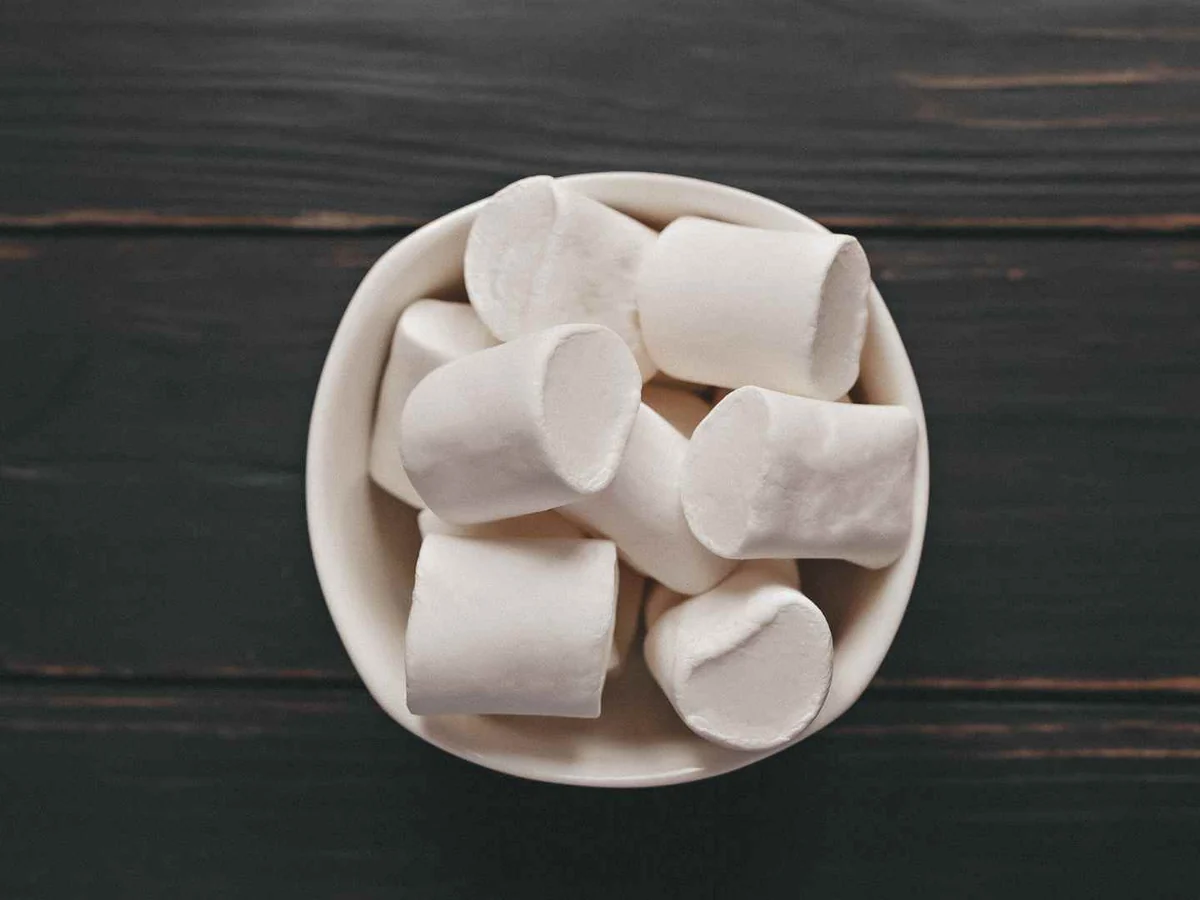
Marshmallows compress, cling, stretch, and become slippery with saliva. A cat may try to gulp a stolen piece before a person retrieves it, which is very different from calmly chewing a tiny crumb.
Mini marshmallows are smaller but not automatically safe, and jumbo roasting marshmallows are an obvious mismatch for a feline mouth. Never toss one for a cat to catch or use a whole piece to hide medication.
Sugar and calories add up quietly
One marshmallow is small by human dessert standards but can be a meaningful extra for a cat. Repeated treats displace balanced food and can interfere with weight-control plans.
Sugar also sticks to teeth, while feline dental disease is common and often painful. Candy does not single-handedly explain every dental problem, but it offers no oral-health advantage.
The Cornell Feline Health Center feeding page recommends complete food appropriate to life stage and restrained treats. Part of the normal ration works better than inventing a candy allowance.
Sugar-free marshmallows require the label
Sugar-free and keto recipes may use sugar alcohols, concentrated sweeteners, protein powders, fibers, or unfamiliar binders. Xylitol is a proven emergency for dogs, while feline evidence is different and less complete.
The FDA xylitol warning shows why the exact ingredient panel matters. After a cat eats a sugar-free product, call with the label rather than assuming that dog-specific evidence makes the entire recipe harmless.
Chocolate-covered and cocoa marshmallows
Chocolate adds methylxanthines, particularly theobromine and caffeine, and darker or more concentrated products generally pose greater concern. Cocoa powder, baking chocolate, fudge coatings, and chocolate chips are more important than a faint artificial flavor.
The Merck chocolate toxicosis review describes vomiting, restlessness, fast heart rate, tremors, seizures, and other signs. Call with the cocoa type, percentage, amount, time, and cat’s weight.
S’mores are a three-part investigation
A s’more combines marshmallow with chocolate and graham cracker, then adds foil, hot surfaces, and sometimes a pointed skewer. Flavored crackers may contain salt, spices, chocolate, or sugar substitutes.
Our guides to chocolate, bread and crackers, ice cream, and honey help separate common dessert components. The skewer and wrapper remain important even when very little food is missing.
Roasting sticks and burns
Wooden or metal skewers can puncture the mouth, esophagus, stomach, or intestine. Never induce vomiting after suspected skewer ingestion, and do not pull an object embedded in the mouth.
Freshly toasted sugar can cause painful burns because it clings to tissue while hot. Drooling, mouth pawing, refusal of food, red or pale patches, or breathing changes after contact warrants urgent assessment.
Wrappers, bags, and twist ties
Plastic bags smell strongly of the product and can be chewed, swallowed, or become a suffocation hazard. Twist ties, clips, foil pouches, and individual wrappers can injure or obstruct.
Count packaging after a raid and search the surrounding floor. Repeated vomiting, appetite loss, abdominal pain, lethargy, straining, or reduced stool can be signs of obstruction.
Homemade marshmallows are not automatically simpler
Recipes may use egg whites, gelatin, corn syrup, honey, flavor extracts, chocolate, coffee, alcohol, fruit concentrate, or cannabis. Raw egg mixtures add food-safety concerns before the candy is fully prepared.
Keep the written recipe and ingredient containers if a cat tastes the mixture. Powdered sugar tracked onto paws can also be groomed off later, so wipe the cat and the floor promptly.
Cannabis and medication-infused candies
Edibles may cause marked sedation, wobbliness, urine dribbling, altered heart rate, unusual vocalization, or other neurologic signs. A product may also contain chocolate, xylitol, or concentrated extracts.
Tell the veterinarian exactly what was present and how much may be missing. Honest product details allow more useful treatment than a generic report of “candy.”
Diabetes and prescribed diets
Do not give marshmallows to a diabetic cat or use them as an improvised response to suspected low blood sugar unless the veterinary team’s written plan says to do so. A weak, trembly, disoriented, seizing, or unresponsive diabetic cat needs urgent help.
Cats on weight-loss, kidney, urinary, gastrointestinal, or allergy diets also benefit from predictable intake. Candy can undermine a carefully measured plan without providing anything the diet lacks.
Kittens and senior cats
A kitten’s tiny airway and strong urge to gulp stolen food make a sticky sweet particularly unsuitable. Growth food should occupy nearly all of that small daily calorie budget.
Senior cats may have dental pain, swallowing trouble, diabetes, or chronic disease that changes the response. Skip the test bite and choose a treat the veterinary team already approves.
Better ways to create a campfire moment
Give the cat a measured commercial treat or a spoonful of regular wet food before people open the candy bag. Keep the cat away from flames, hot skewers, melted sugar, chocolate, and discarded foil.
The FDA complete-and-balanced food explainer helps identify products designed as staple diets. Candy is firmly outside that category, however persuasive the cat’s stare may become.
Watch swallowing, not just stomach signs
After a low-risk nibble, observe whether the cat can swallow normally and is breathing quietly. Repeated gulping, gagging, drooling, coughing, neck stretching, or pawing at the mouth can indicate material caught in the mouth or esophagus.
Do not offer more food to test whether it goes down, and do not pour water into the mouth. A lodged sticky mass needs safe examination, not a second course.
Powdered coatings and kitchen spills
Cornstarch, powdered sugar, cocoa, or flavored dust can spread over paws and fur, then be swallowed during grooming. Move the cat from the room and wipe residue with a damp cloth before sweeping or vacuuming.
Airborne powder can irritate eyes and airways. Persistent coughing, wheezing, open-mouth breathing, squinting, or eye redness after a spill warrants prompt veterinary advice.
Holiday shapes and novelty products
Filled marshmallows, seasonal chicks, cereal treats, sandwich cookies, and hot-cocoa bombs may contain chocolate, coffee, dyes, candy pieces, nut butter, salt, or sugar-free fillings. Novelty packaging can hide several individually wrapped parts.
Read the label from top to bottom and check whether any sachet, plastic tray, or foil is missing. A brightly colored shape is still a multi-ingredient candy, not a pet treat.
Marshmallow cereal treats
Cereal squares add butter or oil, salt, flavoring, chocolate chips, candy, nut spreads, and dense sticky grains. Homemade versions may be cut with toothpicks or wrapped individually for parties.
One crumb is usually a digestive observation, while a large chunk or missing wrap changes the assessment. Save the recipe and estimate the missing dimensions rather than saying only “some.”
Do marshmallows contain dangerous gelatin?
Food-grade gelatin is not the main concern in an ordinary accidental bite. The useful questions are the candy’s size, stickiness, sugar or sweetener, flavor additions, amount, and packaging.
A gelatin allergy or specific dietary restriction can still matter for an individual cat. Do not use gelatin’s animal origin as a reason to offer a sweet that otherwise provides no feline benefit.
A safer pill-giving plan
Marshmallows are unreliable pill pockets because they are sticky, sugary, and easy to spit apart. Some medicines must remain intact or be given without certain foods.
Ask the clinic about a commercial pill treat, a compatible bite of regular wet food, a flavored veterinary liquid, or a demonstration of direct pilling. If a dose is partly eaten, call before repeating it.
Frequently asked questions
Can cats eat mini marshmallows?
Their smaller size does not fix the sugar, sticky texture, or ingredient concerns. A tiny accidental nibble is usually monitored, but do not offer them intentionally.
Are vegan marshmallows safe for cats?
Vegan recipes replace gelatin but remain sugary processed candy and may use other gums, flavors, or sweeteners. Vegan labeling does not equal feline suitability.
What if my cat ate one plain marshmallow?
If the cat swallowed normally and the product contains no hazardous add-ins, monitor for gagging, vomiting, diarrhea, appetite change, or lethargy. Call if symptoms appear or if packaging is missing.
The bottom line
A plain marshmallow nibble is usually low risk, but the candy is nutritionally empty and physically awkward for cats. Chocolate, sugar-free recipes, edibles, hot sugar, skewers, wrappers, choking signs, or a large amount warrant faster action.