Can Dogs Eat Cherry Tomatoes? Ripe Fruit, Green Parts, and Choking
Most healthy adult dogs can eat a small piece of fully ripe red cherry tomato, but the green fruit, stems, leaves, and vines deserve more caution. Wash the tomato, remove every green part, cut it into bite-size pieces, and keep sauces, seasonings, garden chemicals, and whole-fruit choking in separate risk categories.
Ripe fruit and tomato plant are not the same snack
- Fully ripe red flesh with no stem or leaves: a small cut piece may suit many healthy adult dogs.
- Whole cherry tomato: cut it because the round shape can lodge in the throat.
- Green or partly green fruit: do not intentionally feed it.
- Stem, calyx, leaf, vine, or an entire plant: call if a meaningful amount was chewed or swallowed.
- Sauce, salsa, pizza, soup, or sun-dried tomato: inspect salt, fat, onion, garlic, and other ingredients.
Cherry, grape, Roma, and beefsteak tomatoes differ in size and shape, but ripeness and plant-part exposure matter more than the marketing name. A red cherry tomato is not simply a tiny green-tomato hazard.
What ASPCA says about the ripe fruit
The ASPCA tomato-plant entry classifies the plant as toxic and lists drooling, poor appetite, severe gastrointestinal upset, depression, weakness, dilated pupils, and slow heart rate. Crucially, the same entry states that ripe fruit is non-toxic.
That distinction prevents two common mistakes: calling every ripe tomato poisonous and treating a dog’s raid on the vines like one bite of ripe flesh. The plant, ripeness, amount, dog’s size, and symptoms belong in the assessment.
Tomatine and related glycoalkaloids need context
The ASPCA vegetable-garden guidance explains that tomato plants and small green tomatoes contain tomatine and that its level decreases dramatically as fruit ripens. It describes ripe tomatoes as suitable occasional treats in moderation.
Public references sometimes use solanine as a broader nightshade warning and sometimes emphasize tomatine in tomatoes. Owners do not need to resolve the chemistry during an exposure; they need to identify the plant part, ripeness, amount, and clinical signs.
One tiny unripe tomato does not guarantee severe poisoning, and a dog that strips a whole young plant should not be dismissed because no symptoms have appeared yet. Call with photographs and an amount estimate rather than relying on a universal dose copied from another species.
Signs that deserve prompt attention
- Repeated vomiting, severe diarrhea, drooling, or refusal to eat.
- Marked lethargy, weakness, confusion, or collapse.
- Dilated pupils, abnormal heart rate, tremors, or loss of coordination.
- Breathing difficulty, blue or pale gums, or active choking.
- Abdominal pain or ongoing signs after plant, green-fruit, fertilizer, or compost exposure.
A veterinarian or animal poison-control service may recommend home monitoring for a minor exposure or examination for a larger one. Do not wait for the full symptom list before calling after a substantial plant raid.
Whole cherry tomatoes can behave like tiny red marbles
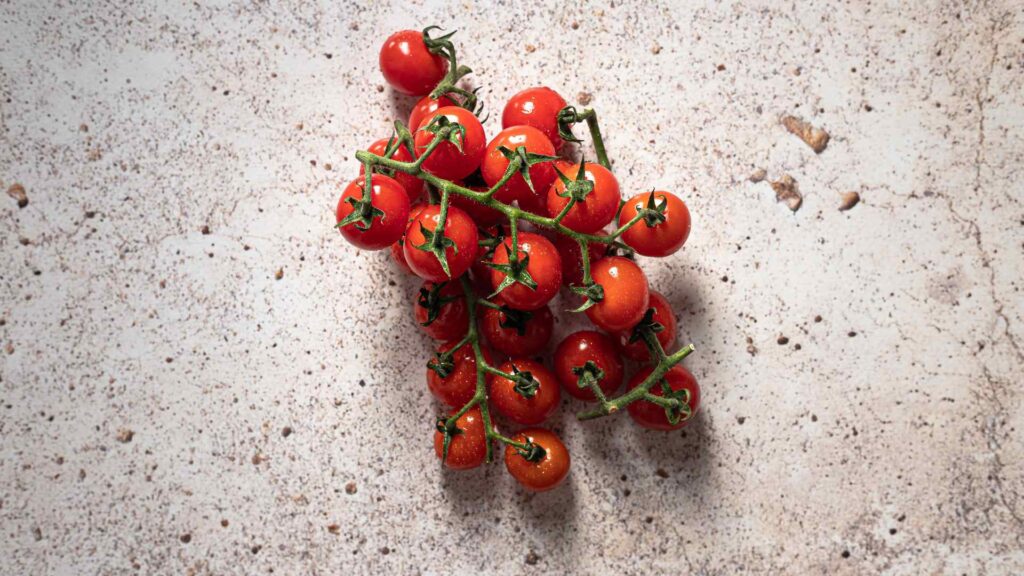
The smooth skin, round shape, and small size make cherry tomatoes easy for an excited dog to swallow without chewing. A whole fruit can obstruct the airway, particularly in a small dog or fast gulper.
Remove the stem and green star-shaped calyx, then quarter the ripe tomato or cut it smaller for the individual dog. Supervise and hand over one piece at a time instead of tossing several across the kitchen.
Active choking, noisy or absent breathing, blue-tinged gums, frantic pawing at the mouth, or collapse is an emergency. Do not blindly push fingers into the throat because that can drive an object deeper or cause a bite.
How to prepare a ripe cherry tomato
- Choose a fully ripe, red, firm tomato without green patches, mold, splitting, or fermentation.
- Wash it under running water and dry it with a clean towel.
- Remove the stem, leaves, green calyx, and any attached vine material.
- Cut the fruit into quarters or smaller bite-size pieces and offer it plain.
- Start with one small piece and stop if the dog develops digestive or skin signs.
The FDA produce-safety guidance recommends washing produce under running water and does not recommend soap, detergent, or commercial produce wash. It also advises discarding rotten produce and cutting away damaged areas.
Washing reduces surface contamination but does not make green fruit ripe or remove compounds from leaves and stems. Organic tomatoes still need washing, plant-part removal, cutting, and portion control.
Raw, cooked, canned, and dried tomato
Raw ripe tomato
A cut piece gives the clearest ingredient and choking control. The seeds and soft ripe skin do not need special removal for most dogs, though an individual gastrointestinal condition may change the veterinarian’s advice.
Plain cooked tomato
Cooking ripe tomato does not make it nutritionally necessary, but a small plain piece can be comparable to ripe raw flesh. The problem is that people rarely cook tomatoes in plain water for the dog.
Canned tomato
Canned diced tomatoes, purée, paste, and crushed tomatoes may contain salt, calcium chloride, citric acid, herbs, or flavored juice. Tomato paste is concentrated and often used inside a seasoned recipe, so it is not a casual spoonful.
Sun-dried tomato
Drying concentrates the fruit into a chewy, calorie-dense piece, and jarred versions often sit in oil with garlic, herbs, and salt. Tough pieces can be gulped, while oily seasoned jars create a mixed exposure.
Sauce is an ingredient list, not a tomato
Pasta sauce, pizza sauce, ketchup, salsa, soup, and tomato juice commonly contain salt, onion, garlic, oil, sugar, spice, cheese, or sweeteners. Even a product called simple marinara may include concentrated Allium ingredients.
Our onion guide and garlic guide explain why cooked and powdered forms still matter. Red blood cell effects can be delayed, so keep the label and do not wait for pale gums or weakness after a meaningful amount.
Salsa can add hot peppers, onion, garlic, salt, lime, and avocado, while pizza adds cheese, fatty meats, oil, and dough. A lick of sauce and a missing pan require different responses.
Basil itself is non-toxic in tiny culinary amounts, but pesto and basil sauces include other ingredients; see our basil guide. The presence of two safe ripe plants does not certify the finished recipe.
Acid, fiber, and portion size
Ripe tomatoes are acidic and contain fiber, so a large amount can cause drooling, reflux-like discomfort, gas, vomiting, or diarrhea without plant poisoning. Dogs with sensitive gastrointestinal disease may need to skip them even when fully ripe.
A low-calorie food is not unlimited. Several tomatoes can displace complete food, add sugar and fiber, and create more digestive trouble than enjoyment, especially for a small dog.
The UC Davis veterinary treat guideline recommends keeping all treats and extras below 10 percent of daily calories, with at least 90 percent from a complete and balanced diet. Tomato shares that allowance with every training reward and table scrap.
There is no reliable need for a size-by-size tomato table. Offer one small cut piece to a healthy adult dog and ask the veterinarian for an individual plan if tomatoes will be frequent or the dog has a medical condition.
Tomatoes are not vitamin or antioxidant therapy
Ripe tomatoes contain nutrients and plant compounds, but a treat-size portion has not been shown to prevent cancer, treat inflammation, protect the heart, improve eyesight, or boost a dog’s immune system. Complete dog food supplies required nutrients in planned amounts.
Adding tomato to treat a diagnosed deficiency, heart disease, or inflammatory condition can delay useful care. Ask what outcome is being treated, how it will be measured, and whether the proposed food changes the balanced diet.
A dog on a prescription kidney, urinary, diabetic, gastrointestinal, cardiac, or elimination diet should receive no tomato unless the treating veterinarian approves it. The issue may be the whole nutrient plan rather than tomato toxicity.
Food allergy is possible, but one itch proves little
Any food can coincide with vomiting, diarrhea, itching, hives, or facial swelling, but those signs have many causes. Stop the new food and call if signs appear, especially with breathing difficulty or collapse.
Do not diagnose tomato allergy using a hair, saliva, or convenient food panel. Veterinary food-allergy diagnosis uses a controlled elimination diet and rechallenge, and unplanned treats can invalidate that process.
The garden has hazards beyond the vine
A dog browsing tomato plants may also reach fertilizer, compost, mulch, pesticides, stakes, clips, ties, and irrigation parts. Ask what else is missing instead of stopping the investigation at a chewed leaf.
Compost can contain mold toxins, spoiled food, coffee grounds, onions, grapes, medication, or foreign objects. Tremors, seizures, abnormal temperature, severe agitation, or collapse after compost access is an emergency.
Secure plants behind a barrier and collect fallen green fruit before it becomes a toy. Garden labels should stay with the plant so a veterinarian can identify the cultivar and products used around it.
What to do after a tomato exposure
- Separate fully ripe red flesh from green fruit, stem, leaf, vine, sauce, or garden material.
- Estimate the amount and time, then record the dog’s weight, symptoms, health conditions, and medications.
- Save the plant tag, recipe, package, ingredient panel, and photographs of what remains.
- Check for onion, garlic, xylitol, alcohol, excess salt, fertilizer, pesticide, compost, and missing objects.
- Call for plant parts, green fruit, a large amount, unsafe co-ingredients, a vulnerable dog, or any concerning signs.
A healthy adult dog that ate one small cut piece of fully ripe red tomato and remains comfortable can generally be monitored. Remove access and return to the regular complete food.
Do not induce vomiting with salt, peroxide, fingers, or another home method unless a veterinary professional directs it. Plant material, co-ingredients, symptoms, and timing change what is safe.
Frequently asked questions
Are ripe cherry tomatoes poisonous to dogs?
ASPCA states that ripe tomato fruit is non-toxic. Serve only a small washed, stem-free, cut piece because whole fruit can choke and too much can upset digestion.
What if my dog ate one green cherry tomato?
Remove access, save a photo, and call for advice based on ripeness, amount, dog size, and symptoms. One fruit does not guarantee severe poisoning, but green fruit should not be intentionally fed.
Can dogs eat tomato sauce?
Do not assume so. Many sauces contain onion, garlic, salt, oil, sugar, cheese, spice, or sweeteners, and paste concentrates the serving.
Do I need to remove cherry-tomato seeds?
The soft seeds of fully ripe fruit are not the main toxicology concern. Remove green plant parts, wash the fruit, and cut it to prevent choking.
Can puppies eat cherry tomatoes?
A tiny ripe cut piece is not a recognized toxin, but puppies need almost all calories from complete growth food and are small enough for choking to matter. There is no reason to make tomato a routine puppy snack.
The bottom line
A small cut piece of fully ripe red cherry tomato can be an occasional treat for many healthy adult dogs. The green fruit, stems, leaves, vines, whole round shape, and seasoned recipes deserve separate decisions.
Think red, washed, stem-free, cut, plain, and small. Call with photographs and labels after plant or green-fruit exposure, and seek urgent help for choking, severe gastrointestinal signs, weakness, tremors, collapse, or abnormal breathing.