Can Dogs Eat Salmon Skin? Cooking, Fat, and Fish Risks
A small piece of fully cooked, plain, boneless salmon skin can be an occasional treat for some healthy dogs, but raw, smoked, salted, seasoned, spoiled, or bone-filled skin is a different question. The skin is fatty, so portion and pancreatitis history matter even when the fish is thoroughly cooked.
The quick decision
If a healthy dog ate one small piece of plain cooked skin and remains comfortable, remove the rest and observe. Call promptly after raw fish, a large amount, bones, smoked or heavily seasoned skin, spoilage, repeated vomiting, abdominal pain, weakness, fever, tremors, or swallowed packaging.
Cooked plain skin
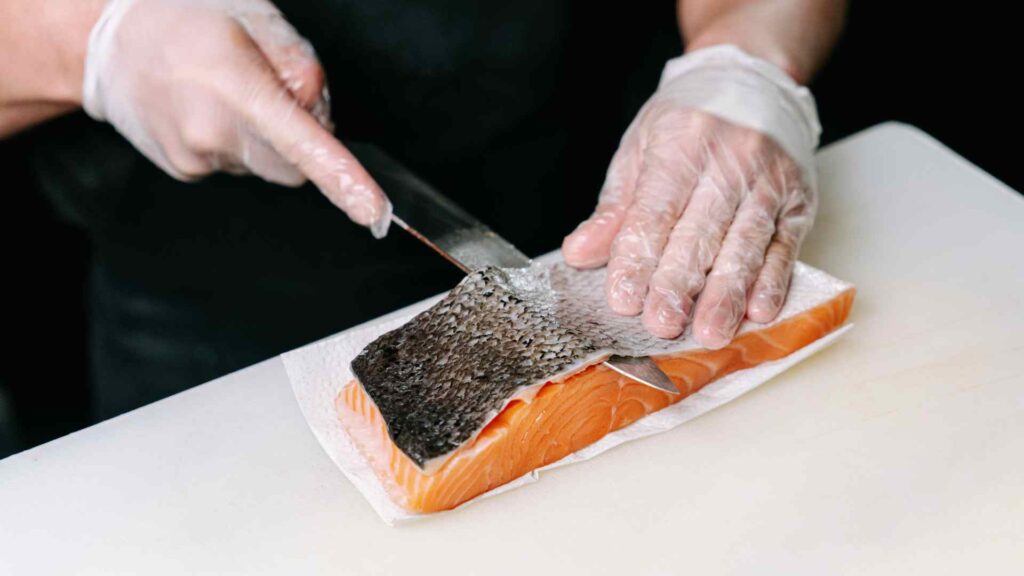
Cook salmon to a safe internal temperature, remove every detectable bone, and serve the skin without oil, butter, salt, sauce, garlic, onion, lemon peel, or spice rub. Crispness does not reduce fat, and burned edges are not a useful dog treat.
Cut the skin into a tiny piece suited to the dog’s chewing style and supervise. A long slippery strip can be gulped, while a hard overcooked shard may be awkward for a small dog or one with dental disease.
Raw fish pathogens and parasites
Raw or undercooked fish can carry bacteria and parasites that affect the dog and expose people through bowls, saliva, surfaces, or feces. The FDA warns that raw pet food can contain pathogens such as Salmonella and Listeria.
Freezing, sourcing, and visual inspection do not let a household guarantee that raw salmon is pathogen-free. Do not use this article as a raw-diet plan, and ask a veterinarian about a complete diet rather than improvising with fish scraps.
Salmon poisoning disease
Dogs can develop salmon poisoning disease after eating certain raw or undercooked salmonid fish carrying an infected fluke. The Merck Veterinary Manual describes the disease in the Pacific Northwest and nearby coastal ranges, though fish distribution and travel history still matter.
Possible signs include fever, appetite loss, vomiting, diarrhea, lethargy, weight loss, and enlarged lymph nodes. Call promptly after raw salmonid exposure, especially in an endemic region, rather than waiting for the dog to look critically ill.
Fat and pancreatitis
Salmon skin contains more fat than many lean training treats, and several pieces can deliver a large load quickly. Dogs with prior pancreatitis, obesity, high blood triglycerides, or a prescribed low-fat diet should avoid it unless the veterinarian approves.
The Merck Veterinary Manual identifies large amounts of table scraps or inappropriate foods as a common suspected pancreatitis risk factor. Repeated vomiting, appetite loss, weakness, dehydration, diarrhea, or abdominal pain needs assessment.
Smoked and salted salmon skin
Smoked salmon and packaged fish skins may contain substantial sodium, sugar, smoke flavor, garlic, onion, or spice. A tiny stolen flake is not automatically salt poisoning, but a whole package matters for a small dog or one with heart, kidney, or sodium-sensitive disease.
Check the Nutrition Facts panel and multiply sodium per serving by the amount missing. Our salt guide explains why normal water access and professional triage are safer than forced overwatering.
Seasonings and sauces
Teriyaki, pesto, barbecue glaze, garlic butter, onion seasoning, chili, and sugar-free sauces can create risks unrelated to salmon. The ASPCA notes that onion and garlic can injure canine red blood cells depending on dose.
Keep the recipe and report every ingredient. Our garlic guide and soy sauce guide cover two common fish-seasoning hazards.
Bones are easy to miss
Pin bones and fragments can lodge in the mouth or esophagus, puncture tissue, or contribute to obstruction. Run clean fingers over the fish in good light, but understand that checking reduces rather than eliminates risk.
Drooling, gagging, repeated swallowing, pawing at the mouth, regurgitation, breathing difficulty, or refusal to eat after a bone exposure needs urgent care. Do not push food down to move a suspected bone.
Spoilage and storage
Cooked fish should be refrigerated promptly and discarded when storage guidance is exceeded or it smells wrong, feels slimy, or shows mold. Do not let the dog serve as the household disposal system.
Foodborne illness may cause vomiting, diarrhea, fever, appetite loss, or lethargy. Save the label and lot when a commercial product seems spoiled, and clean contaminated surfaces carefully.
No omega-3 treatment promise
Salmon contains omega-3 fatty acids, but a fatty skin scrap is not a standardized veterinary supplement or treatment for arthritis, skin disease, heart disease, or inflammation. Dose, purity, oxidation, and the complete diet all matter.
If a veterinarian recommends an omega-3 product, use the specified formulation and amount. More salmon skin is not a reliable substitute and can add unwanted calories or fat.
Portion and preparation checklist
- Choose fully cooked salmon with no seasonings or sauce.
- Remove skin from any visible bones and inspect carefully.
- Cut one tiny piece rather than offering a strip.
- Avoid smoked, salted, raw, spoiled, and heavily fatty preparations.
- Count the piece within the total daily treat allowance.
UC Davis recommends that treats and extras remain at or below 10 percent of daily calories. For the wider fish question, see our fish guide and salmon guide.
Accidental-ingestion steps
Remove the food, save the label or recipe, estimate the amount and time, and note the dog’s weight, conditions, medicines, and symptoms. Check for foil, plastic, skewers, hooks, line, absorbent pads, or bones.
Do not induce vomiting or give a home remedy without veterinary direction. Call for raw salmonid fish, bones, large fatty portions, dangerous seasonings, spoilage, symptoms, or swallowed packaging.
Air-fried and dehydrated fish skins
Commercial fish-skin chews may be dried, baked, or air-fried, but processing method alone does not establish portion, sodium, bone control, or nutritional suitability. Use products made for dogs, inspect each piece, and follow the manufacturer’s feeding and storage directions.
A hard rolled chew can fracture into gulpable sections or become slippery with saliva. Supervise, remove pieces small enough to swallow whole, and avoid them for dogs with damaged teeth or swallowing disease.
Farmed, wild, canned, and leftover salmon
Farmed and wild salmon differ in fat content and sourcing, but either skin should be fully cooked and boneless before a dog receives a taste. Geography does not turn visible raw fish into a safe snack.
Canned salmon skin may be cooked, yet brine, oil, smoke flavor, and bones still require review. Rinsing can remove surface liquid but cannot undo seasoning or guarantee every bone is gone.
Restaurant leftovers are especially hard to assess because oils, butter, rubs, glazes, and salt may not be visible. Ask for ingredient information when possible and keep the receipt or menu description.
Dogs on special diets
Dogs with heart, kidney, gastrointestinal, endocrine, or skin disease may have limits involving fat, sodium, protein, phosphorus, calories, or novel ingredients. A general food article cannot override a prescribed diet.
During an elimination diet, salmon skin can invalidate the trial even if salmon sounds wholesome. Check treats, flavored medications, dental chews, and supplements with the supervising veterinarian.
Allergy and individual intolerance
Dogs can react adversely to fish proteins, though itching or diarrhea after one meal does not prove an allergy. Facial swelling, widespread hives, breathing difficulty, weakness, or collapse requires emergency care.
Recurring ear disease, itching, vomiting, or diarrhea needs veterinary evaluation and a structured diet history. Rotating among fish varieties makes the trigger harder to identify.
Household food safety
Wash hands, utensils, cutting boards, bowls, and counters after raw fish contact, and keep raw juices away from ready-to-eat food. Children, older adults, pregnant people, and immunocompromised household members deserve particular protection from raw-food contamination.
Do not let a dog lick raw-fish plates or preparation surfaces. A dog without obvious illness can still spread pathogens into the home environment.
Monitoring after a cooked-skin theft
Watch appetite, vomiting, stool, abdominal comfort, thirst, energy, and breathing over the following day. Keep the regular diet steady and do not add more rich food while judging tolerance.
Call when signs repeat, intensify, or seem out of proportion. A hidden bone, spoiled fish, larger amount, or seasoning may explain why a seemingly ordinary exposure is not settling.
When preparation details are unknown
A restaurant may not disclose every ingredient immediately, but the dog’s size, amount, cooking status, symptoms, and likely seasoning still support useful triage. Call with what you know and update the clinic when more information arrives.
Do not delay because you cannot identify the salmon species or exact fat grams. Raw versus cooked, bones, salt, quantity, geography, and clinical signs are the first practical distinctions.
Safe alternatives
Use part of the dog’s usual kibble, a veterinary-approved low-fat treat, or a tiny piece of plain cooked boneless salmon flesh when the diet allows it. Removing the skin lowers the concentrated fat exposure.
Avoid sharing from the table because it rewards begging and makes portions hard to track. Set aside any approved plain piece before adding seasonings to the human meal.
Puppies and seniors
Puppies need nearly all calories from a complete growth diet, while seniors may have dental disease, reduced tolerance for fat, or chronic illness. Neither group benefits from a large chewy skin strip.
Ask the veterinarian before making fish skin a recurring reward. The answer may change after pancreatitis, kidney disease, or a prescription diet is diagnosed.
Bottom line
A tiny fully cooked plain boneless piece is usually low risk for a healthy dog, but salmon skin is not a free-food supplement. Raw fish, geography-specific salmon poisoning disease, fat, sodium, seasonings, bones, spoilage, symptoms, and packaging decide the next step.