Can Cats Eat Animal Crackers? Read the Box Before Sharing
One plain animal cracker is unlikely to poison a healthy adult cat, but it is still a dessert wearing a tiny giraffe costume. Check the package, keep the rest of the bag away, and treat any unusual ingredient, missing wrapper, or symptom as a reason to call your veterinarian.
The quick answer for the cracker thief
If your cat stole a small piece of a standard, uncoated animal cracker, offer water and watch normally at home. The likely consequence is nothing, although a sensitive cat may have a soft stool, mild gas, or a brief upset stomach.
Save the package and note roughly how much disappeared. A whole snack bag, chocolate-coated pieces, raisins, unusual sweeteners, medication baked into food, or swallowed plastic deserves prompt professional advice instead of guesswork.
Do not make your cat vomit unless a veterinarian specifically instructs you. Home remedies involving salt, hydrogen peroxide, oil, or milk can create a second problem without reliably solving the first.
Why plain animal crackers are a poor cat treat
Most animal crackers are made from refined wheat flour, sugar, vegetable oil or shortening, salt, leavening, and flavorings. Those ingredients supply calories but do not meet the nutritional needs of an obligate carnivore, so the snack earns no regular place in a feline menu.
The Cornell Feline Health Center recommends a complete and balanced commercial diet and says treats should stay occasional. Your cat’s everyday food already does the serious nutritional work that a cookie cannot.
Repeated extras can quietly crowd out balanced food or add enough calories to promote weight gain. That matters because a two-inch cookie represents a much larger share of a cat’s daily intake than it does of a person’s.
Crunch does not make a human cracker a dental product, either. It crumbles quickly and lacks the evidence, shape, and feeding protocol of products accepted specifically for feline oral care.
The label matters more than the circus shape
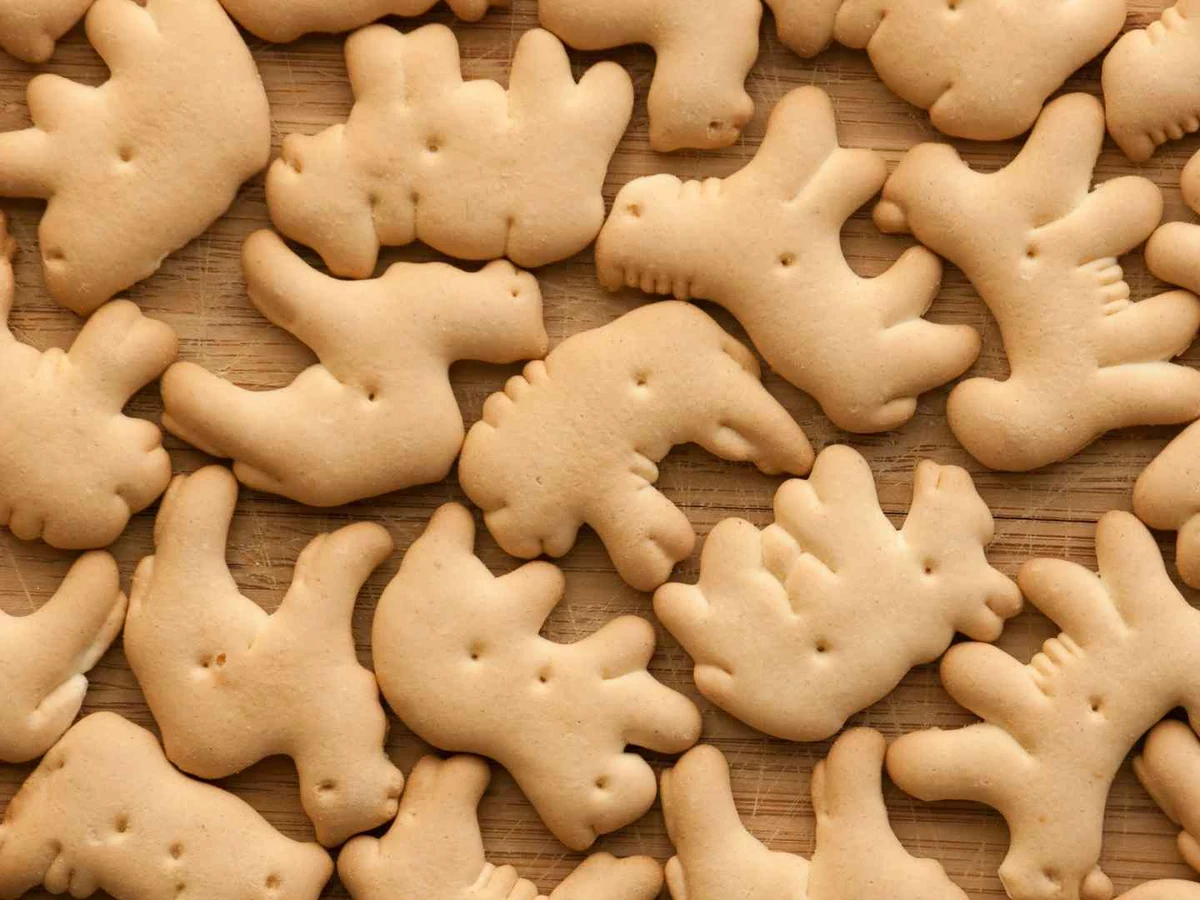
Animal crackers are a product category, not one fixed recipe. Store brands, frosted versions, organic varieties, holiday mixes, protein snacks, and homemade batches can contain very different ingredients.
Read both the ingredient list and any allergen statement, then look for coatings or pieces that may not be obvious in the crumbs. The FDA’s Nutrition Facts guidance explains how serving size, added sugars, sodium, and ingredient information are presented on packaged foods.
Chocolate changes an ordinary cookie incident into a potential toxicology question because cats are susceptible to methylxanthines such as theobromine and caffeine. Use our cat and chocolate guide, but call a clinic or poison service rather than trying to calculate safety from wrapper percentages.
Raisins or grape pieces also raise the stakes, even though the feline evidence is less complete than the canine evidence. Because individual susceptibility and species data are uncertain, the sensible response is immediate veterinary guidance rather than waiting for signs.
Onion or garlic powder can appear in savory crackers, although it is uncommon in classic sweet animal crackers. Any allium ingredient warrants a call, especially after more than a crumb or when the amount is unknown.
What about xylitol?
Xylitol is notorious for causing severe low blood sugar and liver injury in dogs, but that dog emergency must not be copied directly onto cats. The FDA says xylitol does not appear to have the same danger for cats, while also advising owners to keep xylitol products away from pets.
That does not turn a sugar-free cookie into a feline snack. Formulas may contain chocolate, caffeine, macadamias, supplements, or other ingredients, and a veterinarian needs the actual label to assess the whole product.
If a sugar-free package is involved, photograph the front, ingredients, nutrition panel, and lot information before calling. A poison specialist can separate known feline risks from dog-specific warnings and decide whether monitoring is enough.
Frosting, yogurt coatings, and sandwich versions
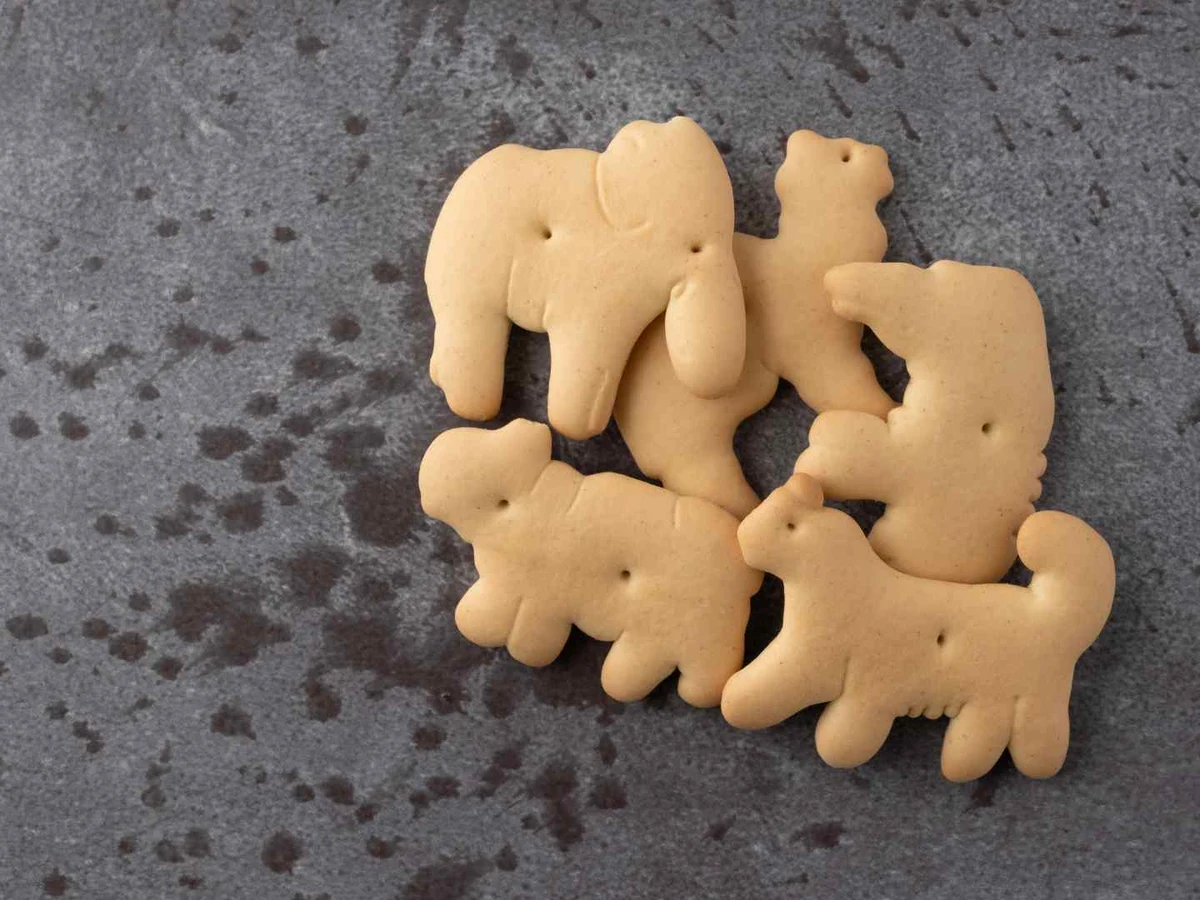
Frosted animal crackers bring more sugar and fat, plus dyes and flavorings that may upset an individual stomach. A lick of ordinary vanilla frosting is usually a monitoring situation, but a pile of coated cookies can be a substantial dietary disruption for a small animal.
White or yogurt-style coatings are not automatically harmless because the name on the front is marketing shorthand, not a toxicology report. Check for cocoa, coffee, raisins, sugar alcohols, and concentrated flavoring extracts.
Butter-rich homemade crackers may trigger vomiting or diarrhea, particularly in a cat unaccustomed to fatty food. Our guide to butter and cats explains why a lick and a butter-heavy binge are different scenarios.
The bag can be more dangerous than the biscuit
A cat who dives into a crinkly snack bag can become trapped or suffocate, while torn film may be swallowed and lodge in the digestive tract. The FDA warns pet owners about food bags and gastrointestinal foreign objects.
Store open bags inside a closed cabinet or rigid container, then cut or tear empty bags before disposal. That small habit protects the cat who believes every rustle in the kitchen is a formal invitation.
Call urgently if plastic is missing or your cat has repeated vomiting, refuses food, strains without passing stool, seems painful, or becomes unusually quiet. An obstruction can worsen while the crumbs themselves remain medically uninteresting.
Cats who need a lower threshold for calling
Kittens, very small cats, seniors, and cats with diabetes, inflammatory bowel disease, pancreatitis, food allergies, kidney disease, or prescribed diets deserve extra caution. Their margin for digestive disruption or inappropriate calories may be narrower.
A cat with a confirmed wheat allergy should not receive a wheat-based cracker, even if another cat tolerates one. Likewise, a veterinary therapeutic diet works best when unapproved snacks do not sneak around its purpose.
If your cat is diabetic, do not give extra insulin because a sweet snack was stolen. Contact the clinician who manages the diabetes for instructions based on the amount eaten, current glucose plan, and any symptoms.
A practical monitoring plan
After a small amount of a plain product, remove access and keep the normal water, food, and litter setup available. Watch appetite, energy, comfort, vomiting, stool, breathing, and coordination rather than repeatedly poking a perfectly content cat awake.
Seek prompt advice for repeated vomiting, diarrhea that is severe or persistent, tremors, weakness, collapse, breathing difficulty, marked agitation, abdominal pain, or refusal to eat. Bring the packaging, an ingredient photo, the estimated amount, the time, and your cat’s weight and medical history.
If chocolate, raisins, alliums, alcohol, medication, or an unknown homemade recipe is involved, call before symptoms develop. Early case-specific advice is more useful than an internet dose chart built for a different product or species.
Better ways to share snack time
Offer one or two pieces of the cat’s usual kibble, a tiny flake of plain cooked meat that fits the diet, or a measured commercial cat treat. The reward is your attention and the little ceremony, not the flour sculpture.
If your cat loves crunchy sounds, use a puzzle feeder with part of the regular meal. That preserves the hunt-and-crunch fun without adding a second menu of sugar, salt, and mystery crumbs.
For comparison with a simpler savory biscuit, see the site’s cracker ingredient overview, while remembering that canine portions and toxicology cannot be applied to cats. If graham-style ingredients are involved, the graham cracker label guide can help identify product variations.
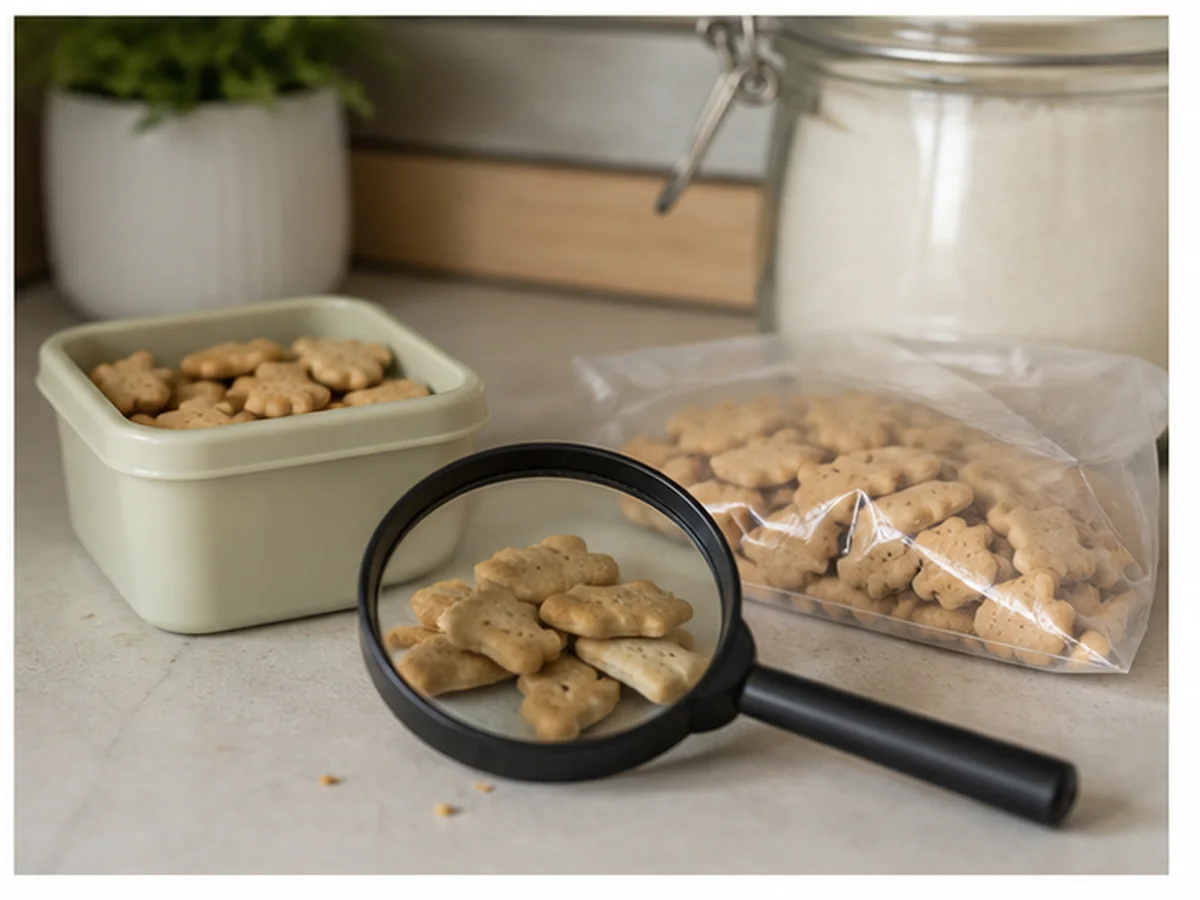
How to read the ingredient list without spiraling
Begin with the ingredients that make up most of the cracker, which appear first by weight, then scan every parenthetical sub-ingredient in coatings and flavor blends. Product names such as natural, wholesome, toddler, or organic describe marketing or production choices, not feline suitability.
Next, look specifically for cocoa or chocolate, coffee, raisins or grape ingredients, onion, garlic, alcohol-containing flavor, and any supplement or drug. Do not stop at the allergen box, because it highlights regulated human allergens rather than every ingredient that matters to a cat.
Then estimate the amount actually missing by counting remaining crackers, checking crumbs, and seeing whether another pet or child had access. An honest range such as one to three frosted pieces is more useful to a clinician than insisting on an exact number you cannot know.
Finally, separate the product hazard from the cat’s current condition. A normal cat after one plain cracker often needs observation, while tremors or collapse after even an uncertain snack exposure requires urgent care before anyone finishes decoding the label.
Record the product’s brand and flavor because manufacturers may sell several recipes in nearly identical boxes.
FAQ
Can a cat eat one plain animal cracker?
One standard uncoated cracker is unlikely to cause poisoning in a healthy adult cat. It is nutritionally pointless, so there is no benefit to making it a habit.
Are frosted animal crackers safe for cats?
They contain more sugar and fat, and coatings vary. A tiny lick of ordinary vanilla coating is usually monitored, but check the label carefully for cocoa, coffee, raisins, or other concerning additions.
Can kittens have animal crackers?
Skip them because kittens need nutrient-dense, balanced food for growth and have small calorie budgets. Their size also makes a hard chunk or wrapper relatively more troublesome.
Why does my cat want my cookies?
The attraction may be fat, aroma, texture, novelty, or simply your enthusiastic participation. Interest does not show that the food supplies something the cat needs.
Bottom line
A crumb or one plain animal cracker is generally a watch-at-home event for a healthy adult cat, not a reason to panic. Read the exact label, guard the packaging, call about risky additions or symptoms, and let the cookie parade remain a human production.